The automotive world is undergoing a significant transformation, and for performance enthusiasts, the pursuit of power has led to a fascinating crossroads. While electric vehicles dominate headlines, the internal combustion engine is far from finished. One of the most significant developments in modern performance tuning is the widespread adoption of E85 fuel. Known for its high octane rating and incredible cooling properties, E85 has become the go-to "corn juice" for those seeking to extract maximum horsepower from their engines.
However, transitioning a vehicle to run on E85 isn't as simple as pulling up to the pump and filling the tank. It requires a fundamental shift in how the engine is managed. The engine control unit (ECU) must be recalibrated to handle the different properties of ethanol. This brings us to a critical question that many enthusiasts face when embarking on their E85 journey: Do you need a piggyback ECU to tune for E85?
In this comprehensive guide, we will explore the intricacies of E85 tuning, break down what a piggyback ECU actually does, examine alternative tuning methods, and ultimately help you decide the best path for your specific vehicle and performance goals.
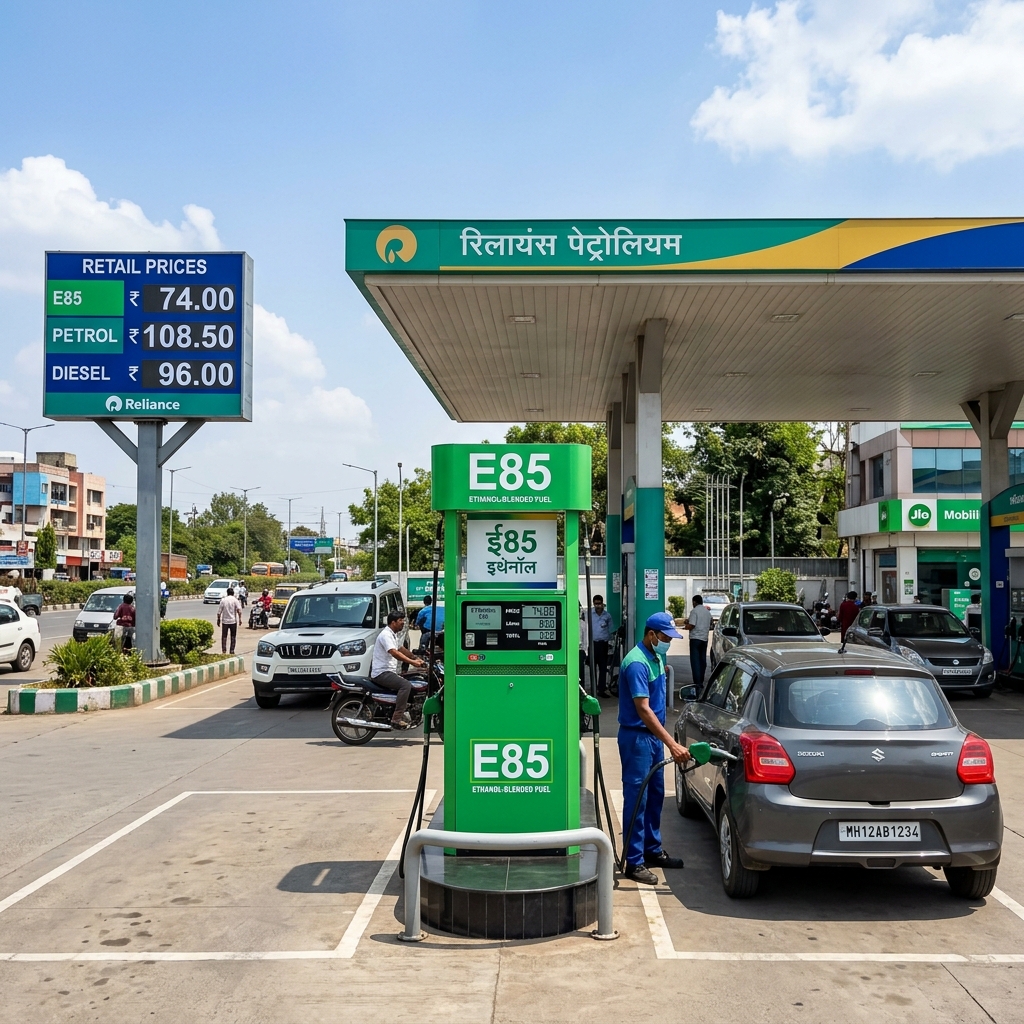
Section 1: Understanding E85 and Its Appeal
Before we dive into the electronics of engine management, it's crucial to understand why E85 is so desirable and why it requires specialized tuning in the first place.
What is E85?
E85 is an abbreviation for an ethanol fuel blend that consists of up to 85% denatured ethanol fuel and 15% gasoline or other hydrocarbon by volume. Ethanol is an alcohol-based fuel, typically derived from corn, sugarcane, or other plant materials. The exact blend can vary depending on the season and location (sometimes dropping to E70 in colder climates to aid starting), but the performance benefits remain substantial.The Magic of High Octane
The primary draw of E85 for tuning is its high octane rating. Standard pump gas usually ranges from 87 to 93 octane. E85, on the other hand, typically boasts an octane rating equivalent to 100 to 105.Octane is a measure of a fuel's resistance to "knock" or pre-ignition—a destructive phenomenon where the air-fuel mixture ignites prematurely due to high cylinder pressures and temperatures before the spark plug fires. Because E85 is highly resistant to knock, tuners can advance the ignition timing significantly and safely increase turbocharger or supercharger boost pressures. This directly translates to more horsepower and torque.
The Cooling Effect (Latent Heat of Vaporization)
Beyond octane, ethanol has a much higher latent heat of vaporization than gasoline. This means that as the liquid fuel evaporates in the intake tract and cylinder, it absorbs a massive amount of heat. This chemical cooling effect drastically lowers intake charge temperatures and combustion chamber temperatures. Cooler air is denser (containing more oxygen), and a cooler cylinder further prevents knock, creating a compounding effect of performance potential.Section 2: Why E85 Demands a Tune
You cannot simply pour E85 into a car designed for regular gasoline and expect it to work. In fact, doing so can cause catastrophic engine failure. Here is why engine management intervention is strictly required.
The Stoichiometric Challenge
The stoichiometric air-fuel ratio (AFR) is the ideal ratio at which all fuel is completely burned with all available oxygen. For pure gasoline, this ratio is 14.7 parts air to 1 part fuel (14.7:1).For E85, the stoichiometric ratio is significantly lower, approximately 9.76:1. This means that to achieve a complete burn, you need significantly more E85 than you would gasoline for the same amount of air.
If you put E85 in a stock car, the ECU will continue to inject fuel based on the 14.7:1 assumption. The engine will run dangerously lean (too much air, not enough fuel). Lean conditions cause extreme combustion temperatures, which can melt pistons and destroy valves in a matter of seconds under load.
Fuel Volume Requirements
Because you need more E85 to achieve the correct air-fuel ratio, the fuel system must flow roughly 30% to 40% more volume compared to a gasoline setup. Your engine management system must be reprogrammed to hold the fuel injectors open longer (increased pulse width) to deliver this extra volume.Ignition Timing Optimization
While an engine might run (poorly) if you only add fuel, to actually realize the power benefits of E85, the ignition timing must be altered. The ECU needs to be told to advance the timing to take advantage of the knock resistance. Stock ECUs do not have the maps or the authority to advance timing to the degree required for E85 optimization.Section 3: The Engine Control Unit (ECU)
The ECU is the brain of your engine. It reads data from a myriad of sensors—mass airflow (MAF), manifold absolute pressure (MAP), throttle position (TPS), engine coolant temperature (ECT), crank position, and oxygen sensors (O2)—and uses this data to calculate the exact amount of fuel to inject and exactly when to fire the spark plugs.
To run E85, we must change the instructions inside this brain. There are three primary ways to achieve this in the tuning world: 1. Piggyback ECU 2. Flash Tuning (Reflashing the factory ECU) 3. Standalone ECU
Let's focus on the piggyback ECU and see how it fits into this landscape.
Section 4: What is a Piggyback ECU?
A piggyback ECU is an auxiliary electronic device that wires into the factory wiring harness, positioning itself between the engine's sensors and the factory ECU, or between the factory ECU and the engine's actuators (like fuel injectors and ignition coils).
As the name implies, it "piggybacks" on the factory engine management system rather than replacing it entirely.
How a Piggyback Works
The primary function of a piggyback system is deception. The factory ECU has strict parameters and maps it wants to follow. If it sees more air than it expects, it might trigger a check engine light or enter "limp mode."A piggyback ECU intercepts the signals coming from the sensors (e.g., the MAP sensor reading boost pressure). It alters this signal before sending it to the factory ECU. - Example: If you increase boost pressure to 15 psi, but the factory ECU cuts fuel at 12 psi, the piggyback intercepts the 15 psi signal, modifies it to read 11.9 psi, and sends that modified signal to the factory ECU. The factory ECU stays happy, thinking everything is normal. - Meanwhile, the piggyback takes control of the fuel injectors (or alters the MAF/MAP signal enough to force the factory ECU to add fuel) to ensure the engine gets the extra fuel needed for that 15 psi of boost.
Piggybacks and Fuel Control
For E85, fuel control is the absolute most critical factor. Many modern, sophisticated piggyback units (like the JB4 from Burger Motorsports, or various GReddy e-Manage systems) can directly control fuel injector pulse widths or manipulate fuel rail pressure sensors (in direct-injected cars) to deliver the extra 30-40% fuel volume required for ethanol.Section 5: Do You Need a Piggyback ECU for E85?
The short and definitive answer is: No. You do not strictly need a piggyback ECU to tune for E85.
However, the longer answer is that it depends entirely on the vehicle platform, the limitations of the factory ECU, and your budget.
In many cases, a piggyback is not just unnecessary; it might actually be an inferior choice compared to modern flash tuning. Let's break down the scenarios.
Scenario A: When Flash Tuning is King
In the last decade, flash tuning has become the gold standard for most modern vehicles. Flash tuning involves using a device (like a Cobb Accessport, EcuTek ProECU, Bootmod3, or HP Tuners) to connect to the car's OBD-II port. Instead of tricking the ECU, you are entirely rewriting the software (the "maps") inside the factory ECU.Why Flash Tuning is usually better for E85: 1. Direct Control: You are changing the fundamental stoichiometric targets, fuel maps, and ignition timing maps natively. The ECU isn't being tricked; it understands exactly what fuel it is burning. 2. Safety Interlocks: Factory ECUs have incredibly complex safety logic (knock retardation, temperature compensations). Flash tuning retains these safety features and calibrates them for E85. Piggybacks, by their deceptive nature, can sometimes blind the factory ECU to dangerous conditions. 3. Flex Fuel Integration: This is the most crucial point. True flex-fuel tuning requires the ECU to read an ethanol content analyzer (sensor) and dynamically blend fuel and timing maps based on whether you have 10% ethanol, 50% ethanol, or 85% ethanol in the tank. Modern flash tuning platforms (like EcuTek or Cobb) allow custom coding to integrate these sensors directly into the factory ECU. Most simple piggybacks cannot do true dynamic flex-fuel blending.
Conclusion for Scenario A: If your car is supported by a robust flash-tuning platform (e.g., most modern BMWs, Subarus, VW/Audis, Fords), you do not need a piggyback. Flash tuning is the superior, safer, and more comprehensive route for E85.
Scenario B: When a Piggyback is the Only (or Best) Option
Despite the dominance of flash tuning, piggyback ECUs still have a vital place in the tuning ecosystem. You might need or choose a piggyback for E85 under the following conditions:1. Locked/Encrypted ECUs: Some manufacturers release vehicles with ECUs that are heavily encrypted and haven't been "cracked" by flash tuning companies yet (e.g., very new models from Toyota, BMW, or specialized JDM platforms). If you cannot flash the ECU, a piggyback is the only way to intercept signals and add the necessary fuel for E85. 2. Warranty Concerns: Flash tuning leaves a digital footprint. Even if you flash it back to stock, dealers can often see the "flash counter" has changed, potentially voiding your powertrain warranty. A piggyback (if carefully installed and removed) leaves no digital trace inside the ECU itself. Some users run piggybacks on E30 or E50 blends specifically for this "stealth" reason. 3. Supplemental Fueling (Port Injection Integration): Many modern cars use Direct Injection (DI). DI fuel pumps and injectors are incredibly expensive to upgrade and often reach their flow limits quickly on E85. A common solution is to add a secondary set of Port Fuel Injectors (PI) into the intake manifold. A factory ECU cannot control a second set of injectors. In this case, a specialized piggyback controller (like a Split Second controller or Motiv Reflex) is absolutely necessary to control those secondary injectors when running high E85 concentrations. 4. Older or Niche Platforms: Some 1990s or early 2000s vehicles have factory ECUs that are essentially untunable (no flash support exists). For these, an older piggyback system might be the only bridge between the stock ECU and a full standalone system.
Section 6: The Ultimate Alternative - The Standalone ECU
If we are discussing whether you need a piggyback, we must discuss the absolute top tier of engine management: the Standalone ECU (e.g., Haltech, Motec, AEM Infinity, Link ECU).
A standalone ECU completely replaces the factory computer. You remove the stock brain and install a new, infinitely programmable brain.
Standalone and E85: Standalone ECUs are the holy grail for E85 tuning. They natively support flex-fuel sensors. You simply wire the sensor into an input on the ECU, check a box in the software, and tell it how much timing and fuel to add at 100% ethanol. The ECU handles all the interpolation in between flawlessly. They also natively support massive fuel injectors, dual fuel pump staging, and advanced engine protection strategies.
Do you need it? No, not for a basic E85 conversion on a modern car. Standalone ECUs are extremely expensive (often $1,500 to $4,000+ just for the unit, plus custom wiring and extensive dyno tuning time). They are typically reserved for heavily modified track cars, massive turbo builds, or engine swaps where the factory ECU is no longer viable.
Section 7: The Vital Component: The Flex Fuel Sensor
Whether you use a flash tune, a standalone ECU, or an advanced piggyback, one piece of hardware is non-negotiable for a daily-driven E85 setup: The Flex Fuel Sensor (Ethanol Content Analyzer).
The Problem with "Static" E85 Tunes
In the early days of tuning, people would flash a dedicated "E85 Map." This assumes the fuel in the tank is exactly 85% ethanol. However, pump E85 is notoriously inconsistent. In the winter, stations often drop the blend to E70 to ensure cars can cold-start (ethanol hates vaporizing in the cold).If you have a static tune for E85, and you fill up with E70, your engine will run rich, you'll lose power, and your timing maps will be unnecessarily aggressive for the actual octane in the tank. Worse, if you can't find an E85 station and have to put 93 octane in, you must manually plug in a laptop or device and switch maps. If you forget, you will destroy the engine.
How Flex Fuel Works
A flex-fuel sensor (usually manufactured by Continental and repurposed by aftermarket companies) splices into your fuel return or feed line. It continuously measures the electrical capacitance of the fuel passing through it, which accurately determines the ethanol percentage (from 0% to 100%).It sends a 0-5v analog or digital frequency signal to the ECU. With true flex-fuel tuning (via Flash or Standalone), the ECU takes this ethanol percentage and dynamically blends a gasoline map and an E85 map. - If the sensor reads 10% ethanol (standard pump gas), it uses the gasoline fuel and timing tables. - If it reads 85%, it uses the E85 tables. - If you mix half a tank of gas and half E85 and the sensor reads 45%, the ECU automatically calculates the exact mathematical midpoint for fueling and timing.
Can Piggybacks do Flex Fuel? Historically, no. Most basic piggybacks only apply a fixed offset. However, modern, high-end piggyback controllers (like the JB4 with a flex-fuel kit, or the Motiv Reflex) have evolved. They can now accept a flex-fuel sensor input and dynamically adjust their boost and fueling hijacks based on ethanol content. But they are still ultimately fighting the factory ECU's closed-loop fueling corrections.
Section 8: Hardware Upgrades - Beyond the Tune
Regardless of whether you use a piggyback, flash, or standalone, tuning for E85 requires physical hardware changes. E85 demands roughly 30% to 40% more fuel volume. Your factory hardware will likely fail to deliver this.
1. Fuel Injectors
The factory injectors are usually sized for the maximum horsepower the car was designed for on gasoline, with a small safety margin. On E85, you will max out the duty cycle of factory injectors very quickly. Upgrading to larger injectors (e.g., moving from 500cc to 1000cc or 1300cc injectors) is almost always mandatory for a full E85 conversion on a forced-induction vehicle.2. The Fuel Pump
The fuel pump in the gas tank (Low-Pressure Fuel Pump or LPFP) must be able to supply the volume demanded by the larger injectors. Factory pumps will drop pressure under heavy load on E85. Upgrading to a high-flow, E85-compatible pump (like a Walbro 450 or 525) is standard practice. Furthermore, the internal components of the pump must be compatible with ethanol, which is highly corrosive and lacks the lubricating properties of gasoline.3. Fuel Lines and Filters
Older vehicles (pre-2005) may have rubber fuel lines that are not designed to withstand high concentrations of alcohol. E85 can dry out, crack, and degrade these lines, leading to catastrophic leaks and fires. Upgrading to PTFE (Teflon) lined hoses is highly recommended for older cars. Modern cars typically use materials that are highly resistant to ethanol. Additionally, E85 can act as a solvent, cleaning out years of "gunk" from your gas tank and clogging your fuel filter quickly after the switch. Replacing the fuel filter shortly after converting is a must.4. Direct Injection Pumps (HPFP)
On modern direct-injected cars, the High-Pressure Fuel Pump (HPFP) driven by the camshaft is often the bottleneck. While you can upgrade the in-tank pump easily, HPFP upgrades are extremely expensive. This is exactly why the piggyback port-injection controllers (mentioned in Scenario B) are so popular. Instead of spending $2,000 on an upgraded DI pump to run full E85, tuners use a piggyback to fire a cheaper set of traditional port injectors to make up the fuel deficit.Section 9: Pros and Cons of a Piggyback for E85
To summarize the utility of a piggyback ECU in the context of E85 tuning:
Pros:
1. Warranty Preservation (Sometimes): Can often be removed without leaving a flash counter trace on the factory ECU (though dealers are getting smarter at checking historical sensor data). 2. Bypassing Encryption: The only way to tune platforms where the factory ECU cannot be cracked or flashed. 3. Port Injection Control: Essential for managing secondary fueling systems (PI) when factory Direct Injection systems run out of headroom on E85. 4. Resale Value: A piggyback module can usually be uninstalled and sold to another owner, whereas flash licenses (like Bootmod3 or EcuTek) are often tied to the specific VIN of the car and cannot be resold.Cons:
1. Deceptive Tuning: You are tricking the factory ECU rather than reprogramming it. This can lead to unpredictable behavior if the factory ECU's safety logic conflicts with the piggyback's hijacked signals. 2. Less Granular Control: Piggybacks generally lack the deep, native control over ignition timing, variable valve timing (VANOS/VVT), and complex throttle mapping that flash tuning provides. 3. Inferior Flex Fuel Integration: While some modern piggybacks support flex-fuel sensors, they don't integrate as seamlessly or safely as a native flash tune that dynamically blends OEM tables. 4. Wiring Complexity: Piggybacks require splicing or plugging into multiple sensors in the engine bay, increasing the risk of electrical gremlins, poor connections, or water ingress.Section 10: Step-by-Step Decision Guide
If you are standing at the crossroads, wondering which route to take for your E85 journey, follow this logical progression:
Step 1: Check Flash Tuning Availability Is there a reputable flash tuning platform for your specific year, make, and model? (e.g., Cobb, EcuTek, MHD, Bootmod3, HP Tuners). * If Yes: Proceed to Step 2. * If No: You must look into a Piggyback ECU or a Standalone system.
Step 2: Check Flex Fuel Support in Flash Does the available flash tuning platform support true custom flex-fuel integration for your car? * If Yes: This is your best route. Buy the flash platform, buy a flex-fuel sensor kit, upgrade your fuel system (pump/injectors), and get a custom tune. You do not need a piggyback. * If No (Flash only supports static E85 maps): You have a choice. You can run static maps and carefully test your fuel, OR you can look into advanced piggybacks (like JB4) that might offer a flex-fuel integration overlay on top of a base flash.
Step 3: Analyze Fuel System Limits (Direct Injection Cars) If your car is Direct Injected, research the limits of the factory High-Pressure Fuel Pump (HPFP) on E85. * If the HPFP can handle your power goals: Stick with flash tuning. If the HPFP cannot handle the volume:** You have to choose between a highly expensive upgraded HPFP (keeping it flash-tuned) OR installing a Port Injection kit. If you install a PI kit, you will likely *need a specialized piggyback controller (like a Motiv Reflex) to run those extra injectors.
Section 11: The Future of E85 and Tuning
As automotive technology marches forward, the landscape of tuning is constantly shifting. Automakers are making factory ECUs harder to crack, implementing advanced over-the-air (OTA) update capabilities that can wipe aftermarket flash tunes, and locking down architectures.
In the face of uncrackable ECUs, piggyback systems are experiencing a renaissance. Companies are developing incredibly sophisticated piggyback modules that communicate over the car's CAN-bus network rather than just intercepting analog sensor wires. These modern modules can read vast amounts of data directly from the car's network, allowing for much smoother and safer control over fueling and boost, making them much more viable for complex E85 setups on brand new platforms.
Furthermore, as the aftermarket embraces electrification, the principles of engine management are changing. However, as long as internal combustion engines are being modified for extreme performance, E85 will remain the fuel of choice, and the battle between flash tuning, piggybacks, and standalone ECUs will continue.
Section 12: Final Thoughts and Conclusion
So, do you need a piggyback ECU to tune for E85?
In the vast majority of scenarios involving modern, tunable vehicles, the answer is a resounding no. Native flash tuning provides a far superior, safer, and more integrated method for commanding the massive fuel volumes and aggressive ignition timing required by ethanol. Flash tuning allows for true, dynamic flex-fuel capability that treats E85 as a native parameter rather than an anomaly to be compensated for.
However, the tuning world is never black and white. Piggyback ECUs remain an essential tool in the tuner's arsenal. They are the undeniable heroes for locked and uncrackable ECUs, the necessary bridge for integrating secondary port injection systems, and a viable option for those fiercely protective of their powertrain warranties.
The successful transition to E85 is a holistic process. It's not just about the ECU; it's about the fuel pump, the injectors, the flex-fuel sensor, and finding a competent calibrator (tuner) who understands the specific demands of your platform.
Whether you choose to rewrite the brain with a flash tune, trick it with a piggyback, or replace it entirely with a standalone system, respect the fuel. E85 is a potent, unforgiving, and incredibly rewarding performance enhancer. Ensure your hardware is up to the task, your tuning method is appropriate for your chassis, and you will unlock the tremendous power potential hiding within the corn.