The automotive landscape in India is undergoing a massive transformation. With rising fuel costs and an ever-increasing emphasis on reducing vehicular emissions, alternative fuels are taking center stage. Among the various alternatives, E85 (a blend of 85% ethanol and 15% gasoline) has emerged as a frontrunner. Supported by the Indian government's aggressive ethanol blending policies, the transition to bioethanol is not just a futuristic vision but a present reality. But what if you own a standard gasoline vehicle and want to reap the benefits of E85? The answer lies in E85 conversion kits, also known as flex-fuel kits.
In this comprehensive 2500-word guide, we delve deep into the world of E85 conversion. We will explore the science behind it, the environmental and economic benefits, and most importantly, we will review the top 5 E85 conversion kits available in India right now. Whether you are a performance enthusiast looking for more horsepower or an eco-conscious driver aiming to reduce your carbon footprint, this article will equip you with everything you need to know about converting your vehicle to run on E85.
---
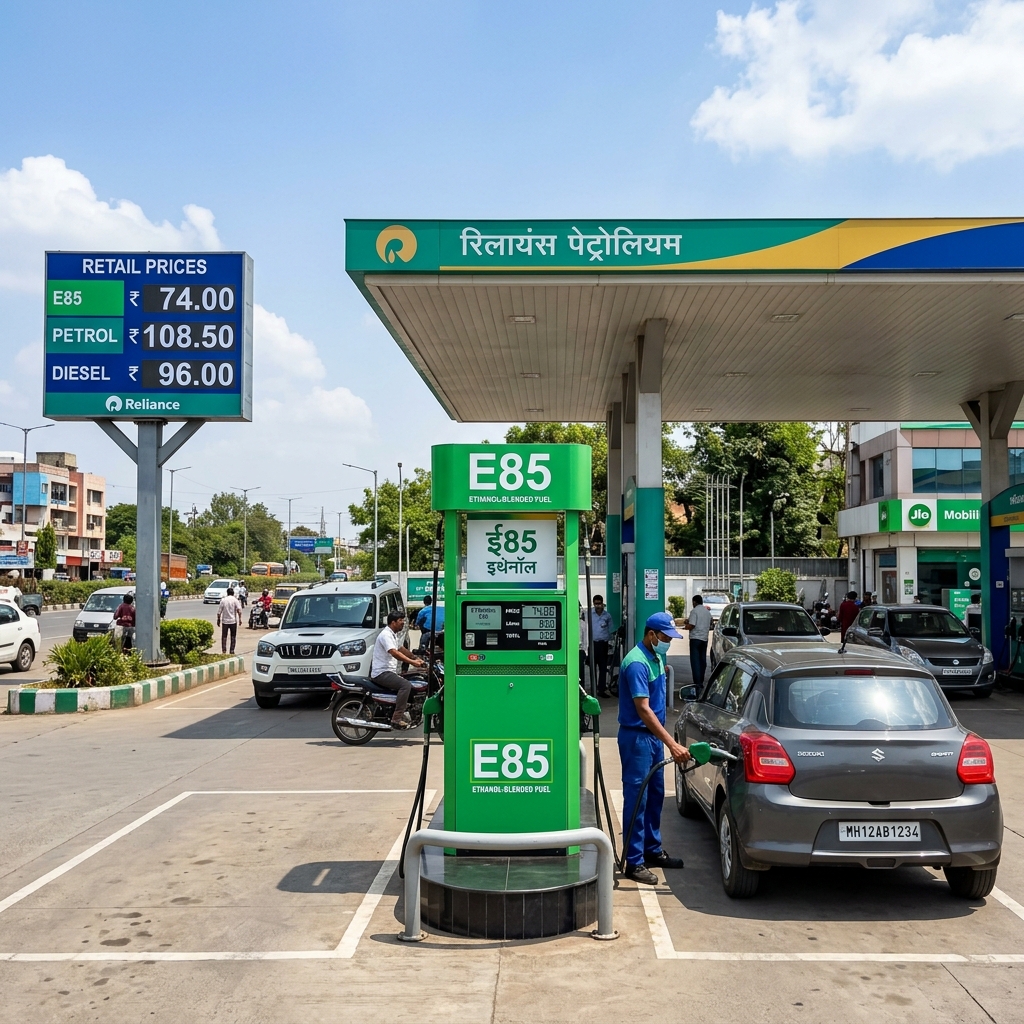
Understanding E85 and Flex-Fuel Technology
Before diving into the conversion kits themselves, it is crucial to understand what E85 is and how flex-fuel technology works.
What is E85?
E85 is an alternative fuel composed of up to 85% ethanol and 15% gasoline (petrol). Ethanol is a renewable biofuel made from plant materials, primarily sugarcane, corn, and agricultural waste. In the context of India, sugarcane and surplus grains are the primary sources for ethanol production. Because it is plant-based, the carbon dioxide emitted during combustion is roughly offset by the carbon dioxide absorbed by the plants as they grow, making it a nearly carbon-neutral fuel over its lifecycle.
E85 has a much higher octane rating than standard unleaded gasoline. While regular petrol in India typically has an octane rating of 91 or 95, E85 boasts an octane rating of around 105. This high octane allows engines to run at higher compression ratios and more aggressive ignition timing without knocking, which translates to significantly more power and torque, especially in forced-induction (turbocharged or supercharged) engines.
What is a Flex-Fuel Vehicle (FFV)?
A Flex-Fuel Vehicle is designed to run on more than one fuel, usually gasoline blended with either ethanol or methanol, and both fuels are stored in the same common tank. Modern FFVs are equipped with specialized components—such as a flex-fuel sensor, upgraded fuel injectors, and corrosion-resistant fuel lines—that can detect the exact blend of ethanol and gasoline in real-time. The engine control unit (ECU) then adjusts the fuel injection and spark timing automatically to ensure optimal combustion and performance regardless of the mixture.
While the Indian government is pushing manufacturers to produce factory-fitted FFVs, millions of existing gasoline cars on Indian roads cannot run on high ethanol blends safely without modification. This is where E85 conversion kits come into play.
---
The Indian Context: Why E85 is Gaining Traction
India is the third-largest consumer and importer of crude oil in the world. This heavy reliance on fossil fuels places a massive burden on the country's import bill and contributes significantly to urban air pollution.
Government Initiatives and Ethanol Blending
To combat these issues, the Government of India introduced the National Policy on Biofuels. The policy initially set a target of 20% ethanol blending in petrol (E20) by 2030. However, recognizing the urgent need for energy security and environmental sustainability, this target was aggressively advanced to 2025.
As E20 becomes the new standard across the country, the infrastructure for ethanol production and distribution is rapidly expanding. This paves the way for higher blends like E85. The government has already started setting up dedicated E85 and E100 dispensing stations in select cities, encouraging early adopters.
Economic and Environmental Imperatives
For the average Indian driver, the shift to E85 presents a compelling economic argument. Ethanol is typically cheaper to produce domestically than refining imported crude oil into gasoline. As local production scales up, E85 is expected to be significantly cheaper per liter than standard petrol.
Environmentally, E85 burns much cleaner than gasoline. It drastically reduces greenhouse gas emissions, carbon monoxide, and particulate matter, which are major contributors to the smog choking Indian metropolitan cities like Delhi, Mumbai, and Bangalore. By converting to E85, drivers are directly contributing to cleaner air and a sustainable future.
---
The Mechanics: How E85 Conversion Kits Work
Converting a standard gasoline engine to run on E85 requires more than just filling up the tank. Because ethanol has a lower energy density than gasoline, an engine requires roughly 30% more fuel volume when running on E85 to achieve the same air-fuel ratio. Furthermore, ethanol is corrosive to certain types of rubber and plastics used in older fuel systems.
An E85 conversion kit primarily addresses the fueling requirement. Here is how a high-quality, true flex-fuel kit operates:
1. The Ethanol Sensor: The heart of a proper conversion kit is the inline ethanol content sensor. This sensor is spliced into the vehicle's fuel return or feed line. It measures the exact percentage of ethanol in the fuel flowing through the system in real-time. 2. The Piggyback Module (Control Unit): The sensor sends its data to a specialized control module provided in the kit. This module sits between the vehicle's factory ECU and the fuel injectors. 3. Injector Pulse Modulation: Based on the ethanol percentage detected, the control module automatically intercepts the signals from the factory ECU and lengthens the injector pulse width. This ensures that the engine receives the extra fuel volume required to run safely and efficiently on E85. 4. Smartphone Connectivity: Modern kits feature Bluetooth connectivity, allowing users to monitor ethanol content, fuel temperature, and injector duty cycle in real-time via a smartphone app.
It is important to differentiate between true "Flex-Fuel Kits" (which use a sensor and adapt automatically) and basic "E85 Kits" (which simply increase fuel flow by a fixed percentage and require you to exclusively run E85). For the Indian market, where E85 availability might vary, a true flex-fuel kit that allows seamless switching between any blend of petrol and ethanol is highly recommended.
---
Benefits of E85 Conversion
Investing in an E85 conversion kit offers a multitude of benefits, ranging from performance enhancements to environmental responsibility.
1. Significant Power and Performance Gains
E85 is often referred to as "cheap race gas." Its high octane rating (105) provides immense knock resistance. If your vehicle is tuned to take advantage of this (especially turbocharged cars like the VW Polo TSI, Skoda Slavia, or Hyundai i20 N Line), you can safely increase boost pressure and advance ignition timing. This results in substantial increases in horsepower and torque. Even without a specific tune, the engine runs cooler and more efficiently.
2. Lower Engine Operating Temperatures
Ethanol has a high latent heat of vaporization. This means it absorbs more heat from the intake air as it turns from a liquid to a gas compared to gasoline. This cooling effect significantly lowers intake charge temperatures and overall engine operating temperatures, which is a massive advantage in India's hot climate.
3. Reduced Emissions and Carbon Footprint
Running on E85 dramatically cuts down tailpipe emissions. Studies show reductions in greenhouse gas emissions by up to 40% compared to standard gasoline. By using a renewable fuel source, you are actively participating in reducing the carbon footprint of your daily commute.
4. Engine Longevity and Cleanliness
Ethanol is an excellent solvent. It acts as a natural cleaner for your engine's fuel system and combustion chambers. Engines running on E85 typically show significantly less carbon buildup on valves and pistons over time, potentially extending the engine's lifespan and maintaining peak efficiency.
5. Supporting the Local Economy
Every liter of ethanol used is a liter of imported crude oil saved. By shifting to E85, you are supporting Indian farmers and the domestic biofuel industry, contributing to national energy security and economic self-reliance.
---
Top 5 E85 Conversion Kits Available in India
The market for E85 conversion kits in India is growing, with several international and domestic brands offering solutions. We have evaluated these kits based on reliability, technology (sensor-based vs. static), ease of installation, customer support, and value for money.
Here are the top 5 E85 conversion kits available for Indian consumers:
1. eFlexFuel Pro (The Premium Choice)
Overview: Originating from Finland, eFlexFuel is a global leader in flex-fuel technology. The eFlexFuel Pro is highly regarded as one of the most advanced, reliable, and user-friendly true flex-fuel kits on the market. It is now readily available in India through specialized performance importers and tuning shops.
Key Features: * True Flex-Fuel Capability: Utilizes a high-precision inline ethanol sensor, allowing you to fill up with regular petrol, E20, E85, or any mixture in between without manually changing settings. * Advanced Control Unit: The intelligent control unit calculates the precise fuel requirement continuously. * eFlexApp: Features a robust Bluetooth smartphone app (iOS and Android) that displays ethanol content, fuel temperature, engine duty cycle, and system status in real-time. * Cold Start Assistant: E85 can sometimes cause rough starting in extremely cold weather. The eFlexFuel kit includes a sophisticated cold start algorithm to ensure smooth starts every time. * Plug-and-Play Wiring: Designed for easy installation with vehicle-specific wiring harnesses available for many popular Indian car models.
Pros: * Fully automatic adaptation. * Excellent smartphone integration. * High build quality and reliability. * Doesn't require expensive ECU tuning for basic operation.
Cons: * Premium pricing compared to basic kits. * Professional installation recommended for complex fuel line routing.
Ideal For: Drivers seeking a hassle-free, technologically advanced, and completely automatic flex-fuel experience without compromise.
---
2. Advanced Fuel Dynamics (AFD) PROFLEX Commander
Overview: Advanced Fuel Dynamics, based in the USA, is renowned in the performance tuning community. The PROFLEX Commander is a heavy-duty, performance-oriented flex-fuel system designed for enthusiasts who demand the absolute best from their engines.
Key Features: * Dynamic Fuel Mapping: The PROFLEX Commander doesn't just arbitrarily increase fuel; it actively scales the injector pulse width based on real-time ethanol content data. * High-Flow Compatibility: Designed to work flawlessly with high-flow aftermarket fuel injectors and high-pressure fuel pumps, making it perfect for heavily modified cars. * PROLink App: A very detailed smartphone app that provides diagnostic-level data to the user. * Robust Sensor: Uses a top-tier, motorsport-grade ethanol content analyzer. * Vehicle Specific Kits: AFD offers highly tailored kits for specific platforms (like modern VAG cars, BMWs, and Japanese imports popular in India), ensuring a perfect fit.
Pros: * Unmatched performance for modified and turbocharged vehicles. * Extremely durable, motorsport-grade components. * Precise dynamic fueling adjustments.
Cons: * One of the most expensive options on the market. * Availability in India may require special ordering through performance garages.
Ideal For: Track-day enthusiasts, tuners, and owners of high-performance vehicles looking to maximize power output using E85 safely.
---
3. Fuel-It! Flex Fuel Kits
Overview: Fuel-It! has carved out a massive niche, particularly among European car owners (BMW, Audi, VW). As the tuning scene for European cars grows rapidly in India, Fuel-It! kits have become highly sought after. They offer a great balance between performance, price, and technology.
Key Features: * Bluetooth Connectivity Standard: Every kit comes with a Bluetooth analyzer that links directly to the Fuel-It! app. * Integration with Tuning Platforms: Fuel-It! kits integrate seamlessly with popular flash tuning platforms like Bootmod3 (BM3) and MHD. If you are tuning your BMW or VW in India, this kit communicates directly with the ECU tune to adjust timing and boost based on the ethanol reading. * Custom Fuel Lines: Kits often include custom-made, PTFE-lined fuel lines with aerospace-grade AN fittings, ensuring absolute safety against ethanol corrosion and high fuel pressures. * Compact Design: The analyzer and Bluetooth module are very compact, making engine bay packaging clean and OEM-looking.
Pros: * Phenomenal integration with popular ECU tuning software. * High-quality PTFE fuel lines included. * Clean, hidden installation.
Cons: * Primarily focused on European makes; limited applications for mass-market Indian cars (Maruti, Hyundai, Tata). * Relies heavily on ECU tuning to unlock full potential.
Ideal For: Owners of European luxury and performance cars (like the BMW 3 Series, Skoda Octavia vRS) who are already using or planning to use flash tunes.
---
4. Haltech Flex Fuel Sensor Kits
Overview: Haltech is a legendary name in standalone engine management systems. While they are famous for full ECU replacements, their standalone Flex Fuel Sensor kits are a brilliant addition for advanced users building custom setups in India.
Key Features: * Universal Application: This is not a piggyback system like eFlexFuel. The Haltech kit provides the raw ethanol content and fuel temperature data via a 0-5V analog signal or CAN bus. * ECU Integration Required: This kit is designed to be wired directly into an aftermarket standalone ECU (like a Haltech Elite or Link ECU) or a highly capable factory ECU that can accept a flex-fuel input. * High Accuracy: Utilizes genuine GM/Continental flex-fuel sensors known for their bulletproof reliability and pinpoint accuracy. * Motorsport Heritage: Built to withstand extreme under-hood temperatures and vibration.
Pros: * Maximum flexibility for custom engine builds. * Incredibly reliable sensors. * Cost-effective if you already have a compatible ECU.
Cons: * NOT a plug-and-play solution. * Requires an aftermarket ECU or a factory ECU capable of custom flex-fuel mapping. * Requires advanced tuning knowledge to set up.
Ideal For: Project car builders, dedicated race cars, and drivers who are heavily modifying their vehicles with standalone engine management systems.
---
5. Cobb Tuning Flex Fuel Kits
Overview: Cobb Tuning is synonymous with Subaru, Porsche, Nissan GT-R, and Ford performance. If you own an imported performance car or one of the newer Ford performance models (like the Mustang GT available in India), Cobb offers an incredibly refined flex-fuel solution.
Key Features: * Accessport Integration: The absolute biggest selling point of the Cobb kit is its integration with the Cobb Accessport (a widely used tuning device). The ethanol sensor data is fed directly into the ECU, and the Accessport dynamically blends custom fuel, timing, and boost maps based on the ethanol percentage. * OEM-Quality Harnesses: The wiring harnesses provided by Cobb are indistinguishable from factory wiring, utilizing high-quality braided sleeving and OEM connectors. * Comprehensive Hardware: Kits usually include custom mounting brackets, fuel lines, and fittings specific to the vehicle model. * Fail-Safe Features: The Cobb system includes built-in safety parameters. If the sensor fails or detects an anomaly, the ECU can be programmed to instantly revert to a safe, low-boost map.
Pros: * Flawless integration with the Cobb ecosystem. * Dynamic, on-the-fly map blending. * Incredible safety features and OEM look.
Cons: * Highly vehicle-specific (very limited applications for typical Indian market cars). * Requires the purchase of a Cobb Accessport if you don't already have one.
Ideal For: Owners of supported performance platforms (Subaru, Ford Mustang) who want a seamless, highly engineered, and safe flex-fuel tuning solution.
---
Important Considerations Before Converting to E85
While the benefits are highly attractive, converting to E85 is not a decision to take lightly. Here are critical factors every Indian driver must consider:
1. Fuel System Upgrades (Beyond the Kit)
An E85 conversion kit handles the electronic side of fuel management. However, physical fuel system components must be evaluated. * Fuel Injectors: As mentioned, E85 requires up to 30% more fuel flow. The factory injectors on many standard cars cannot flow this much fuel at high RPMs. Upgrading to higher-capacity injectors is often mandatory. * Fuel Pump: The factory fuel pump will have to work much harder to deliver the required volume. Upgrading to a high-flow, E85-compatible fuel pump (like a Walbro 450 or AEM 340) is highly recommended to prevent leaning out the engine under load. * Fuel Lines and Seals: Ethanol is an alcohol and can degrade older rubber lines and seals. While cars manufactured after the mid-2000s generally have ethanol-resistant components, older vehicles will require a complete replacement of fuel lines with PTFE (Teflon) coated lines.2. Availability of E85 in India
This is currently the biggest hurdle. While E20 is becoming widely available, true E85 is still relatively scarce, limited to specific bio-fuel pumps in major metros or industrial areas. This is exactly why investing in a TRUE Flex-Fuel Kit (like the eFlexFuel or PROFLEX) is critical. It allows you to run standard petrol when E85 is unavailable, preventing you from being stranded.3. Reduced Fuel Economy
Because E85 has less energy per liter than gasoline, you will consume more fuel to travel the same distance. Expect a drop in kilometers per liter (KMPL) by roughly 20% to 30% when running on pure E85. However, because E85 is expected to be priced significantly lower than petrol, the overall cost per kilometer may balance out or even become cheaper.4. Cold Weather Starting
Ethanol does not vaporize as easily as gasoline in cold temperatures. While not a massive issue in southern India, drivers in northern regions (like Delhi, Punjab, or the Himalayas) during winter might experience longer cranking times. Premium kits address this with cold-start assistants, but it is something to be aware of.5. ECU Tuning is Highly Recommended
While piggyback systems can adapt fuel delivery to make the car run safely, they do not optimize ignition timing or boost pressure. To truly unlock the massive performance benefits of E85 (the 105 octane rating), a custom ECU tune by a professional tuner is highly recommended.---
Installation Guide: DIY vs. Professional Installation
Can you install an E85 conversion kit yourself?
The DIY Approach: If you are mechanically inclined, comfortable working around fuel systems (and the inherent fire risks), and understand basic automotive wiring, a plug-and-play kit like the eFlexFuel can be installed at home. It typically involves: 1. Depressurizing the fuel system. 2. Splicing the ethanol sensor into the fuel line using the provided quick-connect fittings. 3. Plugging the piggyback harness into the fuel injectors and the factory ECU harness. 4. Grounding the system and securing the control module.
The Professional Approach: For most drivers, especially those driving modern, complex vehicles or requiring fuel pump/injector upgrades, professional installation is strongly advised. A reputable performance garage will ensure: * Fuel lines are routed safely away from heat sources and moving parts. * Connections are leak-free under high pressure. * Wiring is cleanly integrated and insulated. * Most importantly, a tuner can verify that the system is operating correctly on a dyno and adjust the ECU mapping to maximize performance and safety.
---
Maintenance and Care for E85 Converted Vehicles
Running E85 requires a slightly altered maintenance schedule:
1. More Frequent Oil Changes: Ethanol can dilute engine oil over time, especially during short trips where the engine doesn't reach optimal operating temperature. It is recommended to reduce your oil change interval (e.g., from 10,000 km down to 7,000 km) and use a high-quality synthetic oil designed to handle ethanol blow-by. 2. Monitor Fuel Filters: Ethanol is a solvent and will clean out years of varnish and deposits in your fuel tank. Immediately after conversion, this debris can clog the fuel filter. Plan to change your fuel filter shortly after running your first few tanks of E85. 3. Avoid Long-Term Storage with E85: Ethanol is hygroscopic, meaning it absorbs moisture from the air. If you plan to park your car for several weeks or months, it is best to run the tank nearly empty and fill it with standard gasoline (which is more stable) to prevent phase separation and corrosion inside the tank.
---
The Future of Bioethanol in India
The push towards bioethanol is not a passing trend in India; it is a vital pillar of the nation's energy strategy. The "Global Biofuels Alliance," championed by India during its G20 presidency, underscores the commitment to this green fuel.
As the infrastructure catches up and E85 dispensing stations become as common as standard petrol pumps, the demand for conversion kits will skyrocket. The kits available today provide a bridge, allowing enthusiasts and early adopters to experience the future of motoring right now. The combination of local agriculture supporting local transport, reduced emissions, and enhanced vehicle performance makes E85 an incredibly exciting prospect for the Indian automotive scene.
---
Conclusion
Converting your car to run on E85 is a brilliant way to future-proof your vehicle, reduce your environmental impact, and unlock hidden performance potential. However, it requires careful planning, an understanding of your vehicle's fuel system limitations, and an investment in high-quality hardware.
When choosing a kit in India, always prioritize a true flex-fuel system with an inline sensor*, such as the **eFlexFuel Pro** or the *AFD PROFLEX Commander. This ensures you are never stranded if E85 is unavailable and guarantees your engine always receives the precise fueling it needs.
Consult with reputable automotive tuning shops in your city to discuss the specific requirements for your car model before taking the plunge. With the right kit and proper installation, E85 conversion is a safe, thrilling, and highly rewarding upgrade.
---
Frequently Asked Questions (FAQs)
Q1: Will E85 ruin my engine? A1: No, E85 will not ruin a modern engine if the fuel system is properly upgraded to deliver the required fuel volume and if the components (lines, pumps) are ethanol-compatible. Running E85 without a conversion kit or tune on a standard gasoline car will cause the engine to run dangerously lean, which can cause severe damage.
Q2: Is E85 legal in India? A2: Yes. The government is actively promoting ethanol blending. While modifying a vehicle's fueling system falls into a grey area regarding warranty, the fuel itself and the push towards its use are completely legal and government-backed.
Q3: Does converting to E85 void my car's warranty? A3: Generally, yes. Splicing into factory wiring or altering the fuel delivery system will void the manufacturer's powertrain warranty. This upgrade is best suited for vehicles that are out of their warranty period or for owners willing to take on that risk for the benefits.
Q4: Can I mix normal petrol and E85 in the tank? A4: Yes, but only if you have a true flex-fuel kit installed (one with an ethanol sensor). The sensor will read the blended mixture and adjust the fueling automatically. If you have a static E85 tune without a sensor, you must run pure E85.
Q5: Will my KMPL (mileage) drop? A5: Yes. Because ethanol has a lower energy density than petrol, you will require roughly 20-30% more volume of fuel to drive the same distance, resulting in lower KMPL. However, the cheaper cost of E85 per liter often offsets this drop in efficiency.
*
Disclaimer: Automotive modifications involve inherent risks. The information provided in this guide is for educational purposes. Always consult with a certified automotive technician or professional tuner before undertaking significant modifications to your vehicle's fuel system or engine control unit.