As the world rapidly shifts towards more sustainable and economically viable energy alternatives, flex fuels—specifically ethanol blends like E85—have taken center stage. In countries like India, where reducing crude oil imports and curbing vehicular emissions are paramount national priorities, the transition to ethanol-blended petrol represents a monumental and necessary step forward. The Indian government’s aggressive push towards E20 (20% ethanol blending) and the imminent introduction of full Flex Fuel Vehicles (FFVs) mark a transformative era for the automotive sector.
However, any major technological or societal shift is inevitably accompanied by a cloud of misinformation, rumors, and half-truths. Despite the widespread adoption of flex fuel vehicles globally—most notably in Brazil and the United States—over the last few decades, numerous misconceptions continue to deter everyday drivers from embracing this cleaner alternative. From unfounded fears about irreversible engine damage to complex debates over environmental impact and agricultural economics, these myths persist in online automotive forums, casual mechanic conversations, and sometimes even mainstream media discussions.
In this comprehensive, deep-dive guide, we are going to meticulously dismantle the top 10 most pervasive myths surrounding flex fuels. By examining the underlying science, the rigorous automotive engineering, and the real-world data accumulated over billions of driven miles, we aim to definitively separate fact from fiction. Whether you are a curious daily commuter, a prospective FFV owner, an automotive enthusiast, or simply someone interested in the future of energy independence in India, this article will equip you with the robust knowledge you need to make informed decisions. Let's bust these myths once and for all.
Myth 1: Flex Fuel Will Ruin Your Engine and Corrode Internals
The Myth: One of the most common and stubborn myths is that running ethanol, especially high blends like E85 (which contains up to 85% ethanol), will inevitably destroy your engine. Skeptics claim that ethanol burns far too hot, lacks the necessary lubrication that traditional petrol provides, and will literally eat away at engine internals, rubber hoses, and gaskets, leading to catastrophic and expensive engine failure.
The Reality: This myth stems from a fundamental misunderstanding of what a modern Flex Fuel Vehicle (FFV) actually is, often confusing them with older, standard vehicles. If you were to pour E85 into a standard, unmodified car from the 1990s that was designed strictly for unleaded petrol, you would indeed likely encounter problems over time because the rubber and plastic components weren't formulated to resist high alcohol concentrations.
However, true Flex Fuel Vehicles are explicitly engineered from the factory to handle ethanol blends seamlessly. Automotive engineers design FFVs with specifically upgraded, highly durable components. The fuel lines, gaskets, injector seals, and fuel pumps in an FFV are manufactured from advanced synthetic materials (like Teflon and specialized fluoropolymers) that are entirely resistant to ethanol's chemical solvent properties.
Furthermore, the engine control unit (ECU) in an FFV is vastly more sophisticated than a standard ECU. It utilizes a specialized inline flex-fuel sensor that constantly analyzes the exact ratio of ethanol to petrol flowing through the fuel line. Based on this precise real-time data, the ECU instantly adjusts the fuel injection pulse width and the ignition timing to ensure optimal combustion and to prevent lean-out conditions.
Far from ruining an engine, ethanol actually possesses several beneficial properties for engine longevity. Ethanol has a very high latent heat of vaporization. This means that as it transforms from a liquid to a gas in the intake manifold, it absorbs a tremendous amount of heat, cooling the intake charge far more effectively than standard petrol. This cooling effect significantly reduces the thermal stress on critical engine components like valves and pistons. Additionally, ethanol acts as an excellent chemical solvent and cleaner; it prevents the buildup of harmful carbon deposits on intake valves and piston crowns, keeping the engine's internal components remarkably cleaner over the long haul.
Myth 2: E85 Gives Terrible Gas Mileage and Isn't Cost-Effective
The Myth: Many cost-conscious drivers believe that using E85 will tank their fuel economy to the point where they are constantly tethered to the fuel pump. The prevailing thought is that this frequent refueling ultimately makes flex fuel far more expensive to operate than standard petrol, entirely negating any per-liter price advantage E85 might have at the station.
The Reality: There is a distinct grain of scientific truth embedded in this myth, but the ultimate conclusion is entirely misleading. It is a physical fact of chemistry that ethanol contains roughly 25% to 30% less energy per unit of volume than standard unleaded petrol. Because it is less energy-dense, your vehicle naturally has to consume a higher volume of E85 to generate the same amount of mechanical work to travel the same distance. Consequently, drivers will see a reduction in fuel economy metrics (miles per gallon or kilometers per liter)—typically experiencing around a 15% to 25% drop when running on high blends like E85.
However, it is crucial to understand that fuel economy (distance traveled per volume of fuel) is not synonymous with cost-effectiveness (distance traveled per unit of currency). To accurately determine whether E85 makes financial sense, you must analyze the price spread between E85 and standard petrol at the pump.
Historically and structurally, E85 is consistently priced lower than regular petrol. In robust flex-fuel markets, the price discount for E85 often exceeds the percentage drop in fuel economy. For example, if E85 is priced 30% cheaper than regular petrol, but you only lose 20% in fuel efficiency, the cost per kilometer driven actually swings in your favor. You are spending less money to travel the same distance, despite filling up slightly more often.
Moreover, as global crude oil prices remain inherently volatile and subject to geopolitical instability, locally produced ethanol offers price stability. In India, where the government is heavily incentivizing domestic ethanol production from sugarcane and surplus grains, the localized supply chain can insulate consumers from global oil price shocks, ensuring that E85 remains a financially viable, predictable choice for daily commuting.
Myth 3: Ethanol Causes Rust and Corrosion in the Fuel System
The Myth: Because ethanol is a hygroscopic substance—meaning it has a chemical propensity to absorb water from the surrounding atmosphere—many people are terrified that using flex fuel will draw moisture directly into the gas tank, causing internal fuel lines, the tank itself, and injectors to rust out and fail prematurely.
The Reality: While the fundamental chemistry describing ethanol as hygroscopic is accurate, the real-world application in modern automotive engineering completely mitigates this concern. This pervasive myth largely dates back to the bygone era of classic cars equipped with carbureted engines, open-vented fuel systems, and raw, untreated steel fuel tanks. In those archaic systems, fuel was constantly exposed to atmospheric air, allowing moisture to easily enter.
Modern vehicles, especially those built in the last two decades (and particularly purpose-built FFVs), feature completely sealed, highly pressurized evaporative emission (EVAP) systems. These sophisticated, closed-loop systems are designed specifically to trap hydrocarbon vapors and prevent any ambient moisture from entering the fuel tank in the first place. Therefore, the opportunity for ethanol to absorb significant amounts of water from the air is virtually non-existent under normal, everyday operating conditions.
Additionally, automotive manufacturers have long since phased out the metallurgy and materials that are susceptible to rust and ethanol corrosion. Today's fuel tanks are predominantly manufactured from high-density polyethylene (HDPE) plastics or specially coated, galvanized metals that are completely immune to rust. Unless you are irresponsibly storing E85 in an unsealed drum in a damp environment, or pouring it into a vintage 1970s automobile that has been sitting neglected in a barn, rust and moisture corrosion in a modern FFV are non-issues.
Myth 4: Flex Fuel is Worse for the Environment Due to Farming Emissions
The Myth: Vocal critics often argue that when you factor in the entire, complex lifecycle of ethanol production—including the diesel burned by heavy agricultural tractors, the intensive energy required to manufacture nitrogen fertilizers, and the emissions spewing from the ethanol processing and distillation plants—ethanol is actually far worse for the environment than simply drilling, refining, and burning traditional fossil fuels.
The Reality: This "lifecycle analysis" critique is a favorite among opponents of alternative fuels, but it is heavily reliant on antiquated data from the early 1990s, the nascent days of ethanol production. Modern agricultural practices, paired with hyper-efficient biorefining technologies, have revolutionized the carbon footprint of ethanol, painting a vastly different picture today.
According to comprehensive, peer-reviewed studies by leading environmental agencies and energy departments worldwide—including the Argonne National Laboratory and the U.S. Department of Energy—modern grain-based ethanol produced today emits roughly 40% to 50% fewer greenhouse gas (GHG) emissions over its entire lifecycle compared to standard gasoline.
Farming practices have evolved dramatically. Precision agriculture, guided by GPS and soil sensors, ensures that fertilizers are applied only exactly where needed, drastically reducing waste and associated emissions. Furthermore, modern ethanol biorefineries are marvels of efficiency. Many capture the carbon dioxide naturally produced during the fermentation process and sell it for use in the beverage and dry ice industries. They also utilize highly valuable co-products; for instance, the remnants of corn or grains are converted into Distillers Dried Grains (DDGS), a premium, high-protein livestock feed, creating a highly efficient, closed-loop economic system.
The environmental benefits compound when looking forward. As the industry transitions toward cellulosic ethanol—which is manufactured from non-edible plant waste, agricultural residues, and dedicated energy crops—the GHG reduction can exceed a staggering 80%. When burned in the engine, E85 dramatically reduces toxic tailpipe emissions, cutting down on particulate matter, carbon monoxide, and harmful aromatics like benzene and toluene, leading directly to significantly cleaner urban air, a critical benefit for densely populated Indian cities.
Myth 5: You Can't Switch Back and Forth Between E85 and Regular Petrol
The Myth: A surprising number of drivers mistakenly believe that once they put E85 in their flex-fuel vehicle, they are permanently "locked in" and must strictly continue using it. Conversely, they fear that if they casually switch between standard petrol and E85, or mix them in the same tank, the fuels will separate or combine poorly, causing the engine to violently stall, misfire, or suffer catastrophic breakdown.
The Reality: This myth is completely baseless and flatly contradicts the very definition and purpose of a "Flex Fuel" vehicle. The defining characteristic, the entire engineering triumph of an FFV, is its absolute, uncompromising flexibility. You can run the vehicle on 100% regular unleaded petrol, 100% E85, or literally any imaginable percentage combination of the two residing in the exact same fuel tank simultaneously.
The secret to this magic lies in the vehicle's onboard diagnostics and advanced fuel sensing technology. As mentioned earlier, FFVs are equipped with an inline flex-fuel sensor (or utilize highly complex oxygen sensor algorithms) that constantly monitors the dielectric properties of the fuel composition as it flows toward the engine. If you have half a tank of regular E10 petrol and pull up to a pump to top it off with E85, the sensor instantly detects the new, blended ethanol percentage—perhaps settling at E40 or E50.
Within milliseconds, the engine control unit precisely adjusts the spark timing and the fuel injector duration to perfectly match the stoichiometry of the new mixture. The driver does not need to press any manual buttons, flip any toggle switches, or perform any aftermarket ECU tuning. The transition is completely seamless, automatic, and entirely unnoticeable from the driver's seat.
Myth 6: Flex Fuel Vehicles are Slower and Lack Power
The Myth: Because ethanol contains less total energy density than petrol, casual observers naturally assume that running a car on E85 will result in a sluggish, underpowered, and disappointing vehicle that struggles to accelerate onto highways or climb steep inclines.
The Reality: In the realm of automotive performance, the exact opposite is true. E85 is not a compromise fuel; it is highly prized and aggressively sought after in the automotive performance, tuning, and racing communities because it reliably generates more horsepower and torque than premium pump petrol.
The reason for this apparent paradox lies in the fuel's octane rating. Standard unleaded petrol typically has an octane rating ranging between 87 and 93 (or 91 to 95 RON in India). E85, on the other hand, boasts an incredibly high effective octane rating, generally hovering between 100 and 105. Octane is a scientific measure of a fuel's resistance to "knocking" or pre-ignition under high cylinder pressure and intense heat.
Because E85 is extraordinarily resistant to knock, the engine's computer can safely advance the ignition timing to its optimal point. In forced-induction engines—those equipped with turbochargers or superchargers—E85 allows tuners to significantly increase the boost pressure without risking engine damage. This allows the engine to extract maximum mechanical energy and cylinder pressure during combustion. While it takes a larger volume of E85 to achieve the correct air-fuel ratio, the resulting power output is noticeably and measurably higher. Many modern flex-fuel vehicles, particularly trucks and performance cars, will show a distinct bump in factory horsepower and torque on the dynamometer when running E85 compared to standard petrol.
Myth 7: Ethanol Fuel Goes Bad Extremely Quickly in the Tank
The Myth: There is a widespread, anxiety-inducing rumor that E85 has a remarkably short shelf life, and that if you leave it sitting in your gas tank for more than a few weeks, it will separate, drastically degrade, and turn into a sludgy mess that will permanently clog your fuel injectors and ruin the fuel pump.
The Reality: Fuel degradation is a chemical reality for all types of refined fuel, including pure, unblended petrol. Over time, gasoline oxidizes, forming varnishes and gums, and ethanol is no different in that it can age. However, the timeline and severity of ethanol degradation are vastly exaggerated by this myth.
Under normal circumstances within a modern, highly engineered, sealed vehicle fuel system, E85 will easily remain chemically stable for many months without issue. The sealed nature of modern fuel tanks prevents the introduction of atmospheric moisture and oxygen, which are the primary catalysts required for rapid fuel degradation.
The phenomenon known as phase separation—where the ethanol absorbs so much water that it separates from the gasoline base and sinks to the bottom of the tank—requires a highly significant amount of water contamination. This level of contamination is practically impossible in a healthy, fully functioning modern EVAP system. If a vehicle is being driven regularly (even just taking it for a spin once a month), fuel degradation is entirely a non-issue. For extreme long-term storage scenarios (e.g., storing a classic FFV conversion over an entire winter season), it is standard operating practice to add a high-quality fuel stabilizer, a rule that applies equally whether the tank is filled with standard petrol or E85.
Myth 8: E85 is Only for Race Cars or Highly Modified Vehicles
The Myth: Because of its exceptionally high octane rating and intense popularity in the aftermarket tuning and drifting communities, many everyday drivers assume E85 is a specialized, niche racing fuel that has no practical place in standard commuter cars, mundane family SUVs, or commercial delivery fleets.
The Reality: While it is undeniably true that motorsport enthusiasts heavily utilize E85 for cheap, reliable, and massive horsepower gains, the fuel was primarily developed and commercialized for mass-market, everyday civilian transportation. Millions upon millions of factory-built flex-fuel vehicles are on the road today globally, ranging from compact economy sedans and family minivans to heavy-duty commercial pickup trucks.
In countries like Brazil, high-percentage ethanol blends are the absolute standard across the entire consumer automotive market. In India, the aggressive, government-backed rollout of ethanol blending (moving rapidly towards E20 and eventually encouraging higher E85 blends and the widespread adoption of FFVs) is aimed squarely at the average daily commuter. The overarching goal is macroeconomic and deeply environmental: systematically reducing reliance on expensive imported crude oil, bolstering domestic agriculture, and significantly lowering urban air pollution generated by daily traffic congestion.
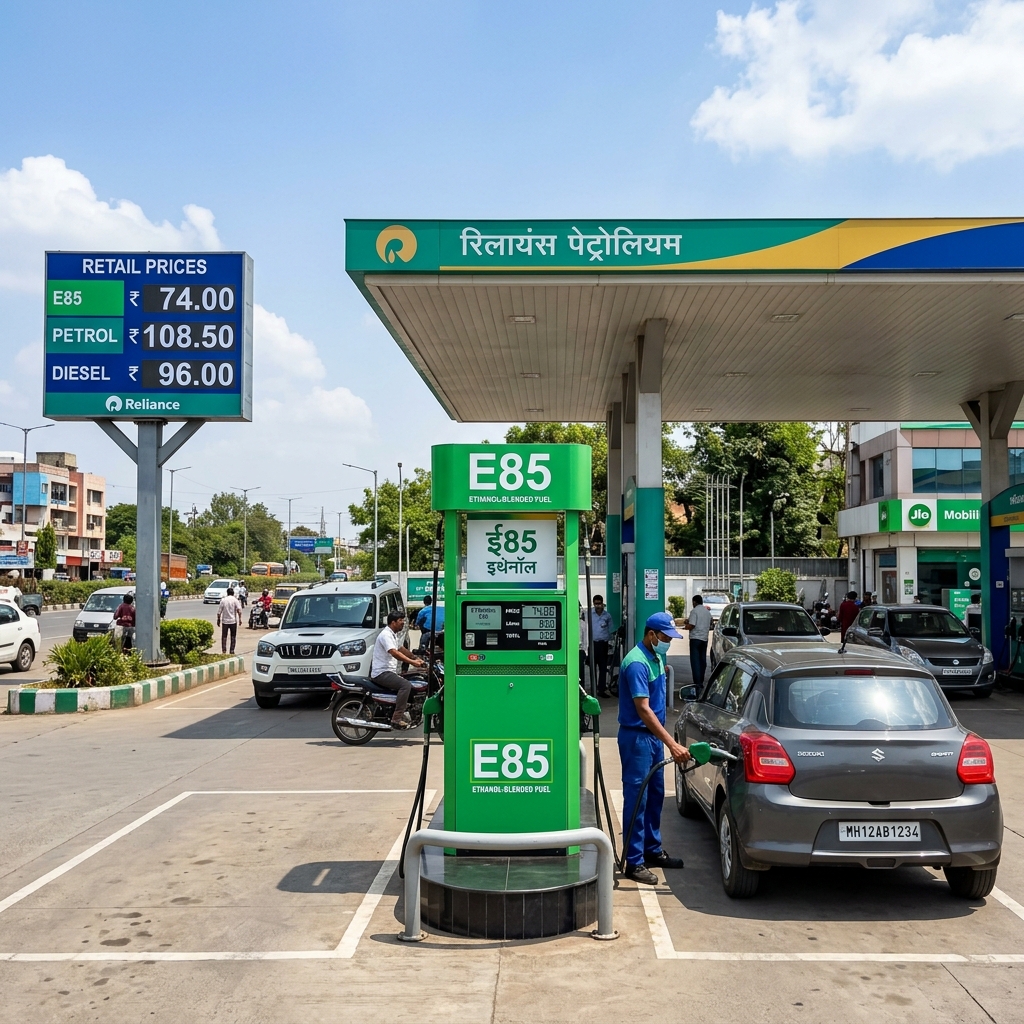
E85 is dispensed at regular, accessible public fuel stations using standard dispensing pumps. It requires absolutely no special handling, specialized training, or mixing by the consumer beyond ensuring their specific vehicle features a flex-fuel badge on the tailgate or is explicitly rated as an FFV in the owner's manual.
Myth 9: Food Prices Will Skyrocket Because of Ethanol Production
The Myth: The "food versus fuel" debate is arguably the most politically charged, emotionally resonant myth on this list. The argument starkly states that by utilizing massive quantities of crops (like corn, sugarcane, or broken rice) to produce ethanol, we are actively diverting vital food supplies away from populations, causing global food shortages, and relentlessly driving up grocery prices for everyday consumers.
The Reality: The economics of global food pricing are staggeringly complex, but multiple comprehensive economic studies conducted by independent agricultural economists have consistently shown that ethanol production is not the primary driver of retail food prices. In reality, its impact on the grocery bill is relatively minimal compared to vastly more influential factors like global energy costs (which dictate transportation and packaging expenses), severe weather events and climate change, and global supply chain disruptions.
More importantly, the ethanol production process creates highly valuable byproducts that actively support, rather than hinder, the food supply chain. In corn-based ethanol production, only the simple starch is consumed to make the alcohol. The remaining essential nutrients—protein, fat, and fiber—are recovered and concentrated to create Distillers Dried Grains (DDGS), which is a highly nutritious, premium livestock feed. This means the agricultural land is simultaneously, efficiently producing fuel and food for animal agriculture.
Furthermore, the industry is continually evolving beyond traditional food crops. Advanced, second-generation (cellulosic) ethanol utilizes agricultural waste products—such as corn stover, wheat straw, and sugarcane bagasse—which absolutely do not compete with the human food supply at any level. In India specifically, ethanol is increasingly being produced strategically from damaged, spoiled grains that are entirely unfit for human consumption, as well as B-heavy molasses, ensuring that primary, healthy food stocks remain totally secure for the population.
Myth 10: Ethanol Production Consumes More Energy Than It Produces
The Myth: An old, frequently cited academic argument claims that the "Net Energy Balance" (NEB) of ethanol is inherently negative. In simpler terms, critics argue that it takes more total energy (in the form of diesel fuel for agricultural tractors, electricity to run the massive processing plants, and natural gas to synthesize nitrogen fertilizer) to grow, harvest, and refine the crops than the total energy contained in the resulting ethanol product. Therefore, it is a net loss for energy independence.
The Reality: This specific myth was born from early, flawed studies conducted in the 1970s and 1980s when the ethanol industry was in its absolute infancy, technology was rudimentary, and agricultural practices were far less efficient. Today, with the benefit of modern technology, this claim is demonstrably and scientifically false.
According to exhaustive lifecycle analyses by the U.S. Department of Agriculture (USDA) and various global energy research institutes, modern ethanol production boasts a highly positive Net Energy Balance. Current, rigorously verified data indicates that for every single unit of fossil energy invested in the production of modern grain ethanol, it yields between 2.5 to 3.0 units of clean, renewable energy.
The numbers are even more impressive for other feedstocks. For cellulosic ethanol and sugarcane-derived ethanol (which is widely used in Brazil and represents a massive growth vector in India), this ratio can climb to an astonishing 8 to 10 units of renewable energy produced for every 1 unit of fossil energy consumed. Continuous advancements in agricultural crop yields, vastly more efficient biorefinery distillation processes, and the increasing utilization of waste biomass to generate electricity to power the distillation plants themselves have dramatically, irreversibly improved the energy efficiency of ethanol production. It is undeniably, mathematically a net-positive energy source.
---
Conclusion: Embracing the Flex Fuel Future
As we collectively navigate the critical global transition toward more sustainable, environmentally responsible, and economically secure transportation solutions, it is absolutely crucial to base our personal and policy decisions on hard facts, rigorous science, and current engineering realities, rather than clinging to outdated myths and pervasive misconceptions.
Flex fuels like E85 offer a robust, immediately deployable, and highly practical bridge to a cleaner automotive future. They provide everyday drivers with the unprecedented flexibility to choose a domestically produced, renewable energy source that tangibly lowers greenhouse gas emissions, significantly cleans up urban air quality, and deeply supports the domestic agricultural economy—all without forcing consumers to sacrifice vehicle performance, range anxiety, or mechanical reliability.
Modern Flex Fuel Vehicles are true marvels of contemporary automotive engineering, designed explicitly from the ground up to seamlessly harness the high-octane, clean-burning properties of ethanol blends. While switching to E85 may alter your volumetric fuel economy slightly, its highly competitive pricing structure often offsets the difference entirely, making it a surprisingly smart economic choice for millions of drivers worldwide.
As ethanol production infrastructure continues to expand aggressively globally, and particularly in forward-thinking nations like India, deeply understanding the realities of flex fuel empowers consumers to confidently take full advantage of this transformative technology. By meticulously busting these myths and spreading factual awareness, we can effectively clear the road ahead for a significantly wider adoption of alternative fuels, accelerating our collective drive toward a greener, cleaner, and immensely more energy-independent tomorrow.