The automotive landscape in India is undergoing a monumental shift. As the nation grapples with the dual challenges of environmental pollution and a heavy reliance on imported crude oil, the government and the automotive industry are exploring sustainable and economically viable alternatives. Among these, flex-fuel vehicles (FFVs) have emerged as a highly promising solution. But for the average Indian consumer, purchasing a car is not just about mobility; it is an investment. A critical aspect of this investment is the vehicle's residual or resale value.
In this comprehensive guide, we delve deep into the dynamics of the resale value of flex-fuel cars in India. We will explore what flex-fuel cars are, how they are positioned in the Indian market, and the myriad of factors that will ultimately determine how well they hold their value in the second-hand car market.
Understanding Flex-Fuel Vehicles (FFVs)
Before we analyze their resale value, it is essential to understand what makes flex-fuel cars different from standard internal combustion engine (ICE) vehicles. A flex-fuel vehicle is equipped with an internal combustion engine designed to run on more than one type of fuel. Usually, this means the vehicle can operate on a blend of gasoline (petrol) and ethanol.
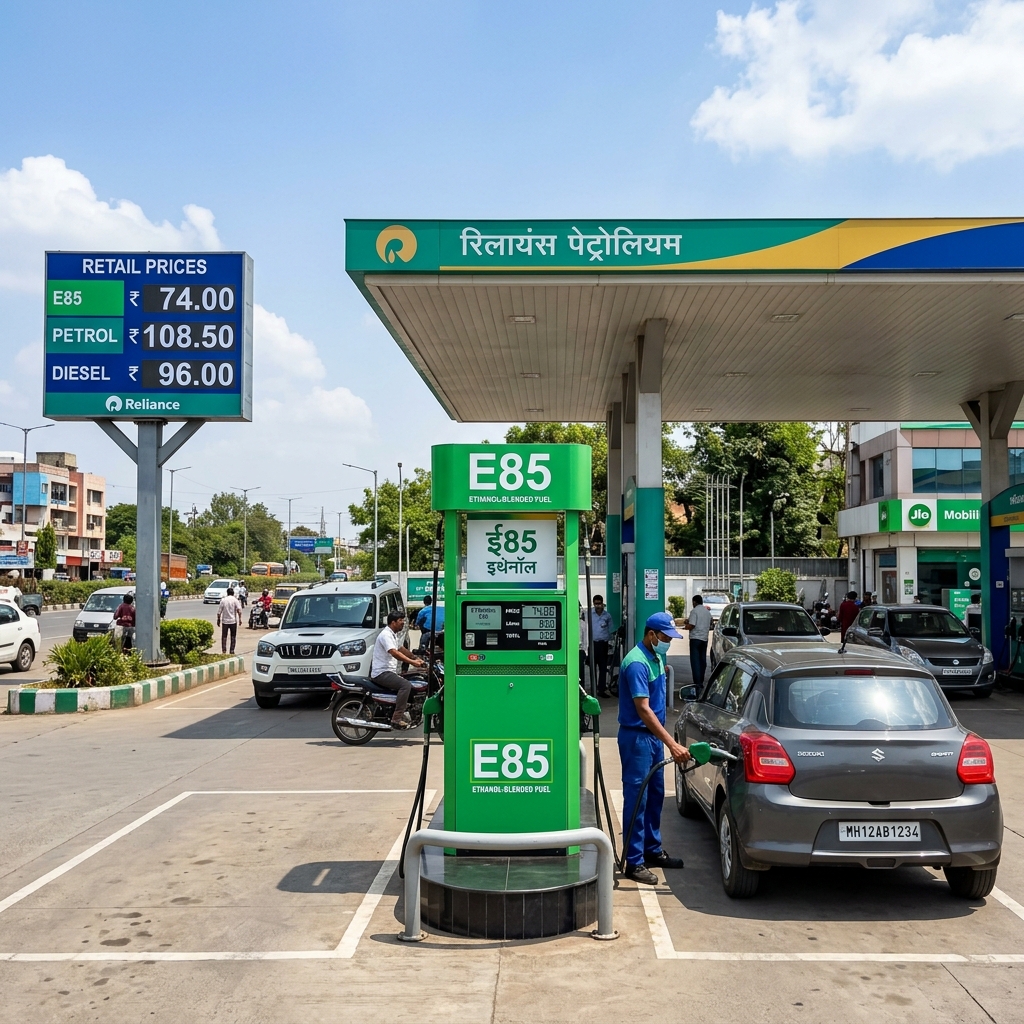
In the context of the Indian market, this generally refers to vehicles that can run on any blend of petrol and ethanol, from pure petrol up to E85 (a mixture of 85% ethanol and 15% petrol), or in some specific models, even E100 (100% ethanol). To accommodate the corrosive nature of ethanol and its different combustion characteristics, these vehicles are built with specially modified engine components, robust fuel lines, specialized sensors, and advanced Engine Control Units (ECUs) that automatically adjust the fuel-air mixture and spark timing based on the exact ethanol blend detected in the tank.
The Indian Context: The Push for Ethanol Blending
India's strategy regarding flex-fuel cars is heavily intertwined with the government's Ethanol Blended Petrol (EBP) program. The primary goals of this program are to reduce carbon emissions, support the domestic agricultural sector (sugar cane and grain farmers who produce the feedstock for ethanol), and, most importantly, cut down the massive import bill for crude oil.
India has aggressively fast-tracked its ethanol blending targets. The target of achieving 20% ethanol blending (E20) was brought forward to 2025-2026. This aggressive push means that the infrastructure for ethanol distribution is expanding, and automotive manufacturers are compelled to introduce E20-compliant and eventually full flex-fuel vehicles. This strong governmental backing plays a pivotal role in shaping consumer confidence, which in turn directly impacts the resale value of these vehicles.
Core Factors Influencing the Resale Value of Cars in India
The resale value of any car in India is governed by a well-established set of rules and consumer perceptions. When we introduce a new technology like flex-fuel into the mix, these traditional factors interact with new variables. Here are the core factors that generally dictate resale value:
1. Brand Perception and Trust: In India, certain brands like Maruti Suzuki, Hyundai, and Toyota command a premium in the used car market due to a long-standing reputation for reliability and low running costs. 2. Fuel Efficiency (Mileage): The quintessential Indian automotive question, "Kitna deti hai?" (What is the mileage?), remains a dominant factor. Cars with high fuel efficiency retain their value better. 3. Maintenance Costs and Spare Parts: Vehicles that are cheap to maintain and have easily accessible spare parts across the country are highly favored by second-hand buyers. 4. Reliability and Durability: Cars known to easily cross the 1,00,000 km mark without major engine or transmission overhauls fetch higher prices.
How Flex-Fuel Cars Perform Against Resale Value Metrics
Now, let us examine how flex-fuel cars specifically align with these established metrics and what new variables they bring to the equation.
1. The Question of Fuel Efficiency and Running Costs
One of the most complex aspects of flex-fuel cars is their fuel efficiency. Ethanol has a lower energy density than petrol. This means that to travel the same distance, a vehicle will consume a larger volume of ethanol compared to pure petrol. Generally, running on higher blends of ethanol (like E85) will result in a drop in volumetric fuel efficiency (kilometers per liter).
However, this does not necessarily mean higher running costs. The economic viability of flex-fuel cars depends entirely on the price differential between ethanol and petrol. The Indian government has historically kept ethanol prices competitive to encourage its adoption. If the cost of E85 is significantly lower than standard petrol, the cost per kilometer driven could be lower, even with reduced mileage.
Impact on Resale: If the government maintains a favorable pricing policy for ethanol, flex-fuel cars will be perceived as economical to run. This perception will positively impact their resale value. Conversely, if the price gap narrows and running costs become higher than standard petrol cars, their resale value will take a substantial hit, as second-hand buyers are extremely price-sensitive regarding daily running costs.
2. Engine Durability and Long-Term Reliability
Ethanol is corrosive and has a lower lubricity compared to petrol. Furthermore, it absorbs moisture from the air, which can lead to phase separation in the fuel tank if the vehicle is left stationary for long periods.
Manufacturers of true flex-fuel vehicles address these issues by using corrosion-resistant materials for fuel lines, tanks, and engine internals. They also use hardened valves and seats to handle the different combustion characteristics.
Impact on Resale: The long-term reliability of these modified engines in the Indian driving environment (extreme heat, varied traffic conditions, and inconsistent fuel quality) is a critical unknown for many buyers. If early generations of flex-fuel cars prove to be durable and require no more maintenance than their standard ICE counterparts, their resale value will stabilize. However, if reports of premature engine wear, fuel pump failures, or sensor issues become prevalent, the resale value will plummet. Second-hand car buyers avoid vehicles with a reputation for expensive, specialized repairs.
3. Maintenance Costs and Spare Parts Availability
Flex-fuel vehicles, while similar to standard petrol cars, possess specialized components such as ethanol sensors, different fuel injectors, and specifically tuned ECUs.
Impact on Resale: Initially, the availability of these specific spare parts in the aftermarket and with independent mechanics might be limited, forcing owners to rely on more expensive authorized service centers. This potential for higher maintenance costs can deter second-hand buyers. Over time, as FFVs become mainstream, the aftermarket ecosystem will adapt, mitigating this issue. For early adopters, this factor might cause a slightly steeper initial depreciation curve.
4. Infrastructure and Fuel Availability
The utility of a flex-fuel car is inextricably linked to the availability of the fuel. While the government is rapidly expanding the E20 network, the availability of higher blends like E85 is currently very limited and largely confined to pilot projects or specific geographic corridors.
Impact on Resale: A used car buyer looks for convenience. If buying a flex-fuel car means constantly worrying about finding a pump that dispenses the appropriate fuel to realize the car's economic benefits, the buyer will likely opt for a standard petrol or diesel vehicle instead. The resale value of FFVs will directly mirror the expansion and density of the ethanol fuel dispensing network across India. High resale value will only be unlocked when ethanol pumps are as ubiquitous as standard petrol pumps.
5. Government Policies, Subsidies, and Mandates
Government intervention is the biggest catalyst for the FFV market in India. Beyond the blending mandates, the government might introduce incentives to promote the adoption of FFVs. These could include lower GST rates on the vehicles themselves, reduced road tax, or registration fee waivers.
Furthermore, changing emissions regulations play a role. As older diesel and petrol cars face strict deregistration rules (like the 10-year and 15-year rules in Delhi-NCR), buyers are looking for 'future-proof' technologies.
Impact on Resale: If government policies strongly penalize pure fossil-fuel cars while exempting or favoring FFVs, the resale value of FFVs will surge. They will be seen as safer, long-term investments that are immune to sudden regulatory bans. Conversely, if policy support wavers or if electric vehicles (EVs) receive disproportionately higher support, the FFV resale market might struggle to gain traction.
Comparing Resale Values: FFVs vs. EVs vs. Hybrids
To understand the positioning of FFVs in the second-hand market, it is useful to compare them with competing alternative technologies: Electric Vehicles (EVs) and Strong Hybrids.
* FFVs vs. EVs: EVs currently suffer from high initial depreciation due to concerns over battery degradation and the high cost of battery replacement out of warranty. The charging infrastructure, while growing, still induces range anxiety. FFVs offer the familiar refueling experience and do not have the massive single-point failure risk of an expensive battery pack. Consequently, once established, FFVs might enjoy a more stable and predictable depreciation curve compared to EVs, appealing to buyers who want greener options without the range and battery anxiety. * FFVs vs. Strong Hybrids: Strong hybrids are currently enjoying excellent resale value in India. They offer exceptional fuel efficiency (addressing the primary Indian consumer concern) without any range anxiety or need for new fueling infrastructure. They use standard petrol. FFVs will have to compete hard against hybrids. If ethanol fuel is not significantly cheaper to offset the lower mileage, used car buyers will likely prefer the proven, hassle-free high mileage of a strong hybrid over an FFV.
The Early Adopter Penalty vs. Long-Term Stabilization
The trajectory of FFV resale values will likely follow a distinct timeline:
1. Phase 1: Introduction and Skepticism (Present to Near Future): As the first mass-market FFVs are launched, there will be hesitation in the used car market. Buyers will wait and watch to see real-world performance, reliability, and the expansion of the fuel network. During this phase, depreciation might be slightly higher than standard petrol cars due to the perceived risk of new technology and limited fuel availability. 2. Phase 2: Mainstream Acceptance and Infrastructure Growth: As E20 becomes the standard and E85 pumps become common in urban and semi-urban areas, and as the initial batch of cars proves their reliability, confidence will build. During this phase, the resale value of FFVs will likely align with, or perhaps even slightly exceed, their standard petrol counterparts, driven by lower running costs (assuming favorable ethanol pricing). 3. Phase 3: Maturity and Regulatory Favor: In the long term, if stringent emissions regulations make owning pure ICE vehicles difficult, FFVs (along with EVs and Hybrids) will become the preferred choice in the used market, ensuring strong residual values.
Tips for FFV Owners to Maximize Resale Value
If you are an early adopter of a flex-fuel vehicle in India, there are specific steps you can take to ensure your car retains maximum value when it's time to sell:
1. Maintain Impeccable Service Records
Because buyers may be skeptical about the new engine technology, a complete, authorized service history is non-negotiable. It proves that the specialized components have been maintained according to the manufacturer's strict guidelines.2. Follow Fueling Recommendations Strictly
Use the correct fuel blends as recommended by the manufacturer. If you are forced to park the car for extended periods, follow the manufacturer's advice regarding the fuel tank (whether to leave it full or empty) to prevent phase separation and moisture damage caused by ethanol.3. Educate the Buyer
When selling, be prepared to educate the prospective buyer. Many buyers might confuse a factory-fitted flex-fuel car with an aftermarket CNG conversion. Explain the manufacturer's engineering, the benefits of the technology, and demonstrate the cost savings if ethanol pricing is favorable in your region.4. Highlight the "Future-Proof" Aspect
Emphasize to the buyer that the vehicle is compliant with the government's future fuel mandates, meaning they are less likely to face sudden bans or regulatory hurdles compared to older, pure fossil-fuel vehicles.The Verdict on Flex Fuel Car Resale Value
Predicting the exact resale value of flex-fuel cars in India involves navigating a complex matrix of government policy, infrastructure development, and consumer psychology.
Unlike standard vehicles where resale is largely determined by brand and mileage, the FFV's value is uniquely tied to external macro-economic factors—specifically, the national pricing strategy for ethanol and the speed of pump deployment.
If the Indian government successfully executes its vision—ensuring that ethanol is widely available and priced attractively enough to offset its lower energy density—flex-fuel cars are poised to become highly sought after in the used car market. They offer a pragmatic bridge between heavily polluting fossil fuels and pure electric vehicles, providing a greener, potentially cheaper running alternative without requiring a complete overhaul of driving and refueling habits.
For now, the resale value remains a space of cautious optimism. The automotive industry and consumers alike are watching the rollout of the EBP program closely. As the infrastructure matures and the technology proves its mettle on the harsh Indian roads, flex-fuel vehicles have the strong potential to command robust and competitive resale values in the years to come, securing their place in the future of Indian mobility.