India stands at the precipice of a monumental shift in its mobility and energy sectors, driven by the relentless pursuit of sustainability, economic resilience, and self-reliance. At the forefront of this transformative journey is the Union Minister for Road Transport and Highways, Nitin Gadkari. Known for his audacious goals and infrastructure marvels, Gadkari has championed a vision that could fundamentally alter the Indian automotive landscape: the mass adoption of E100 vehicles.
E100, which denotes fuel comprised of 100% ethanol, represents a radical departure from traditional fossil fuels like petrol and diesel. It is not merely a technological upgrade but a comprehensive, multi-dimensional socio-economic strategy. This strategy is explicitly aimed at reducing India's massive crude oil import bill, mitigating alarming urban pollution levels, and revitalizing the agrarian economy by empowering farmers. This extensive exploration delves deep into the multi-faceted vision of Nitin Gadkari regarding E100 vehicles. We will examine the technological requirements, the profound economic ramifications, the environmental benefits, the global context, and the substantial logistical and ecological challenges that lie ahead in realizing this green dream.
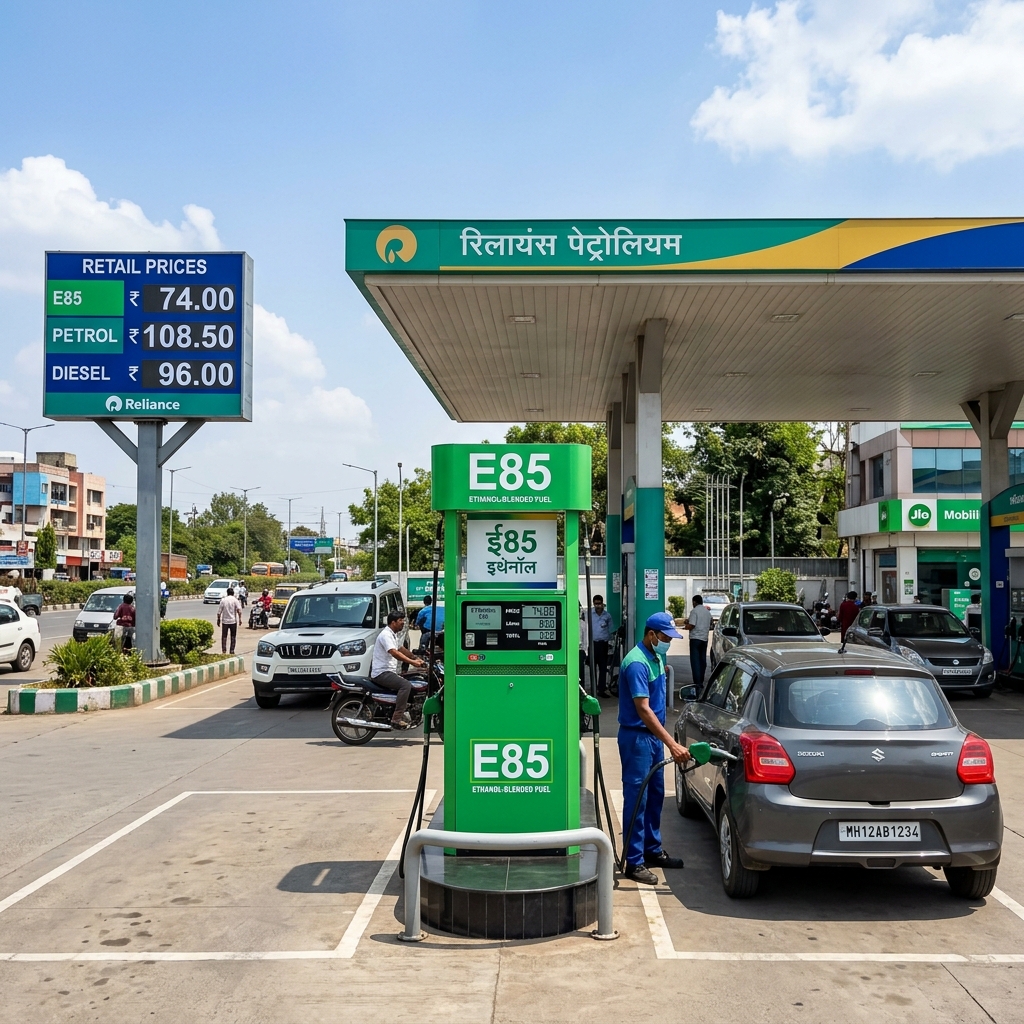
Understanding the E100 Paradigm: Moving Beyond Fossil Fuels
To fully grasp the magnitude and implications of Gadkari's vision, one must first clearly understand what E100 entails and how it differs from the current automotive ecosystem. Traditional internal combustion engine (ICE) vehicles are designed to run on refined petroleum products—gasoline (petrol) or diesel. Over the past decade, the Indian government has aggressively pursued an ethanol blending program. We have successfully moved past E10 (10% ethanol mixed with 90% petrol) and are rapidly approaching the nationwide rollout of E20 (20% ethanol blending) well ahead of the original deadlines.
E100, however, is the ultimate, uncompromising goal. It signifies a fuel ecosystem where vehicles operate entirely on pure ethanol. Ethanol (ethyl alcohol, C2H5OH) is a renewable, plant-based biofuel. In the Indian context, it is produced primarily through the fermentation of sugars found in agricultural products such as sugarcane (via molasses or direct juice), maize, and broken rice.
The Mechanism of Flex-Fuel Engines (FFVs)
For a vehicle to seamlessly run on E100, or any varying blend of ethanol and petrol interchangeably, it requires a specific type of internal combustion engine known as a Flex-Fuel Engine. These Flexible Fuel Vehicles (FFVs) represent a crucial bridge technology. They are engineered with advanced sensors that detect the exact proportion of ethanol in the fuel tank in real-time. Based on this data, the Engine Control Unit (ECU) automatically adjusts the ignition timing and the fuel-air mixture to ensure optimal combustion and performance.
While such technology is ubiquitous in countries like Brazil, the introduction of flex-fuel technology in India marks a paradigm shift. It requires significant Research and Development (R&D) investments from Original Equipment Manufacturers (OEMs), supply chain overhauls, and rigorous testing for Indian driving conditions. Gadkari's push for E100 is not a distant utopian ideal; it is a highly pragmatic strategy tailored to leverage India's unique agricultural strengths to solve its crippling energy dependency crisis.
The Economic Imperative: From Net Importer to Energy Independent
The economic arguments underpinning the E100 vision are compelling and arguably the most potent drivers of this national policy.
Slashing the Crippling Crude Oil Import Bill
India is currently the third-largest consumer of crude oil globally, importing over 80% to 85% of its petroleum requirements. This massive, unyielding dependency creates a severe drain on foreign exchange reserves. More critically, it leaves the Indian economy highly vulnerable to global geopolitical shocks, supply chain disruptions, and the unpredictable fluctuations of international oil prices. Every time global crude prices spike due to conflicts or production cuts, inflation in India inevitably follows suit. This imported inflation impacts everything from the cost of transporting essential goods to the daily commute of the average citizen.
Nitin Gadkari has repeatedly and forcefully emphasized that transitioning to E100 and maximizing ethanol blending can save the national exchequer lakhs of crores of rupees annually. By substituting expensive, imported petrol with domestically produced, renewable ethanol, India can significantly insulate its economy from external volatilities. The immense wealth that currently flows out of the country to oil-producing nations would instead remain within the domestic economy, driving internal growth, infrastructure development, and social welfare programs.
Realizing the Vision of Atmanirbhar Bharat (Self-Reliant India)
The E100 initiative is perfectly aligned with the Prime Minister's overarching vision of 'Atmanirbhar Bharat'. True national self-reliance is impossible without energy independence. By developing a robust, scalable biofuel ecosystem, India transitions from being a passive, vulnerable consumer of global energy to a self-sustaining producer. This sovereignty extends far beyond mere economics; it is a matter of strategic national security. A nation that produces its own fuel is inherently more resilient and capable of charting its own geopolitical course without being beholden to energy cartels.
Transforming the Agrarian Economy: From Annadata to Urjadata
Perhaps the most socially transformative and emotionally resonant aspect of Gadkari's E100 vision is its potential to revolutionize the Indian agricultural sector. The minister frequently uses the evocative phrase of transitioning farmers from being merely 'Annadata' (providers of food) to becoming 'Urjadata' (providers of energy).
Creating a Massive, Guaranteed Market for Agricultural Produce
Historically, ethanol production in India has relied almost entirely on sugarcane molasses, a byproduct of sugar manufacturing. However, to meet the colossal demand required for a nationwide E100 transition, the feedstock base is being rapidly and aggressively diversified. The government has strategically permitted and incentivized the production of ethanol directly from sugarcane juice, B-heavy molasses, and crucially, from damaged food grains (like broken rice that is unfit for human consumption) and maize.
This policy shift creates a guaranteed, massive alternative market for Indian farmers. Indian agriculture often suffers from the paradox of plenty; in years of surplus production, bumper crops often lead to a crash in market prices, causing immense financial distress and tragedy for farmers. Ethanol production acts as a crucial, structural buffer. Excess sugarcane or surplus grains can be systematically diverted to distilleries. This ensures that farmers receive fair, stable, and remunerative prices for their produce, breaking the cycle of debt and despair.
Boosting Rural Incomes, Employment, and Decentralized Industrialization
The establishment of modern ethanol distilleries, particularly in rural and semi-urban agricultural heartlands, generates substantial local employment. From the harvesting and transportation of feedstock to the skilled operation of the plants and the complex logistics of distributing the final fuel, the entire supply chain requires a massive workforce.
This localized, agro-based industrialization can significantly boost rural incomes. By creating lucrative economic opportunities in villages and small towns, it can help curb the relentless distress migration of rural youth to already overcrowded, infrastructure-starved megacities, leading to more equitable and balanced national development.
Furthermore, the advancement of 2G (Second Generation) ethanol technology—which utilizes agricultural waste like rice stubble, wheat straw, and bagasse—solves another critical national problem. Instead of resorting to the environmentally disastrous practice of burning crop residue (a major cause of severe, hazardous air pollution in northern India during the winter months), farmers can sell this 'waste' to biomass plants. This transforms a liability into an asset, generating additional income while directly mitigating an annual public health emergency.
The Environmental Crusade: Steering Towards a Greener, Cleaner Future
While the economic and agricultural benefits are profound and immediate, the long-term environmental necessity of the E100 vision cannot be overstated. India is home to several of the world's most polluted cities, and vehicular tailpipe emissions are a primary, undisputed contributor to urban air toxicity.
Slashing Greenhouse Gas Emissions and Meeting Climate Goals
Ethanol is inherently a cleaner-burning fuel compared to conventional petrol and diesel. Its chemical structure contains oxygen, which results in a much more complete and efficient combustion process within the engine. This directly translates to a significant reduction in tailpipe emissions of harmful, localized pollutants like carbon monoxide (CO) and unburned toxic hydrocarbons.
More importantly, on a macroeconomic scale, ethanol is considered a largely carbon-neutral fuel over its entire lifecycle. The carbon dioxide emitted when E100 is burned in a vehicle's engine is roughly equivalent to the carbon dioxide absorbed by the feedstock crops (such as sugarcane or corn) from the atmosphere during their growth phase through the process of photosynthesis. Widespread adoption of E100 would result in a massive, structural reduction in India's overall carbon footprint. This transition plays a crucial role in meeting the nation's ambitious climate commitments made at global platforms like COP26 and COP28, specifically the critical target of achieving net-zero emissions by the year 2070.
Tangible Improvements in Urban Air Quality and Public Health
The most immediate, tangible benefit for the average Indian citizen would be significantly cleaner, safer air. By systematically phasing out millions of highly polluting older ICE vehicles and replacing them with cleaner E100 or flex-fuel vehicles, the concentration of dangerous particulate matter (PM2.5 and PM10) and nitrogen oxides (NOx) in choked urban centers would drop dramatically. This has profound implications for public health, potentially reducing the massive burden of respiratory diseases, cardiovascular issues, and improving the overall quality of life and life expectancy for millions of urban dwellers.
The Role of the Automobile Industry: Meeting the Flex-Fuel Challenge
The transition to an E100 ecosystem is practically impossible without the enthusiastic participation, rapid innovation, and substantial investment of the automobile industry. Nitin Gadkari has been relentless in his engagement with OEMs, using a mix of persuasion, policy incentives, and regulatory pressure to accelerate the development and rollout of Flex-Fuel Vehicles.
Technical Adaptations and R&D Requirements
Building a reliable flex-fuel engine is not simply a matter of pouring ethanol into a standard petrol tank. Ethanol is hygroscopic (it absorbs water) and is highly corrosive to certain metals and rubbers traditionally used in automotive manufacturing.
Therefore, critical components of the vehicle's fuel delivery system—including the inner lining of the fuel tank, fuel lines, high-pressure pumps, and fuel injectors—must be re-engineered using special corrosion-resistant materials (like high-grade stainless steel, teflon, or specially formulated coated plastics). Furthermore, the Engine Control Unit (ECU) requires advanced, sophisticated software algorithms and robust sensors capable of detecting the precise ethanol blend ratio in real-time, adjusting the spark timing and fuel injection parameters on the fly to ensure optimal performance, fuel efficiency, and prevent engine knocking or long-term damage.
The Automakers' Response and the Global Context
Initially, the Indian auto industry expressed valid reservations. They cited the high, immediate costs of R&D, the necessity for clear, unwavering long-term policy roadmaps, and the classic "chicken-and-egg" problem regarding the lack of existing, widespread ethanol dispensing infrastructure. However, under Gadkari's persistent urging and clear policy signals, the industry is pivoting rapidly.
Global majors with experience in markets like Brazil (where flex-fuel is the norm) have an advantage. Companies like Toyota have already showcased advanced prototype flex-fuel vehicles in India, such as the flex-fuel Corolla Altis hybrid. However, the true revolution must happen in the two-wheeler segment, which completely dominates the Indian mobility landscape. Indian two-wheeler giants are making significant strides. TVS Motors pioneered this by launching the Apache RTR 200 Fi E100 several years ago. Bajaj Auto and Hero MotoCorp, realizing the inevitable shift, are actively developing robust flex-fuel platforms. Gadkari's democratic vision mandates that the option to run on E100 should not be an expensive luxury restricted to high-end sedans, but a standard, affordable feature available to the common man commuting daily on a motorcycle or scooter.
Infrastructure and Ecosystem Development: Bridging the Missing Link
The most brilliant vehicle engine technology is entirely useless without the ubiquitous infrastructure required to fuel it. A significant, formidable hurdle in realizing the E100 vision is the establishment of a robust, nationwide supply chain, storage, and dispensing network.
Dispensing Stations and Complex Logistics
Currently, in the lower blend mandates, ethanol is blended with petrol at massive oil marketing company (OMC) depots and then transported as a blended fuel to retail stations. For a pure E100 ecosystem, dedicated ethanol storage tanks and specialized dispensing pumps must be installed across the country's vast, sprawling network of tens of thousands of fuel stations. This requires staggering capital expenditure from OMCs like Indian Oil Corporation (IOCL), Bharat Petroleum (BPCL), and Hindustan Petroleum (HPCL).
Furthermore, the logistics of transporting pure ethanol pose unique, complex challenges. Unlike traditional petroleum products which are often transported efficiently through vast, underground pipeline networks, ethanol's strong affinity for water and its corrosive nature make standard pipeline transport highly problematic and risk-prone. The system currently relies heavily on dedicated fleets of specialized tanker trucks and rail wagons. Scaling this complex logistics network to seamlessly handle the massive volumes required for widespread, uninterrupted E100 adoption is an infrastructural undertaking of monumental proportions.
Exponentially Scaling Production Capacity
To adequately fuel a nation as large and populous as India entirely, or even substantially, on E100, the production capacity of domestic ethanol distilleries must increase exponentially. While the government has introduced highly attractive financial schemes, including interest subventions and fast-tracked environmental clearances to encourage the setting up of new mega-distilleries, the pace of capacity addition is a constant race against surging demand. This requires sustained private sector investment and the streamlining of complex regulatory approvals at the state level to ensure plants come online swiftly.
Navigating the Challenges, Roadblocks, and Criticisms
While Nitin Gadkari's E100 vision is undeniably inspiring, it is not without its critics and formidable, deeply complex challenges that require careful, nuanced navigation to avoid unintended catastrophic consequences.
The Contentious "Food vs. Fuel" Debate
The most persistent, globally recognized criticism leveled against large-scale biofuel initiatives is the "food vs. fuel" debate. Critics argue that if massive tracts of fertile agricultural land are diverted away from essential food crops to grow highly lucrative cash crops like sugarcane or maize explicitly for fuel production, it could lead to severe shortages of food crops. This could drive up food inflation and directly threaten food security in a populous, developing nation like India.
The government counters this valid concern by emphasizing regulations that prioritize the use of surplus crops, heavily damaged grains that are deemed entirely unfit for human consumption, and heavily promoting the rapid commercialization of 2G ethanol derived from agricultural waste. However, ensuring absolute strict adherence to these regulatory boundaries on the ground, and preventing the subtle, market-driven displacement of essential food crops by lucrative fuel crops, requires highly sophisticated, real-time agricultural monitoring and dynamic policymaking.
The Ecological Impact: Water Intensity of Feedstock
Sugarcane, currently the primary source of ethanol in India, is a notoriously highly water-intensive crop. Encouraging the widespread, unbridled cultivation of sugarcane in regions already facing severe water scarcity, drought conditions, or rapidly depleting groundwater tables (such as specific dry regions of Maharashtra, Karnataka, and Uttar Pradesh) could lead to severe, irreversible ecological consequences. A truly sustainable E100 vision must heavily prioritize research into less water-intensive feedstocks like specialized varieties of maize, sweet sorghum, or rapidly advance the commercial viability and scalability of 2G and 3G (algae-based) ethanol technologies that do not stress freshwater resources.
The EV Conundrum: Competition or Strategic Coexistence?
Gadkari's aggressive push for E100 occurs concurrently with the government's other massive push for battery Electric Vehicles (EVs). Some industry observers and environmental purists view this as a mixed signal or a dilution of effort. If the ultimate, long-term goal is absolute zero tailpipe emissions, shouldn't all national resources and subsidies be directed exclusively towards EVs?
The pragmatic, realistic view, often articulated by Gadkari, is that India's mobility needs, geographic vastness, and economic realities are far too diverse to rely exclusively on a single "silver bullet" technology. EVs face immense, persistent hurdles regarding the agonizingly slow rollout of charging infrastructure in rural and remote areas, high upfront battery replacement costs, and range anxiety, particularly for long-haul heavy commercial vehicles.
E100 and flex-fuel technology provide a crucial, immediate, and economically viable complementary pathway to decarbonization. They utilize the massive existing internal combustion engine manufacturing infrastructure and supply chains, thereby saving millions of jobs in the traditional auto sector from sudden obsolescence, while still achieving substantial environmental benefits today. It is deliberately not an 'either-or' scenario, but a highly strategic policy of coexistence and technological pluralism.
The Road Ahead: Long-Term Policy Support and Future Outlook
The successful realization of the ambitious E100 dream hinges entirely on consistent, unwavering, long-term policy support that outlasts political cycles. The government has already taken several aggressive, positive steps: * Massive GST Reduction: The Goods and Services Tax (GST) on ethanol intended specifically for blending has been drastically slashed from 18% to just 5%, making it highly economically viable. * Lucrative Administered Pricing Mechanism: The government guarantees highly lucrative, fixed procurement prices for ethanol derived from various feedstocks, providing essential, long-term financial security to distilleries and the farmers supplying them. * Aggressive Target Advancement: The national target for achieving 20% ethanol blending (E20) was ambitiously brought forward by five years, from 2030 to 2025, demonstrating unprecedented political will and execution speed.
Conclusion: A Masterclass in Holistic Policymaking
Nitin Gadkari's vision for E100 vehicles in India is a masterclass in complex, holistic national policymaking. It boldly attempts to solve multiple, seemingly disparate national crises—chronic energy insecurity, persistent agricultural distress, and severe environmental degradation—with a single, deeply integrated socio-economic approach.
The ultimate success of this grand vision will depend heavily on seamless, unbureaucratic coordination between various key ministries (Petroleum and Natural Gas, Agriculture, Road Transport), the enthusiastic and heavily invested participation of the automobile industry, massive private sector capital deployment in infrastructure, and the careful, scientific management of ecological and agricultural constraints.
If successfully executed, the E100 initiative will not merely change the liquid that fuels Indian vehicles; it will fundamentally transform the architecture of the Indian economy. It promises to create a cleaner, richer, more equitable, and truly self-reliant nation. The journey is undeniably complex and fraught with monumental challenges, but the destination—a green, thriving, energy-independent India—makes the aggressive pursuit of the E100 vision one of the most critical and defining national endeavors of our time.