As the automotive world shifts toward more sustainable and high-performance fuel alternatives, E85 ethanol has emerged as a popular choice among car enthusiasts and eco-conscious drivers alike. With its high octane rating and renewable origins, E85 offers significant benefits. However, a common question arises for those who install aftermarket flex-fuel conversion kits: Can you mix E85 and regular petrol in a conversion kit?
The short answer is yes, absolutely—provided you have a true flex-fuel conversion kit equipped with an ethanol sensor. But understanding how* it works, *why it's safe, and the best practices for mixing these fuels is crucial for maintaining engine health and maximizing performance.
In this comprehensive 2500-word guide, we will dive deep into the science behind E85, the mechanics of conversion kits, the effects of mixing ethanol with standard gasoline, and everything you need to know to run your vehicle efficiently and safely.
---
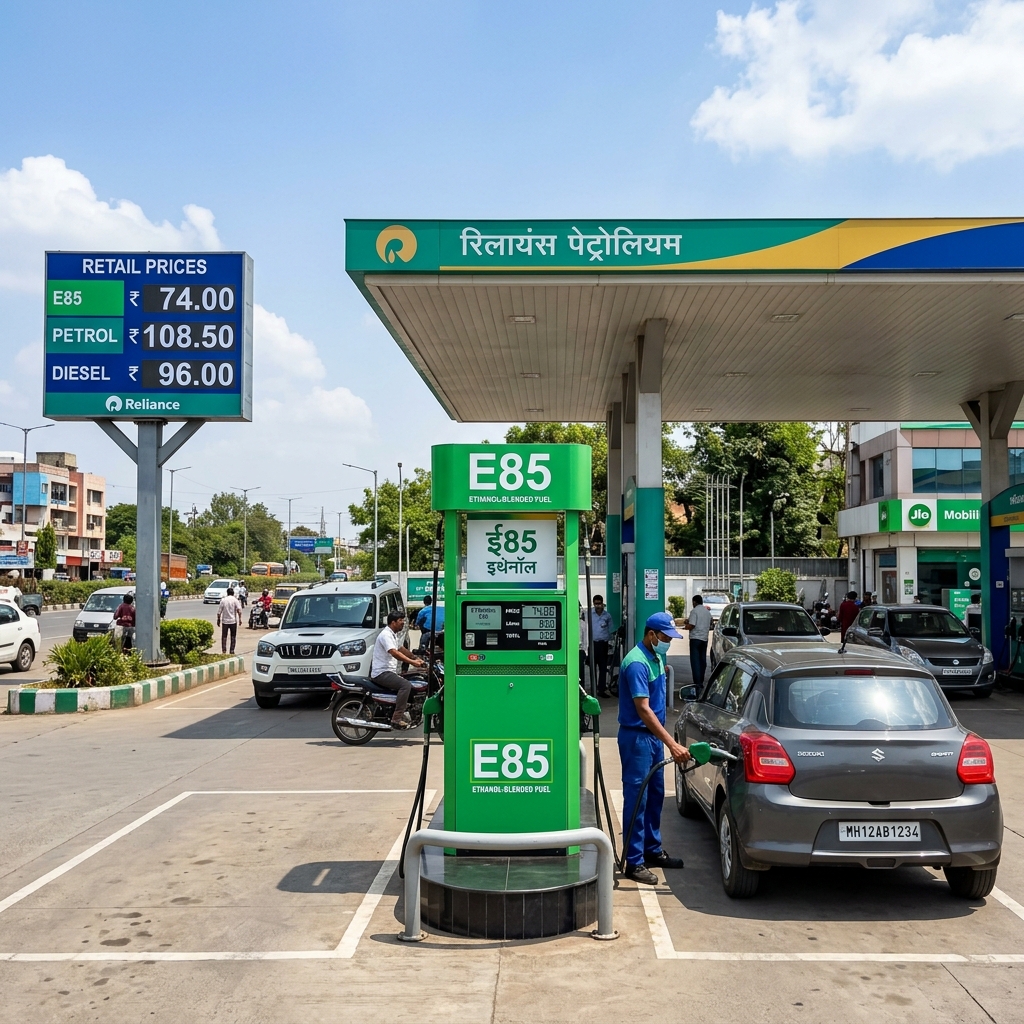
1. Understanding the Fuels: What Are E85 and Regular Petrol?
Before discussing how these fuels mix, it is essential to understand their individual properties.
What is Regular Petrol (Gasoline)?
Regular petrol, or gasoline, is a petroleum-derived liquid primarily composed of organic compounds obtained by the fractional distillation of petroleum. It is heavily refined and blended with various additives to improve stability, prevent engine knocking, and reduce carbon deposits.
In most parts of the world, standard pump petrol is rated by its octane number (e.g., 87, 89, 91, or 93 AKI in the US, or 91, 95, 98 RON in Europe/Asia). Higher octane petrol can withstand more compression before detonating, which prevents engine knocking. Modern gasoline often contains up to 10% ethanol (E10) as a government-mandated oxygenate to reduce emissions.
What is E85?
E85 is a biofuel blend consisting of up to 85% denatured ethanol and 15% gasoline (or other hydrocarbon blends). Ethanol is a renewable alcohol fuel made from plant materials such as corn, sugarcane, or grasses.
The most notable characteristic of E85 is its incredibly high octane rating—typically around 100 to 105. This makes it highly desirable for high-performance and forced-induction (turbocharged or supercharged) engines, as it allows for more aggressive ignition timing and higher boost pressures without the risk of pre-ignition (engine knock).
Additionally, E85 burns cleaner and cooler than standard gasoline, reducing the overall thermal load on the engine components.
---
2. What is an E85 Conversion Kit?
An E85 conversion kit, often referred to as a flex-fuel kit, is an aftermarket upgrade that allows a standard petrol-powered vehicle to run on E85, regular petrol, or any mixture of the two.
Types of Conversion Kits
Not all E85 kits are created equal. Broadly speaking, there are two main types:
#### A. Static E85 Tunes (Not True Flex-Fuel)
In a static tune setup, the vehicle's Engine Control Unit (ECU) is reprogrammed specifically to run on E85. While this allows the car to utilize the high octane of ethanol, it completely removes the ability to run regular petrol safely. If you flash your ECU for a strict E85 tune, you cannot mix E85 and petrol. Doing so will cause the engine to run excessively lean, leading to catastrophic engine failure.
#### B. True Flex-Fuel Conversion Kits
A true flex-fuel kit is a dynamic system. These kits are designed to monitor the exact ethanol content in the fuel lines in real-time. This is the only type of kit that allows for the mixing of E85 and regular petrol.
How a True Flex-Fuel Kit Works
The magic of a true flex-fuel conversion kit lies in a small but critical component: the Flex-Fuel Sensor (or Ethanol Content Analyzer).
1. The Sensor: Installed in the fuel return line or feed line, this sensor measures the dielectric constant of the fuel passing through it. Since ethanol and gasoline have different electrical properties, the sensor can accurately determine the exact percentage of ethanol in the fuel mixture, ranging from 0% to 100%. 2. Data Transmission: The sensor sends an electrical signal (usually a pulse-width modulated frequency) to the flex-fuel module or directly to a compatible standalone ECU. 3. Dynamic Adjustments: Upon receiving the ethanol content data, the ECU dynamically adjusts three critical engine parameters: - Fuel Injector Pulse Width (Fuel Volume): Ethanol has roughly 30% less energy density than gasoline. Therefore, the engine needs to inject more fuel when running E85. The ECU increases fuel flow as ethanol content rises. - Ignition Timing: Because E85 resists knocking much better than petrol, the ECU can advance the ignition timing for better performance as the ethanol percentage increases. - Boost Targets: On turbocharged cars, the ECU may allow for higher boost pressures safely when a high ethanol content is detected.
Because these adjustments happen continuously and in real-time, you can mix E85 and standard petrol in any ratio, and the engine will seamlessly adapt.
---
3. The Science of Mixing E85 and Petrol
When you pump E85 into a tank that still has regular petrol in it, the two liquids mix readily. Ethanol and gasoline are miscible, meaning they dissolve into one another completely, forming a homogeneous blend.
The Resulting Blend (E-Blends)
When you mix the two, you create a custom ethanol blend, often referred to by the letter 'E' followed by the ethanol percentage. For example: - E30: 30% Ethanol, 70% Petrol - E50: 50% Ethanol, 50% Petrol - E70: 70% Ethanol, 30% Petrol
Because standard E85 from the pump can vary in actual ethanol content (often ranging from 51% to 85% depending on the season and geographical location), the fuel in your tank is rarely exactly E85 or exactly E10. It is a constantly shifting fluid dynamic.
Octane Scaling
As you mix E85 with regular petrol, the octane rating of the resulting mixture scales non-linearly. The most significant gains in octane happen in the lower percentages of ethanol.
For instance, mixing 91 octane petrol with E85 to achieve an E30 blend often results in an effective octane rating of around 96-98. This is why many tuning enthusiasts specifically target E30 or E50 blends; they reap the majority of the octane benefits without maxing out their fuel injectors and fuel pumps, which happens when running full E85.
---
4. Why Would You Mix E85 and Petrol?
If E85 is so great, why would you want to mix it with regular petrol in the first place? There are several highly practical reasons why drivers with conversion kits intentionally or unintentionally mix fuels.
1. Limited E85 Availability
The primary reason drivers mix fuels is infrastructure. While E85 is common in regions like the American Midwest or parts of Brazil, it can be sparse in other areas. If you are on a road trip and running low on fuel, you might not find an E85 station. With a flex-fuel kit, you can simply pull into any standard gas station and fill up with regular unleaded. The sensor will detect the drop in ethanol content, and the ECU will revert to the standard petrol maps.
2. Cold Weather Starting Issues
Ethanol does not vaporize as easily as gasoline at low temperatures. In freezing conditions, a car running on pure E85 (or E85 at the high end of its tolerance, like E90) can struggle to start. It may require extended cranking or fail to start altogether.
By mixing in some regular petrol (effectively lowering the ethanol content to E50 or E60), you significantly improve the cold-start characteristics of the vehicle. In fact, many fuel stations automatically switch to winter-blend E85 (which is actually E51 to E70) during colder months precisely for this reason.
3. Fuel System Limitations
As mentioned earlier, E85 requires roughly 30% more fuel volume to achieve the same stoichiometric air-fuel ratio as standard petrol. Many factory fuel systems (injectors and fuel pumps) cannot handle the flow requirements of full E85, especially when performance modifications have been added.
By mixing fuels to create an E30 or E50 blend, drivers can get a massive boost in octane and performance while keeping their fuel demand within the safe operating limits of their stock or lightly modified fuel injectors.
4. Better Fuel Economy
Because E85 has less energy density than petrol, your miles per gallon (MPG) will drop by roughly 20-30% when running full E85. If you are going on a long highway commute where performance isn't necessary, mixing in standard petrol (or filling up entirely with petrol) will restore your vehicle's original fuel economy, saving you time between fill-ups.
---
5. Potential Risks and Things to Watch Out For
While a proper flex-fuel conversion kit makes mixing E85 and petrol safe and seamless, there are still physical limitations and maintenance considerations to be aware of.
A. Exceeding Fuel System Capacity
The most critical risk is maxing out your fuel pump or fuel injectors. If your conversion kit includes a flex-fuel sensor but does not include upgraded fuel injectors or a higher-flowing fuel pump, you must be extremely cautious.
If you fill up with full E85, the ECU will attempt to inject 30% more fuel. If the injectors physically cannot flow that much, the engine will run lean. Running lean under high load can melt pistons, damage valves, and destroy the engine. This is why many people purposefully mix down to E30 or E50—to stay within the limits of their hardware. Always consult with your tuner regarding the maximum safe ethanol percentage for your specific hardware setup.
B. Fuel Line Degradation
Ethanol is hygroscopic, meaning it absorbs water from the atmosphere. It is also an excellent solvent. Over time, high concentrations of ethanol can dry out and degrade older rubber fuel lines, gaskets, and O-rings not designed for alcohol fuels.
Modern vehicles (typically those built after 2001) are built with synthetic fuel lines (like PTFE) that are highly resistant to ethanol. However, if you are installing a conversion kit on an older classic car, you must upgrade the physical fuel lines to ethanol-safe materials before mixing E85 into the system.
C. The "Goop" Phenomenon (Phase Separation)
If a vehicle sits for an extended period (several months) with a mixture of E85 and petrol in the tank, the fuel can suffer from phase separation. Because ethanol absorbs water, if enough moisture enters the tank, the ethanol-water mixture will separate from the gasoline and sink to the bottom of the tank.
This results in a highly corrosive, watery sludge sitting right at the fuel pump pickup. If you plan to store a vehicle for winter, it is highly recommended to run the tank down, fill it with standard petrol (preferably ethanol-free if available), and add a fuel stabilizer.
D. Oil Degradation
Because you are injecting more fuel, there is a higher chance of fuel bypassing the piston rings and washing into the oil pan (fuel dilution), especially during cold starts. Ethanol can break down engine oil faster than standard petrol. If you frequently run high ethanol mixtures, it is highly recommended to shorten your oil change intervals (e.g., from every 5,000 miles to every 3,000 miles) to ensure the engine remains properly lubricated.
---
6. How to Calculate Your E-Blend When Mixing
While your flex-fuel sensor will tell you the exact ethanol content after the fuels mix, many drivers prefer to target a specific blend (like E50) at the pump. To do this, you need to do a little bit of math based on your tank size, current fuel level, and the ethanol content of the pump E85.
The Variables
- Target Ethanol %: (e.g., 50%) - Total Tank Capacity: (e.g., 15 gallons) - Current Fuel Level: (e.g., 3 gallons remaining) - Current Ethanol % in Tank: (Read from your flex-fuel app or gauge, e.g., 10%) - Pump E85 Content: (Usually tested manually with a test tube, or assumed to be ~70-85%) - Pump Gas Content: (Usually E10, or 10% ethanol)There are many smartphone apps available (like "E85 Mix Calculator") that allow you to plug in these variables. The app will tell you exactly how many gallons of E85 and how many gallons of 91/93 octane petrol to pump to hit your precise E50 target.
Pro-Tip: Always pump the E85 first, followed by the regular petrol. The force of the regular petrol rushing into the tank will help agitate and mix the fuels thoroughly. Drive the car gently for a few miles to allow the new mixture to reach the fuel lines and the flex-fuel sensor before doing any wide-open throttle (WOT) pulls.
---
7. Myths vs. Facts About Mixing E85 and Petrol
The internet is full of misinformation regarding ethanol. Let's debunk a few common myths.
Myth: Mixing E85 and petrol will blow up your engine. Fact: Only if you are untuned. With a proper flex-fuel sensor and ECU management, the computer adjusts perfectly to the mixture. It is entirely safe.
Myth: E85 will rot out my gas tank. Fact: Modern gas tanks are made of high-density plastics or coated metals that are entirely impervious to ethanol. Unless you drive a car from the 1980s or earlier, tank degradation is a non-issue.
Myth: You have to drain the tank completely before switching fuels. Fact: False. You can mix them in any ratio at any time, provided you have a dynamic flex-fuel conversion kit.
Myth: E85 produces less power because it has less energy. Fact: While it has lower energy density* per volume, its high octane allows tuners to add significantly more timing and boost. This results in a massive *increase in horsepower and torque, despite the lower energy density.
---
8. The Tuning Aspect: How the ECU Handles the Mix
To truly appreciate the safety and efficiency of mixing fuels in a conversion kit, we must look at how the tuner configures the Engine Control Unit (ECU).
When a tuner installs a flex-fuel kit, they do not just write one fuel map. They create a sliding scale.
1. The Base Petrol Map: The tuner will tune the car on standard 91 or 93 octane petrol. This establishes the baseline for injector pulse width and ignition timing. 2. The High Ethanol Map: The tuner will then drain the petrol and fill the car with pure E85. They will tune the car again, optimizing timing, fuel volume, and boost for the high octane. 3. The Interpolation Table: The magic happens in the software. The ECU is programmed to blend between the Petrol Map and the E85 Map based on the voltage coming from the flex-fuel sensor.
If the sensor reads E10, it runs 100% on the petrol map. If it reads E85, it runs 100% on the E85 map. But if you mix the fuels and the sensor reads E45, the ECU will look at both maps and interpolate (blend) the data, running exactly in the middle.
This interpolation is instantaneous, meaning as the fuel sloshes and mixes, the ECU never skips a beat, protecting your engine at all times.
---
9. Frequently Asked Questions (FAQs)
What happens if my flex fuel sensor breaks?
If the sensor fails, most modern ECUs have a failsafe mode. They will default to a pre-set safe mode (usually assuming the fuel is low-octane standard petrol), pull ignition timing, and limit boost to prevent engine knock. The car will likely throw a Check Engine Light (CEL), but the engine will survive.Can I mix E85 with premium (93 octane) or should I use regular (87 octane)?
You can mix it with either. However, mixing E85 with premium 93 octane will yield a higher overall octane rating than mixing it with 87. If your goal is maximum performance, mix E85 with the highest octane premium pump gas available.Does it matter what order I pump the fuel?
It is generally best practice to pump the E85 first, then the regular petrol. The physical action of the second fuel entering the tank helps mix them thoroughly. However, because they are highly miscible, they will mix regardless of order as you drive and the fuel sloshes in the tank.How long does it take for the ECU to adjust after mixing fuels?
The ECU adjusts instantaneously based on the sensor reading. However, the sensor is located in the fuel line near the engine, while the tank is in the rear. It takes a short time (usually a few minutes of normal driving) for the newly mixed fuel in the tank to travel through the lines and reach the sensor. Do not perform high-speed runs immediately after leaving the gas station; give the lines time to clear.---
10. Conclusion: Embrace the Flexibility
So, can you mix E85 and regular petrol in a conversion kit? If you have installed a genuine flex-fuel kit equipped with a content sensor, the answer is a resounding yes.
The ability to mix fuels seamlessly is the defining feature and greatest benefit of a flex-fuel conversion. It gives you the freedom to chase massive horsepower numbers at the track with full E85, the economy to commute long distances on standard petrol, and the flexibility to mix the two in scenarios where E85 is scarce or cold weather makes starting difficult.
As long as you ensure your fuel injectors and fuel pump are adequately sized for the volume of ethanol you intend to run, and you allow your ECU time to read the new mixture after a fill-up, mixing E85 and petrol is completely safe, highly effective, and incredibly convenient.
Embrace the flexibility of your conversion kit, use a mixture calculator if you have specific performance goals, and enjoy the cleaner, more powerful drive!