As India accelerates its transition toward cleaner and more sustainable automotive fuels, ethanol blending has emerged as a cornerstone of the nation's energy strategy. The government's ambitious Ethanol Blended Petrol (EBP) program has significantly impacted the automotive landscape, compelling manufacturers to adapt their engines to accommodate higher ethanol concentrations. At the forefront of this evolution is Maruti Suzuki, India's largest passenger vehicle manufacturer. With the widespread introduction of E20 fuel (20% ethanol and 80% petrol) and the impending arrival of E85 (85% ethanol) flex-fuel vehicles, understanding the Maruti Suzuki E20/E85 Warranty Policy has never been more crucial for car owners.
This comprehensive guide delves deep into the intricacies of Maruti Suzuki's warranty policies concerning E20 and E85 fuels. We will explore what these fuels mean for your car's engine, how they impact your warranty coverage, the vital maintenance practices you must adopt, and the future of flex-fuel technology in India. Whether you own a brand-new Maruti Suzuki model or are planning to purchase a flex-fuel vehicle in the near future, this article provides all the essential information you need to protect your investment and ensure optimal vehicle performance.
---
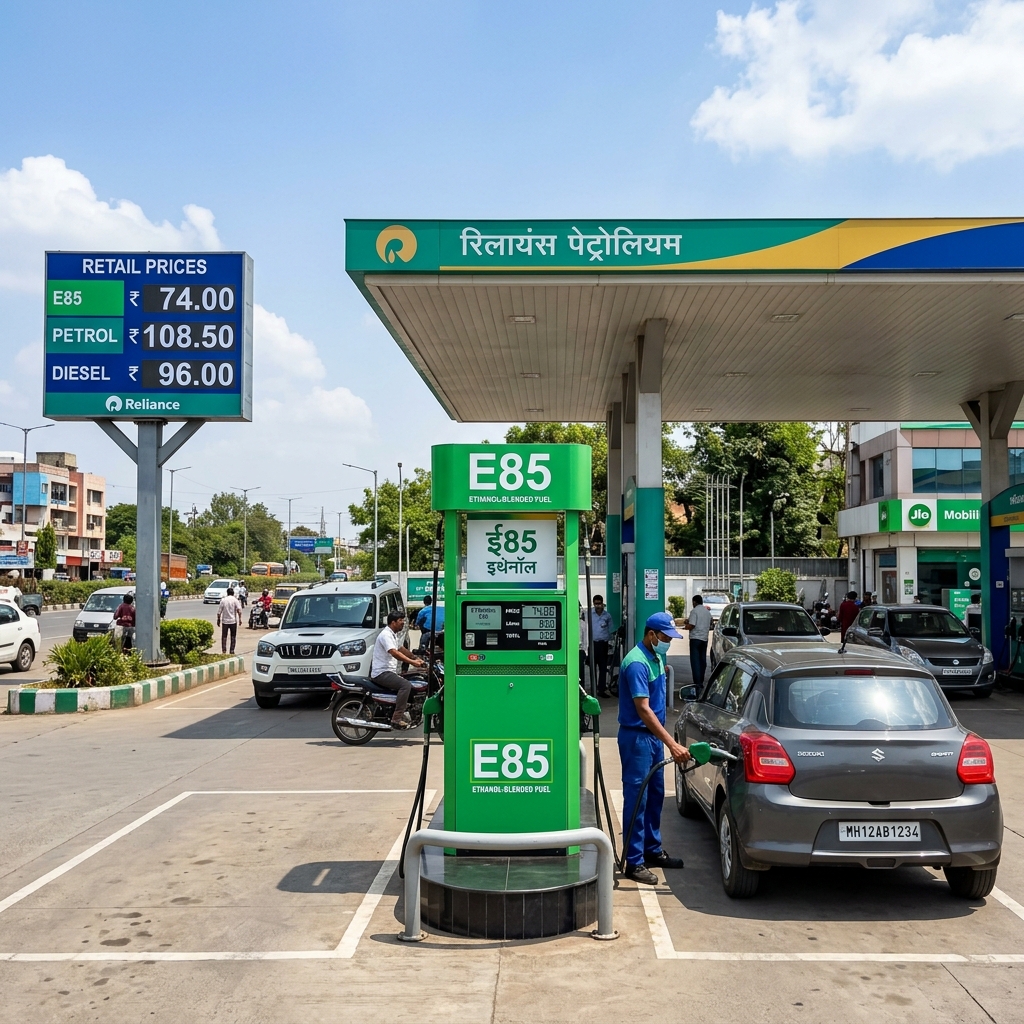
1. The Shift to Ethanol-Blended Fuels in India
Before diving into the specifics of the warranty policy, it's essential to understand the context of ethanol blending in India. The push towards ethanol—a renewable biofuel derived primarily from sugarcane, corn, and agricultural waste—is driven by multiple factors, including the need to reduce crude oil imports, cut down greenhouse gas emissions, and boost the agricultural economy.
1.1 What is E20 Fuel?
E20 fuel is a mixture comprising 20% ethanol and 80% traditional gasoline (petrol). The Indian government mandated that all new vehicles manufactured from April 2023 onwards must be material-compliant with E20 fuel. This means the fuel lines, rubber hoses, plastic components, and engine seals are designed to withstand the corrosive nature of ethanol at a 20% concentration. E20 fuel is rapidly replacing E10 across petrol pumps nationwide, making it the new standard for Indian motorists.
1.2 The Emergence of E85 and Flex-Fuel Vehicles (FFVs)
While E20 is the current standard, the horizon features E85 fuel—a blend of up to 85% ethanol and 15% petrol. Vehicles designed to run on E85 or any blend of ethanol up to 85% are known as Flex-Fuel Vehicles (FFVs). Maruti Suzuki has showcased prototype FFVs, such as the WagonR Flex Fuel, demonstrating their readiness for higher ethanol blends. These engines are specifically engineered with advanced fuel sensors, robust fuel pumps, and highly durable engine components to handle the distinct chemical properties of E85.
---
2. Understanding the Maruti Suzuki E20 Warranty Policy
For the vast majority of Maruti Suzuki owners today, the E20 warranty policy is the most relevant. The transition to E20 fuel brings specific conditions and coverage details that every owner must be aware of.
2.1 Standard Warranty Coverage for E20-Compliant Vehicles
If you have purchased a Maruti Suzuki vehicle manufactured on or after April 1, 2023, your vehicle is officially certified as E20 compliant. Under the standard warranty, Maruti Suzuki guarantees that the vehicle's engine and fuel system components will operate smoothly on E20 fuel without suffering premature wear or failure due to the fuel itself.
Key Components Covered: * Fuel Injectors: Covered against clogging or failure resulting from standard E20 fuel usage. * Fuel Pump: Protected against deterioration caused by ethanol. * Rubber Hoses and Seals: Made from ethanol-resistant materials and covered against cracking or leaking. * Engine Cylinders and Pistons: Covered for normal wear and tear when using recommended E20 fuel. * Catalytic Converter: Protected under the emissions warranty, ensuring that the exhaust system handles E20 combustion by-products effectively.
2.2 Pre-2023 Vehicles: The E10 vs. E20 Dilemma
A critical area of concern involves older Maruti Suzuki vehicles manufactured before the E20 mandate. These vehicles were primarily designed for E10 (10% ethanol) or pure petrol.
Warranty Implications for Older Vehicles: * Manufacturer Advice: Maruti Suzuki explicitly advises against using E20 fuel in vehicles not certified for it. The higher ethanol concentration can corrode non-compliant rubber and plastic components, leading to fuel leaks and engine stalling. Warranty Voidance:** If an owner of a pre-2023, non-E20 compliant vehicle consistently uses E20 fuel and suffers engine or fuel system failure, *the warranty claim will likely be denied. The manufacturer will attribute the failure to the use of "unauthorized or improper fuel." * The Solution: Owners of older vehicles must seek out standard petrol (which may still contain up to 10% ethanol) or use premium fuels that guarantee lower ethanol content. Always consult your vehicle's specific owner's manual.
2.3 Conditions That Can Void Your E20 Warranty
Even if your car is E20 compliant, certain actions can void your warranty: * Using Fuel Exceeding E20: Filling an E20-compliant car with E85 or any blend higher than 20% ethanol will void the warranty. The engine mapping and materials are not designed for such high ethanol content. * Adulterated Fuel: Damage caused by contaminated fuel (e.g., water in the fuel tank, which is a significant risk with ethanol since it is hygroscopic) is generally not covered. * Unauthorized Modifications: Installing aftermarket performance parts or tuning the ECU (Engine Control Unit) to alter fuel delivery will automatically void the powertrain warranty. * Neglecting Scheduled Maintenance: Failure to adhere to the prescribed service intervals, especially replacing fuel filters and engine oil, gives the manufacturer grounds to reject warranty claims.
---
3. The Future: Maruti Suzuki E85 (Flex Fuel) Warranty Policy
As India prepares for the launch of E85 Flex-Fuel Vehicles, understanding the proposed warranty structures for these advanced machines is vital for prospective buyers.
3.1 What Makes an E85 Warranty Different?
E85 fuel has a significantly higher octane rating but lower energy density than pure petrol. More importantly, it is highly corrosive. An E85 warranty must cover a more robust set of components engineered specifically for this extreme environment.
Expected Coverage for E85 FFVs: * Flex Fuel Sensor: This critical component detects the exact ethanol blend in real-time and adjusts the engine timing. Its failure will be fully covered under the primary powertrain warranty. * Upgraded Fuel Lines: Stainless steel or specially lined fuel hoses designed to prevent ethanol degradation. * Heavy-Duty Fuel Pump: Designed to pump a higher volume of fuel (since E85 requires more volume to produce the same power) and withstand corrosion. * Specialized Engine Valves and Seats: Hardened materials to prevent premature wear from the drier combustion of high-ethanol blends.
3.2 The Flexibility Clause
The core premise of an FFV is its ability to run on any blend of petrol and ethanol from E0 up to E85. The Maruti Suzuki E85 warranty will explicitly cover the engine regardless of the blend ratio used, provided the fuel is sourced from an authorized, unadulterated pump.
3.3 Potential E85 Warranty Exclusions
Just like the E20 policy, the E85 warranty will have strict exclusions: * E100 (Pure Ethanol): Unless the vehicle is specifically rated for E100, using pure ethanol could void the warranty. * Phase Separation Damage: Ethanol attracts water. If a vehicle sits idle for months with E85 in the tank, the water and ethanol can separate from the petrol (phase separation), causing severe engine damage when started. Damage resulting from prolonged storage without proper fuel stabilizers is typically excluded from warranty coverage. * Cold Start Issues: While not necessarily a warranty voidance, manufacturers often stipulate that in extreme cold, high ethanol blends might cause starting difficulties. The warranty covers component failure, but not environmental limitations inherent to the fuel.
---
4. The Science of Ethanol and Engine Wear
To fully appreciate why warranty policies are structured the way they are, one must understand how ethanol interacts with an internal combustion engine.
4.1 The Corrosive Nature of Ethanol
Ethanol is an excellent solvent. While this means it can clean the engine internals, it also means it can dissolve specific polymers, rubbers, and even some metals used in older fuel systems. E20-compliant and E85-capable engines utilize materials like Teflon, stainless steel, and specialized fluoroelastomers to resist this corrosion. If a non-compliant vehicle uses ethanol, the dissolved rubber can clog fuel injectors, leading to a lean fuel mixture and catastrophic engine failure. This is why manufacturers strictly enforce the "improper fuel" clause in their warranties.
4.2 The Hygroscopic Effect
Ethanol is hygroscopic, meaning it absorbs moisture from the air. In humid Indian conditions, this is a significant concern. Water in the fuel tank leads to poor combustion, rust, and eventually, phase separation. When phase separation occurs, a highly corrosive water-ethanol mixture settles at the bottom of the tank, where the fuel pump draws it directly into the engine. Warranty policies explicitly exclude damage caused by water in the fuel, making it the owner's responsibility to source quality fuel and avoid leaving E20/E85 sitting in the tank for extended periods.
4.3 Combustion Temperature and Lubrication
Ethanol burns cooler than petrol, which can be beneficial for high-compression engines. However, it provides less lubrication to the upper cylinders and valves. Flex-fuel engines compensate for this with hardened valve seats and specialized engine oils. Using the wrong engine oil in an E20 or E85 vehicle can lead to increased friction and wear, potentially voiding the warranty.
---
5. How to Maintain Your Warranty: Best Practices for E20/E85 Vehicles
Owning an E20-compliant or future E85 Maruti Suzuki vehicle requires a slight shift in maintenance habits to ensure your warranty remains valid and your car runs flawlessly.
5.1 Fuel Up at Reputable Stations
Always refuel at high-turnover, reputed petrol stations (such as company-owned IndianOil, BPCL, or HPCL outlets). High turnover ensures the fuel is fresh and minimizes the risk of water contamination in the station's underground storage tanks. Keep fuel receipts as proof of purchase; in the rare event of a warranty dispute over fuel quality, these receipts can be invaluable.
5.2 Adhere to Recommended Engine Oil Specifications
Ethanol-blended fuels demand specific engine oils that can handle fuel dilution and provide adequate protection. Always use the engine oil grade and specification recommended in your Maruti Suzuki owner's manual (e.g., API SN Plus or SP). Using incorrect or substandard oil will give the service center a valid reason to deny an engine warranty claim.
5.3 Strictly Follow Service Intervals
Maruti Suzuki has established precise service schedules for E20 vehicles. This includes timely replacements of fuel filters, spark plugs, and engine oil. The fuel filter is particularly crucial, as it traps any debris or dissolved materials in the fuel line. A clogged filter strains the fuel pump and can lead to failure. Maintain a complete service history at authorized Maruti Suzuki service centers.
5.4 Manage Fuel During Vehicle Storage
If you plan to leave your car unused for more than a month, take precautions. Because E20 and E85 attract water, leaving the tank partially full can lead to condensation and phase separation. * Short-term storage: Fill the tank completely to minimize the air gap where condensation forms. * Long-term storage: Consider using an ethanol-compatible fuel stabilizer, though you must confirm with your dealer if this is approved under the warranty policy.
5.5 Avoid Aftermarket Additives
Do not use aftermarket fuel additives, octane boosters, or engine flushes unless explicitly approved by Maruti Suzuki. Many of these chemicals react unpredictably with ethanol and can damage sensors or seals, instantly voiding your warranty.
---
6. Filing a Warranty Claim for E20/E85 Related Issues
If you experience engine sputtering, check engine lights, or a sudden drop in fuel efficiency, you might have a fuel system issue. Here is the step-by-step process for handling a warranty claim with Maruti Suzuki:
Step 1: Do Not Clear the Error Codes
If the Check Engine Light (CEL) comes on, do not use an OBD2 scanner to clear the codes. These codes provide the service center with crucial diagnostic data.
Step 2: Visit an Authorized Service Center Promptly
Take your vehicle to an authorized Maruti Suzuki Arena or Nexa service center as soon as possible. Driving with a severe fuel system issue can cause cascading damage that might not be covered.
Step 3: Diagnostic Assessment
The service technicians will connect the vehicle to their diagnostic tools. They will check fuel pressure, injector spray patterns, and the flex-fuel sensor (for E85 models). They may also take a fuel sample to test for water contamination or an incorrect ethanol blend.
Step 4: The Warranty Decision
If the failure is due to a manufacturing defect in a covered component (e.g., a faulty E20-rated fuel pump), the repair will be covered entirely under warranty.
Reasons for Rejection: * The fuel sample shows the ethanol content significantly exceeds the car's rating (e.g., 40% ethanol in an E20-only car). * The fuel sample shows severe water contamination. * The service history shows missed major service intervals.
Step 5: Escalation (If Necessary)
If your claim is rejected and you believe it is unjustified (for instance, you have proof of filling E20 from a reputed pump), you can escalate the issue to the Territory Service Manager (TSM) or use Maruti Suzuki's official customer grievance portals. Having your fuel receipts and a pristine service record will be your best defense.
---
7. The Economic and Environmental Impact of the Warranty Policy
Maruti Suzuki's robust warranty policy for E20 and E85 vehicles is not just about protecting the consumer; it plays a vital role in the broader adoption of green technologies in India.
Building Consumer Confidence
The primary barrier to adopting new fuel technologies is range anxiety and reliability concerns. By offering a comprehensive warranty that clearly defines what is covered when using E20 or E85, Maruti Suzuki instills confidence in the Indian consumer. Buyers know they are protected against the unique challenges posed by ethanol.
Pushing Industry Standards
As the market leader, Maruti Suzuki sets the benchmark. Their clear warranty guidelines for ethanol-blended fuels force other manufacturers to offer similar or better protections, ultimately benefiting all Indian car buyers.
Environmental Stewardship
By ensuring their vehicles can reliably run on E20 and eventually E85 without failure, Maruti Suzuki is directly supporting the government's initiative to reduce vehicular emissions. A well-maintained, warranty-backed E20 vehicle runs cleaner and more efficiently than a deteriorating non-compliant vehicle struggling with the same fuel.
---
8. Frequently Asked Questions (FAQs) Regarding Maruti Suzuki E20/E85 Warranties
To provide absolute clarity, here are answers to the most common questions Indian car owners have about ethanol fuels and their Maruti Suzuki warranty.
FAQ 1: Can I use E20 fuel in my 2018 Maruti Swift?
Answer: It is highly discouraged. Your 2018 Swift was designed for a maximum of E10 fuel. Using E20 can damage fuel lines and plastic components. If such damage occurs, it will not be covered under your standard or extended warranty, as it constitutes using improper fuel.FAQ 2: My new Brezza is E20 compliant. Can I occasionally use standard E10 or pure petrol?
Answer: Yes, absolutely. E20 compliance means the engine can handle up to 20% ethanol safely. It will run perfectly fine on E10 or pure petrol (E0), and doing so will not affect your warranty in any way.FAQ 3: When Maruti launches the WagonR Flex Fuel, will the warranty cover engine damage if I use E85 every day?
Answer: Yes. A Flex-Fuel Vehicle is explicitly designed to run on E85 permanently if the owner chooses. The warranty will fully cover the engine and fuel system under daily E85 usage, provided you follow the prescribed maintenance schedule.FAQ 4: Does using E20 fuel affect my extended warranty?
Answer: If your car is officially E20 compliant (manufactured April 2023 onwards), using E20 fuel is standard operation and is fully covered under both the standard factory warranty and any official Maruti Suzuki extended warranty you purchase.FAQ 5: The petrol pump attendant put premium fuel in my E20 car. Is my warranty void?
Answer: No. Premium fuels (like Speed or Power) generally have higher octane ratings and cleaning additives, but their ethanol content typically remains at or below the E20 threshold. Using premium fuel is safe and will not void your warranty.FAQ 6: How does the service center know if I used the wrong fuel?
Answer: Authorized service centers have tools to test the fuel currently in your tank. They can check the ethanol percentage and look for water contamination. Additionally, modern ECUs log engine data; if the engine ran excessively lean due to fuel starvation (a common symptom of ethanol degrading old rubber lines), the data will reflect this.---
9. Conclusion: Navigating the Flex-Fuel Future with Confidence
The transition to E20 and the impending arrival of E85 represent a monumental shift in the Indian automotive sector. For Maruti Suzuki owners, understanding the nuances of the E20/E85 warranty policy is the key to a stress-free ownership experience.
To summarize the golden rules: 1. Know your car's compatibility: Only use E20 if your vehicle is manufactured from April 2023 onwards or explicitly stated as E20 compliant in the manual. 2. Wait for true FFVs for E85: Never attempt to use E85 in a standard E20 vehicle. 3. Maintain religiously: Follow Maruti Suzuki's service intervals to the letter, paying special attention to fuel filters and oil changes. 4. Source good fuel: Refuel at reputable, high-traffic stations to avoid water contamination.
By adhering to these guidelines, you ensure that your Maruti Suzuki vehicle remains protected under warranty, delivers optimal performance, and contributes to a greener, more sustainable India. As the flex-fuel revolution unfolds, staying informed about your warranty rights and responsibilities will keep you confidently behind the wheel.
--- Disclaimer: Warranty terms and conditions are subject to change by the manufacturer. Always refer to the official Maruti Suzuki owner's manual and warranty booklet provided with your specific vehicle model for the most accurate and legally binding information.