The automotive landscape in India is undergoing a massive transformation, driven by the pressing need for greener, more sustainable, and economically viable mobility solutions. While electric vehicles (EVs) have garnered a significant share of the limelight, another extremely practical and immediate solution has been steadily gaining traction: Flex Fuel technology. Leading the charge in India’s transition towards alternative fuels is the country's largest carmaker, Maruti Suzuki. At the forefront of this initiative is the Maruti Suzuki Brezza Flex Fuel, a vehicle that promises to redefine how we view internal combustion engines by making them cleaner and less dependent on imported crude oil.
In this comprehensive guide, we will delve deep into everything you need to know about the Maruti Suzuki Brezza Flex Fuel. From its expected price and launch date to its detailed specifications, technology, and what it means for the average Indian consumer, we’ve got it all covered.
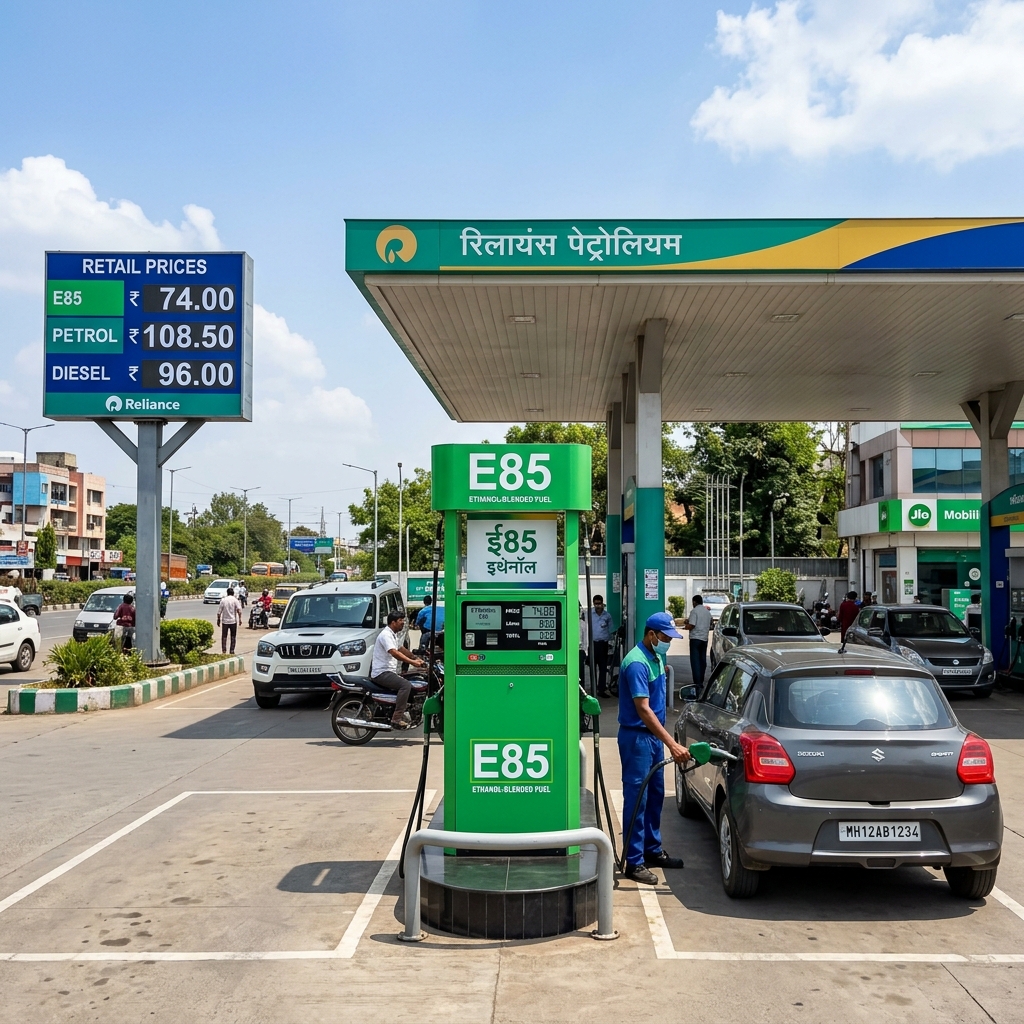
What is Flex Fuel Technology?
To truly appreciate the significance of the Maruti Suzuki Brezza Flex Fuel, it is essential to first understand what flex-fuel technology actually is. "Flex fuel," short for flexible fuel, refers to an alternative fuel vehicle with an internal combustion engine designed to run on more than one fuel, usually gasoline blended with either ethanol or methanol fuel. Both fuels are stored in the same common tank.
How Does a Flex-Fuel Engine Work?
Modern flex-fuel engines are engineering marvels. They are equipped with sophisticated sensors and a highly advanced Engine Control Module (ECM). The primary sensor, often called the flex-fuel sensor, measures the precise blend of fuel—specifically the ethanol-to-gasoline ratio—entering the engine. Once the ECM receives this data, it instantaneously adjusts the ignition timing and the fuel injection strategy to ensure optimal combustion. This means the engine can run seamlessly on pure petrol, or any blend up to E85 (85% ethanol and 15% petrol), without requiring any manual intervention from the driver.The Shift Towards Ethanol Blends (E20 to E85)
India has been aggressively pushing for ethanol blending in petrol. Ethanol is a biofuel primarily derived from sugarcane, corn, and agricultural waste. By blending ethanol with petrol, India can significantly reduce its reliance on costly crude oil imports and drastically cut down on greenhouse gas emissions. While the country has already achieved its initial target of E10 (10% ethanol blend) and is rapidly moving towards E20 (20% ethanol blend) at fuel pumps nationwide, the ultimate goal for flex-fuel vehicles like the Brezza is to run on E85. E85 is a high-level blend containing 85% ethanol, which requires specific modifications to the engine components to handle the corrosive nature of alcohol.Maruti Suzuki's Flex Fuel Strategy in India
Maruti Suzuki has always been a pragmatic automaker, focusing on technologies that are accessible, affordable, and practical for the Indian masses. While the company is developing its EV portfolio, it firmly believes that multiple technologies will coexist on the road to carbon neutrality. This multi-pathway approach includes CNG, strong hybrids, biogas, and flex-fuel vehicles.
The development of the Brezza Flex Fuel aligns perfectly with the Government of India's vision of a self-reliant and greener automotive sector. By investing heavily in flex-fuel technology, Maruti Suzuki aims to offer a compelling alternative that provides the familiar driving dynamics of a petrol car but with a significantly lower carbon footprint and reduced running costs, provided ethanol is priced competitively.
Maruti Suzuki Brezza Flex Fuel: Overview and Prototype
Maruti Suzuki first showcased the prototype of the WagonR Flex Fuel in 2022, which was a clear indicator of its technological direction. However, the decision to introduce flex-fuel technology in the Brezza—one of India’s highest-selling compact SUVs—speaks volumes about the company's confidence in the technology and its mass-market appeal.
The Brezza Flex Fuel prototype was prominently displayed at major automotive expos, drawing significant attention from industry experts and consumers alike. Visually, the Brezza Flex Fuel looks nearly identical to its standard petrol-powered counterpart. It retains the bold, muscular stance, the striking LED headlamps, the precision-cut alloy wheels, and the spacious, feature-rich interior. The real magic, however, lies under the hood and within the fuel delivery system.
Detailed Specifications of the Brezza Flex Fuel
Transitioning a standard petrol engine to run on a high-ethanol blend like E85 is not as simple as pouring a different fuel into the tank. Ethanol has different chemical properties compared to petrol; it is more corrosive, has a lower energy density, and burns differently. Therefore, Maruti Suzuki engineers had to make several crucial modifications to the Brezza's powertrain.
Engine and Performance
At the heart of the Brezza Flex Fuel is a heavily modified version of Maruti Suzuki's reliable and refined 1.5-liter K15C naturally aspirated four-cylinder engine.* Displacement: 1462 cc * Engine Type: K15C Smart Hybrid (Modified for Flex Fuel) * Max Power: Expected to be around 100 to 103 bhp (depending on the fuel blend) * Max Torque: Expected to be around 135 to 137 Nm (depending on the fuel blend) * Fuel Compatibility: Petrol and Ethanol blends ranging from E20 up to E85.
While the power and torque figures are expected to be very similar to the standard petrol Brezza, the way the engine delivers that power might feel slightly different due to the revised engine mapping required for ethanol combustion.
Crucial Hardware Modifications
To ensure long-term reliability and performance when running on highly corrosive E85 ethanol, several hardware changes are mandatory:1. Upgraded Fuel Pump and Lines: Standard fuel lines and pumps can degrade quickly when exposed to high concentrations of ethanol. The Brezza Flex Fuel features upgraded, corrosion-resistant fuel lines and a heavy-duty fuel pump designed to withstand the chemical properties of E85. 2. Modified Fuel Injectors: Ethanol has a lower energy density than petrol, meaning more fuel needs to be injected into the combustion chamber to achieve the same power output. Upgraded fuel injectors with a higher flow rate are installed to handle this requirement. 3. Engine Valves and Valve Seats: The valves and valve seats have been hardened to withstand the different combustion characteristics and higher latent heat of vaporization of ethanol. 4. Advanced Engine Control Unit (ECU): The brain of the operation. The ECU has been entirely re-calibrated. It constantly communicates with the flex-fuel sensor to determine the exact ethanol ratio and instantly adjusts the ignition timing, fuel injection duration, and air-fuel mixture to ensure smooth running, optimal performance, and minimal emissions, regardless of what blend is in the tank. 5. Cold Start Assist System: One of the inherent challenges with high-ethanol blends like E85 is cold starting in low temperatures, as ethanol doesn't vaporize as easily as petrol. Maruti Suzuki engineers have incorporated a specialized cold-start assist system, potentially involving a heated fuel rail or optimized spark timing, to ensure the engine starts effortlessly even on chilly winter mornings.
Transmission Options
Initially, it is expected that the Maruti Suzuki Brezza Flex Fuel will be offered with a 5-speed manual transmission. This allows the company to keep the entry-level price aggressive. However, considering the high demand for automatic SUVs in India, a 6-speed torque converter automatic transmission is highly likely to follow, either at launch or shortly after.Expected Mileage and Fuel Efficiency on E85
One of the most common questions surrounding flex-fuel vehicles is regarding fuel efficiency. This is a nuanced topic that requires a clear understanding of energy density.
Ethanol has approximately 30% less energy per unit volume compared to pure petrol. This means that to travel the same distance, an engine will need to burn more E85 than it would pure petrol. Consequently, the volumetric fuel efficiency (kilometers per liter or kmpl) of the Brezza Flex Fuel will be lower when running on E85 compared to standard petrol.
* Estimated Petrol Mileage: ~19-20 kmpl * Estimated E85 Mileage: ~14-16 kmpl
The Cost Perspective: While the kmpl figure might be lower on E85, the overall running cost depends entirely on the price of the fuel. For flex-fuel vehicles to be economically viable for the consumer, E85 must be priced significantly lower than standard petrol. If the price difference is substantial enough to offset the drop in mileage, running a flex-fuel Brezza on E85 could actually be cheaper per kilometer than running a standard petrol car. Furthermore, the government is expected to offer tax incentives or subsidies on ethanol fuel to encourage adoption, which would further sweeten the deal for consumers.
Environmental Impact and Emissions
The primary driving force behind the adoption of flex-fuel technology is its positive impact on the environment. The Maruti Suzuki Brezza Flex Fuel is poised to be significantly greener than its petrol-only counterpart.
* Reduction in Greenhouse Gases: Ethanol is a renewable biofuel. The carbon dioxide (CO2) released when ethanol is burned is roughly equal to the amount of CO2 absorbed by the crops (like sugarcane) while they were growing. This creates a nearly closed carbon cycle, resulting in significantly lower net greenhouse gas emissions compared to fossil fuels. * Lower Tailpipe Emissions: Burning E85 produces fewer particulate matters (PM), carbon monoxide (CO), and unburned hydrocarbons compared to pure petrol. This contributes to better air quality, particularly in heavily congested urban areas. * BS6 Phase II Compliance: The Brezza Flex Fuel will strictly adhere to the latest and most stringent Bharat Stage 6 (BS6) Phase II emission norms, equipped with advanced catalytic converters and real driving emission (RDE) compliance hardware.
Expected Pricing and Variants
Developing a flex-fuel vehicle involves additional research and development, as well as the integration of specialized, corrosion-resistant hardware. Therefore, the Maruti Suzuki Brezza Flex Fuel is expected to command a premium over the standard petrol models.
However, Maruti Suzuki is known for its aggressive pricing strategies. Through heavy localization of components and economies of scale, the company will aim to keep the premium as minimal as possible to encourage mass adoption.
* Expected Price Premium: We anticipate the Brezza Flex Fuel variants to be priced approximately ₹30,000 to ₹50,000 higher than the corresponding standard petrol variants. * Expected Starting Price: The Maruti Suzuki Brezza Flex Fuel is expected to have a starting price in the range of ₹8.50 Lakh to ₹9.00 Lakh (Ex-showroom).
It is likely that Maruti Suzuki will offer the flex-fuel option across multiple trim levels (e.g., VXi, ZXi, and ZXi+), allowing consumers to choose the variant that best fits their budget and feature requirements.
Launch Date in India
The exact launch date of the Maruti Suzuki Brezza Flex Fuel heavily depends on the readiness of the infrastructure, specifically the widespread availability of E85 fuel at petrol stations across India.
The Indian government has been pushing oil marketing companies (OMCs) to establish ethanol dispensing infrastructure rapidly. While E20 is becoming increasingly common, E85 availability is currently limited. Maruti Suzuki has stated its commitment to launching flex-fuel vehicles once the necessary fuel infrastructure is in place to ensure a seamless experience for customers.
Based on current timelines and government projections for ethanol blending targets, industry experts anticipate that the Maruti Suzuki Brezza Flex Fuel could be officially launched in India by late 2026 or early 2027. This timeline aligns with the broader rollout of high-ethanol blend fuels across major cities and highways.
Pros and Cons of the Brezza Flex Fuel
To provide a balanced perspective, let's look at the advantages and disadvantages of opting for the Brezza Flex Fuel.
Pros:
* Environmentally Friendly: Significantly lower net carbon emissions and reduced tailpipe pollutants. * Energy Security: Helps reduce India's dependence on imported crude oil by utilizing domestically produced biofuel. * Potential Cost Savings: If E85 is priced aggressively lower than petrol by the government, the running costs could be substantially reduced. * Familiar Ownership Experience: Drives and feels just like a regular petrol SUV; no range anxiety associated with EVs, as you can fill up at any standard petrol station (using pure petrol if E85 is unavailable). * Maruti Suzuki Reliability: Backed by India's largest service network and renowned engine reliability.Cons:
* Lower Mileage on E85: Due to ethanol's lower energy density, volumetric fuel efficiency (kmpl) will drop when running on high ethanol blends. * Higher Initial Cost: Will be slightly more expensive to purchase than the standard petrol Brezza. * Infrastructure Dependency: The primary benefit is only realized if E85 fuel is readily available at fuel stations, which is currently a work in progress. * Potential Cold Start Issues: Though mitigated by modern engineering, very high ethanol blends can sometimes be harder to start in extreme cold compared to pure petrol.Frequently Asked Questions (FAQs)
Q1: Can I run the Brezza Flex Fuel on normal petrol? A1: Yes, absolutely. That is the fundamental advantage of a flex-fuel vehicle. The engine and ECM are designed to automatically detect the fuel in the tank and adjust accordingly. You can run it on 100% normal petrol, E20, E85, or any blend in between without any manual intervention.
Q2: Will running on E85 damage the engine? A2: No. Unlike older cars where high ethanol blends could damage seals and fuel lines, the Brezza Flex Fuel is purpose-built with upgraded, corrosion-resistant components specifically designed to handle E85 safely for the life of the vehicle.
Q3: Does ethanol affect engine performance? A3: Ethanol has a higher octane rating than standard petrol, which can sometimes allow for slightly better performance or smoother running, though the energy density is lower. Overall, the peak power and torque figures are expected to be very similar to the standard petrol engine.
Q4: Is the Brezza Flex Fuel better than the Brezza CNG? A4: "Better" depends on the use case. CNG offers excellent running costs but compromises heavily on boot space and requires frequent refilling due to limited tank capacity. Flex Fuel retains the full boot space and offers the convenience of quick liquid fuel fill-ups, though running costs will depend heavily on the subsidized price of E85.
Q5: Will there be a tax benefit for buying a Flex Fuel vehicle? A5: The automotive industry is actively lobbying the government for tax reductions (such as lower GST rates) on flex-fuel vehicles, similar to the benefits offered for EVs, to promote their adoption. While not confirmed yet, it is a strong possibility in the near future.
Conclusion
The Maruti Suzuki Brezza Flex Fuel represents a highly pragmatic, transitional technology for the Indian automotive sector. It beautifully bridges the gap between the internal combustion engines we know and trust and the greener, sustainable future we need to achieve. By offering a familiar driving experience, removing the range anxiety associated with EVs, and utilizing domestically produced biofuels, the Brezza Flex Fuel has the potential to be a massive game-changer.
While its ultimate success will depend heavily on the widespread availability and pricing of E85 fuel, Maruti Suzuki’s commitment to this technology ensures that Indian consumers will soon have a robust, reliable, and environmentally conscious alternative in the highly competitive compact SUV segment. As the infrastructure develops, the Brezza Flex Fuel could very well become the smart choice for the modern Indian family.