The Indian automotive landscape is undergoing a massive, unprecedented transformation. As the global and domestic push for cleaner, greener, and more sustainable mobility solutions intensifies at a rapid pace, alternative fuel technologies are stepping out of the shadows and firmly into the spotlight. Among these innovative approaches, flex-fuel technology has emerged as a clear frontrunner, heavily championed by the Indian government as a pragmatic and immediate solution to pressing economic and environmental challenges. With ethanol blending mandates becoming stricter and deadlines approaching faster than anticipated, automakers are racing against the clock to adapt their portfolios. Kia India, a relatively young but wildly successful and dominant player in the fiercely competitive SUV segment, is widely speculated to be working intensely on a robust flex-fuel strategy. Naturally, their flagship volume driver, the Kia Seltos, is at the absolute center of these industry rumors.
But what does this paradigm shift mean for the everyday Indian consumer? Will the highly anticipated Kia Seltos Flex Fuel actually launch in India? If the green light is given, when can we realistically expect it to hit dealership floors, and what specific mechanical and aesthetic changes will it bring? How will it impact the ownership experience, from the driving dynamics to the wallet? In this exceptionally comprehensive and exhaustive analysis, we dive deep into the prospects of the Kia Seltos Flex Fuel vehicle (FFV) hitting Indian roads, the complex technology behind it, the economic drivers pushing it forward, and the broader, long-term implications for the Indian auto industry as a whole.
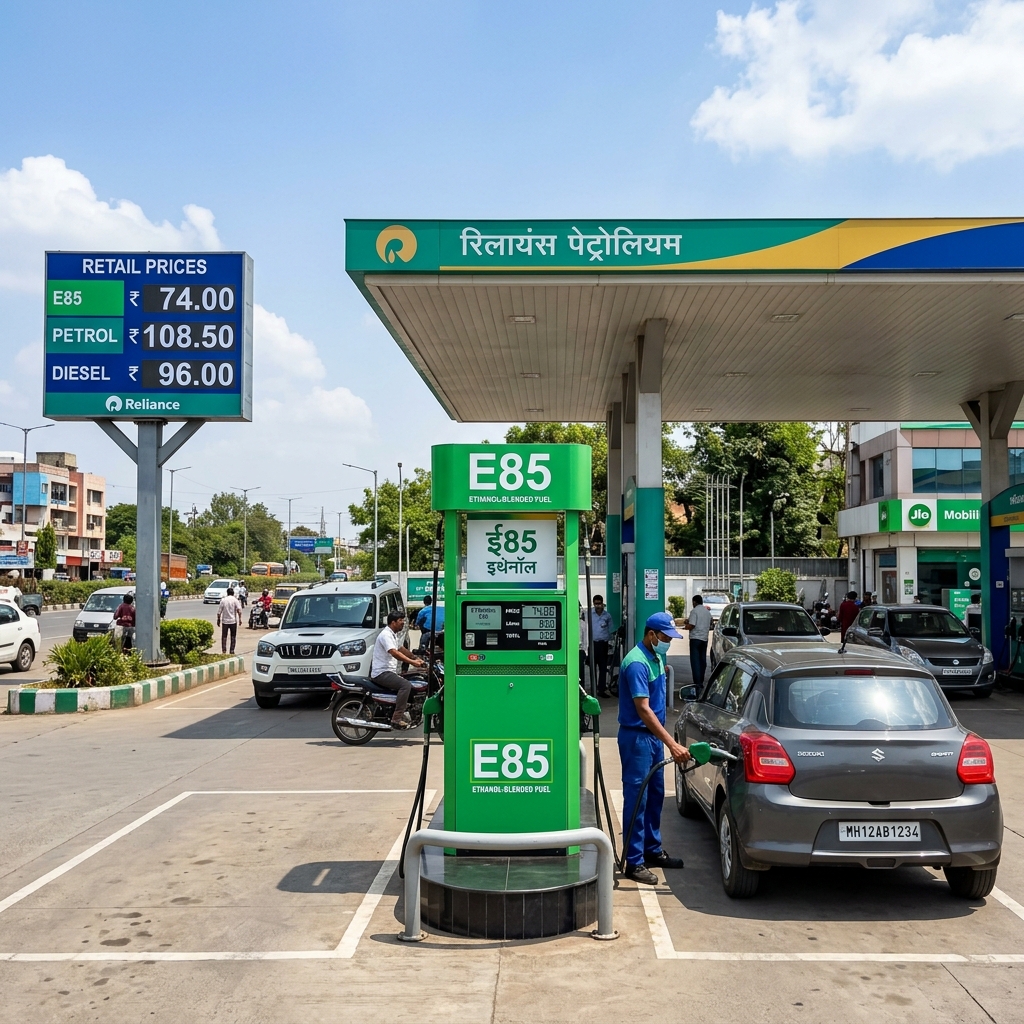
The Dawn of Flex-Fuel in India: A Macroeconomic Necessity
Before we focus specifically on the Kia Seltos, it is absolutely crucial to understand the broader context of flex-fuel technology in the Indian subcontinent. Flex-fuel vehicles (FFVs) are meticulously engineered to run on more than one type of fuel, typically a variable blend of standard gasoline and ethanol. Unlike regular, traditional vehicles that are calibrated to handle only a specific, low percentage of ethanol (like E10, meaning 10% ethanol and 90% gasoline, or the upcoming E20), true flex-fuel engines are marvels of adaptability. They can seamlessly run on any blend, all the way up to E85 (85% ethanol and 15% gasoline) or, in some specific global markets, even E100 (pure, unadulterated ethanol).
The Government's Unrelenting Ethanol Push
The Indian government, spearheaded by the Road Transport and Highways Ministry, has been exceptionally vocal and aggressive about reducing the nation's crippling dependence on expensive imported crude oil. Simultaneously, there is a desperate need to lower vehicular emissions to combat the severe air quality crises plaguing major Indian metropolitan areas like Delhi, Mumbai, and Bangalore. To achieve these dual objectives, the government has aggressively promoted the National Policy on Biofuels, putting ethanol blending front and center.
India has already achieved its initial target of 10% ethanol blending (E10) ahead of its scheduled deadline, a monumental feat that required immense coordination between the agricultural sector, oil marketing companies (OMCs), and the automotive industry. Now, the nation is rapidly accelerating towards the E20 mandate (20% ethanol blending), which was initially targeted for 2030 but was ambitiously brought forward to 2025. But the ambition certainly doesn't stop at E20. Policymakers are strongly urging, and perhaps soon mandating, automakers to introduce vehicles capable of running on E85 and ultimately, 100% ethanol.
The macroeconomic and environmental benefits of this transition are multifold and profound: 1. Massive Economic Savings: India imports over 80% of its crude oil requirements. By substituting a significant portion of gasoline with domestically produced ethanol, the country stands to save tens of thousands of crores in precious foreign exchange, stabilizing the economy and reducing vulnerability to volatile global oil prices. 2. Profound Environmental Impact: Ethanol, being a plant-based biofuel, burns significantly cleaner than refined petroleum products. It produces substantially fewer particulate matters, carbon monoxide, and unburned hydrocarbons. On a well-to-wheel basis, it significantly reduces the overall carbon footprint, contributing directly to India's COP26 climate commitments. 3. A Monumental Agricultural Boost: Unlike many Western nations that produce ethanol from corn, ethanol in India is primarily derived from sugarcane molasses, agricultural residue, and surplus food grains (like damaged rice or maize). This creates a massive, reliable alternative revenue stream for millions of Indian farmers, transforming the agricultural sector into an energy-producing powerhouse.
This highly favorable macroeconomic, political, and environmental landscape sets the perfect, fertile stage for forward-thinking automakers like Kia to introduce flex-fuel variants of their most popular and aspirational models.
Understanding the Kia Seltos' Dominant Position in India
The Kia Seltos is not just another SUV; it is a cultural phenomenon in the Indian automotive space. It is the vehicle that single-handedly established Kia's incredibly strong foothold in an overcrowded and highly competitive market. Since its blockbuster launch, the Seltos has consistently ranked among the highest-selling compact SUVs, universally praised for its striking, contemporary design, its meticulously crafted, feature-rich cabin, and its exceptionally diverse array of engine and transmission options.
Why the Seltos is the Perfect Candidate for Flex-Fuel
If Kia India makes the strategic decision to introduce a dedicated flex-fuel vehicle in the domestic market, the Seltos is unequivocally the most logical and strategically sound candidate for several compelling reasons:
- Massive Volume Driver: The Seltos consistently generates immense sales volumes, often clocking upwards of 8,000 to 10,000 units a month. Introducing cutting-edge new technology in a proven, high-demand model ensures much faster market adoption and allows the company to achieve critical economies of scale, driving down component costs. - Inherent Platform Flexibility: The sophisticated K2 platform architecture underpinning the Seltos is highly versatile and adaptable. It is specifically engineered to accommodate various powertrains, making the structural and packaging modifications required for complex flex-fuel compatibility relatively seamless for Kia's engineers. - Aspirational Brand Perception: Kia has aggressively positioned itself as a premium, forward-thinking, and tech-savvy brand aimed at the modern Indian consumer. Launching a sophisticated flex-fuel Seltos aligns perfectly with this carefully curated brand identity, vividly showcasing their commitment to sustainable, future-ready technologies. - Maintaining Competitor Parity: The Indian market is cutthroat. Arch-rivals like Maruti Suzuki and Toyota are already aggressively showcasing their flex-fuel prototypes (such as the highly publicized WagonR FFV and the Corolla Altis Hybrid FFV). Kia simply cannot afford to be perceived as a laggard in this critical technological race. The Seltos FFV would be their definitive answer to the competition.
Deep Dive: What is a Flex-Fuel Vehicle (FFV) and How Does it Actually Work?
For the uninitiated consumer, the leap from a standard internal combustion engine (ICE) to a flex-fuel engine might seem like a simple software tweak, but it actually involves highly intricate, metallurgical, and electronic engineering changes.
Ethanol possesses vastly different chemical and physical properties compared to conventional gasoline. It is highly corrosive, highly hygroscopic (it readily absorbs water from the atmosphere), has a significantly lower energy density, and burns at completely different temperatures and stoichiometric ratios. Therefore, simply pouring E85 into a standard, unmodified engine would result in catastrophic failure, rapid deterioration of fuel lines, and severe internal engine damage.
The Complex Anatomy of a Modern Flex-Fuel Engine
To make the existing Kia Seltos engine flex-fuel compatible, Kia's global engineering teams would need to implement several critical, heavy-duty modifications:
1. Anti-Corrosive Component Upgrades: Because high-concentration ethanol is highly corrosive and prone to water absorption, every single component that comes into contact with the fuel—including the inner lining of the fuel tank, the entire length of the fuel delivery lines, the high-pressure fuel pump, and the precision fuel injectors—must be replaced or coated with specially designed, corrosion-resistant materials, often involving complex polymers and specialized stainless steel alloys. 2. The Brain of the Operation: Advanced Engine Control Unit (ECU): The true heart of an FFV is its highly intelligent ECU. A flex-fuel vehicle is equipped with a specialized inline fuel composition sensor that continuously, in real-time, analyzes the exact ratio of ethanol to gasoline passing through the lines. The ECU takes this data and instantly, seamlessly adjusts crucial parameters like the fuel injection pulse width, spark ignition timing, and turbocharger wastegate settings to ensure optimal, safe combustion and performance, regardless of what blend is in the tank. 3. Hardened Engine Internals: The combustion characteristics of ethanol are harsher. Therefore, critical internal engine components, particularly the engine intake and exhaust valves, the valve seats embedded in the cylinder head, and the piston rings, must be metallurgically hardened to withstand the different thermal loads and lack of lubricity associated with high-ethanol combustion. 4. Intelligent Cold Start Mitigation Systems: One of the primary drawbacks of ethanol is that its vapor pressure is very low, making it notoriously difficult to ignite in cold weather conditions. Modern FFVs often incorporate clever cold-start mitigation systems. This could involve highly optimized software routines that alter injection spray patterns, specialized heated fuel injectors, or in extreme cases, small secondary gasoline-only reservoirs used exclusively for the first few seconds of a cold start.
If Kia brings a Flex-Fuel Seltos to India, it will be bristling with these advanced, invisible systems, ensuring the car runs perfectly seamlessly, whether the owner fills it with government-mandated E20, highly concentrated E85, or standard premium gasoline.
The Mileage Conundrum vs. The Performance Advantage
One of the most defining characteristics of the Indian car buyer is an obsession with fuel efficiency. "Kitna deti hai?" (What is the mileage?) remains the ultimate deciding factor for millions. How would a sophisticated flex-fuel Kia Seltos fare under this intense scrutiny?
The Reality of Flex-Fuel Mileage
It is a simple law of physics: Ethanol has roughly 30% less volumetric energy density (BTUs per gallon) than traditional gasoline. Consequently, when a flex-fuel vehicle is running on high-ethanol blends like E85, the vehicle's outright fuel efficiency (measured in kilometers per liter or KMPL) will inevitably drop compared to running on pure gasoline. You physically have to burn more ethanol to achieve the same energy output.However, this drop in KMPL must be carefully contextualized with the retail price of the fuel. Because it is locally produced and highly subsidized, ethanol is projected to be significantly cheaper than heavily taxed gasoline at the pumps. Therefore, while you might get fewer kilometers for every liter of E85 consumed, the actual running cost per kilometer driven could remain identical, or ideally, become significantly cheaper, depending heavily on the final taxation and retail pricing structure of E85 fuel implemented by the Indian government.
The Surprising Performance Enhancements
Interestingly, the ethanol story has a very positive flip side for driving enthusiasts. While ethanol has a lower energy density, it boasts a much higher octane rating than even the most premium unleaded gasoline (pure ethanol has an octane rating exceeding 113). High octane is the holy grail for high-performance engines because it drastically resists "engine knock" or pre-ignition.For a sophisticated, forced-induction engine like the critically acclaimed 1.5-liter Turbocharged GDi Petrol engine offered in the current Kia Seltos line-up, this high octane rating is spectacular news. The advanced flex-fuel ECU detects the high-octane E85 and can significantly advance the ignition spark timing and dial up the turbocharger boost pressure safely. This means a flex-fuel Seltos running on E85 could actually produce substantially more horsepower and torque than its standard gasoline counterpart, resulting in a noticeably punchier, more exhilarating driving experience.
Kia's Global Flex-Fuel Arsenal: A Proven Track Record
Is Kia starting from scratch for the Indian market? Absolutely not. Kia Motors, as an integral part of the colossal Hyundai Motor Group, possesses decades of extensive, real-world experience with flex-fuel technology on a global scale.
In massive automotive markets like Brazil, where ethanol (derived predominantly from their massive sugarcane industry) has been the dominant automotive fuel for decades, Kia and Hyundai have been successfully selling millions of flex-fuel vehicles. Popular models equipped with modified versions of their reliable Gamma and Nu series engines have been brilliantly adapted to run flawlessly on anything from E27 (Brazil's standard minimum blend) all the way up to E100 (100% pure hydrous ethanol).
This immense global expertise is a massive strategic advantage. It means Kia India does not need to reinvent the wheel. They already possess the core technology, the intricate engineering know-how, millions of miles of real-world testing data, and a deep understanding of the global supply chain required to produce robust, reliable FFVs. The primary challenge lies not in inventing the tech, but in aggressively localizing the manufacturing of these specialized components for the Indian market to keep the final retail price fiercely competitive.
Comparing Flex Fuel to Hybrids and EVs
As the market shifts, consumers will inevitably compare a potential Seltos FFV to Hybrid Electric Vehicles (HEVs) and Battery Electric Vehicles (BEVs).
- Flex Fuel vs. EV: While EVs (like the Kia EV6 or Tata Nexon EV) offer zero tailpipe emissions, they suffer from high initial acquisition costs, severe range anxiety, and a heavily underdeveloped public charging infrastructure in India. A Flex Fuel Seltos offers the convenience of quick, 5-minute refueling at a traditional pump, zero range anxiety for long highway trips, and a much lower entry price point, while still significantly reducing your carbon footprint compared to standard petrol. - Flex Fuel vs. Hybrid: Strong hybrids (like the Toyota Hyryder or Maruti Grand Vitara) offer incredible fuel efficiency (KMPL) in stop-and-go city traffic by utilizing a small battery and electric motor. However, the hybrid powertrain adds immense complexity and a very high upfront cost premium. Flex-fuel technology is far less mechanically complex than a full hybrid system, meaning a Seltos FFV could theoretically be priced much closer to a standard petrol car than a strong hybrid can, offering a faster return on investment for the buyer.
Expected Timeline: When Will the Green Seltos Arrive?
The exact timeline for the highly anticipated launch of a Kia Seltos Flex Fuel depends on a delicate dance between government infrastructure readiness and Kia India's internal, highly secretive product roadmap.
1. The Infrastructure Bottleneck
Currently, the Indian oil and gas infrastructure is heavily focused on rolling out E20 fuel nationwide by 2025. While E20 requires only minor, easily manageable engine tweaks (which the current generation Kia Seltos is already compliant with), true flex-fuel capability (requiring E85) necessitates dedicated, specialized dispensing pumps, separate underground storage tanks at petrol bunks, and an entirely new, robust supply chain for transporting high-blend ethanol across the country.The government has indicated that dedicated E85 pumps will start appearing in major metropolitan clusters in the coming years. Pragmatically, automakers will closely synchronize their major FFV product launches to coincide precisely with the widespread, reliable availability of this new fuel.
2. Kia's Calculated Launch Strategy
Industry analysts and supply chain insiders speculate that Kia, moving in tandem with other major manufacturers like Maruti and Toyota, aims to showcase fully production-ready FFVs by late 2025 or early 2026. Given that the Seltos recently received a comprehensive mid-life facelift, a major, radical powertrain update like a true flex-fuel engine could realistically be introduced in the next major generational update cycle, potentially pinpointed around late 2026 or early 2027.It is highly probable that Kia will strategically first showcase a stunning Flex-Fuel Seltos prototype or concept vehicle at a major automotive event, such as the upcoming Auto Expo or Bharat Mobility Global Expo, to aggressively gauge consumer reaction, generate media hype, and publicly demonstrate their undisputed technological readiness long before the official market launch.
Anticipated Price Premium and Ownership Costs
Advanced, specialized technology always comes at a premium. The specialized anti-corrosive materials, the highly advanced fuel composition sensors, and the vastly upgraded ECU required for a true flex-fuel vehicle will inevitably increase the core manufacturing cost of the Seltos.
However, because the Indian automotive market is notoriously price-sensitive, Kia's procurement teams will strive for exceptionally high levels of component localization to drastically offset these costs. We can reasonably expect a price premium of approximately ₹40,000 to ₹80,000 (roughly $500 to $1000 USD) over the equivalent standard gasoline variants.
This premium is considered highly reasonable and justifiable if the day-to-day running costs (driven by substantially cheaper ethanol pricing at the pumps) allow owners to effortlessly recover the difference within the first two to three years of standard ownership.
Furthermore, to aggressively push the adoption of green fuels, the Indian government is widely expected to introduce lucrative tax incentives, subsidies, or significantly lower GST (Goods and Services Tax) slabs specifically for certified flex-fuel vehicles. Such aggressive policy interventions could effectively nullify the initial price premium entirely, making the Seltos FFV an absolute no-brainer for the cost-conscious Indian buyer.
The Formidable Challenges Ahead for Kia in India
While the prospect of a high-tech, eco-friendly flex-fuel Kia Seltos is undeniably exciting, the road to mass adoption is fraught with significant hurdles.
1. The Dreaded "Chicken and Egg" Infrastructure Problem
The classic infrastructure dilemma relentlessly plagues the adoption of any alternative fuel. Consumers understandably hesitate to purchase FFVs without the reassuring, widespread availability of E85 fuel pumps. Conversely, fuel marketing companies (like IOCL, BPCL) hesitate to invest billions in setting up E85 infrastructure without a large, guaranteed fleet of FFVs already on the road demanding the fuel. The government's proactive, heavy-handed role in mandating infrastructure development is absolutely crucial in breaking this vicious cycle.2. Massive Consumer Education Campaigns
Generations of Indian consumers are deeply accustomed to traditional petrol and diesel paradigms. There is a massive, urgent need for grassroots education regarding flex-fuel technology. Kia India will need to invest heavily in extensive marketing campaigns to clearly explain the environmental and economic benefits, directly address the inevitable mileage concerns, and decisively assure skeptical buyers about the long-term reliability and durability of ethanol-powered engines.3. Rigorous Supply Chain Localization
To price the Seltos FFV aggressively and competitively, Kia must ruthlessly localize the manufacturing of all flex-fuel specific components. Importing these specialized parts from Korea or Brazil would attract massive import duties, making the vehicle prohibitively expensive for the target demographic. Developing a robust, high-quality local vendor base capable of producing ethanol-resistant parts to global standards will take significant time, capital, and technology transfer.4. Ensuring Ethanol Quality and Consistency
The absolute purity and consistency of the ethanol blend are vital for the proper, safe functioning of a highly strung FFV engine. Any water contamination, impurities, or vast inconsistency in the actual ethanol percentage supplied at local pumps could lead to severe engine knock, drivability issues, or catastrophic engine failure, instantly and irreparably damaging Kia's hard-earned brand reputation. Establishing extraordinarily stringent quality control measures across the entire fuel distribution network is non-negotiable.The Cutthroat Competitor Landscape
Kia is certainly not operating in a vacuum. The high-stakes race to dominate the lucrative flex-fuel segment in India has already officially begun.
- Maruti Suzuki: The undisputed, undisputed titan of the Indian market has already publicly showcased a fully working prototype of the WagonR Flex Fuel. They are actively and aggressively developing flex-fuel capabilities for their ubiquitous 1.2L and 1.5L K-Series engines. They have a publicly stated, aggressive goal of launching their very first mass-market FFV by late 2025. - Toyota Kirloskar Motor: Toyota has always been a global pioneer in alternative, green fuels. They recently unveiled a highly sophisticated flex-fuel strong hybrid prototype based on the Corolla Altis, personally endorsed by government ministers. Their unmatched expertise in highly efficient hybrid systems, when combined with flex-fuel, could create a formidable, unbeatable technological package. - Hyundai India: Kia's massive sister company and direct rival will undoubtedly introduce their flex-fuel technology simultaneously. The best-selling Hyundai Creta, which shares its core platform and powertrain with the Seltos, will inevitably receive the exact same flex-fuel engine upgrades, leading to intense, unavoidable cannibalization and in-house competition. - Tata Motors and Mahindra: While currently focusing the vast majority of their R&D budgets heavily on their rapidly expanding electric vehicle (EV) portfolios, both these domestic giants possess the engineering prowess and agility to pivot quickly to flex-fuel internal combustion engines if market demand suddenly dictates it.
To survive and thrive, Kia will need to ensure the Seltos FFV offers a definitively superior driving experience, class-leading technological features, and ruthlessly aggressive pricing to stand out in what will soon be a very crowded, highly competitive green-car showroom.
Design and Feature Expectations: What Will the Seltos FFV Look Like?
If and when the Kia Seltos Flex Fuel finally launches, what will the physical product actually look like?
Visually and aesthetically, we do not expect radical, polarizing changes from the universally loved standard ICE Seltos. The bold design language, the signature, aggressive "tiger-nose" grille, the sleek, modern LED lighting signatures, and the commanding SUV stance will all remain entirely intact. However, Kia's design department might introduce several subtle but distinct visual differentiators to mark it out as the eco-friendly variant:
- Bespoke Unique Badging: Expect prominent, stylish "Flex-Fuel," "E85," or perhaps a newly designed "EcoDynamics" badge prominently displayed on the rear tailgate and the front fenders to clearly advertise its green credentials. - Exclusive Eco-Themed Color Options: Kia might strategically offer a unique, exclusive exterior color palette, perhaps featuring deep, sophisticated greens, earthy tones, or unique dual-tone combinations, designed specifically to subtly emphasize the vehicle's eco-friendly nature and appeal to conscious buyers. - Next-Generation Instrument Cluster Updates: The Seltos's stunning digital instrument cluster will likely receive major software updates. Expect to see specific, dedicated data screens designed to display the exact current fuel blend (the real-time ethanol-to-gasoline ratio detected by the sensor), dynamically calculated estimated range based specifically on the current blend in the tank, and highly gamified, specialized eco-driving scores to encourage efficient driving habits.
Inside the luxurious cabin, the Seltos will continue to offer the segment-leading, premium features it is globally renowned for: the massive panoramic sunroof, heavily bolstered ventilated front seats, the stunning dual 10.25-inch integrated displays, the premium, immersive Bose audio system, and a comprehensive suite of Level 2 ADAS (Advanced Driver Assistance Systems) for maximum safety. The unique combination of these high-tech, luxury features with cutting-edge, eco-friendly fuel technology will make the Seltos FFV an incredibly compelling, highly attractive overall package that few competitors can match.
The Crucial Role of Flex-Fuel in India's Long-Term Green Mobility Roadmap
It is incredibly important to view the impending launch of the Kia Seltos Flex Fuel not merely as a single product launch, but as a critical, foundational pillar of a much broader, nationwide energy transition.
While pure Battery Electric Vehicles (EVs) are widely acknowledged as the ultimate, long-term goal for achieving absolute zero-tailpipe emissions, the harsh reality is that the transition to a completely, 100% electric national fleet will realistically take decades. This is especially true in a vast, geographically diverse, and developing country like India. Immense, systemic challenges regarding the rollout of a ubiquitous EV fast-charging infrastructure across rural areas, the persistently high cost of raw battery materials (lithium, cobalt), and the deep-seated psychological barrier of "range anxiety" among consumers all severely hinder rapid EV adoption.
In this realistic context, flex-fuel serves as an incredibly effective, highly pragmatic "bridge technology." - It efficiently utilizes the massive, existing internal combustion engine manufacturing infrastructure, saving millions of jobs. - It leverages the vast, already established nationwide fuel station network (requiring only relatively minor modifications to pumps and tanks). - It provides a massive, immediate, and quantifiable reduction in national carbon emissions without requiring any massive, disruptive lifestyle changes or behavioral shifts from the average consumer.
By strategically developing and introducing a flex-fuel Seltos, Kia intelligently acknowledges that a nuanced, multi-pronged approach is absolutely necessary for achieving sustainable mobility. They can perfectly cater to the massive segment of consumers who are deeply environmentally conscious and want to lower their carbon footprint, but are perhaps not yet financially ready, or practically able, to transition to a fully electric vehicle like the premium Kia EV6 or the massive upcoming EV9 flagship.
Conclusion: A High Probability Event That Will Reshape the Market
So, to answer the burning question: Will the Kia Seltos Flex Fuel actually launch in India? Based on the aggressive, unyielding government mandates pushing for ethanol adoption, Kia's immense, proven global technological readiness, and the absolute strategic importance of the Seltos brand to Kia India's overall portfolio, the answer is a resounding, undeniable yes. It is no longer a question of if* it will happen, but merely a question of *exactly when the infrastructure will be ready to support it.
The official introduction of the Kia Seltos FFV will be viewed retrospectively as a landmark, watershed moment in the Indian automotive industry. It will actively democratize access to cutting-edge, cleaner fuel technology, placing it directly into the highly popular, fiercely contested, and accessible compact SUV segment. While significant, highly complex challenges regarding nationwide fuel distribution infrastructure and grassroots consumer awareness undeniably remain, the powerful, combined, and coordinated efforts of the central government, the massive oil marketing companies, and forward-thinking automakers like Kia are rapidly and irrevocably paving the way for a flex-fuel future.
For the average Indian car buyer, the upcoming years promise an exciting, unprecedented array of choices. The prospect of purchasing a Kia Seltos that offers the exact same striking design, the robust, exhilarating performance, and the premium, luxurious features they have come to expect, while simultaneously running on significantly cheaper, drastically greener, and proudly locally produced Indian ethanol, is a highly compelling proposition that will be incredibly hard to ignore. As the entire automotive industry inevitably shifts gears towards a more sustainable future, the Seltos Flex Fuel is perfectly poised to be at the absolute forefront of this vital green revolution on Indian roads, securing Kia's dominance for years to come.
*
Disclaimer: The intricate details, specific technical specifications, exact pricing estimates, and launch timelines mentioned in this comprehensive analytical article are based on current, prevailing industry trends, evolving government policies, and informed speculative analysis from industry experts. Official announcements and final production specifications from Kia India may vary significantly as the market situation develops.