As the world grapples with the urgent need to transition towards sustainable and renewable energy sources, the automotive and energy sectors are undergoing a massive transformation. While electric vehicles (EVs) often dominate the headlines, biofuels—specifically ethanol—represent a critical, immediate, and highly effective piece of the decarbonization puzzle. In the realm of ethanol adoption and integration, one nation stands head and shoulders above the rest: Brazil.
For decades, Brazil has successfully integrated ethanol into its national energy grid, creating a robust ecosystem that spans agriculture, infrastructure, and automotive manufacturing. India, currently on an aggressive path to increase its own ethanol blending mandates, looks to Brazil not just as an example, but as a blueprint. This article explores the history and success of Brazil's ethanol program, the current state of India's bioethanol initiatives, and the critical lessons India must learn from the global ethanol leader to achieve its goals of energy independence and environmental sustainability.
---
The Brazilian Ethanol Miracle: A Historical Context
To understand Brazil’s dominance in the ethanol sector, one must look back to the 1970s. The global oil crisis of 1973 served as a massive wake-up call for nations heavily dependent on imported crude oil. Brazil, realizing its vulnerability to volatile global oil prices, launched the Pró-Álcool (National Alcohol Program) in 1975.
The primary objective of this program was to substitute fossil fuels with ethanol produced from sugarcane, a crop that grew abundantly in the country. The government incentivized sugarcane cultivation, subsidized ethanol production, and mandated the blending of ethanol with gasoline. By the late 1970s, Brazilian automakers were producing cars that ran entirely on hydrous ethanol (E100).
While the program faced challenges in the late 1980s and 1990s due to fluctuating sugar prices and lower oil prices, the foundation had been laid. The resilience of the Brazilian ethanol industry was proven in the early 2000s with the introduction of a game-changing technology that would cement Brazil's status as a global leader.
The Game Changer: Flex-Fuel Vehicles (FFVs)
In 2003, Volkswagen introduced the Gol 1.6 Total Flex in Brazil, the first commercial flex-fuel vehicle (FFV). These vehicles are designed to run on any blend of gasoline and ethanol, from standard gasoline (which in Brazil already contains a mandatory 27% ethanol, known as E27) all the way up to 100% ethanol (E100).
The genius of the FFV lies in giving the power of choice directly to the consumer. Depending on the fluctuating prices of gasoline and ethanol at the pump, consumers can choose whichever fuel is more economical on any given day. This flexibility removed the "range anxiety" associated with early dedicated-ethanol vehicles and spurred massive consumer adoption. Today, over 80% of the light vehicle fleet in Brazil consists of flex-fuel cars.
Sugarcane: The Golden Crop
Brazil’s success is intrinsically linked to its primary feedstock: sugarcane. Sugarcane is one of the most efficient crops for ethanol production. The energy balance of sugarcane ethanol—the ratio of the energy produced to the fossil energy required to produce it—is exceptionally high, often cited as being between 8 to 1 and 10 to 1. This is significantly more efficient than corn-based ethanol, which is prevalent in the United States. Furthermore, the bagasse (the fibrous residue left after sugarcane crushing) is burned to generate electricity, powering the ethanol plants themselves and even contributing surplus power to the national grid.
---
The Indian Context: The Drive Towards E20
India is the world's third-largest energy consumer and relies on imports for over 85% of its crude oil requirements. This massive import bill not only strains the national exchequer but also leaves the economy highly vulnerable to global geopolitical tensions and oil price shocks. Furthermore, major Indian cities consistently rank among the most polluted in the world, necessitating urgent action to curb vehicular emissions.
In response, the Government of India launched the National Policy on Biofuels in 2018, which was later amended to bring forward the target of 20% ethanol blending in petrol (E20) from 2030 to 2025-26. The progress has been commendable. From a meager blending rate of 1.5% in 2014, India achieved its 10% blending target (E10) in 2022, five months ahead of schedule.
India's approach is multi-pronged, utilizing not just sugarcane juice and molasses, but also damaged food grains, surplus rice, and maize. The government has introduced remunerative prices for ethanol produced from different feedstocks to encourage diverse production and protect food security.
However, moving from E10 to E20 and beyond requires a monumental shift in infrastructure, vehicle technology, and consumer behavior. This is where the lessons from Brazil become invaluable.
---
Lesson 1: Long-Term Policy Consistency and Mandates
The cornerstone of Brazil’s success is the unwavering, long-term commitment of the government spanning several decades. Despite economic downturns and fluctuations in global commodity prices, the mandate for ethanol blending remained. Currently, Brazil mandates a 27% ethanol blend (E27) in all standard gasoline.
What India Must Do: While the Indian government has shown strong commitment recently, it must ensure policy stability over the next two to three decades. Investors in distilleries, infrastructure, and automotive manufacturing need the confidence that the government will not backtrack on its mandates if crude oil prices drop temporarily. A legally binding roadmap beyond E20, perhaps targeting E85 or flex-fuel adoption by 2035, will provide the necessary long-term visibility. The government must also maintain a clear and predictable pricing mechanism for ethanol procurement to ensure the financial viability of sugar mills and distilleries.
Lesson 2: Fostering the Flex-Fuel Ecosystem
India is currently focusing on material compatibility for E20. However, to truly capitalize on the benefits of ethanol, the transition to Flex-Fuel Vehicles (FFVs) is essential. Brazil's rapid expansion of ethanol consumption was driven entirely by the availability and consumer acceptance of FFVs.
What India Must Do: India needs a robust policy framework to incentivize automakers to produce FFVs. Currently, companies like Toyota and TVS have showcased flex-fuel prototypes in India, but mass commercialization is pending.
1. Tax Incentives: The government should consider reducing the Goods and Services Tax (GST) on FFVs to make them cost-competitive with conventional gasoline vehicles. 2. Emissions Standards Alignment: Ensure that testing protocols and emissions standards for FFVs are clearly defined and aligned with global best practices. 3. Consumer Subsidies: Temporary subsidies for early adopters of FFVs can help kickstart the market.
By introducing FFVs, India can create an unconstrained demand for ethanol, encouraging producers to scale up capacities without fear of hitting a blending ceiling.
Lesson 3: Feedstock Diversification and Yield Improvement
Brazil relies almost exclusively on sugarcane, benefiting from massive tracts of arable land and highly optimized agricultural practices. India, with its massive population and food security concerns, cannot afford to divert extensive agricultural land or edible crops solely for fuel.
What India Must Do: India must focus on two critical agricultural aspects: yield improvement and advanced feedstocks (2G ethanol).
1. Sugarcane Yields: The average yield of sugarcane per hectare in India is significantly lower than in Brazil. India must invest heavily in agricultural research to develop higher-yielding, drought-resistant varieties of sugarcane. Improving irrigation efficiency and soil health is paramount. 2. Maize as a Key Player: The government's recent push towards maize as a primary feedstock is a step in the right direction. Maize requires less water than sugarcane and can be grown in different seasons, ensuring a year-round supply for distilleries. 3. Second Generation (2G) Ethanol: To avoid the "food vs. fuel" debate, India must aggressively commercialize 2G ethanol, which is produced from agricultural residues like rice stubble, wheat straw, and bamboo. Not only does this provide a non-edible feedstock, but it also solves the massive problem of stubble burning in northern India, a primary cause of winter air pollution. While 2G technology is currently expensive, sustained R&D and government support can achieve economies of scale.
Lesson 4: Infrastructure Development and Distribution Networks
In Brazil, nearly every fuel station offers hydrous ethanol (E100) alongside standard E27 gasoline. This widespread availability is crucial; consumers will not adopt flex-fuel vehicles if they cannot easily find the fuel. The logistics of transporting ethanol—which is highly corrosive and absorbs moisture—require specialized infrastructure.
What India Must Do: India's ethanol production is heavily concentrated in sugarcane-rich states like Uttar Pradesh, Maharashtra, and Karnataka. Transporting this ethanol to states in the east and northeast is a logistical nightmare via road and rail.
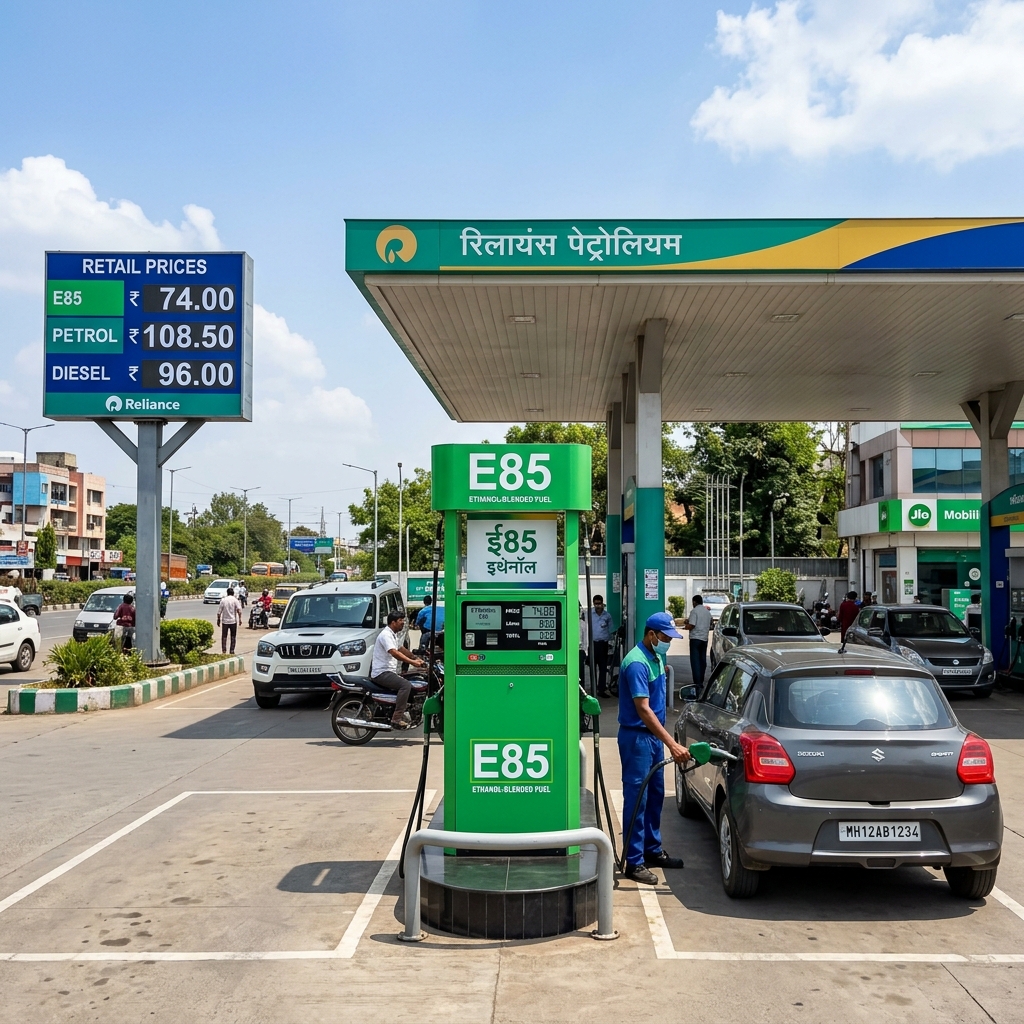
1. Dedicated Pipelines: India must invest in dedicated ethanol pipelines connecting major production hubs to regional depots. This dramatically reduces transportation costs and carbon emissions compared to road transport. 2. Dispensing Infrastructure: Oil Marketing Companies (OMCs) need to retrofit existing fuel stations with ethanol-compatible storage tanks and dispensers. The rollout of E20 and eventually E85 pumps must be widespread and visible to build consumer confidence. 3. Strategic Reserves: Establishing strategic reserves of ethanol can help buffer against seasonal supply fluctuations and ensure a steady blending rate throughout the year.
Lesson 5: Consumer Education and Pricing Parity
Brazilian consumers understand the economics of ethanol. Because ethanol has a lower energy density than gasoline (yielding roughly 30% fewer kilometers per liter), it must be priced significantly cheaper than gasoline to be economically viable. In Brazil, the rule of thumb is that ethanol is the better buy if its price is less than 70% of the price of gasoline.
What India Must Do: 1. Competitive Pricing at the Pump: The government and OMCs must ensure that higher ethanol blends (like E20 or E85) are priced lower than standard E10 gasoline to account for the lower energy density. If consumers perceive that they are paying the same price for less mileage, the program will face massive resistance. Tax adjustments at the retail level will be required to maintain this price parity. 2. Mass Awareness Campaigns: The government must launch extensive educational campaigns. Consumers need to understand that E20 or flex-fuels are safe for their compatible vehicles, beneficial for the environment, and supportive of Indian farmers. Dispelling myths about engine damage and performance loss is crucial. 3. Labeling: Clear labeling on fuel pumps and vehicle fuel caps regarding ethanol compatibility will prevent misfueling and build trust.
---
The Broader Economic and Environmental Impact
Replicating Brazil's success offers India benefits that extend far beyond simply fueling cars.
Rural Economic Transformation
The ethanol program is fundamentally an agricultural initiative. By creating a sustained, high-volume demand for sugarcane, maize, and agricultural residues, the program guarantees a stable income for millions of Indian farmers. It shifts the agricultural paradigm from surplus management (which often leads to distressed sales and government bailouts) to wealth creation. The establishment of distilleries in rural areas also creates direct and indirect employment, stimulating local economies.Foreign Exchange Savings
Every liter of domestically produced ethanol replaces a corresponding amount of imported crude oil. Achieving E20 by 2025 is estimated to save India billions of dollars annually in foreign exchange. These saved funds can be redirected towards critical infrastructure, healthcare, and education. If India eventually scales to Brazilian levels of ethanol consumption via FFVs, the macroeconomic benefits will be transformative.Environmental Rejuvenation
Ethanol burns cleaner than gasoline, producing significantly lower levels of carbon monoxide, unburned hydrocarbons, and particulate matter. Widespread adoption of E20 and E85 will lead to a tangible improvement in the air quality of India's congested metropolises. Furthermore, ethanol is a renewable resource; the carbon dioxide emitted during its combustion is roughly equal to the carbon dioxide absorbed by the crops during their growth phase, creating a near-closed carbon loop.When coupled with the potential reduction in agricultural stubble burning through 2G ethanol production, the environmental benefits become doubly impactful.
---
Challenges India Faces in Replicating the Model
While the Brazilian model is the gold standard, India faces unique challenges that prevent a simple "copy-paste" approach.
1. Water Scarcity: Sugarcane is a highly water-intensive crop. While Brazil receives abundant rainfall in its agricultural zones, India's agriculture is heavily reliant on a volatile monsoon and rapidly depleting groundwater reserves. Over-reliance on sugarcane for ethanol could exacerbate regional water crises. This necessitates the shift towards less water-intensive crops like maize. 2. Food Security: With a population of 1.4 billion, ensuring food security is the government's absolute priority. Any policy that diverts arable land or edible crops towards fuel production will face intense scrutiny. Balancing the remunerative prices of ethanol feedstocks against the prices of essential food grains requires careful and dynamic policy management. 3. Land Holdings: Brazilian agriculture is characterized by massive, consolidated farms that allow for high mechanization and economies of scale. In contrast, Indian agriculture is dominated by small and marginal farmers with fragmented landholdings. Organizing these farmers into efficient supply chains for distilleries requires robust cooperative frameworks and institutional support.
---
The Road Ahead: Forging India's Own Path
Brazil has provided the world with undeniable proof that a large-scale, sustainable biofuel economy is not just a theoretical concept, but a practical, economically viable reality. The Brazilian ethanol miracle was not achieved overnight; it required decades of unwavering policy support, technological innovation, and infrastructural investment.
India is currently at a critical inflection point. The success of the E10 program has proven that the administrative and logistical machinery can deliver results. However, scaling up to E20, introducing Flex-Fuel Vehicles, and eventually targeting higher blends like E85 requires an exponential leap in effort and coordination.
India cannot merely replicate Brazil; it must adapt the Brazilian lessons to the unique realities of the Indian subcontinent. This means prioritizing water-efficient feedstocks, rapidly commercializing 2G ethanol technology to utilize crop residues, and structuring pricing mechanisms that protect the consumer, incentivize the farmer, and ensure the viability of the industry.
The transition to a bio-based fuel economy is a monumental undertaking, but the rewards—energy independence, rural prosperity, and a cleaner environment—are immeasurable. By learning from the global ethanol leader and executing a uniquely Indian strategy, India has the potential to not only achieve its own energy goals but also emerge as a global superpower in the renewable energy landscape.
The seeds have been sown. Now, with the right policies and infrastructure, India must cultivate its own ethanol miracle.
--- Stay tuned to our blog for more insights into the future of biofuels, flex-fuel technology, and the road to sustainable transportation in India.