When it comes to extracting maximum performance from an internal combustion engine, few upgrades offer the massive bang-for-the-buck of switching to E85. Often affectionately referred to as "corn juice" by automotive enthusiasts, E85 is a blend of 85% ethanol and 15% gasoline. It boasts a high octane rating (typically around 105 to 110 octane), incredible cooling properties due to its high latent heat of vaporization, and the ability to run more aggressive ignition timing and higher boost pressures without encountering engine-destroying detonation or knock.
However, tuning for E85 is entirely different from tuning for standard pump gasoline. The most critical aspect of this tuning process is understanding and dialing in the correct Air-Fuel Ratio (AFR). If you get the AFR wrong, you risk not only leaving massive amounts of horsepower and torque on the table but also potentially causing catastrophic engine failure.
In this exhaustive 2500-word guide, we will dive deep into everything you need to know about the ideal Air-Fuel Ratio for E85. We will explore the science of stoichiometry, the crucial concept of Lambda ($\lambda$), optimal ratios for different driving conditions (idle, cruise, and wide-open throttle), the physical properties of ethanol, fuel system requirements, and the best practices for tuning your engine on E85.
---
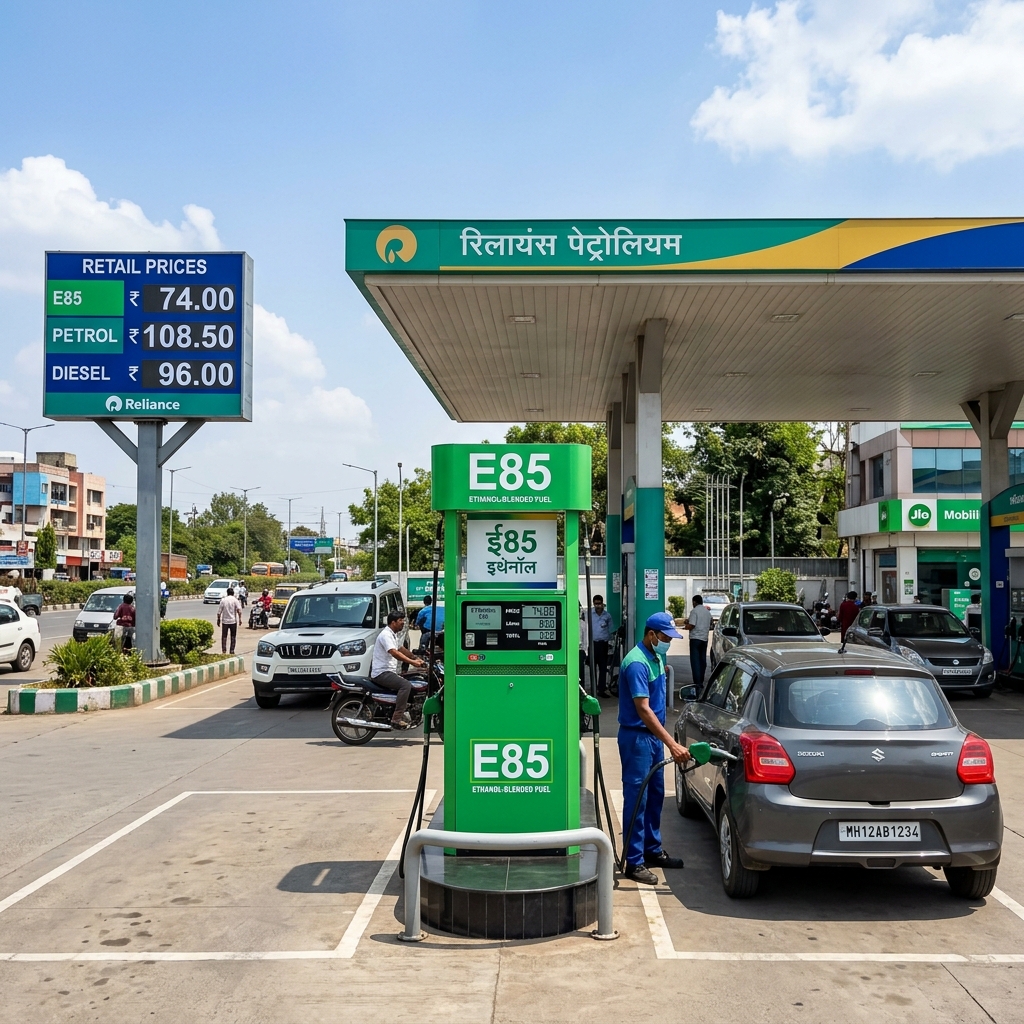
1. Understanding Air-Fuel Ratio (AFR)
To comprehend the ideal AFR for E85, we must first understand what Air-Fuel Ratio actually means. The Air-Fuel Ratio is the mass ratio of air to a solid, liquid, or gaseous fuel present in a combustion process. In the context of an internal combustion engine, it represents how many parts of air are mixed with one part of fuel.
Stoichiometry: The Perfect Burn
The stoichiometric mixture is the ideal ratio at which there is exactly enough air to burn all the fuel present, with no excess air or unburned fuel left over. This is a chemically perfect burn.- For pure gasoline*, the stoichiometric AFR is widely accepted as *14.7:1. This means it takes 14.7 pounds of air to completely burn 1 pound of gasoline. - For pure ethanol (E100)*, the stoichiometric AFR is *9.0:1. - For E85 (85% ethanol, 15% gasoline)*, the stoichiometric AFR is approximately **9.76:1** to *9.8:1.
Because E85 has a much lower stoichiometric AFR than gasoline, you need to inject roughly 30% to 40% more fuel volume into the combustion chamber to achieve a complete burn compared to regular pump gas. This is the primary reason why switching to E85 requires significantly larger fuel injectors and more robust fuel pumps.
Lean vs. Rich
- Lean Mixture: When the AFR is higher than the stoichiometric ratio (e.g., 11.0:1 on E85), there is more air than necessary. This improves fuel economy but increases combustion temperatures, which can lead to pre-ignition and engine damage under heavy load. - Rich Mixture: When the AFR is lower than stoichiometric (e.g., 8.0:1 on E85), there is excess fuel. This cools the combustion chamber and prevents knock but reduces fuel economy and can cause spark plug fouling or oil dilution (cylinder wash) if excessively rich.---
2. The Golden Rule of E85 Tuning: Lambda ($\lambda$) is King
If you are tuning for E85, you must familiarize yourself with Lambda ($\lambda$). Many tuners and enthusiasts make the mistake of using gasoline AFR scales on their wideband oxygen sensors when tuning for E85, which leads to massive confusion.
What is Lambda?
Lambda is an equivalence ratio that represents the actual air-fuel mixture relative to the stoichiometric mixture for any given fuel.The formula is simple: Lambda ($\lambda$) = Actual AFR / Stoichiometric AFR
- A Lambda of 1.0 always means the mixture is exactly stoichiometric, regardless of what fuel you are using. - A Lambda of 0.85 is rich (15% more fuel than stoichiometric). - A Lambda of 1.10 is lean (10% less fuel than stoichiometric).
The Wideband Sensor Confusion
Most wideband O2 sensors do not actually measure Air-Fuel Ratio directly. They measure the oxygen content in the exhaust gas (Lambda) and then multiply it by a pre-programmed multiplier (usually 14.7 for gasoline) to display an AFR on the gauge.If your wideband gauge is set to the gasoline scale (14.7) but you are running E85, a stoichiometric burn of E85 (which is actually 9.8:1 AFR) will still read as 14.7 on the gauge because the sensor is reading Lambda 1.0 and multiplying it by 14.7.
To avoid this confusion, professional tuners recommend setting your engine management system and wideband gauge to display Lambda rather than AFR. - Lambda 1.0 is stoichiometry for pump gas. - Lambda 1.0 is stoichiometry for E85. - Lambda 1.0 is stoichiometry for methanol.
If you tune in Lambda, you never have to do mental gymnastics when switching between fuels.
---
3. What is the Ideal AFR for E85?
There is no single "ideal" AFR for E85 because the optimal mixture changes drastically depending on engine load, RPM, and whether the engine is naturally aspirated or forced induction (turbocharged/supercharged).
Here is a comprehensive breakdown of the ideal Lambda values and their corresponding E85 AFR (assuming a true E85 stoichiometric of 9.76:1) for various operating conditions.
A. Idle and Light Cruise
When you are idling at a stoplight or cruising steadily down the highway at low load, your primary goals are smooth engine operation, fuel efficiency, and emissions reduction. At this state, the engine does not need to produce maximum torque, nor is it at risk of detonation.- Ideal Lambda: 1.00 - True E85 AFR: ~9.8:1 - Gasoline Scale AFR (Gauge Reading): 14.7:1
Running at Lambda 1.0 ensures the catalytic converters operate efficiently and prevents excessive fuel consumption. Some tuners may run E85 slightly leaner at cruise (Lambda 1.05 to 1.10 / True AFR 10.2:1 to 10.7:1) to squeeze out extra MPG, but this depends on the specific engine's tolerance for lean mixtures without experiencing lean-misfire.
B. Naturally Aspirated Engines at Wide Open Throttle (WOT)
When a naturally aspirated (NA) engine goes into wide-open throttle (WOT), it requires a richer mixture to produce maximum brake torque (MBT). The extra fuel helps lower in-cylinder temperatures and provides a denser charge.- Ideal Lambda: 0.85 to 0.88 - True E85 AFR: 8.3:1 to 8.6:1 - Gasoline Scale AFR (Gauge Reading): 12.5:1 to 12.9:1
E85 has a very wide tuning window for maximum power. While gasoline loses power quickly if it gets too rich, E85 will often continue to make great power down to 0.80 Lambda, though you will be burning excess fuel for minimal or zero power gains.
C. Forced Induction (Turbocharged/Supercharged) at WOT
Forced induction (boosted) engines generate immense cylinder pressures and heat. Here, E85 shines the brightest. The high latent heat of vaporization of ethanol means that as the fuel changes from liquid to gas inside the intake tract or cylinder, it absorbs massive amounts of heat, drastically lowering intake air temperatures (IATs).Because of the extreme pressures in a boosted engine, you must run a richer mixture to keep temperatures in check and stave off detonation.
- Ideal Lambda: 0.78 to 0.82 - True E85 AFR: 7.6:1 to 8.0:1 - Gasoline Scale AFR (Gauge Reading): 11.5:1 to 12.0:1
If you are running extreme boost levels (e.g., 30+ psi on a highly built engine), tuners will often target the richer end of this spectrum (0.75 - 0.78 Lambda) as a safety margin. While this uses an incredible amount of fuel, it acts as a liquid intercooler, ensuring the pistons and valves survive the immense heat.
D. Spool-Up / Transients
For turbocharged engines, getting the turbo to spool (generate boost) quickly is crucial for drivability. A slightly leaner mixture produces hotter exhaust gas temperatures (EGTs). Hotter gas expands more, driving the turbine wheel harder and faster.During the brief moment of turbo spool-up before peak boost is reached, tuners might target: - Ideal Lambda: 0.88 to 0.90 - True E85 AFR: 8.6:1 to 8.8:1
Once peak boost is achieved, the fuel map will immediately command a richer mixture (e.g., 0.80 Lambda) for engine safety.
---
4. The E85 Advantage: Why is it the Ultimate Performance Fuel?
Now that we know the ideal AFRs, let's explore why running these rich AFRs on E85 yields such spectacular results compared to premium pump gas.
1. High Octane Rating
Standard premium gasoline in most regions maxes out at 91 to 93 octane (AKI). E85 ranges from 100 to 105 octane. Octane is a measure of a fuel's resistance to detonation (knock). Because E85 is highly knock-resistant, tuners can advance the ignition timing significantly. Advancing ignition timing means the spark plug fires earlier in the compression stroke, creating more peak cylinder pressure at the optimal angle of the crankshaft, which directly translates to massive torque and horsepower gains.2. The Cooling Effect (Latent Heat of Vaporization)
Ethanol absorbs about 2.5 times more heat per unit of mass than gasoline when it vaporizes. Furthermore, because E85 requires you to inject about 35% more fuel mass into the cylinder compared to gasoline to reach stoichiometry, the total cooling effect in the cylinder is immense.This drastic reduction in cylinder temperatures makes E85 behave almost like a chemical intercooler. This cooling effect is what allows forced induction engines to run incredibly high boost pressures on E85 that would instantly melt a piston on 93 octane gasoline.
3. Oxygenated Fuel
Ethanol is an oxygenated hydrocarbon. The chemical formula for ethanol is C2H5OH. Notice the "O" in the formula? Ethanol carries its own oxygen into the combustion chamber. Even when the engine is starved for atmospheric air, the oxygen within the fuel molecule assists in the combustion process, allowing for more power generation.---
5. The "E85" Variability: Flex Fuel and Winter Blends
One of the most dangerous misconceptions about E85 is that it is always exactly 85% ethanol. In reality, the ethanol content at the pump fluctuates based on the region and the season.
Winter Blends (E70)
In colder climates, pure ethanol struggles to vaporize in freezing temperatures, which leads to cold-start issues. To combat this, fuel stations switch to "Winter Blend E85" during the colder months. Winter blend is often only 70% ethanol and 30% gasoline (E70), and sometimes it can dip as low as 50% ethanol (E50).If your engine is hard-tuned for true E85 (85% ethanol) and you suddenly fill up with E70, your stoichiometric point changes. The engine will run richer than expected. While running slightly rich is generally safe, your ignition timing might be too aggressive for the lower octane of the E70 blend, leading to knock.
The Solution: Flex Fuel Sensors
The only safe and reliable way to run E85 in a street car is by using a Flex Fuel Sensor integrated into a standalone ECU (like Haltech, MoTeC, or AEM) or a modern stock ECU capable of flex-fuel logic (like Cobb Accessport or EcuTek).A flex-fuel sensor is installed in the return or feed fuel line. It continuously measures the exact percentage of ethanol in the fuel flowing to the engine and sends a signal to the ECU. The tuner creates a sliding scale in the ECU software. If the sensor reads 85% ethanol, the ECU commands the full E85 fuel volume and aggressive ignition timing. If you fill up with 93 octane and the sensor reads 10% ethanol (E10), the ECU immediately scales back the fuel volume and retards the ignition timing to gasoline-safe levels.
This allows you to mix E85 and pump gas in your tank seamlessly, without ever having to switch maps or worry about engine damage.
---
6. Fuel System Upgrades for E85
Achieving the ideal Air-Fuel Ratio on E85 is impossible if your fuel system cannot deliver the required volume. Because E85 demands 30% to 40% more fuel mass than gasoline, you cannot simply pour it into a stock engine and expect it to work. Attempting to do so will result in a severely lean condition (Lambda > 1.2), triggering check engine lights and potentially melting the engine under load.
1. Fuel Injectors
Your factory fuel injectors will likely "max out" (reach 100% duty cycle) on E85, meaning they stay open constantly but still cannot flow enough fuel. You must upgrade to high-flow injectors. For a turbocharged 4-cylinder aiming for 500hp, 1000cc to 1300cc injectors are typically required for E85. For V8s making over 800hp, 1500cc or even 2000cc injectors are common.2. Fuel Pumps
The stock in-tank fuel pump will also fall short. You need a high-flow, E85-compatible fuel pump. E85 is highly corrosive to certain rubbers and plastics used in older fuel systems. Modern E85-compatible pumps (like those from Walbro/TI Automotive or Aeromotive) feature sealed wiring and ethanol-resistant impellers. Often, high-horsepower builds require dual or even triple in-tank fuel pumps.3. Fuel Lines and Filters
If your car was built before the mid-2000s, the rubber fuel lines may degrade when exposed to high concentrations of ethanol, leading to leaks or clogged injectors. Upgrading to PTFE (Teflon) fuel lines ensures complete chemical resistance to E85. Additionally, you should run a high-quality stainless steel or micro-glass fuel filter, as E85 acts as a powerful solvent that will clean decades of sludge out of your gas tank and send it straight toward your new expensive injectors.---
7. The Dangers of Running E85 Too Lean or Too Rich
While E85 is incredibly forgiving compared to pump gas, ignoring the ideal AFR targets will eventually catch up with you.
Risks of Running Too Lean (High Lambda)
1. Pre-Ignition and Detonation: If you run leaner than 0.85 Lambda under heavy boost, cylinder temperatures will spike. While E85 resists knock, it is not immune to it. Severe detonation will shatter ringlands, bend connecting rods, or blow head gaskets. 2. Exhaust Valve Damage: Lean mixtures burn extremely hot and slow. This fire can still be burning when the exhaust valves open, acting like a blowtorch on the valves and the turbocharger turbine wheel.Risks of Running Too Rich (Low Lambda)
1. Cylinder Wash (Oil Dilution): E85 requires massive fuel volume. If you run excessively rich (Lambda 0.70 or lower), the unburned ethanol will wash the protective oil film off the cylinder walls. This leads to accelerated piston ring and cylinder wall wear. Worse, the unburned E85 seeps past the piston rings and down into the oil pan. Over time, the ethanol degrades the engine oil's viscosity, leading to spun rod bearings and catastrophic failure. 2. Spark Plug Fouling (Black Smoke): Running too rich will quickly foul spark plugs with black soot, leading to misfires under load. 3. Loss of Power: While running slightly rich acts as a safety net, dumping excessive fuel into the chamber displaces oxygen. Without oxygen, you cannot make power. A tune that is too rich will feel sluggish and lose significant horsepower.---
8. Best Practices for E85 Tuning
If you are a tuner or an enthusiast working with a professional calibrator, here is a summary checklist for dialing in the perfect E85 tune:
1. Change Your Mindset to Lambda: Stop talking in gasoline AFR numbers (14.7, 11.5). Set your software and gauges to Lambda. Target 1.0 for idle, 0.85 for NA WOT, and 0.80 for Boosted WOT. 2. Install a Flex Fuel Sensor: Never guess what is in your tank. A flex fuel sensor is the cheapest insurance policy you can buy for an E85 vehicle. 3. Monitor Fuel Pressure: As boost pressure rises, fuel pressure must rise at a 1:1 ratio. If your fuel pump is weak, fuel pressure will drop at high RPM, causing the engine to run dangerously lean. A fuel pressure sensor wired to an ECU safety cut is mandatory. 4. Mind Your Oil: Because E85 introduces more moisture into the crankcase and has a tendency to dilute oil, you must change your engine oil much more frequently. Every 3,000 miles (or sooner for track cars) is highly recommended. Use a high-quality synthetic oil designed for high-performance applications. 5. Cold Start Enrichment: E85 does not vaporize well when the engine is freezing cold. The ECU will need significant "cranking fuel enrichment" (sometimes 200-300% more fuel) at startup in cold weather to get the engine to catch and fire smoothly.
---
9. Frequently Asked Questions (FAQ)
Q: Can I run E85 on a stock ECU without a tune? A: Absolutely not, unless your vehicle is specifically badged as a "Flex Fuel Vehicle" (FFV) from the factory. If you put E85 in a standard car, it will run extremely lean, throw check engine lights, and likely result in engine damage under load.
Q: What should my wideband gauge read on E85 at idle? A: If your gauge is set to the standard gasoline scale, it should read 14.7:1 at idle. If it is set to the E85 scale, it should read 9.8:1. If it is set to Lambda, it should read 1.0.
Q: Does E85 ruin engines? A: E85 does not ruin engines; poor tuning and inadequate fuel systems ruin engines. If properly tuned with compatible injectors, pumps, and lines, an engine will often last longer on E85 because the internal temperatures are drastically lower than on pump gas.
Q: Why does my MPG drop on E85? A: E85 has less energy density per gallon than gasoline. Because it requires 30% to 40% more fuel volume to achieve a stoichiometric burn, your fuel economy (MPG) will decrease by roughly 25% to 30%. However, the horsepower gains usually make this a worthwhile tradeoff for performance enthusiasts.
---
10. Conclusion
Finding the ideal Air Fuel Ratio (AFR) for E85 is the cornerstone of unlocking the immense power potential of this incredible fuel. By shifting your mindset away from traditional gasoline AFRs and embracing the concept of Lambda, tuning for E85 becomes logical and consistent.
Remember the golden rules: - Lambda 1.0 for idle and cruising. - Lambda 0.85 (NA)* or *Lambda 0.80 (Forced Induction) for maximum power and safety at wide-open throttle.
E85 is not a magic potion you can simply pour into a stock gas tank. It requires a robust, high-flowing fuel system, an accurate flex-fuel sensor, and a precise calibration by a competent tuner. Once properly dialed in, however, E85 provides a level of knock resistance, cooling, and horsepower generation that rivals highly expensive race fuels, all at a fraction of the cost.
Whether you are building a 400hp daily driver or a 1500hp drag monster, mastering the E85 Air-Fuel Ratio is your key to reliable, record-setting performance.
Disclaimer: Automotive tuning carries inherent risks. Always consult with a professional calibrator and ensure your hardware can support your power goals before attempting to modify your engine's fueling or ignition timing.