The Indian automotive landscape is undergoing a monumental shift, driven by the dual imperatives of reducing a massive crude oil import bill and combating escalating urban pollution. Central to this transformation is the aggressive push towards alternative fuels, with ethanol blending taking center stage. While Electric Vehicles (EVs) often steal the limelight, the transition to ethanol-blended fuels, particularly E85 (a blend of 85% ethanol and 15% petrol), presents an immediate, scalable, and pragmatic solution. In this dynamic scenario, one question looms large: Is Hyundai India, and specifically its blockbuster SUV, the Creta, ready for the flex-fuel revolution?
The Hyundai Creta isn't just a car in India; it's a phenomenon. It established the mid-size SUV segment and has reigned supreme despite fierce competition. Therefore, the introduction of a Hyundai Creta Flex Fuel variant isn't just another product launch; it's a critical inflection point for the industry. This comprehensive analysis dives deep into what a flex-fuel Creta would entail, Hyundai's technological readiness, the challenges ahead, and what it means for the Indian consumer.
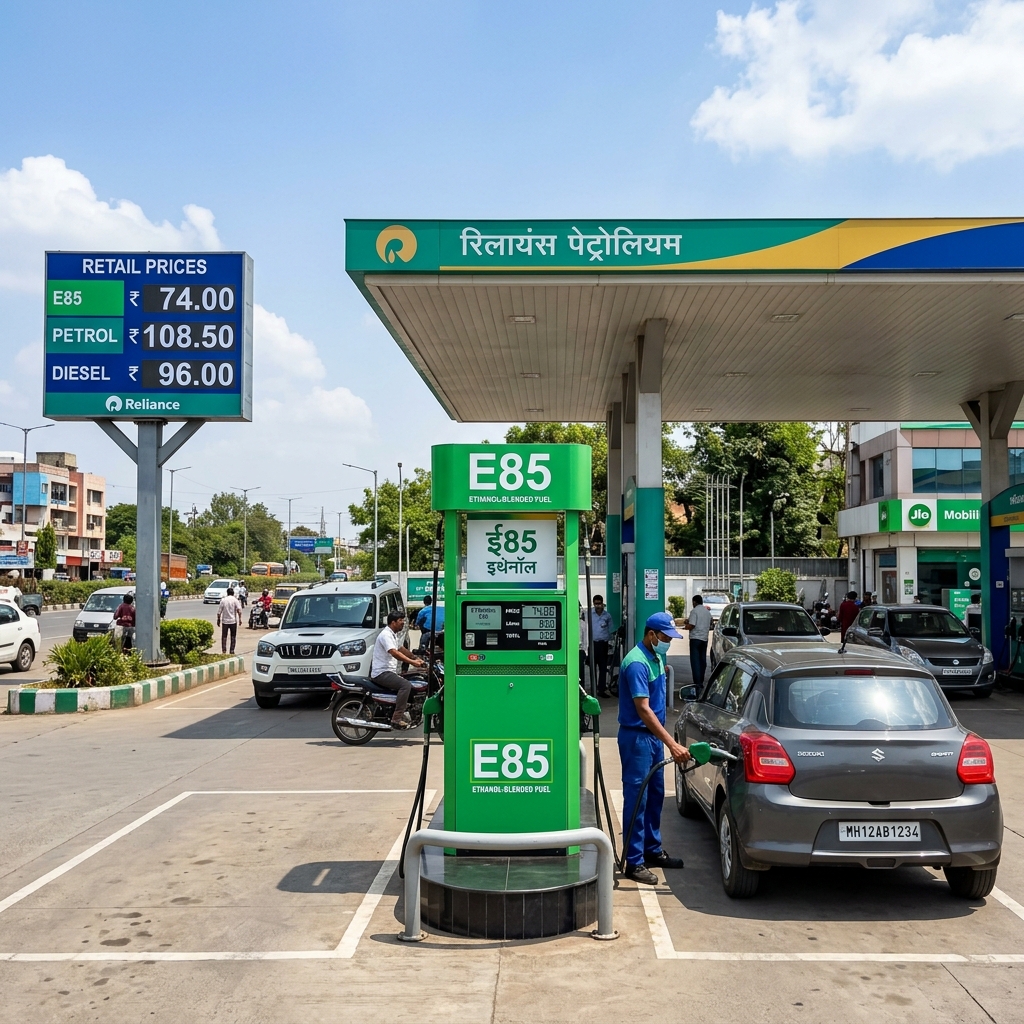
Understanding the Shift: The Case for E85 and Flex Fuel in India
Before analyzing Hyundai's readiness, it is crucial to understand why E85 and flex-fuel technology are so vital for India.
What is Flex Fuel Technology?
A Flexible Fuel Vehicle (FFV) or flex-fuel vehicle has an internal combustion engine (ICE) designed to run on more than one fuel, usually gasoline blended with either ethanol or methanol fuel, and both fuels are stored in the same common tank. Modern flex-fuel engines are capable of burning any proportion of the resulting blend in the combustion chamber as fuel injection and spark timing are adjusted automatically according to the actual blend detected by a fuel composition sensor.The Significance of E85
E85 represents a fuel blend containing up to 85% ethanol and 15% petrol (gasoline). Ethanol is a renewable biofuel primarily derived from plant materials like sugarcane, corn, and agricultural waste.India's interest in ethanol is strategic. The country imports roughly 85% of its crude oil requirements, which puts a massive strain on foreign exchange reserves. By substituting petrol with domestically produced ethanol, India can save billions. Furthermore, ethanol burns cleaner than petrol, emitting fewer greenhouse gases and pollutants, aligning perfectly with India's climate commitments. The government has already achieved its E10 (10% ethanol blending) target ahead of schedule and is aggressively pursuing an E20 target by 2025. The logical next step, as advocated by policymakers, is the mass adoption of E85 flex-fuel vehicles.
The King of the Segment: Why the Creta Matters
To understand the impact of a potential Creta Flex Fuel, one must acknowledge the stature of the Creta in the Indian market. Since its launch in 2015, the Creta has consistently topped sales charts. It defines what Indian consumers want in an SUV: striking design, robust feature list, varied powertrain options, and reliable after-sales service.
If Hyundai introduces flex-fuel technology in the Creta, it won't just be testing the waters; it will be mainstreaming the technology. When the market leader adopts a new standard, the ecosystem—from component suppliers to fuel retailers—is forced to adapt rapidly. A Creta running on E85 would validate the technology in the eyes of the Indian consumer, turning it from a niche alternative to a mainstream choice.
Hyundai's Global Flex Fuel Expertise: The Brazilian Connection
A common misconception is that flex-fuel technology is entirely new to automakers. For Hyundai, nothing could be further from the truth. The key to answering whether the "Korean Giant is ready" lies in South America, specifically Brazil.
Brazil has one of the world's most mature and successful flex-fuel programs. Introduced in the early 2000s, flex-fuel vehicles now account for the vast majority of new car sales in the country. Hyundai has been a major player in this market for over a decade.
The HB20 and Creta in Brazil
Hyundai manufactures and sells flex-fuel versions of its popular models, including the HB20 hatchback and the Creta SUV, in Brazil. The Brazilian Creta is offered with engines calibrated to run on E100 (100% hydrated ethanol) or any blend of petrol and ethanol.These engines feature specialized components to handle the corrosive nature of ethanol. They utilize different fuel pumps, fuel lines, injectors, and engine mapping. Hyundai’s engineering teams have years of real-world data and experience in developing, refining, and mass-producing these powertrains.
Therefore, technologically, Hyundai does not need to invent a flex-fuel engine from scratch for India. The core technology, the engineering know-how, and the supplier relationships for flex-fuel components already exist within the global Hyundai ecosystem.
Adapting the Creta for E85 in India: The Engineering Challenge
While the core technology exists, bringing a flex-fuel Creta to India is not a simple 'plug-and-play' operation. The Indian context presents unique engineering and commercial challenges.
1. Engine Modifications and Material Upgrades
Ethanol is hygroscopic (absorbs water) and can be corrosive to certain metals, plastics, and rubbers used in traditional fuel systems. To run on E85, the Creta's engines (currently the 1.5L naturally aspirated petrol and the 1.5L turbo-petrol) would require significant hardware upgrades: * Fuel Lines and Tank: Must be upgraded to ethanol-resistant materials. * Fuel Pump and Injectors: Need higher flow rates because ethanol contains less energy by volume than petrol (meaning more fuel must be injected to achieve the same power). * Valve Seats and Piston Rings: Hardened materials are required to withstand the different combustion characteristics of high-ethanol blends.2. ECU Calibration and Sensors
The brain of the car, the Engine Control Unit (ECU), needs entirely new mapping. An E85 Creta would require a specialized fuel composition sensor in the fuel line. This sensor detects the exact percentage of ethanol in the tank (which can vary every time the user refuels) and instantly sends this data to the ECU. The ECU then adjusts spark timing and fuel injection duration in milliseconds to ensure optimal combustion, performance, and emissions, regardless of whether the tank has E20, E50, or E85.3. Cold Start Issues
One of the historical challenges with high-ethanol blends like E85 is cold starting, especially in lower temperatures. Ethanol has a higher latent heat of vaporization than petrol, making it harder to vaporize and ignite in a cold engine. While not a severe problem in most of India, regions with harsh winters (like the North and Northeast) could pose a challenge. Hyundai would need to implement solutions like heated fuel rails or specialized cold-start injection strategies, which add cost and complexity.The Benefits: Why a Creta E85 is a Game-Changer
If Hyundai successfully navigates the engineering challenges, a Creta Flex Fuel offers compelling advantages for various stakeholders.
For the Consumer
* Lower Running Costs: This is the primary driver. Ethanol is generally priced significantly lower than petrol. Even accounting for the lower energy density of ethanol (which results in slightly lower mileage per liter compared to petrol), the cost per kilometer on E85 is expected to be substantially cheaper. For high-mileage users, a flex-fuel Creta could offer running costs comparable to or even better than a diesel variant, without the associated emissions concerns or the 10-year scrappage rule prevalent in cities like Delhi NCR. * Performance Boost: Ethanol has a higher octane rating (around 100-105) compared to standard petrol (91-95). A higher octane rating allows the engine to run more advanced ignition timing without knocking. In turbocharged engines, like the Creta's 1.5L Turbo, this can translate to a noticeable increase in horsepower and torque when running on E85. * Fuel Flexibility: True to its name, a flex-fuel vehicle offers peace of mind. If an E85 pump is not available on a highway trip, the driver can seamlessly fill up with standard E10 or E20 petrol without any issues.For the Environment and the Nation
* Reduced Emissions: E85 burns significantly cleaner, producing lower levels of carbon monoxide, particulate matter, and nitrogen oxides. A widespread shift to flex-fuel SUVs like the Creta would demonstrably improve urban air quality. * Energy Security: Every liter of ethanol used is a fraction of a liter of crude oil that India doesn't have to import. This strengthens the economy and provides energy independence. * Boosting the Agrarian Economy: The increased demand for ethanol directly benefits farmers by creating a massive market for sugarcane, maize, and agricultural residues.The Hurdles: Infrastructure and Cost
Despite the benefits and technological readiness, two major roadblocks stand in the way of a swift launch.
The Chicken and Egg Problem of Infrastructure
The biggest hurdle is fuel availability. Currently, E85 pumps are virtually non-existent in India. The government is pushing oil marketing companies (OMCs) to set up dedicated ethanol pumps, but progress is slow.Automakers are hesitant to launch flex-fuel vehicles if consumers can't find the fuel. Conversely, OMCs are reluctant to invest in specialized E85 dispensing infrastructure if there are no cars on the road to buy the fuel. This classic chicken-and-egg situation requires decisive government intervention and coordinated action between OEMs and fuel retailers.
The Cost Penalty
Modifying an engine for flex-fuel capability is not free. The upgraded materials, sensors, and recalibrated ECUs add to the manufacturing cost. Industry estimates suggest that a flex-fuel variant could cost anywhere from ₹30,000 to ₹60,000 more than its standard petrol counterpart.In the highly price-sensitive Indian market, this premium must be justified by the lower running costs. If the government does not provide adequate tax incentives on flex-fuel vehicles or ensure a substantial price differential between E85 and petrol at the pump, consumers will stick to standard petrol or hybrid options.
The Competitive Landscape
Hyundai does not operate in a vacuum. Its rivals are also gearing up for the flex-fuel era.
* Maruti Suzuki and Toyota: The formidable alliance is aggressively pursuing multiple alternative fuel strategies, including strong hybrids, CNG, and flex-fuel. Maruti Suzuki has already showcased a flex-fuel prototype of the WagonR and has indicated plans to introduce the technology across its lineup. Given their massive market share, a move by Maruti will force the entire industry to follow suit. Toyota, a global leader in flex-fuel technology, will likely equip models like the Hyryder with E85 capabilities. * Tata Motors and Mahindra: Both Indian giants are deeply invested in EVs, but they also recognize the interim necessity of flex-fuel. Mahindra, with its focus on rugged SUVs, will likely explore flex-fuel options for its petrol engines to maintain relevance in regions where EV charging is impractical.
Hyundai must move swiftly to ensure the Creta doesn't lose its technological edge. Being the first to launch a mainstream, desirable flex-fuel SUV could cement its leadership for the next decade.
The Role of Government Policy
The trajectory of the Hyundai Creta Flex Fuel is fundamentally tied to government policy. The Indian government has expressed strong intent, but policy clarity is needed in three critical areas:
1. Taxation: Currently, EVs enjoy a GST rate of just 5%. Petrol and diesel cars face GST rates of 28% plus cess. For flex-fuel vehicles to be commercially viable, the government must lower the GST rate on these vehicles, perhaps bringing them on par with or close to EVs. 2. Fuel Pricing: The economic argument for the consumer only works if E85 is significantly cheaper than petrol. The government must ensure a pricing structure that incentivizes the use of ethanol. 3. Mandates: If the government mandates a certain percentage of fleet sales to be flex-fuel by a specific year, automakers will be forced to accelerate their timelines.
Expected Timeline: When Will We See the Creta E85?
Given the complexities of infrastructure and policy, an immediate launch is unlikely. However, the pieces are moving rapidly. The government is aiming for 20% ethanol blending by 2025. This will be the foundational step.
Following this, we can expect automakers to start introducing flex-fuel capable vehicles. For the Hyundai Creta, a timeline around late 2026 or early 2027 seems plausible for the introduction of an E85 capable variant. This timeline aligns with the expected maturation of the ethanol supply chain and the rollout of E85 dispensing infrastructure at key fuel stations.
Hyundai is known for its agility and market responsiveness. It is highly probable that prototype testing of flex-fuel engines optimized for Indian conditions is already underway at Hyundai's R&D facilities.
Conclusion: A Necessary Evolution
The transition to flex-fuel is not just a passing trend for the Indian automotive industry; it is a vital bridge to a cleaner energy future. For Hyundai, adapting the Creta—its crown jewel—to run on E85 is not a question of 'if', but 'when'.
The Korean giant possesses the global expertise, particularly from its Brazilian operations, to engineer robust and reliable flex-fuel powertrains. The challenge lies not in the technology, but in navigating the nascent infrastructure and awaiting supportive government policies in India.
A Hyundai Creta Flex Fuel has the potential to democratize green mobility in India. It offers the familiar comfort, space, and prestige of the country's favorite SUV, combined with the economic and environmental benefits of a homegrown, renewable fuel. When the Creta finally embraces E85, it won't just be a victory for Hyundai; it will signal a maturing Indian automotive ecosystem ready to embrace sustainable solutions without compromising on the joy of driving. The giant is indeed ready; it is now waiting for the Indian ecosystem to catch up.