The transition towards cleaner, more sustainable energy sources is no longer a distant dream but a present reality. In India, a major driver of this change in the automotive sector is the adoption of Ethanol Blended Petrol (EBP). As the country rapidly progresses toward its ambitious E20 (20% ethanol blended with 80% petrol) target, leading Oil Marketing Companies (OMCs) like Hindustan Petroleum Corporation Limited (HPCL) and Bharat Petroleum Corporation Limited (BPCL) are at the forefront of this green revolution.
This comprehensive guide serves as an extensive directory and informational resource regarding HPCL and BPCL ethanol-blended petrol stations. Whether you are a flex-fuel vehicle owner, an environmentally conscious driver, or simply curious about India's energy transition, this article covers everything from the basics of ethanol blending to finding the nearest E20 station, the profound benefits of this fuel, and the technological advancements paving the way for a greener tomorrow.
---
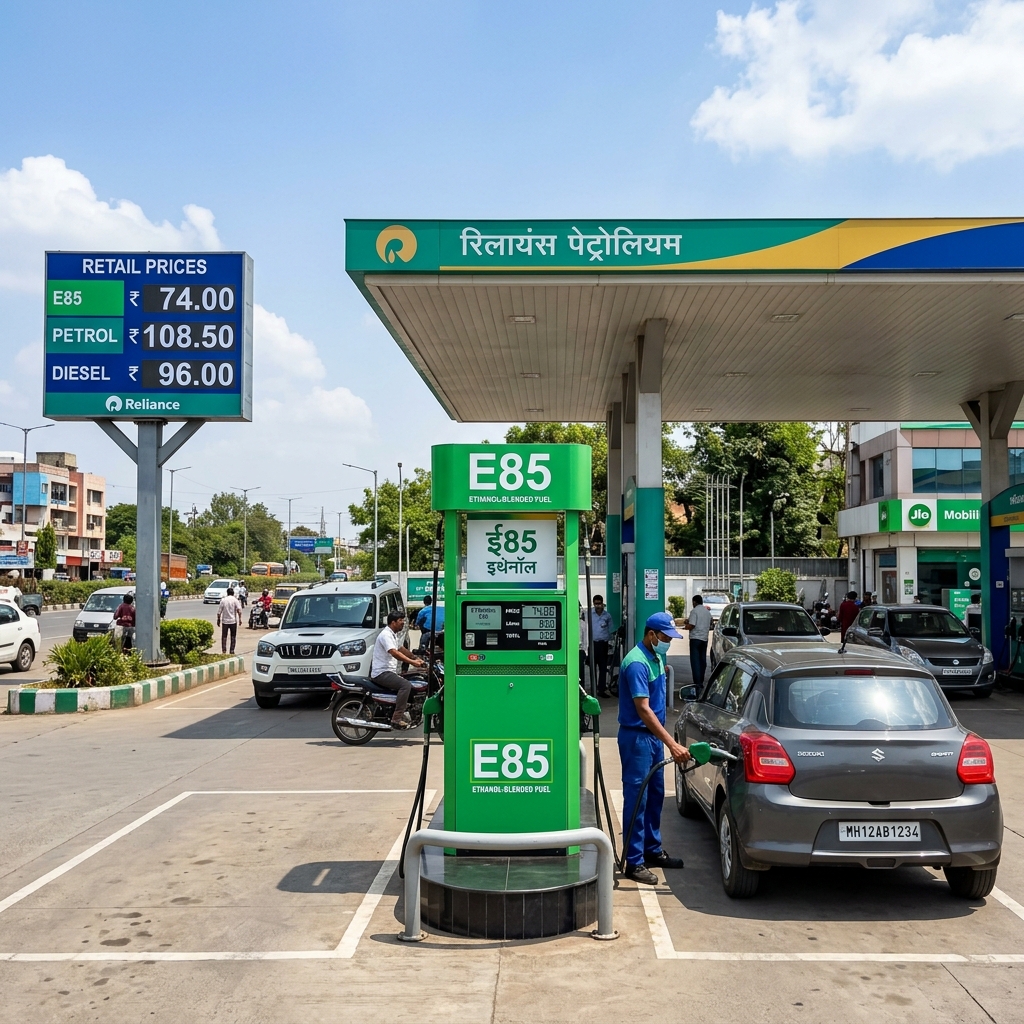
The Rise of Ethanol Blended Petrol in India
Before delving into the specifics of HPCL and BPCL stations, it is essential to understand the context of the Ethanol Blended Petrol (EBP) program in India. The government's vision is multi-faceted: reducing the carbon footprint of the transportation sector, decreasing the massive crude oil import bill, and boosting the agricultural economy by creating a new demand for ethanol, primarily derived from sugarcane, broken rice, and maize.
From E10 to E20: A Phased Rollout
India successfully achieved the target of 10% ethanol blending (E10) ahead of schedule, setting the stage for the more ambitious E20 target. The initial deadline for nationwide E20 availability was set for 2030, but recognizing the momentum and strategic benefits, the Government of India aggressively advanced this target to 2025. This acceleration required a massive ramp-up in both ethanol production capacity and the distribution infrastructure of OMCs.The Role of Oil Marketing Companies (OMCs)
The success of the EBP program rests heavily on the shoulders of state-run OMCs—Indian Oil Corporation Limited (IOCL), HPCL, and BPCL. These companies are responsible for upgrading their refineries, storage terminals, and vast retail networks to handle ethanol blends safely and efficiently. HPCL and BPCL, in particular, have been highly proactive in upgrading their dispensing units and educating consumers.---
Hindustan Petroleum Corporation Limited (HPCL): Pioneering Green Mobility
Hindustan Petroleum Corporation Limited (HPCL), a Maharatna CPSE, has a vast network of retail outlets across the length and breadth of India. Their commitment to the EBP program is evident in their aggressive rollout of E20 dispensing stations.
HPCL's E20 Infrastructure
HPCL has been upgrading its dispensing infrastructure at a breakneck pace. Ethanol, due to its chemical properties, requires specific materials for storage and dispensing to prevent corrosion and phase separation. HPCL has invested heavily in ensuring that underground tanks, pipelines, and the dispensing nozzles are fully compatible with E20 fuel.Finding HPCL E20 Stations: The Directory
To assist consumers, HPCL has integrated E20 station locators into their digital platforms. While a static list of thousands of stations is impractical to maintain in a single article, locating them has never been easier.How to find an HPCL E20 Station near you: 1. The HP Pay App: The most reliable method is using the official HP Pay mobile application. The app features a station locator that allows users to filter retail outlets by the fuel types available, including E20. 2. HPCL Official Website: The HPCL website offers a comprehensive retail outlet locator. By entering your state, district, and city, you can view a list of stations and their available amenities and fuels. 3. Signage at Retail Outlets: HPCL E20 stations are distinctly marked. Look for prominent green signage and specific branding on the dispensing units indicating "E20 Fuel Available Here."
Major Cities with Extensive HPCL E20 Coverage
While the rollout is pan-India, initial phases heavily targeted major metropolitan and Tier-1 cities to maximize impact. * Delhi NCR: A dense network of HPCL E20 stations ensures seamless availability for commuters. * Mumbai & Pune: Maharashtra, being a major sugarcane and ethanol-producing state, sees high availability of HP20 (as it's sometimes colloquially known) across HPCL bunks. * Bengaluru & Chennai: Southern metropolises have seen a rapid conversion of existing petrol pumps to E20 compatible ones.---
Bharat Petroleum Corporation Limited (BPCL): Fueling the Future
Bharat Petroleum Corporation Limited (BPCL), another titan of the Indian oil and gas sector, shares a similar zeal for the E20 mandate. With its "Pure for Sure" promise, BPCL ensures that the ethanol-blended petrol meets stringent quality standards.
BPCL's Commitment to Quality EBP
BPCL's approach to the E20 rollout involves stringent quality control measures at their terminals before the fuel is dispatched to retail outlets. This ensures that the blend ratio is accurate and the fuel is free from water contamination, which is crucial for ethanol blends.Finding BPCL E20 Stations: The Directory
Similar to HPCL, BPCL leverages technology to help customers find green fuel.How to find a BPCL E20 Station near you: 1. HelloBPCL App: This versatile application is the primary digital touchpoint for BPCL customers. The "Locate Us" feature within the app allows users to filter for E20 availability, providing real-time directions to the nearest outlet. 2. WhatsApp Chatbot (Urja): BPCL's innovative WhatsApp chatbot can also assist in locating the nearest petrol pump dispensing E20. 3. Visual Cues: BPCL uses distinct green branding on the dispensers and large hoardings to clearly demarcate E20 availability at their fuel stations.
Strategic Corridors and BPCL's E20 Reach
BPCL has strategically targeted national highways and major transport corridors for its E20 rollout, in addition to urban centers. This ensures that inter-city travelers with flex-fuel or E20-compatible vehicles do not face range anxiety regarding fuel compatibility. * Northern Corridors: Highways connecting Delhi, Punjab, and Haryana have high density of BPCL E20 stations. * Western & Central India: Extensive coverage in Gujarat, Madhya Pradesh, and Maharashtra.---
The Compelling Benefits of Ethanol Blended Petrol (E20)
Why are HPCL, BPCL, and the government pushing so hard for E20? The benefits are manifold, encompassing environmental, economic, and strategic dimensions.
1. Environmental Impact: Breathing Cleaner Air
The primary driver for EBP is the environment. Ethanol contains oxygen, which results in more complete combustion of the fuel. * Reduced Tailpipe Emissions: E20 significantly reduces emissions of Carbon Monoxide (CO) and Hydrocarbons (HC) compared to neat petrol. This is a crucial step in combating urban air pollution. * Lower Greenhouse Gases: Ethanol is a renewable biofuel. The carbon dioxide absorbed by the plants (sugarcane, corn) during their growth offsets the carbon dioxide emitted when the ethanol is burned, creating a more balanced carbon cycle compared to fossil fuels.2. Economic Advantages: Boosting the Agrarian Economy
The EBP program is a massive boon for the Indian agricultural sector. * Increased Farmer Income: By creating a steady and massive demand for ethanol, farmers have a guaranteed market for their surplus crops, particularly sugarcane and food grains like broken rice and maize. * Rural Development: The establishment of numerous grain-based and molasses-based ethanol distilleries is generating employment and stimulating economic growth in rural areas.3. Energy Security: Reducing Import Dependence
India currently imports a vast majority of its crude oil requirements, which places a heavy burden on the exchequer and leaves the economy vulnerable to global oil price fluctuations. * Saving Foreign Exchange: Blending 20% ethanol directly replaces 20% of the petrol volume, leading to massive savings in foreign exchange (estimated in thousands of crores of rupees annually). * Strategic Autonomy: Producing fuel domestically enhances India's energy security and resilience against geopolitical shocks.4. Vehicle Performance and Octane Rating
Contrary to some early misconceptions, ethanol blending, when done correctly and used in compatible vehicles, can be beneficial for engines. * Higher Octane Number: Ethanol naturally has a very high octane rating. Blending it with petrol increases the overall octane number of the fuel, which can help prevent engine knocking and allow for higher compression ratios in modern engines, potentially improving efficiency. * Cooling Effect: Ethanol has a higher heat of vaporization than petrol, which means it absorbs more heat as it vaporizes, leading to a cooler intake charge.---
Vehicle Compatibility: Can Your Car Run on E20?
As HPCL and BPCL rapidly expand their E20 network, a common question arises among motorists: "Is my vehicle compatible?"
E20 Material Compliant vs. E20 Tuned
It is crucial to understand the distinction: 1. E20 Material Compliant: Most vehicles manufactured in India post-2008 are generally E10 compliant. Vehicles manufactured from April 2023 onwards are mandated to be material compliant with E20. This means the fuel lines, plastics, and rubber components in the fuel system will not degrade when exposed to 20% ethanol. 2. E20 Tuned: While a vehicle might be material compliant, its engine mapping (ECU) must be tuned to achieve optimal fuel efficiency and performance with E20. Vehicles specifically labeled as E20 compatible by the manufacturer are tuned to handle the slightly lower energy density of ethanol without a significant drop in mileage.What Happens if You Put E20 in an Older Car?
Using E20 in older, non-compliant vehicles is generally not recommended by manufacturers for prolonged periods. Ethanol is hygroscopic (attracts water) and can act as a solvent, potentially degrading older rubber seals and fuel lines over time, and leaning out the air-fuel mixture, which could lead to engine issues.Always consult your vehicle's owner's manual or the manufacturer's official guidelines regarding E20 compatibility.
The Era of Flex-Fuel Vehicles (FFVs)
To fully capitalize on higher ethanol blends (like E85, which is 85% ethanol), India is ushering in the era of Flex-Fuel Vehicles. Several automakers have showcased prototypes and are preparing to launch FFVs that can run on any blend of petrol and ethanol, from pure petrol to E85. As FFVs hit the market, the HPCL and BPCL E20 infrastructure will seamlessly serve these vehicles, paving the way for eventual E85 dispensing.---
Navigating the Transition: Tips for Consumers
As you navigate this transition and start utilizing the E20 stations listed in HPCL and BPCL directories, keep these practical tips in mind:
1. Verify Compatibility First: Never guess. Check your car's manual or the fuel lid for E10, E20, or E85 stickers. 2. Look for the Green Signage: When at an HPCL or BPCL station, specifically look for the E20 dispenser. Often, regular petrol (which may still be E10) and E20 are sold side-by-side. 3. Regular Maintenance: Regardless of the fuel used, adhere to your vehicle's scheduled maintenance. Clean fuel filters and well-maintained spark plugs are essential for optimal combustion. 4. Avoid Long-Term Storage: Because ethanol attracts moisture, it is advisable not to leave E20 fuel sitting in a vehicle's tank for many months without use, as it can lead to phase separation (where water and ethanol separate from the petrol). 5. Use Official Apps: Rely on the HP Pay and HelloBPCL apps. They are the most accurate and up-to-date directories for locating specific fuel types.
---
The Future: Beyond E20
The rollout of E20 across HPCL and BPCL stations is not the finish line; it is a significant milestone in a much longer journey towards sustainable transportation.
Second-Generation (2G) Ethanol
Currently, most ethanol in India is First-Generation (1G), derived from food crops (sugarcane juice, B-heavy molasses, damaged food grains). The future lies in Second-Generation (2G) ethanol, which is produced from agricultural residues (like paddy straw, wheat straw, and corn cobs), municipal solid waste, and forestry residues. Both HPCL and BPCL are investing heavily in setting up 2G ethanol biorefineries. This will further reduce the environmental impact by utilizing waste and preventing crop stubble burning, while ensuring food security is not compromised.The Path to E85 and E100
While the immediate goal is 20%, the long-term vision includes dispensing E85 and eventually E100 (pure ethanol) for specifically designed vehicles. Brazil has successfully demonstrated the viability of a high-ethanol transport sector, and India is steadily moving in that direction. The extensive network of HPCL and BPCL retail outlets being upgraded today will form the backbone of this future distribution system.Integration with EV Infrastructure
Interestingly, OMCs are not viewing biofuels and Electric Vehicles (EVs) as mutually exclusive. HPCL and BPCL stations are evolving into comprehensive energy hubs. It is increasingly common to find an E20 dispensing unit right next to a fast DC charger for EVs. This multi-fuel approach ensures that OMCs remain relevant and cater to all consumer needs during the energy transition.---
Frequently Asked Questions (FAQs)
Q1: Is E20 petrol cheaper than regular petrol? A: Generally, the pricing of E20 is kept at par with regular petrol (which is usually E10). The pricing is regulated by the government and OMCs. The primary benefits are macroeconomic and environmental rather than direct per-liter cost savings at the pump for the consumer at present.
Q2: Will I get less mileage with E20 petrol at HPCL or BPCL stations? A: Ethanol has a slightly lower energy density than pure petrol. Therefore, you might experience a marginal drop in fuel economy (usually estimated between 2% to 6%) compared to neat petrol. However, in modern E20-tuned vehicles, this drop is minimized through engine calibration.
Q3: Can I mix E20 with regular petrol in my tank? A: If your vehicle is E20 compatible, mixing it with regular petrol (E10) is perfectly fine. The engine's ECU will adjust to the resulting blend.
Q4: How do I know for sure if a BPCL or HPCL station has E20? A: The most surefire way is to use their respective mobile apps (HP Pay or HelloBPCL) to locate stations with E20 availability before you travel.
Q5: Are HPCL and BPCL the only ones selling E20? A: No, Indian Oil Corporation (IOCL), Jio-bp, Nayara Energy, and other private players are also actively rolling out E20 across their networks. However, HPCL and BPCL command a massive share of the retail market.
---
Conclusion
The transformation of the Indian fuel retail landscape is happening at an unprecedented pace. The widespread directory of HPCL and BPCL ethanol-blended petrol stations is a testament to the nation's commitment to a greener, more self-reliant future.
By actively seeking out E20 fuel at your local HPCL or BPCL outlet—provided your vehicle is compatible—you are directly contributing to reduced urban pollution, supporting Indian farmers, and helping the nation save billions in foreign exchange.
As we look toward the 2025 horizon and beyond, the ubiquitous petrol pump is evolving. With the continued efforts of OMCs like HPCL and BPCL, the transition from fossil fuels to renewable biofuels is not just a policy on paper, but a tangible reality available at a pump near you. Embrace the change, use the digital directories provided by these companies, and drive into a cleaner future.
--- Disclaimer: Fuel compatibility is highly specific to the make, model, and year of your vehicle. Always refer to your vehicle manufacturer's guidelines before using E20 or higher ethanol blends. The availability of E20 is subject to continuous expansion and local supply dynamics.