When it comes to extracting maximum performance from your vehicle, E85 has become the undisputed champion in the world of accessible, pump-gas alternatives. Offering an octane rating substantially higher than standard premium gasoline, E85 allows tuners to advance ignition timing and turn up the boost without the immediate threat of engine-destroying detonation. However, there is a catch that every performance enthusiast needs to understand: the "85" in E85 isn't always accurate.
Depending on the season, the geographical location, and the specific fuel station, the actual ethanol content coming out of an E85 pump can vary wildly—sometimes dropping as low as 51%. If your vehicle is aggressively tuned for a specific ethanol percentage, running fuel with a drastically different concentration can lead to suboptimal performance at best, and catastrophic engine failure at worst. This is where testing the ethanol content at the pump becomes not just a recommendation, but a crucial necessity.
In this comprehensive guide, we will dive deep into everything you need to know about testing the ethanol content of E85. We'll explore why ethanol levels fluctuate, the consequences of running the wrong mixture, the different types of E85 test kits available, and provide a detailed, step-by-step tutorial on how to test your fuel right at the gas station.
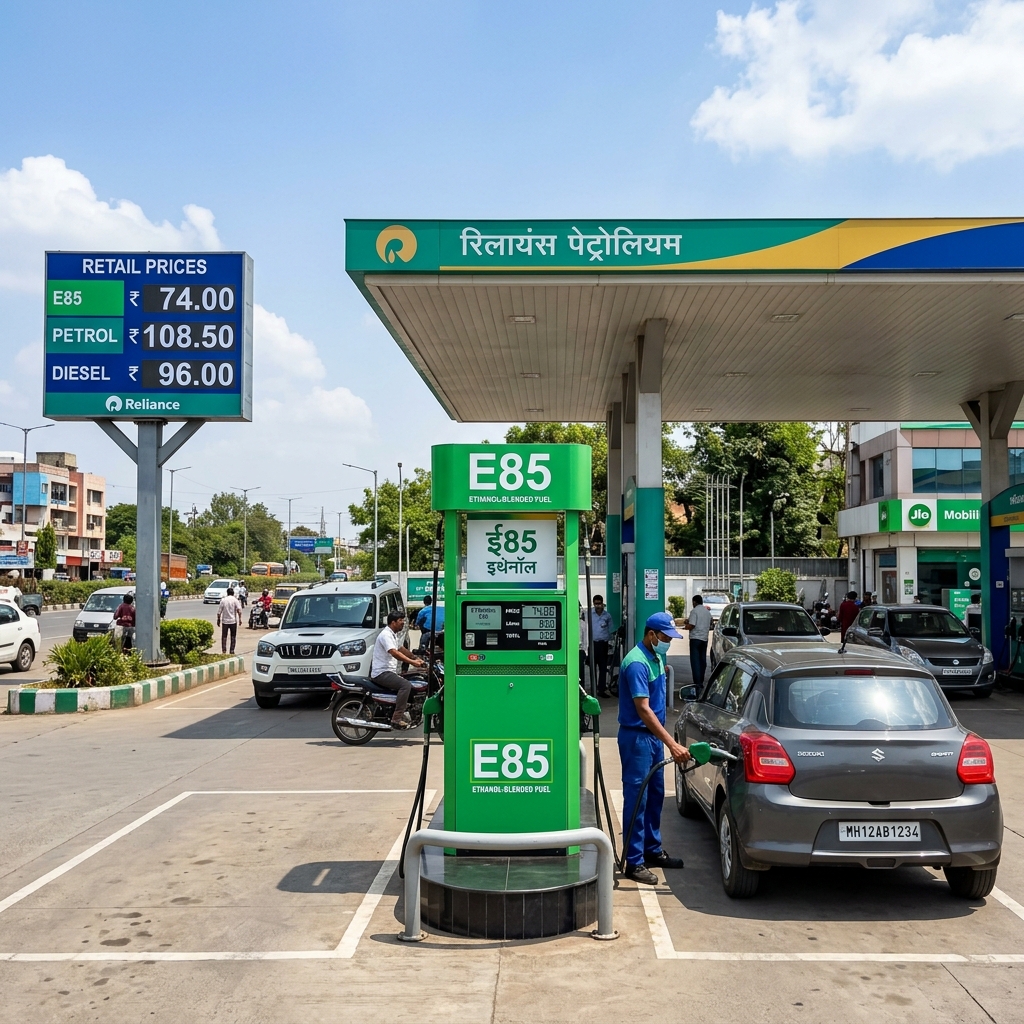
Understanding E85: Why Does the Ethanol Content Vary?
Before we get into the mechanics of testing, it's important to understand why E85 isn't just a standardized, unvarying fluid. The term "E85" technically refers to a high-level ethanol-gasoline blend containing 51% to 83% ethanol, depending on geography and season, according to standard regulations in many parts of the world.
1. Seasonal Blending Requirements
The primary reason for fluctuating ethanol levels is seasonal blending. Ethanol has different physical properties than gasoline, one of the most notable being its vaporization characteristics. In cold weather, high concentrations of ethanol struggle to vaporize effectively, making it difficult for a cold engine to start.To combat this, fuel manufacturers lower the ethanol content and increase the proportion of standard gasoline (usually a lower-octane base stock) during the winter months. This "Winter E85" might actually be closer to E50 or E70. When the weather warms up, the blend transitions back toward the true 85% mark, often referred to as "Summer Blend."
2. Geographic Location
Regulations regarding fuel mixtures can vary significantly by region. In warmer climates where freezing temperatures are rare, the ethanol content may stay consistently higher year-round. In contrast, colder regions will experience much more dramatic swings in ethanol concentration between summer and winter.3. Station and Supplier Variability
Even within the same city and the same season, you might find differences between gas stations. Different suppliers have different blending practices, and sometimes a station's underground tanks might hold a residual mixture of an older blend, slightly diluting a fresh delivery. This means you can't simply assume that because it's summer, the pump is dispensing pure E85.The Stakes: What Happens if the Ethanol Content is Off?
If your vehicle is equipped with a true flex-fuel system featuring an inline ethanol sensor, the ECU (Engine Control Unit) automatically adjusts fueling and timing based on real-time readings. In this scenario, testing at the pump is less critical, though still useful if you're trying to achieve a specific blend for a race event.
However, if your car is running a static, dedicated E85 tune (meaning the ECU assumes it is always receiving a specific percentage of ethanol), the consequences of running the wrong fuel can be severe.
1. When Ethanol Content is Too Low
If your car is tuned for 85% ethanol but you fill up with winter-blend E50, you are introducing a fuel with a lower octane rating than your engine expects. Because the ECU thinks it has E85, it will attempt to run aggressive ignition timing. The lower-octane fuel will resist detonation poorly under these conditions, leading to engine knock. Severe knock under high load can break pistons, bend connecting rods, and destroy an engine in a matter of seconds.Additionally, ethanol has a lower stoichiometric air-fuel ratio than gasoline. It requires more fuel volume to achieve the same chemical combustion. If you run E50 on an E85 tune, the engine is injecting the massive fuel volume meant for E85, but burning a fuel that requires less volume. The result is an excessively rich air-fuel mixture, which can wash oil off the cylinder walls, increase wear, and foul spark plugs.
2. When Ethanol Content is Too High (or if tuned for a lower blend)
Conversely, some enthusiasts purposefully run an E30 or E50 blend (by mixing E85 and premium unleaded) because their fuel systems cannot flow enough volume for full E85. If you are tuned for E50 but accidentally run E85 because you miscalculated the pump's actual content, your engine will run lean. Running lean under boost increases combustion temperatures dramatically, increasing the risk of pre-ignition, melting pistons, and burning valves.Because the stakes are so high, knowing exactly what is going into your tank is the only way to ensure your tune is safe.
Enter the E85 Test Kit: The Enthusiast's Best Friend
An E85 test kit is a simple, affordable, and incredibly effective tool for determining the exact percentage of ethanol in a fuel sample. While there are advanced electronic sensors available, the most common and accessible method for testing at the pump involves a specialized glass or plastic tube.
The Science Behind the Test: Water Extraction
The standard E85 test kit operates on a very simple chemical principle: phase separation.Ethanol is highly hygroscopic; it loves water. It dissolves readily into water to form a single, uniform solution. Gasoline, on the other hand, is hydrophobic; it repels water. When you mix gasoline and water, they separate, with the gasoline floating on top.
When you take a sample of E85 and add water to it, a fascinating reaction occurs. The ethanol leaves the gasoline and binds with the water. The new water-ethanol mixture separates from the remaining gasoline, dropping to the bottom of the container. By measuring the volume of this water-ethanol layer against the total volume, you can accurately determine the percentage of ethanol that was originally in the fuel.
Types of E85 Testing Methods
1. The Classic Glass/Plastic Tube Kit
This is the quintessential E85 test kit. It consists of a transparent tube with specific markings. It's inexpensive, easily transportable, and doesn't require batteries or calibration. Brands like Rev-X and various tuning companies offer these kits for under $20. They are the go-to choice for most enthusiasts testing at the pump.2. Digital E85 Testers
Some companies offer portable digital testers that look like a small pen or probe. You dip the probe into a fuel sample, and a digital readout gives you the ethanol percentage instantly. These are more expensive (often over $100) and require batteries, but they eliminate the need to handle water or wait for fluids to separate. However, many purists still prefer the tube method for its undeniable physical evidence.3. Inline Flex-Fuel Sensors
While not a "test kit" used at the pump, an inline flex-fuel sensor (like those made by Continental) is the ultimate solution. Installed directly into your vehicle's fuel return line, it constantly measures the ethanol content and sends a signal to an aftermarket ECU or a gauge in the cabin. If you have the budget, setting up a flex-fuel system is highly recommended. But even then, knowing how to manually test fuel is a valuable skill.Step-by-Step Guide: How to Test E85 at the Pump with a Tube Kit
Testing your fuel at the pump is a straightforward process, but it requires a bit of preparation and care. You are dealing with flammable liquids, so safety should always be your top priority.
What You Will Need:
- An E85 Test Tube: Ensure it has clear markings for "Water Fill Line" and "E85 Fill Line," as well as percentage increments. - A Small Bottle of Water: Tap water or bottled drinking water works perfectly. - A Clean Rag or Paper Towels: For wiping up any minor spills. - Nitrile Gloves (Optional but Recommended): To keep fuel and odors off your hands. - Safety Glasses (Recommended): To protect your eyes from accidental splashes.Step 1: Preparation & Safety First
Park your vehicle at the E85 pump and turn off the engine. Ensure you are in a well-ventilated area—gas stations naturally are, but be mindful of wind direction. Do not smoke, and avoid using your phone directly over the fuel sample.Retrieve your test kit and your water bottle. Ensure the test tube is completely clean and dry before you begin. Any residual liquid from a previous test can skew your results.
Step 2: Add Water to the Initial Fill Line
Most test tubes have a line near the bottom labeled "Water Fill Line." Carefully pour your tap or bottled water into the tube until the meniscus (the curve of the liquid's surface) rests exactly on this line. Note: Accuracy here is paramount. If you overfill or underfill the water, your final ethanol reading will be incorrect.Step 3: Extract a Fuel Sample
This can be the trickiest part. You need to get E85 from the pump nozzle into your small test tube.Pro Tip: Do not squeeze the pump handle forcefully while aiming at the tube. The pressure will blast fuel everywhere. Instead, gently squeeze the handle just enough to let a tiny trickle of fuel run out. Catch this fuel directly in the tube.
Fill the tube with E85 until the liquid reaches the upper mark, usually labeled "E85 Fill Line." Again, be as precise as possible.
Step 4: Cap and Shake
Once both the water and the E85 are in the tube, securely fasten the cap. Ensure it is threaded correctly so it doesn't leak.Vigorously shake the tube for 10 to 15 seconds. You want to ensure that the water completely mixes with the fuel sample so that it can absorb all the ethanol present. The liquid inside will likely look cloudy and milky during this process.
Step 5: Let It Settle and Read the Results
Set the tube down on a flat, level surface. You can rest it on the trunk of your car, the top of the gas pump (if flat), or the ground.Now, wait. The separation process usually takes about 3 to 5 minutes. You will watch the cloudy mixture slowly resolve into two distinct layers. The top layer is standard gasoline (which is lighter), and the bottom layer is the heavy water-ethanol mixture.
Look at the line where the two liquids meet. Read the corresponding percentage marking on the side of the tube at that dividing line. That number is the ethanol percentage of the fuel you just tested.
For example, if the dividing line rests right on the '70' mark, you are looking at E70 fuel.
Step 6: Clean Up
Once you have your reading, safely dispose of the liquid. The safest method is to pour the small amount of liquid back into the gas station's waste bin or, better yet, bring a small sealed container to take the waste fluid home for proper disposal at a hazardous waste facility. Do not pour it down storm drains.Wipe out your test tube with a paper towel and leave the cap off so it can air dry before your next use.
Interpreting Your Results: What to Do Next
Now that you have your reading, you need to apply it to your fueling strategy.
- If the reading matches your tune (e.g., you need E85 and the pump reads 83-85%): You are good to go. Fill up your tank with confidence. - If the reading is significantly lower than your tune requires (e.g., you need E85, but the pump reads E60): Do not fill your tank if you plan on driving aggressively. If you must get home, pump enough to make it there, but stay out of boost and keep RPMs low. Wait for a different station or a fresh delivery of summer blend. - If you are blending (e.g., mixing E85 and 93 Octane to make E30): You must use the new ethanol reading to recalculate your mix ratios. There are many free smartphone apps available (like e85mix) where you can input the pump's ethanol content, your target ethanol content, and your tank size, and the app will tell you exactly how many gallons of each fuel to pump.
Common Mistakes When Testing Ethanol Content
Even though the process is simple, there are a few common pitfalls to avoid:
1. Using an Unclean Tube: Leftover water or fuel from a previous test will ruin the ratio of your new test. Always start with a dry tube. 2. Inaccurate Filling: Missing the water fill line or the E85 fill line by just a few millimeters will skew the final percentage. Take your time to be precise. 3. Not Waiting Long Enough: If you read the tube while the mixture is still cloudy, your reading will be inaccurate. Wait until the separation line is sharp and distinct. 4. Testing Too Often/Not Enough: While you don't need to test every single time you visit your regular station during the peak of summer, you absolutely should test when seasons are changing (Spring/Fall) or when visiting a new, unfamiliar gas station. 5. Ignoring Temperature: The phase separation process can be slow in very cold weather. If you are testing in freezing temperatures, you might need to hold the tube in your warm hands for a few minutes to speed up the separation.
Frequently Asked Questions (FAQ)
Can I test E85 at home if I brought it in a jerry can?
Yes, absolutely. The process is exactly the same whether you test it directly at the pump or later in your garage. Just make sure the fuel hasn't been sitting open and absorbing atmospheric moisture before you test it.Does E85 expire?
E85 does have a shelf life, largely due to its hygroscopic nature. If left sitting in a vented container or a car's gas tank for many months, it can absorb moisture from the air. This absorbed water can lead to corrosion in fuel system components and poor combustion. It's generally recommended to consume E85 within 3 to 6 months.How long does the testing process take at the pump?
Once you get the hang of it, the entire process—from filling the tube to reading the result—takes less than 5 minutes. It's a small investment of time for the peace of mind it provides.If my E85 tests at 90%, is that better?
While uncommon, sometimes pumps dispense fuel with slightly higher than 85% ethanol. While this provides even more knock resistance, it also requires even more fuel volume. If your injectors or fuel pump are already maxed out at 85%, running 90% might cause the system to lean out. Consult with your tuner if you regularly encounter higher-than-expected ethanol levels.Are cheap E85 test tubes accurate?
Yes. The physical chemistry of phase separation doesn't change based on how much the tube costs. As long as the markings on the tube are printed accurately (which is true for almost all commercially available kits), a $15 tube will give you just as accurate a reading as a more expensive setup.Conclusion: Knowledge is Power (and Safety)
In the realm of high-performance tuning, assumptions are dangerous. Assuming that the fuel coming from an E85 pump is exactly 85% ethanol is a gamble that puts your expensive engine build at risk. The variability caused by seasonal blending, regional regulations, and individual station practices means that the fuel you pumped today might be drastically different from the fuel you pumped last month.
Equipping yourself with an E85 test kit is one of the smartest and most cost-effective decisions you can make as an enthusiast. It removes the guesswork from fueling, allows you to accurately mix custom blends, and provides the peace of mind necessary to confidently push your vehicle to its limits. Whether you opt for a simple glass tube or a high-tech digital tester, taking five minutes to verify your fuel at the pump is an essential ritual for anyone looking to safely harness the power of ethanol.
Stay safe, test your fuel, and enjoy the boost!