The modern automotive landscape is in a constant state of evolution, driven by the dual mandates of reducing emissions and maximizing engine performance. Amidst the rise of electrification, internal combustion engines (ICE) continue to advance, finding new ways to operate cleaner and more powerfully. One of the most significant advancements in recent decades for performance enthusiasts and eco-conscious drivers alike is the Flex Fuel system.
At the core of this technology is the ability to run a vehicle on varying blends of gasoline and ethanol, most notably E85 (a blend containing up to 85% ethanol and 15% gasoline). But how exactly does an engine instantly know what fuel is flowing through its veins, and how does it adjust thousands of times per minute to prevent catastrophic engine failure while optimizing power? The answer lies in an elegant symphony of sensors, advanced engine control units (ECUs), and robust fuel delivery hardware.
In this comprehensive guide, we will dive deep into the mechanics of flex fuel engines. We will explore the critical role of the E85 flex fuel sensor, how the ECU interprets its data, the necessary hardware upgrades for a flex fuel conversion, and the immense performance benefits that ethanol brings to the table.
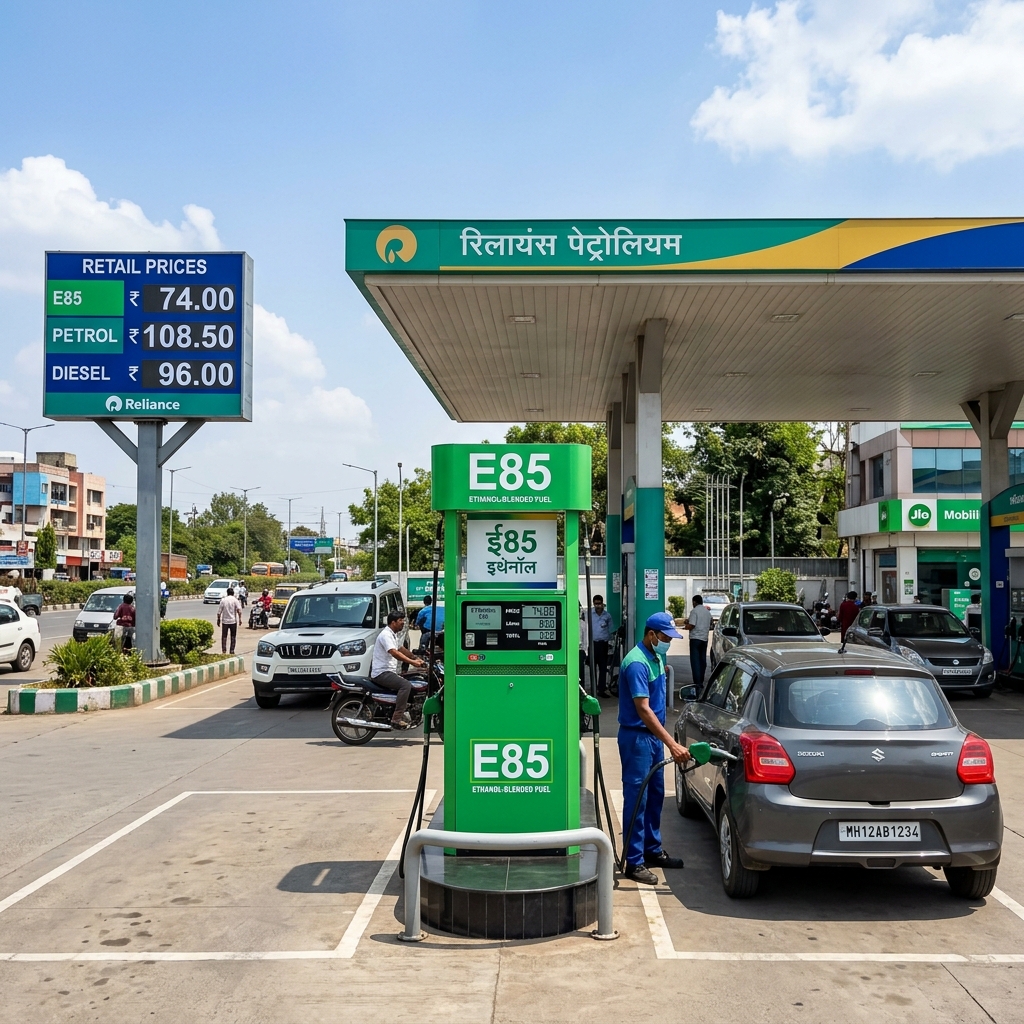
The Foundation: What is a Flex Fuel Vehicle?
A Flex Fuel Vehicle (FFV) is an automobile equipped with an internal combustion engine designed to run on more than one fuel, usually a mixture of gasoline and ethanol. Unlike dedicated ethanol vehicles or standard gasoline vehicles, an FFV is completely agnostic to the ratio of the blend. You can fill the tank with pure 91 octane gasoline today, E85 tomorrow, and a half-and-half mixture the day after. The vehicle will start, run, and perform seamlessly without any manual intervention from the driver.
This flexibility is paramount. Ethanol, while widely available in some regions, can be scarce in others. Furthermore, true E85 is often heavily dependent on the season. During winter months in colder climates, refineries often drop the ethanol content to E70 or even E50 to aid in cold engine starts, as ethanol has a higher vaporization point than gasoline. A true flex fuel system doesn't care if the pump dispenses E85 or E50; it adjusts the engine parameters in real-time.
To understand how this magic happens, we must first look at the differences between gasoline and ethanol as motor fuels.
Gasoline vs. Ethanol: The Chemical Differences
1. Energy Density: Gasoline contains roughly 114,000 British Thermal Units (BTUs) of energy per gallon. Ethanol, on the other hand, contains about 76,000 BTUs per gallon. Because ethanol has a lower energy density, an engine requires approximately 30% to 40% more fuel by volume when running on E85 compared to standard gasoline to achieve the same chemical energy release. 2. Stoichiometric Air-Fuel Ratio (AFR): The stoichiometric ratio is the ideal ratio of air to fuel for complete combustion. For pure gasoline, this ratio is 14.7:1 (14.7 parts air to 1 part fuel). For pure ethanol (E100), the stoichiometric ratio is 9.0:1. For E85, it hovers around 9.7:1 to 9.8:1. This means an engine running E85 needs significantly more fuel mixed with the same amount of air. 3. Octane Rating: This is where ethanol shines for performance. Standard premium gasoline typically has an octane rating of 91 to 93 (AKI). E85 boasts an effective octane rating ranging from 100 to 105+. Octane is a measure of a fuel's resistance to pre-ignition or "knock." Higher octane allows engine tuners to advance ignition timing and increase turbocharger or supercharger boost pressures, resulting in massive power gains safely. 4. Latent Heat of Vaporization: Ethanol absorbs a tremendous amount of heat as it transitions from a liquid to a gas (vaporization) inside the intake manifold or cylinder. This provides a massive cooling effect on the intake charge, creating denser air and further resisting knock.
Because the engine requires drastically different amounts of fuel and can tolerate entirely different ignition timing depending on the ethanol content, the engine management system must know exactly what is in the tank. Enter the Flex Fuel Sensor.
The Heart of the System: The Flex Fuel Sensor
The flex fuel sensor is the unsung hero of the E85 revolution. Often no larger than a deck of cards, this inline sensor is plumbed directly into the vehicle's fuel system. Its primary job is to measure the ethanol concentration of the fuel passing through it and report that data to the engine's ECU.
How Does a Flex Fuel Sensor Measure Ethanol Content?
You might assume a sensor measuring chemical composition would be overly complex or rely on optical spectrometry. In reality, the modern flex fuel sensor—pioneered by companies like Continental (often rebranded by GM, Haltech, and others)—uses a remarkably clever and reliable electrical measurement based on the dielectric constant of the fluid.
The sensor acts essentially as a capacitor. Inside the housing, the fuel flows between two conductive plates or concentric tubes. The sensor measures the electrical capacitance of the fluid between these plates.
* Gasoline is a non-polar hydrocarbon and an excellent electrical insulator. It has a very low dielectric constant (around 2.0). * Ethanol, conversely, is a polar molecule (due to its hydroxyl group, -OH). It is a relatively poor insulator and has a much higher dielectric constant (around 24.3).
As the concentration of ethanol in the fuel mixture increases, the overall dielectric constant of the fluid flowing through the sensor increases proportionally. The microprocessor inside the sensor reads this capacitance, calculates the ethanol percentage, and generates an output signal.
Temperature Measurement and Compensation
Measuring capacitance alone isn't enough. The dielectric constant of liquids changes with temperature. If the fuel gets hotter, its properties shift, which could lead to an inaccurate ethanol reading if left uncorrected.
Therefore, integrated into every modern flex fuel sensor is a thermistor—a temperature sensor. The internal microprocessor monitors the fuel temperature and applies a mathematical correction factor to the capacitance reading. This ensures that whether you are doing a cold start at freezing temperatures or hot lapping on a race track in the middle of summer, the ethanol reading remains dead accurate.
The Output Signal: Frequency and Pulse Width
The flex fuel sensor does not typically send a simple analog voltage (like 0-5V) to the ECU, though some aftermarket converters exist. Instead, the standard Continental-style sensor sends a digital square-wave signal. This single wire transmits both the ethanol content and the fuel temperature simultaneously by varying two properties of the wave:
1. Frequency (Hertz): The frequency of the signal represents the ethanol percentage. * Typically, 50 Hertz (Hz) indicates 0% ethanol (pure gasoline). * 150 Hertz (Hz) indicates 100% ethanol (E100). * Frequencies in between represent the corresponding blend (e.g., 100 Hz = 50% ethanol). 2. Pulse Width (Duty Cycle): The pulse width—the amount of time the signal is in the "high" state compared to the "low" state during one cycle—represents the fuel temperature. * A pulse width of 1 millisecond (ms) usually corresponds to -40°C (-40°F). * A pulse width of 5 milliseconds (ms) usually corresponds to 125°C (257°F).
The Engine Control Unit receives this high-speed digital signal, decodes the frequency to determine the ethanol content, and decodes the pulse width to determine the temperature. It does this continuously, allowing for real-time adjustments.
Placement in the Fuel System
For the system to work effectively, the sensor must be placed in a location where it can measure the fuel before it reaches the injectors, but without becoming a significant restriction to fuel flow.
There are generally two types of fuel systems: Return-Style Fuel Systems:** Fuel is pumped from the tank to the engine fuel rail, and excess fuel is returned back to the tank via a return line. In these systems, the flex fuel sensor is almost always installed on the *return line. The return line handles lower pressure and less critical instantaneous flow demands than the feed line, making it the perfect, safe location to sample the fuel mixture as it circulates. Returnless Fuel Systems:** Modern emissions standards have driven the adoption of returnless systems, where the fuel pressure regulator is in the tank, and a single dead-end line feeds the engine. In these setups, the sensor must be placed on the *feed line, as close to the fuel rail as possible. Tuners and engineers must ensure the internal diameter of the sensor does not restrict the high flow required by high-performance engines.
The Brains of the Operation: ECU Flex Fuel Logic
Having an accurate ethanol reading is only half the battle. The Engine Control Unit must know what to do with that information. Modern ECUs (both factory units that have been reprogrammed/flashed and aftermarket standalone systems like MoTeC, Haltech, or AEM) utilize complex algorithms to blend engine operating parameters dynamically.
This process is known as interpolation.
When a tuner sets up a true flex fuel system, they do not just create one "tune." They essentially create two complete maps: one for pure pump gas (e.g., E10) and one for high ethanol (e.g., E85).
The ECU then uses the data from the flex fuel sensor to blend between these two maps based on the current ethanol percentage. Let's break down the primary areas the ECU adjusts:
1. Fueling (Injector Pulse Width)
Because E85 requires roughly 30% more volume than gasoline, the ECU must drastically increase the time the fuel injectors stay open (injector pulse width) as ethanol content rises.
If the sensor reads 10% ethanol, the ECU primarily references the gasoline fuel map. If the driver fills up with E85, the sensor reading jumps to 85%. The ECU instantly sees this and applies a multiplier to the base fueling calculation. It knows that for a given amount of air entering the engine, it must command the injectors to spray significantly more fuel to maintain the target Air-Fuel Ratio (AFR).
Furthermore, the target AFR itself changes. The ECU will switch from targeting around 14.7:1 at cruising speeds (for gas) to targeting around 9.8:1 (for E85).
2. Ignition Timing
This is where flex fuel unlocks massive performance. Gasoline is prone to knocking (detonation) under high cylinder pressures and temperatures. To prevent engine damage on gasoline, the ECU must keep ignition timing relatively conservative—sparking the plug later in the compression stroke.
E85's high octane rating and cooling properties make it incredibly resistant to knock. Therefore, the tuner programs a separate ignition timing map for E85 that is much more aggressive—sparking the plug earlier (advanced timing). This allows the expanding combustion gases to push on the piston for a longer duration, generating significantly more torque and horsepower.
As the ethanol sensor detects rising ethanol levels, the ECU interpolates between the conservative gas timing map and the aggressive E85 timing map. If you are running E50, the ECU will advance the timing exactly halfway between the gas and E85 settings, ensuring maximum safe power for that specific blend.
3. Forced Induction Boost Control
For turbocharged or supercharged vehicles, ethanol allows the engine to ingest much more air safely. A typical tune on 91 octane might be limited to 18 psi of boost before knocking occurs. On E85, that same engine might safely run 25 psi or more.
A properly configured flex fuel ECU will link the electronic boost controller to the ethanol sensor. As ethanol content increases, the ECU actively raises the target boost pressure. If the ethanol content drops, the ECU lowers the boost to protect the engine. This means you get a 300hp car on gasoline and a 400hp car on E85, seamlessly switching between the two without ever touching a laptop or pressing a button.
4. Cold Start Enrichment
One of the physical drawbacks of ethanol is that it does not vaporize well in cold temperatures. If you try to start an engine on E85 at 30°F (-1°C) using gasoline starting parameters, it simply won't start; the fuel will puddle in the cylinders as a liquid rather than mixing with the air as a vapor.
The ECU utilizes the temperature data from the flex fuel sensor and the coolant temperature sensor to apply "Cold Start Enrichment." When cold ethanol is detected, the ECU commands the injectors to spray massive amounts of extra fuel during cranking—sometimes 200% to 300% more than normal—ensuring enough vapor is created to ignite. It also adjusts the ignition timing during cranking to facilitate a reliable start.
Hardware Requirements: Preparing for Flex Fuel
Simply installing a flex fuel sensor and flashing the ECU is usually not enough, especially if you intend to push the car for performance. The physical hardware of the fuel system must be capable of handling ethanol's unique properties.
1. Upgraded Fuel Injectors
Because E85 requires roughly 30% more fuel by volume, factory fuel injectors will almost always max out (reach 100% duty cycle) when trying to run E85 at full throttle. Upgrading to larger, high-flow injectors is mandatory. These injectors must also feature internal components (like stainless steel internals) that are compatible with ethanol, as standard injectors can rust or corrode when exposed to the moisture ethanol attracts.2. High-Flow Fuel Pump
The fuel pump in the gas tank must also keep up with the 30% increase in volume demand. Furthermore, the pump must be "E85 compatible." Ethanol is a solvent and lacks the lubricating properties of gasoline. Standard fuel pumps will rapidly wear out, and their internal wiring insulation can degrade when submerged in high concentrations of ethanol. Specialized E85 pumps (like the popular Walbro 450/525 or specific brushless units) use sealed electrical connectors and modified turbine designs to survive in alcohol.3. Fuel Lines and Filtration
Older vehicles (generally pre-2000s) often used rubber fuel lines that are not compatible with ethanol. Over time, ethanol dries out and degrades standard rubber, leading to brittle lines, fuel leaks, and rubber particulates clogging the injectors. Modern vehicles utilize PTFE (Polytetrafluoroethylene, aka Teflon) or specialized synthetic rubber (like Viton) fuel lines that are fully resistant to ethanol. Anyone converting an older car to flex fuel must replace their soft lines with PTFE hose. Additionally, because ethanol acts as a powerful solvent, it will clean out decades of sludge and deposits from an old fuel tank. A high-quality, micro-glass or stainless-steel mesh fuel filter is necessary to catch this debris before it ruins the new injectors.The Pros and Cons of E85 and Flex Fuel
While flex fuel systems offer incredible advantages, they are not without their compromises.
The Benefits
* Massive Performance Gains: The combination of high octane, cooling effects, and the ability to run more boost and advanced timing makes E85 the ultimate cheap race fuel. Horsepower gains of 10% to 20% on naturally aspirated engines and 20% to 40% on turbocharged engines are common. * Engine Safety at High Output: Because E85 cools the combustion chamber and resists detonation, it dramatically increases the margin of safety when pushing an engine to its limits. * Lower Emissions: Ethanol combustion produces significantly less carbon monoxide, particulate matter, and harmful aromatics compared to gasoline. * Ultimate Convenience: You never have to worry about running out of race fuel or carrying jerry cans. If you can't find an E85 station, you simply pump premium gas and drive home.The Drawbacks
* Reduced Fuel Economy: Due to the lower energy density, your miles-per-gallon (MPG) will drop by roughly 25% to 35% when running E85. While E85 is often cheaper per gallon than premium gas, the cost-per-mile usually balances out or leans slightly in favor of gasoline. * Hygroscopic Nature: Ethanol absorbs moisture from the air. If a car sits for months with a half-full tank of E85, the fuel can absorb enough water to cause phase separation (where the water/ethanol mixture separates from the gasoline) or internal corrosion. It is generally advised not to store a vehicle long-term with E85 in the tank. * Availability: While widespread in the American Midwest and parts of the South due to corn production, true E85 can be difficult to find in certain regions, coastal states, or internationally. * "Black Goo" Build-up: Some users running extremely high volumes of E85 report a strange, black, tar-like substance building up on the tips of fuel injectors. This is often attributed to additives in the gasoline portion of the fuel or reactions with certain rubber components. Running a tank of top-tier gasoline with strong detergents through the system periodically usually mitigates this.Conclusion: The Ultimate Engine Hack
The flex fuel system represents one of the most brilliant bridges between daily drivability and high-performance engineering. By utilizing a simple yet highly effective capacitance sensor, modern ECUs are given a real-time chemical analysis of the fuel entering the engine.
This technology eliminates the need for compromises. Tuners no longer have to choose between a "safe" tune for questionable pump gas and a "spicy" tune that requires expensive, dedicated race fuels. The flex fuel sensor allows the engine to adapt dynamically, ensuring that whether you are commuting to work on 91 octane or setting lap records on E85, the engine operates in its peak window of efficiency and power.
As long as internal combustion engines continue to power the passions of automotive enthusiasts, the flex fuel sensor will remain an indispensable tool for extracting every last ounce of performance safely and reliably.