The Indian automotive industry is standing at the precipice of a massive transformation. As the world grapples with climate change and the urgent need to reduce carbon emissions, nations are exploring alternative fuel strategies to replace traditional fossil fuels. In India, the narrative has strongly shifted towards ethanol blending, spearheaded by the government's ambitious ethanol blending program. Amidst this green revolution, rumors of the Honda Elevate E85 Flex Fuel have started making rounds, creating a palpable buzz among car enthusiasts and eco-conscious buyers alike.
In this comprehensive and exhaustive article, we delve deep into the rumors surrounding the launch of the Honda Elevate E85 Flex Fuel in India. We will explore what E85 flex-fuel technology entails, why the Honda Elevate is the perfect candidate for this transition, expected specifications, economic implications, environmental benefits, and the challenges that lie ahead. Whether you are a prospective buyer, an automotive aficionado, or an investor tracking the green mobility sector, this guide provides all the insights you need.
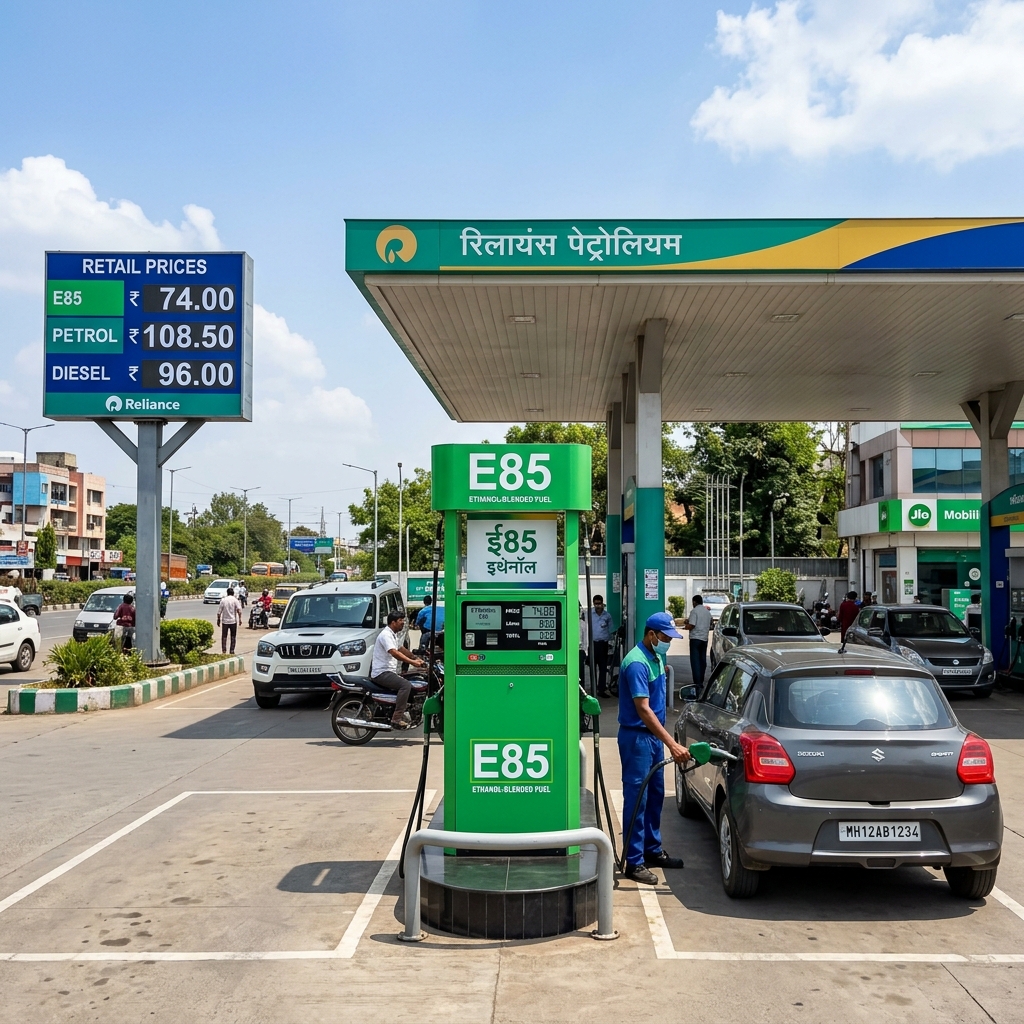
The Rise of Flex Fuel Technology in India
Before diving into the specifics of the Honda Elevate, it is crucial to understand the broader context of flex-fuel technology in India.
What is E85 Flex Fuel?
E85 is a high-level ethanol-petrol blend consisting of 85% ethanol and 15% petrol. The "E" stands for ethanol, and the number denotes the percentage of ethanol in the mixture. Ethanol is a renewable biofuel produced from plant materials, primarily sugarcane, corn, and agricultural waste. A flex-fuel vehicle (FFV) is designed with an internal combustion engine that can run on more than one type of fuel, usually petrol blended with either ethanol or methanol fuel, and both fuels are stored in the same common tank.
The engine and fuel system in a flex-fuel vehicle are modified to withstand the corrosive nature of ethanol and to adjust the air-fuel mixture optimally, regardless of the ethanol-petrol ratio in the tank. This means an FFV can run seamlessly on pure petrol, E20 (20% ethanol), or E85 (85% ethanol) without any manual intervention from the driver.
The Indian Government's Push for Ethanol
India is the third-largest consumer of crude oil globally, importing over 80% of its oil requirements. This heavy reliance on imports puts a massive strain on the country's foreign exchange reserves and makes the economy vulnerable to global oil price fluctuations. To counter this, the Government of India, led by the Ministry of Road Transport and Highways under Shri Nitin Gadkari, has aggressively pushed for ethanol blending.
The initial target of achieving E10 (10% ethanol blending) was successfully met ahead of schedule. Now, the focus has shifted to rolling out E20 petrol across the country by 2025. But the ultimate vision extends beyond E20; the government has mandated automakers to start producing flex-fuel vehicles capable of running on E85 or even E100 (pure ethanol).
This transition not only promises to significantly slash India's crude oil import bill—potentially saving tens of thousands of crores annually—but also empowers the agricultural sector, particularly sugarcane farmers, who play a vital role in ethanol production. It is against this dynamic backdrop that the rumors of the Honda Elevate E85 Flex Fuel are gaining immense traction.
Honda Elevate: A Brief Overview of the Base Model
To understand why an E85 variant of the Elevate makes so much sense, let's briefly look at the standard Honda Elevate.
Launched to much fanfare, the Honda Elevate marked the Japanese automaker's serious re-entry into the highly competitive mid-size SUV segment in India. Competing against established stalwarts like the Hyundai Creta, Kia Seltos, Maruti Suzuki Grand Vitara, and Toyota Urban Cruiser Hyryder, the Elevate carved a niche for itself through a combination of bold, boxy styling, a spacious and comfortable cabin, and the bulletproof reliability associated with the Honda badge.
Under the hood, the standard Elevate is powered by a naturally aspirated 1.5-liter i-VTEC petrol engine, a tried-and-tested powerhouse that delivers 121 PS of maximum power and 145 Nm of peak torque. Paired with either a 6-speed manual transmission or a continuously variable transmission (CVT), this engine is renowned for its refinement, linear power delivery, and excellent high-revving characteristics.
The Elevate's success has provided Honda Car India with a robust platform to experiment and innovate. Given the government's strong directives on flex fuels, using the popular Elevate as the flagship model for Honda's flex-fuel journey in India is a logical and strategic masterstroke.
Unpacking the Honda Elevate E85 Flex Fuel Rumors
The automotive grapevine is rife with speculation about Honda's flex-fuel plans for India. Here is a detailed breakdown of the rumors, timelines, and testing phases associated with the Honda Elevate E85 Flex Fuel.
The Genesis of the Rumors
The rumors regarding a flex-fuel Honda Elevate began to surface shortly after the Indian government urged automakers at a Society of Indian Automobile Manufacturers (SIAM) convention to fast-track FFV development. Honda, which already has extensive experience with flex-fuel technology in international markets like Brazil, was quickly identified as a prime candidate to introduce this technology in India.
In Brazil, Honda sells several models equipped with flex-fuel engines capable of running on high ethanol blends. The technological know-how is already present within the company's global R&D ecosystem. The challenge—and the source of the rumors—revolves around localizing this technology for the Indian market, particularly adapting it to the Indian driving conditions, climate, and the specific characteristics of Indian ethanol.
Expected Launch Timeline
While Honda Car India has not issued an official launch date, industry insiders and automotive analysts suggest that the Honda Elevate E85 Flex Fuel could debut around late 2026 or early 2027.
The timeline is dictated by several factors: 1. Infrastructure Readiness: While E20 fuel is becoming widely available, E85 dispensing infrastructure is currently in its nascent stages. Honda would likely want a critical mass of E85 pumps available, at least in metropolitan areas and key highway corridors, before launching the vehicle. 2. Testing and Homologation: Modifying the 1.5L i-VTEC engine for E85 compatibility requires rigorous testing to ensure reliability, emission compliance, and performance under diverse Indian conditions. Homologation processes with the Automotive Research Association of India (ARAI) take time. 3. Strategic Phasing: Honda may choose to unveil a prototype or a near-production concept at a major auto show (like the Bharat Mobility Global Expo) to gauge consumer reaction before initiating mass production.
Prototyping and Testing
Rumors suggest that Honda engineers are already running preliminary tests using modified City and Elevate platforms in controlled environments. These tests focus on cold start performance—a common issue with high-ethanol blends—and long-term durability of fuel system components. The data gathered from Honda's Brazilian operations is undoubtedly serving as a foundational blueprint, but recalibrations are necessary to meet India's stringent BS6 Phase 2 (and subsequent Phase 3) emission norms.
Expected Technical Specifications and Engineering Modifications
Transitioning a conventional internal combustion engine to run on E85 is not merely a matter of changing the fuel mapping; it requires significant hardware and software engineering. Here is what we can expect under the hood of the Honda Elevate E85 Flex Fuel.
Engine and Hardware Upgrades
Ethanol is highly corrosive and has distinct physical and chemical properties compared to pure petrol. To make the 1.5-liter i-VTEC engine E85 compatible, Honda will likely implement the following hardware upgrades:
1. Corrosion-Resistant Components: The entire fuel delivery system, including fuel lines, fuel pump, and fuel injectors, must be upgraded using materials that resist ethanol corrosion. Stainless steel, specialized plastics, and Teflon-lined hoses are typically used. 2. Upgraded Valve Seats and Piston Rings: Ethanol burns hotter and lacks the lubricating properties of petrol. Therefore, hardened valve seats and specialized piston rings are necessary to prevent accelerated wear and tear in the combustion chamber. 3. High-Capacity Fuel Injectors: Ethanol has a lower energy density than petrol (roughly 30% less by volume). To achieve the same power output, a larger volume of E85 must be injected into the cylinder. This necessitates high-capacity fuel injectors capable of delivering the required fuel flow rate.
Software and ECU Recalibration
The brain of the engine, the Electronic Control Unit (ECU), requires sophisticated software updates. 1. Fuel Composition Sensor: The vehicle will be equipped with a fuel composition sensor (often placed in the fuel line) that continuously measures the ethanol percentage in the fuel. 2. Dynamic Mapping: Based on real-time data from the fuel composition sensor, the ECU will dynamically adjust the ignition timing, fuel injection pulse width, and air-to-fuel ratio. If the tank has E20, it uses one map; if it detects E85, it switches to a more aggressive mapping to optimize combustion.
Performance Dynamics: Power, Torque, and Mileage
One of the most exciting aspects of running E85 is its high octane rating (typically around 100 to 105 octane), which is significantly higher than standard 91 or 95 octane petrol.
- Power and Torque Boost: The high octane rating allows the engine to run more aggressive ignition timing and higher compression ratios (if modified) without the risk of engine knock (pre-ignition). Consequently, the Honda Elevate E85 could see a noticeable bump in horsepower and torque when running on E85 compared to standard petrol. The i-VTEC engine, known for its spirited top-end performance, could become even more engaging to drive. - Mileage/Fuel Efficiency: The trade-off, however, is in fuel efficiency. Because ethanol contains less energy per unit of volume, the car will consume more fuel per kilometer. Expect the mileage figures (kmpl) to drop by roughly 20-30% when running purely on E85. However, this drop in efficiency must be weighed against the lower cost per liter of E85 fuel, which brings us to the economic impact.
Economic and Environmental Impact
The shift to E85 flex-fuel technology represents a paradigm shift not just for the automotive industry, but for the Indian economy and environment.
The Consumer's Wallet: Cost vs. Benefit
For the prospective buyer of the Honda Elevate E85, the economic equation is multi-faceted: 1. Initial Acquisition Cost: Modifying the engine for flex-fuel compatibility adds to the manufacturing cost. Expect the E85 variant to carry a premium over the standard petrol model, though government subsidies or tax incentives for flex-fuel vehicles could offset this difference. 2. Running Costs: The cost-effectiveness of running an E85 vehicle depends heavily on the retail price of E85 fuel. The Indian government has indicated that high-ethanol blends will be priced significantly lower than traditional petrol to incentivize adoption. If E85 is priced at least 30-40% cheaper than petrol, the lower mileage per liter is fully compensated for, resulting in a lower running cost per kilometer for the consumer. 3. Maintenance: Modern FFVs are designed to be as reliable as conventional cars. Maintenance schedules for the Honda Elevate E85 should align closely with the standard model, minimizing long-term ownership costs.
Macroeconomic Benefits for India
At a national level, widespread adoption of vehicles like the Elevate E85 could be transformative: - Foreign Exchange Savings: Substituting petrol with domestically produced ethanol directly reduces crude oil imports, strengthening the Rupee and stabilizing the national economy against global oil shocks. - Boosting the Agrarian Economy: India is one of the world's largest producers of sugarcane. Channeling surplus sugar production into ethanol creates a lucrative, steady revenue stream for millions of farmers, boosting rural economies and reducing dependency on agricultural subsidies.
Environmental Stewardship
The environmental benefits of E85 are substantial and align with global sustainability goals: - Reduced Greenhouse Gas Emissions: While burning ethanol does release CO2, it is part of a closed carbon cycle. The plants (like sugarcane) absorb CO2 during their growth phase, offsetting the emissions released during combustion. Overall lifecycle greenhouse gas emissions are significantly lower compared to fossil fuels. - Lower Tailpipe Pollutants: Ethanol burns cleaner than petrol, resulting in a marked reduction in harmful tailpipe emissions such as carbon monoxide, unburned hydrocarbons, and particulate matter, leading to improved air quality in congested Indian cities.
Challenges and Roadblocks
While the prospects are overwhelmingly positive, the launch of the Honda Elevate E85 is not without significant hurdles that the ecosystem must collectively overcome.
The Infrastructure Bottleneck
The quintessential "chicken-and-egg" problem plagues the flex-fuel segment. Automakers are hesitant to launch FFVs without adequate E85 fuel pumps, and oil marketing companies (OMCs) are reluctant to invest in specialized dispensing infrastructure without a sizable fleet of FFVs on the road. For the Honda Elevate E85 to succeed, companies like Indian Oil, Bharat Petroleum, and Hindustan Petroleum must aggressively expand their E85 dispensing network beyond a few pilot stations.
Ethanol Supply Chain Consistency
India's ethanol production is heavily reliant on agriculture, which is susceptible to weather fluctuations, droughts, and changes in crop yield. Ensuring a consistent, year-round supply of high-grade ethanol to meet the demands of a growing FFV fleet requires massive investments in ethanol distilleries and robust supply chain logistics. The government's recent move to allow ethanol production from maize and broken rice is a step in the right direction to diversify the feedstock.
Consumer Awareness and Range Anxiety
Educating the Indian consumer about flex-fuel technology is a monumental task. Misconceptions regarding engine damage, lower mileage (without understanding the lower fuel cost), and range anxiety (fear of not finding an E85 pump) need to be addressed through aggressive marketing and transparent communication by automakers like Honda. The beauty of an FFV, of course, is that it can run on regular petrol if E85 is unavailable, completely eliminating true range anxiety, but this fact needs to be effectively communicated to the masses.
Competition in the Flex Fuel Segment
Honda will not be entering a vacant arena. The race to dominate the flex-fuel segment in India is already heating up.
Maruti Suzuki's Aggressive Push
Maruti Suzuki, India's largest automaker, has showcased a flex-fuel prototype of the popular WagonR. Maruti has historically dominated the alternate fuel space (CNG) and is leveraging its massive R&D resources to bring affordable flex-fuel vehicles to the masses. If Maruti launches a flex-fuel Grand Vitara or Brezza, it will directly challenge the Honda Elevate E85.
Toyota's Hybrid-Flex Fuel Strategy
Toyota is taking a slightly different, arguably more advanced route. The company has showcased flex-fuel hybrid prototypes (like the Corolla Altis Flex Fuel Hybrid and the Innova Hycross prototype). By combining a flex-fuel engine with a strong hybrid system, Toyota aims to negate the mileage drop associated with E85, offering a vehicle that is both incredibly clean and astonishingly fuel-efficient. Honda, possessing strong hybrid technology (e:HEV), might eventually consider a flex-fuel hybrid Elevate in the distant future to counter Toyota.
Tata and Mahindra
Domestic giants Tata Motors and Mahindra & Mahindra are heavily focused on electric vehicles (EVs). However, given the government's push, both companies are keeping their flex-fuel options open, particularly for their larger SUVs and commercial vehicles.
The Future of Honda in India
The potential launch of the Honda Elevate E85 Flex Fuel represents a critical pivot for Honda Car India. For years, the company was criticized for a slow product pipeline and an over-reliance on the City sedan. The standard Elevate has proven that Honda still understands the pulse of the Indian SUV buyer.
By taking a leadership role in the flex-fuel transition, Honda can position itself as a forward-thinking, technologically advanced, and environmentally responsible brand. It aligns perfectly with Honda's global vision to realize carbon neutrality for all its products and corporate activities by 2050.
Furthermore, an E85 Elevate would cater to a unique demographic: consumers who want to reduce their carbon footprint and support the local economy but are not yet ready to transition fully to Electric Vehicles (EVs) due to charging infrastructure limitations or long highway commute requirements. A flex-fuel SUV bridges this gap perfectly, offering the familiarity and quick refueling times of an internal combustion engine, coupled with the green credentials of renewable fuel.
Conclusion
The rumors surrounding the Honda Elevate E85 Flex Fuel highlight a transformative era in the Indian automotive landscape. While official confirmation and exact launch dates are still awaited, the underlying market dynamics, government mandates, and Honda's proven technological capabilities strongly suggest that a flex-fuel Elevate is more than just a passing rumor—it is an impending reality.
When launched, the Honda Elevate E85 will offer Indian consumers a compelling choice: a robust, reliable, and stylish SUV that runs on a cheaper, cleaner, and domestically produced fuel. It promises to deliver a slightly punchier performance while contributing significantly to environmental sustainability and economic self-reliance.
However, the success of this vehicle will not rest solely on Honda's shoulders. It will require a synchronized effort from the government to maintain favorable policies, oil marketing companies to build dispensing infrastructure, and the agricultural sector to ensure a steady supply of ethanol.
As we look towards the late 2020s, the Honda Elevate E85 Flex Fuel stands as a symbol of transition—a bridge between the fossil-fuel past and the sustainable mobility future. For the Indian car buyer, the choices have never been more exciting, and for the nation, the road ahead looks unmistakably greener. Keep an eye on Honda's announcements in the coming months, as the official unveiling of the Elevate E85 could mark one of the most significant automotive milestones of the decade.