When building a high-performance engine, one of the most critical decisions a tuner or enthusiast must make revolves around fueling. While slapping on a massive turbocharger or upgrading camshafts will undoubtedly increase airflow, taking advantage of that extra air requires a high-quality fuel that can resist detonation and allow for aggressive tuning. Two of the most heavily debated performance fuels in the modern era are E85* (an ethanol blend) and *XP100 (a premium 100-octane unleaded petrol).
The age-old question echoes through dyno rooms and track paddocks across the world: Which fuel actually makes more power?
The answer, as you might expect in the world of automotive engineering, isn't just a simple one-word reply. It requires a deep dive into the chemical properties of each fuel, how engines process them, the nuances of ECU tuning, and the supporting hardware required to extract their full potential. In this comprehensive, 2500-word guide, we will break down everything you need to know about E85 and XP100 to help you determine which fuel is the absolute best choice for your high-performance vehicle.
---
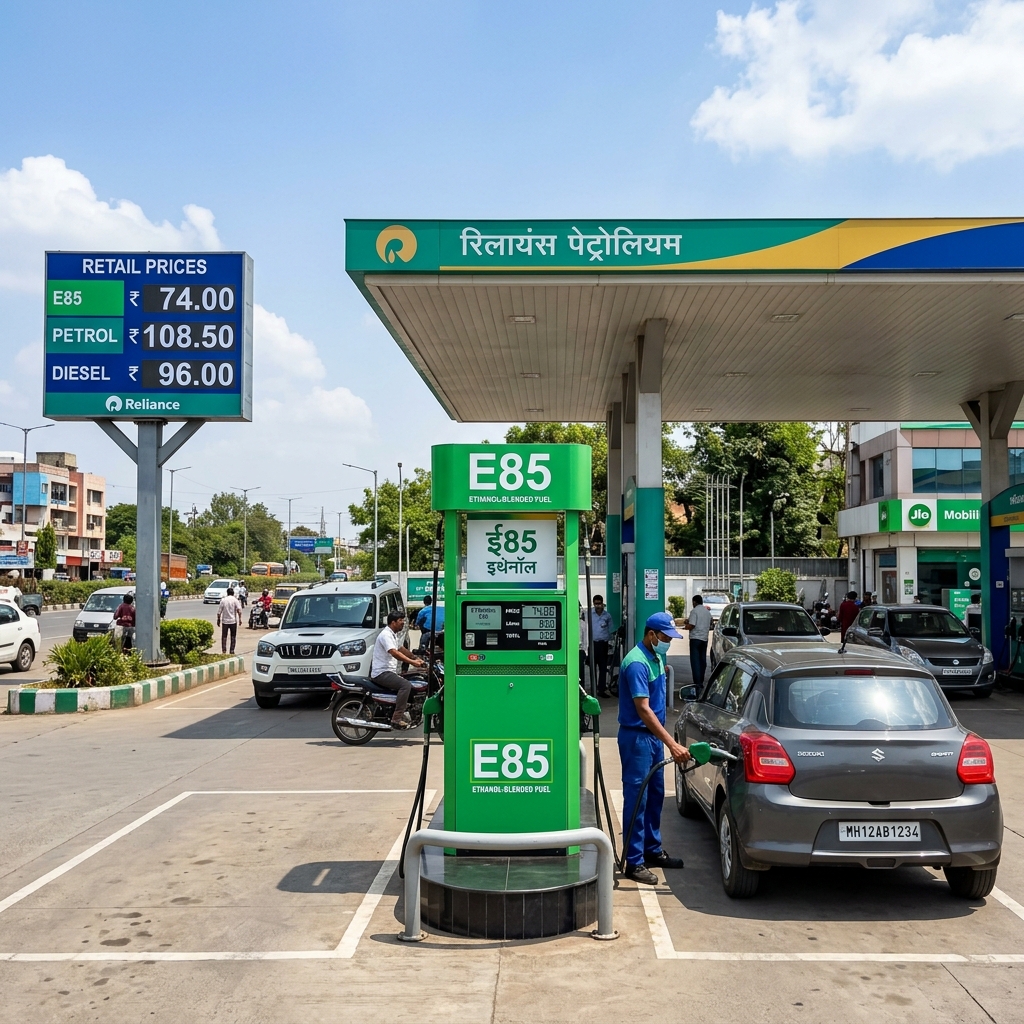
1. Understanding Octane Rating and Knock Resistance
Before we can compare E85 and XP100, we must first understand the concept of "octane." The octane rating of a fuel is the standard measure of its resistance to knocking or pinging during combustion. Engine knock (detonation) occurs when the air-fuel mixture ignites prematurely, before the spark plug fires, due to high cylinder pressures and temperatures. Severe detonation can easily destroy pistons, bend connecting rods, and result in catastrophic engine failure.
In performance applications—especially forced induction (turbocharged or supercharged) and high-compression naturally aspirated engines—cylinder pressures are vastly higher than in a standard commuter car. To prevent detonation under these extreme conditions, a fuel with a high octane rating is absolutely mandatory.
When you increase the octane rating, you give the tuner the ability to: - Run more advanced ignition timing. - Safely push higher levels of boost pressure. - Run a leaner air-fuel mixture for maximum efficiency.
Both E85 and XP100 boast incredibly high knock resistance, but they achieve this through entirely different chemical pathways.
---
2. What is E85? The Magic of Ethanol
E85 is a biofuel blend consisting of nominally 85% ethanol (ethyl alcohol) and 15% gasoline (petrol). In some regions or seasons, the actual ethanol content can drop as low as 51% (often referred to as winter-blend E85) to aid in cold starting, but for performance applications, tuners usually aim for E70 to E85 mixtures.
Ethanol is an oxygenated fuel, meaning it has oxygen molecules chemically bound within it. Because it is an alcohol-based fuel, it behaves very differently from traditional hydrocarbon-based gasoline.
The True Octane of E85
E85 does not have a standard pump octane number (AKI or RON) displayed in the same way gasoline does, because the testing methods designed for pure gasoline don't translate perfectly to high-ethanol blends. However, the effective octane rating of E85 is generally estimated to be between 105 and 110 octane.The Cooling Effect (Latent Heat of Vaporization)
One of the most significant advantages of E85 is its latent heat of vaporization. This refers to the amount of heat energy required to turn a liquid into a gas. Ethanol requires nearly three times as much heat energy to vaporize as regular gasoline.When E85 is injected into the intake manifold or directly into the cylinder, it absorbs a massive amount of heat from the surrounding air and engine components. This creates an incredible cooling effect, drastically lowering intake air temperatures (IATs). Cooler, denser air contains more oxygen molecules, which directly translates to more horsepower. Furthermore, cooler cylinder temperatures significantly reduce the likelihood of pre-ignition and detonation, acting as a secondary mechanism for knock resistance beyond just the octane rating.
---
3. What is XP100? The Pinnacle of Unleaded Petrol
XP100 (often sold as 100-octane racing fuel or premium pump fuel like IndianOil's XP100) is a highly refined, premium unleaded gasoline. Unlike E85, which relies heavily on alcohol, XP100 is purely hydrocarbon-based, similar to the 91, 93, or 95-octane petrol you find at a standard filling station, but refined and formulated to an extreme degree to hit that magic 100 Research Octane Number (RON) rating.
Precision and Consistency
One of the major selling points of XP100 is its absolute consistency. E85 pumped straight from a station can vary wildly in its ethanol content depending on the season and the supplier. A sudden drop from 85% to 60% ethanol can cause an engine tuned aggressively for pure E85 to experience catastrophic detonation.XP100 is strictly quality-controlled. When you pour XP100 into your tank, you know exactly what you are getting. It is an extremely stable fuel with excellent shelf life, making it a favorite among owners of exotic cars, high-end sports cars, and track toys that might sit in a garage for weeks between outings.
High Energy Density
Because XP100 is pure gasoline, it possesses a significantly higher energy density (measured in BTUs or Megajoules per kilogram) than E85. Gasoline inherently contains more chemical energy per drop than alcohol. This means that an engine running on XP100 requires less fuel volume to produce power compared to an engine running on E85. We will explore the implications of this in the stoichiometry section.---
4. The Science of Power Generation: Head-to-Head
To definitively answer which fuel makes more power, we must examine how the engine physically burns the fuel.
Stoichiometry (Air-Fuel Ratio)
The stoichiometric air-fuel ratio (AFR) is the exact mathematical ratio at which all the fuel and all the oxygen in the cylinder are completely consumed during combustion. - The stoichiometric ratio for 100% pure gasoline (like XP100)* is *14.7:1 (14.7 parts air to 1 part fuel). - The stoichiometric ratio for E85* is roughly *9.76:1.To run an engine safely at wide-open throttle (WOT) to make maximum power, engines run slightly richer than stoichiometric. For XP100, maximum power rich (LBT) is usually around 12.5:1 AFR. For E85, maximum power is generally found between 7.5:1 and 8.5:1 AFR (on the gasoline scale).
Because E85 has a much lower stoichiometric ratio, you must inject approximately 30% to 40% more fuel volume into the cylinder to achieve the correct air-fuel mixture compared to XP100.
Why More Fuel Volume Means More Power
While it seems counterintuitive since gasoline has more energy density, the massive volume of E85 injected into the cylinder changes the game entirely. Because you are injecting nearly 40% more liquid into the engine, you are introducing a massive amount of oxygen (since ethanol is an oxygenated fuel) and amplifying the cooling effect mentioned earlier.When you burn 30% more E85 in a cylinder, the total energy released during combustion actually exceeds the energy released by the smaller volume of XP100, despite XP100's higher individual energy density.
The Result: E85 Makes More Peak Power
From a purely scientific and empirical standpoint, E85 will almost always make more peak horsepower and torque than XP100 in a high-performance, forced-induction application.The combination of a higher effective octane rating (105-110 vs 100), the massive cooling effect from its latent heat of vaporization, and the extra oxygen brought into the cylinder allows a tuner to: 1. Run significantly more boost pressure before hitting the knock threshold. 2. Advance ignition timing far past what is possible on XP100. 3. Keep cylinder temperatures remarkably low, ensuring engine safety at extreme power levels.
On a heavily modified turbocharged engine, switching from 100-octane race gas to E85 can yield an increase of anywhere from 5% to 15% more horsepower. On a 1000-horsepower engine, that's a massive 50 to 150 horsepower gain simply from a fuel swap and a retune.
---
5. E85 vs XP100: Tuning Dynamics
While E85 wins the peak power battle, the process of tuning for each fuel reveals distinct characteristics that might influence your decision depending on your vehicle's setup.
Tuning for XP100
Tuning an engine for XP100 is relatively straightforward. Because it is chemically similar to standard pump gas, the fueling demands on the injectors and fuel pumps are very reasonable. The tuner will progressively increase boost and advance ignition timing until the engine reaches Maximum Brake Torque (MBT) or until slight knock is detected, at which point they will back off the timing to ensure a safety margin.XP100 provides a very wide tuning window and is incredibly forgiving, allowing for high sustained loads on track days without fear of vapor lock or fluctuating fuel mixtures.
Tuning for E85
Tuning for E85 requires a completely different approach. Because of E85's immense knock resistance, engines will often reach MBT (Maximum Brake Torque)—the point where advancing timing no longer yields extra power—long before the engine actually knocks. This requires a highly skilled tuner. If an inexperienced tuner keeps advancing timing on E85 waiting for the engine to knock (as they would with pump gas), cylinder pressures will skyrocket, leading to bent rods or blown head gaskets without any audible warning.Furthermore, E85 requires careful cold-start tuning. Because ethanol struggles to vaporize in cold temperatures, the engine may require massive amounts of cranking fuel and advanced ignition trickery to start cleanly on a cold winter morning. XP100, on the other hand, fires up perfectly in all weather conditions.
---
6. Hardware Requirements: The Hidden Cost of E85
While E85 is cheaper at the pump than XP100, preparing a car to run on E85 can be significantly more expensive in terms of hardware upgrades.
The Fuel System Upgrade
Because E85 requires 30% to 40% more volume than gasoline, your entire fuel system must be upsized to handle the flow. - Fuel Injectors: You will need massively oversized fuel injectors. A 1000cc injector might max out at 500hp on E85, whereas it could comfortably support over 600hp on XP100. - Fuel Pumps: The stock fuel pump will almost certainly fail to keep up with the flow demands. Dual or even triple high-flow aftermarket pumps are commonly required for high-horsepower E85 builds. - Fuel Lines and Filters: Ethanol is hygroscopic (it absorbs water) and can be highly corrosive to standard rubber fuel lines and certain metals. You must ensure your entire fuel system uses PTFE (Teflon) lines and stainless steel or anodized aluminum fittings to prevent the fuel from eating through the system.XP100, being a standard hydrocarbon gasoline, is perfectly safe for all OEM fuel systems and requires far less fuel pump and injector headroom. If your car is built to make 600hp on standard petrol, it will easily handle 600hp on XP100 without needing a massive overhaul of the fuel delivery system.
Flex Fuel Sensors
If you plan to run E85 on a street car, a Flex Fuel sensor is highly recommended. This sensor measures the exact ethanol content of the fuel in real-time and sends a signal to the ECU. The ECU then interpolates between a gasoline tune and a pure E85 tune on the fly. This allows you to mix normal pump gas and E85 in any ratio, providing peace of mind if you can't find an E85 station. Setting up Flex Fuel requires an aftermarket ECU or a sophisticated piggyback system, adding to the total build cost.---
7. Cost, Availability, and Practicality
When deciding between these two powerhouse fuels, practicality is often the deciding factor for street-driven vehicles.
The Case for E85
In many countries (particularly the USA), E85 is heavily subsidized and incredibly cheap at the pump—often significantly cheaper than standard 87-octane gasoline. This makes it the undisputed "king of cheap horsepower." For a fraction of the cost of race gas, you get race-gas-level performance. However, availability can be spotty. While the Midwest US has E85 on every corner, other regions or countries may have practically zero E85 infrastructure. Furthermore, because you burn 30-40% more fuel, your fuel economy will plummet drastically. Expect your miles-per-gallon (MPG) to drop by a third.The Case for XP100
XP100 is essentially race fuel. It is highly refined and, consequently, extremely expensive. It can cost three to four times as much per gallon/liter as standard premium petrol. For daily drivers, running XP100 exclusively is financially unviable for most people. However, XP100 is often available in sealed drums or at specialty pumps at race tracks. For a dedicated track car that only sees action on weekends, or a high-end exotic car (like a Ferrari, Lamborghini, or Porsche GT car) where the owner wants maximum performance and component safety without modifying the OEM fuel lines, XP100 is the ultimate "pour-and-play" solution. Furthermore, fuel economy remains consistent with standard gasoline.---
8. Pros and Cons Summary
E85 (Ethanol Blend)
Pros: - Makes the absolute most peak power. Higher effective octane and massive cooling effect. - Cost-effective at the pump. Much cheaper per gallon than race gas or XP100. - Environmentally friendly. Burns much cleaner than gasoline with lower emissions. - Acts as a chemical intercooler, lowering intake air and cylinder temperatures.Cons: - Requires massive fuel system upgrades (huge injectors, massive pumps, PTFE lines). - Horrible fuel economy (30-40% worse than gasoline). - Inconsistent ethanol mixtures from the pump require a Flex Fuel sensor. - Can be difficult to cold-start in winter weather. - Hygroscopic nature means it can absorb water and degrade if left sitting in the tank for months.
XP100 (100 Octane Petrol)
Pros: - Extremely consistent, lab-grade quality control. - Requires less fuel volume, meaning OEM or moderately upgraded fuel systems can handle it. - Excellent shelf stability; will not absorb water or corrode fuel lines if the car sits. - Perfect cold-start characteristics and normal fuel economy. - The best choice for naturally aspirated exotic cars.Cons: - Extremely expensive. Often 3x to 4x the price of standard pump gas. - Will not make quite as much peak horsepower as E85 on a heavily turbocharged engine. - Lacks the extreme cooling effect of ethanol. - Hard to find at standard filling stations; usually requires purchasing in drums.
---
9. Engine Longevity and Maintenance
Fuel choice doesn't just impact your dyno numbers; it dictates how your engine wears over time.
Engines running on E85 often boast incredibly clean combustion chambers. Because ethanol acts as a potent solvent and burns remarkably clean, it essentially steam-cleans the pistons, valves, and cylinder heads. It is common to tear down an engine that has run E85 for years and find pistons that look brand new. However, E85's solvent properties also mean it can wash oil off the cylinder walls if the engine is running too rich, potentially leading to increased piston ring wear. Furthermore, E85 requires more frequent engine oil changes, as ethanol blow-by can dilute the engine oil over time.
XP100 provides excellent lubrication properties (as do all high-quality gasolines) and is much gentler on the engine oil. An engine running on XP100 can adhere to standard high-performance maintenance intervals without the constant worry of fuel dilution or system corrosion.
---
10. The Final Verdict: Which One Should You Choose?
So, which fuel is the true champion? The answer lies entirely in your specific application, budget, and goals.
Choose E85 If:
You are building a high-boost, forced-induction monster (turbo or supercharged) and you want to extract every single ounce of horsepower possible. If you are chasing dyno records, drag racing timeslips, and maximum performance per dollar, E85 is the undisputed king. You must be willing to invest in a robust, ethanol-compatible fuel system and a high-quality Flex Fuel tune. If you live in an area where E85 is plentiful at the pump, it is the greatest performance cheat code in the modern automotive world.Choose XP100 If:
You own a high-end sports car, exotic, or a dedicated circuit racing car where consistency and reliability are more important than absolute peak numbers. If you do not want to tear out your factory fuel lines or upgrade your direct injection fuel pumps, XP100 allows you to maximize your existing setup safely. It is the ultimate choice for cars that are driven sporadically, as it won't rot your fuel lines or go bad sitting in the tank over the winter. If budget is no object and you want the highest quality, most stable fuel available without the headaches of ethanol, XP100 is the premium choice.Conclusion
In the battle of E85 vs XP100*, **E85 makes more absolute power**, thanks to its oxygenated nature and incredible cooling properties. However, *XP100 offers superior convenience, consistency, and stability.Both fuels represent the pinnacle of high-performance combustion. Consult with your engine builder and tuner, assess your local fuel availability, and choose the path that best aligns with your ultimate horsepower goals.