If you are an automotive enthusiast, a tuner, or simply someone looking to get the most out of their vehicle's engine, you have likely heard the buzz surrounding E85 fuel. Often referred to as "corn juice" by gearheads, E85 has gained massive popularity in the performance community. The primary reason? Its incredibly high ethanol octane rating. While standard premium gasoline at your local pump might top out at 91 or 93 octane, E85 boasts an impressive 105 octane rating (often ranging between 100 and 105 depending on the exact blend and seasonal variations).
But what exactly does that number mean? Why does ethanol naturally have such a high octane rating, and more importantly, what does a 105 octane rating mean for your engine's performance, reliability, and tuning potential?
In this comprehensive guide, we will dive deep into the science of the ethanol octane rating, explore the chemistry behind E85, compare it to traditional gasoline, and explain exactly why switching to this high-octane biofuel could be the best modification you ever make to your vehicle.
---
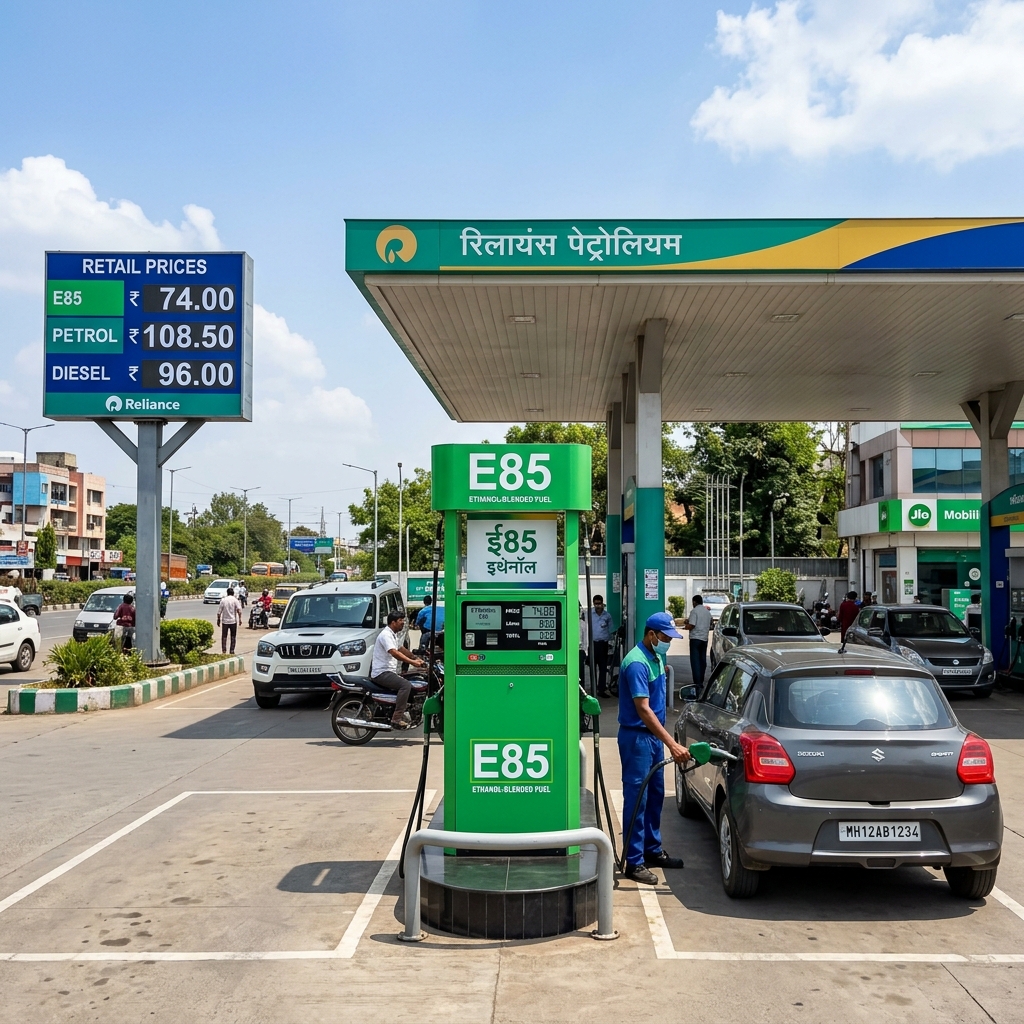
What is an Octane Rating? The Basics
Before we can appreciate the impressive 105 octane rating of E85, we must first understand what an octane rating actually measures. A common misconception among drivers is that a higher octane rating means the fuel contains more energy or will magically make a standard commuter car faster. This is inherently false.
The octane rating of a fuel is simply a measure of its resistance to detonation or "knocking" during combustion.
Defining Octane: RON, MON, and AKI
When you look at the yellow sticker on a gas pump, the number you see is typically the Anti-Knock Index (AKI). The AKI is derived from two different testing methods:
1. Research Octane Number (RON): This measures the fuel's behavior under mild, low-stress engine conditions (lower speeds and temperatures). 2. Motor Octane Number (MON): This measures the fuel's behavior under severe, high-stress conditions (higher RPMs, higher temperatures, and heavier loads).
The AKI is the average of these two numbers, calculated as (RON + MON) / 2. Therefore, when we say E85 has an octane rating of 105, we are referring to its AKI, which means it has exceptional stability under both mild and extreme engine loads.
How Knocking Occurs in an Engine
To understand why resistance to detonation is vital, we have to look at the four-stroke internal combustion cycle: intake, compression, power, and exhaust.
During the compression stroke, the piston moves upward, squeezing the mixture of air and fuel into a very small, highly pressurized space. As pressure increases, so does temperature. In a perfectly operating engine, the spark plug fires at the exact right moment, igniting the fuel-air mixture smoothly. The flame front propagates evenly across the cylinder, pushing the piston down for the power stroke.
However, if the fuel's octane rating is too low for the amount of heat and pressure in the cylinder, the fuel can auto-ignite before the spark plug fires. This premature, explosive detonation sends violent shockwaves through the engine block. This is known as "engine knock" or "pinging." Severe knocking can shatter pistons, bend connecting rods, and completely destroy an engine in a matter of seconds.
Higher octane fuels resist auto-ignition under extreme pressure and heat. This is the core reason why high-performance engines absolutely require high-octane fuel.
---
The Chemistry of Ethanol and Octane
So, why does ethanol inherently possess such a high octane rating? The answer lies in its chemical composition and physical properties.
Ethanol (ethyl alcohol) is a chemical compound with the formula C2H5OH. It is an alcohol derived from the fermentation of sugars found in crops like corn, sugarcane, and cellulose. Traditional gasoline, on the other hand, is a complex mixture of hundreds of different hydrocarbons refined from crude oil.
Ethanol's Molecular Structure
The presence of the hydroxyl group (-OH) in ethanol's molecular structure fundamentally changes how it burns compared to gasoline. The oxygen atom bound within the ethanol molecule means that ethanol is an "oxygenated" fuel. It brings its own oxygen to the combustion process.
This chemical structure makes ethanol inherently highly stable under pressure. The bonds within the ethanol molecule require a significant amount of activation energy to break down and auto-ignite. This incredible stability translates directly to a high resistance to pre-ignition and engine knock, granting pure ethanol (E100) an octane rating (AKI) of approximately 109 to 113.
Latent Heat of Vaporization
Beyond its chemical stability, ethanol has another ace up its sleeve: its incredibly high latent heat of vaporization.
Latent heat of vaporization refers to the amount of heat energy required to change a liquid into a gas. When fuel is injected into the engine's intake manifold or directly into the cylinder, it must vaporize to mix with the air and burn. This vaporization process absorbs heat from the surrounding environment.
Ethanol's latent heat of vaporization is roughly 2.5 times higher than that of standard gasoline. When E85 is injected into a hot engine, it absorbs a massive amount of thermal energy as it vaporizes. This creates a dramatic cooling effect on the intake charge (the air-fuel mixture) and the combustion chamber itself.
A cooler intake charge is denser, meaning it contains more oxygen molecules. More oxygen allows the engine to burn more fuel, creating more power. Furthermore, cooler combustion chamber temperatures drastically reduce the likelihood of hot spots causing premature detonation. This cooling effect acts as a secondary, mechanical barrier against engine knock, amplifying the benefits of the fuel's chemical octane rating.
---
Why E85 Has an Octane Rating of 105
We know that pure ethanol has an octane rating over 110. So why is E85 rated at 105?
The Blend: 85% Ethanol, 15% Gasoline
E85 is a blended fuel. The "E" stands for ethanol, and the "85" denotes the maximum percentage of ethanol by volume. The remaining 15% (or more, depending on the season) is comprised of standard hydrocarbon gasoline (usually 87 octane) and various additives.
The gasoline is added for several practical reasons. Primarily, it helps with cold engine starts. Pure ethanol does not vaporize well at low temperatures, making cold-weather starting extremely difficult. The 15% gasoline component provides the necessary volatility to start the engine when the thermometer drops. Additionally, the gasoline portion helps lubricate fuel system components.
Synergy of the Blend
When you blend 85% ethanol (113+ octane) with 15% regular gasoline (87 octane), the resulting mixture averages out to an AKI of approximately 105.
It is important to note that E85 blends can fluctuate at the pump. In colder climates during the winter months, fuel stations often switch to "Winter Blend" E85, which might actually be E70 (70% ethanol, 30% gasoline) to ensure reliable cold starting. Even at E70, the octane rating remains phenomenally high, typically hovering around 100 AKI, which is still far superior to premium pump gas.
---
What a 105 Octane Rating Means for Your Engine
Now that we understand why* E85 has a 105 octane rating, let's explore what it actually *means for an internal combustion engine. Why do engine builders and tuners salivate over this fuel?
The 105 octane rating unlocks the ability to push an engine far beyond the physical limits imposed by 91 or 93 octane gasoline. It allows tuners to alter three critical engine parameters: Compression Ratio, Ignition Timing, and Boost Pressure.
Higher Compression Ratios
Compression ratio is the ratio of the volume of the cylinder when the piston is at the bottom of its stroke (Bottom Dead Center) to the volume when it is at the top (Top Dead Center). A higher compression ratio squeezes the air-fuel mixture tighter, resulting in a more forceful explosion and higher thermal efficiency.
Naturally aspirated engines (engines without turbochargers or superchargers) benefit greatly from high compression. However, on 91 octane gas, compression ratios are strictly limited (usually around 11:1 or 12:1) because squeezing the mixture too much will generate enough heat to cause knocking.
Because E85 is so resistant to knocking (thanks to its 105 octane rating and cooling properties), engine builders can construct high-compression engines (13:1, 14:1, or even higher) specifically designed to run on E85. This yields massive increases in naturally aspirated horsepower and throttle response.
Advanced Ignition Timing
Ignition timing refers to the exact moment the spark plug fires relative to the piston's position. For maximum power, the spark should fire slightly before the piston reaches Top Dead Center (TDC). This gives the flame front time to propagate so that peak cylinder pressure occurs exactly as the piston begins moving downward, maximizing mechanical leverage on the crankshaft.
Advancing the ignition timing (firing the spark earlier) increases power. However, advancing the timing too much on standard pump gas will cause the mixture to detonate before the piston is in the correct position, causing catastrophic engine knock.
With E85's 105 octane rating, a tuner can advance the ignition timing significantly further than they ever could on premium gas. The fuel will simply not knock, allowing the engine to extract maximum mechanical efficiency and power from every single combustion cycle.
Forced Induction (Turbochargers and Superchargers)
The most dramatic benefits of E85 are seen in forced induction engines. Turbochargers and superchargers work by forcing compressed air into the engine. Compressing air generates a massive amount of heat.
When you combine hot compressed air with the heat already present inside the engine cylinder, you create a recipe for immediate, destructive detonation if you are using standard pump gasoline. To compensate, tuners on pump gas must pull back ignition timing and limit boost pressure to keep the engine from destroying itself.
E85 completely changes the game for turbocharged and supercharged vehicles. The incredible latent heat of vaporization acts as a chemical intercooler, drastically lowering the temperature of the forced air entering the engine. Combined with the 105 octane stability, tuners can dramatically increase boost pressure (forcing much more air and fuel into the engine) while simultaneously advancing ignition timing.
This synergistic effect allows forced induction engines running E85 to produce hundreds of horsepower more than they could on 93 octane gasoline, safely and reliably.
---
Performance Benefits of E85's High Octane
Switching to E85 provides a cascade of tangible performance benefits that make it the ultimate choice for automotive enthusiasts.
Increased Horsepower and Torque
As detailed above, the ability to run more boost, higher compression, and more aggressive ignition timing directly translates to massive power gains. In a turbocharged vehicle, switching from 93 octane to E85 and having the vehicle professionally tuned can easily result in gains of 50 to 100+ horsepower at the wheels. E85 is widely considered the best "bang for your buck" horsepower modification available for modern sports cars.
Cooler Intake Temperatures
Heat is the enemy of performance. The chemical cooling effect of ethanol vaporizing in the intake tract significantly lowers Intake Air Temperatures (IATs). A cooler engine is a happier, more consistent engine. On a racetrack or during repeated hard accelerations, a car running on pump gas will suffer from "heat soak," leading the engine computer to pull power to protect itself. E85 keeps the engine drastically cooler, ensuring consistent, repeatable power delivery lap after lap.
Engine Longevity and Cleaner Internals
Ethanol is an excellent solvent. While it has a reputation for being tough on older rubber fuel lines (a myth we will address shortly), its solvent properties are incredible for keeping the inside of an engine clean.
Engines run on E85 routinely show virtually zero carbon buildup on the pistons, valves, and combustion chambers, even after tens of thousands of miles of hard driving. Furthermore, because E85 suppresses engine knock so effectively, the internal components (rods, bearings, pistons) are subjected to less harsh, erratic stress, potentially increasing engine longevity in high-performance applications compared to pushing the limits on pump gas.
---
E85 vs. Premium Gasoline (91/93 Octane)
While E85 sounds like a miracle fluid, it is important to objectively compare it to traditional premium gasoline to understand the trade-offs.
Cost Comparison
In most markets, a gallon of E85 is significantly cheaper than a gallon of 91 or 93 octane premium gasoline. Because ethanol is derived from renewable agricultural products and is often subsidized or incentivized, the price at the pump is highly attractive. For high-performance drivers who consume a lot of fuel, the cost savings per gallon can be substantial.
Fuel Efficiency (MPG) Differences
This is the primary drawback of E85. Ethanol contains roughly 30% less potential energy per volume than gasoline. Therefore, to achieve the proper air-to-fuel ratio for combustion (stoichiometric ratio), an engine must inject significantly more E85 into the cylinder than it would gasoline.
As a result, a vehicle running on E85 will experience a noticeable drop in fuel economy (Miles Per Gallon). You can generally expect a 20% to 30% decrease in MPG when switching from standard gas to E85. You will be visiting the gas station more frequently. However, for most enthusiasts, the massive increase in horsepower and engine safety far outweighs the decrease in fuel economy.
Power Output Differences
When comparing power output, E85 reigns supreme. A vehicle tuned for 93 octane might make 400 horsepower. That exact same vehicle, with no mechanical changes other than larger fuel injectors and an E85 tune, might make 480 horsepower. The 105 octane rating and cooling properties allow the engine to operate at peak efficiency, far surpassing the capabilities of premium pump gas.
---
Converting Your Vehicle to Run on E85
You cannot simply pump E85 into a standard gasoline vehicle and drive away. Doing so will cause the engine to run dangerously lean (not enough fuel), trigger check engine lights, and potentially cause engine damage. Because E85 requires a much higher volume of fuel to burn correctly, the vehicle must be equipped to handle it.
Flex-Fuel Vehicles (FFVs)
Many modern vehicles leave the factory as Flex-Fuel Vehicles (FFVs). These cars are equipped with specialized fuel systems, ethanol-compatible lines and seals, and a flex-fuel sensor in the fuel line. This sensor detects the exact percentage of ethanol in the fuel system and instantly relays that information to the Engine Control Unit (ECU).
The ECU then automatically adjusts the fuel injection volume and ignition timing on the fly. You can put 87 octane gas, 105 octane E85, or any mixture of the two into the tank, and the car will adapt perfectly.
Aftermarket E85 Conversion Kits
If your car is not a factory FFV, you can install an aftermarket flex-fuel conversion kit. This typically involves splicing a flex-fuel sensor into your fuel line and wiring it to a compatible aftermarket ECU or an intercepted signal to the factory ECU (if supported by tuning software like Cobb, EcuTek, or Hondata).
Upgrading Fuel Injectors and Pumps
Because E85 requires roughly 30% more fuel volume to flow into the engine, the factory fuel injectors and fuel pump on most standard cars are entirely inadequate. They will "max out" and fail to deliver enough fuel at full throttle.
Converting a non-FFV vehicle for performance E85 use almost always requires installing high-flow aftermarket fuel injectors and a high-capacity in-tank fuel pump capable of flowing enough volume to support the engine's new power output. Furthermore, the pump and injectors must be explicitly rated as E85-compatible, as the alcohol can degrade standard electrical and rubber components over time.
Engine Tuning for 105 Octane
Hardware upgrades are useless without software. Once the high-flow fuel system and flex-fuel sensor are installed, the vehicle MUST be recalibrated (tuned) by a professional on a dynamometer. The tuner will map the ECU to understand the new injector size, calibrate the flex-fuel sensor, and, most importantly, create custom ignition timing and boost maps that take advantage of the 105 octane rating.
---
Myths and Misconceptions About E85 and Octane
Despite its popularity, several myths continue to surround E85 fuel.
Myth: High Octane Means More Energy
As stated earlier, this is false. Octane is a measurement of stability and resistance to detonation, not energy content. In fact, E85 contains less* energy per gallon than 87 octane regular gasoline. E85 makes more power not because it has more energy, but because its 105 octane rating allows the *engine to operate more aggressively and efficiently.
Myth: E85 Corrodes Your Engine Quickly
This myth stems from the 1980s and 90s. Older vehicles used natural rubber fuel lines, cork gaskets, and unprotected steel fuel tanks. High concentrations of ethanol will indeed degrade natural rubber and cause rust in unprotected steel.
However, virtually all vehicles manufactured after the early 2000s utilize synthetic rubber (like PTFE or Viton) lines, coated fuel tanks, and ethanol-resistant plastics. Modern fuel systems are highly resilient to ethanol. While you should ensure your aftermarket fuel pump is E85 rated, pumping E85 into a modern car will not instantly melt the fuel lines.
---
The Environmental Impact of E85
Beyond performance, the high ethanol content of E85 offers significant environmental advantages.
Reduced Greenhouse Gas Emissions
Ethanol is an oxygenated fuel, meaning it burns cleaner and more completely than pure hydrocarbon gasoline. Vehicles running on E85 emit significantly lower levels of carbon monoxide, particulate matter, and tailpipe greenhouse gases.
Renewable Nature of Ethanol
Unlike fossil fuels, which take millions of years to form, ethanol is derived from renewable agricultural sources. The carbon dioxide emitted by burning E85 is partially offset by the carbon dioxide absorbed by the corn or sugarcane plants grown to produce the next batch of fuel, creating a more sustainable carbon cycle.
---
The Future of High-Octane Biofuels
As the automotive industry faces increasingly stringent emissions regulations and the eventual phase-out of internal combustion engines in some markets, high-octane biofuels like E85 represent a bridge to the future.
Automakers are researching advanced, high-compression engines designed exclusively to run on high-octane renewable fuels. These engines could offer the thermal efficiency and low emissions of a hybrid system while retaining the mechanical soul of an internal combustion engine. The 105 octane rating of E85 proves that we do not have to sacrifice performance in the pursuit of cleaner, renewable energy.
---
Conclusion
The ethanol octane rating of 105 is not just a marketing gimmick; it is a profound chemical property that drastically alters how an internal combustion engine operates. By providing unparalleled resistance to engine knock and incredible cooling capabilities, E85 allows engines to run higher compression, massive boost pressures, and aggressive ignition timing safely.
While the trade-off is lower fuel economy, the performance gains, engine safety, and cost savings at the pump make E85 the undisputed king of pump-accessible racing fuels. Whether you are building a 1000-horsepower drag car or just looking to wake up your daily driver, understanding the power of a 105 octane rating is the first step toward automotive nirvana.
---
Frequently Asked Questions (FAQ)
Does E85 actually have 105 octane? Yes, standard E85 (85% ethanol, 15% gasoline) typically features an Anti-Knock Index (AKI) octane rating of roughly 105. Seasonal winter blends with less ethanol may dip slightly to around 100 octane, which is still vastly superior to premium gasoline.
Can I put E85 in a car that requires 93 octane? No. Unless your car is a factory Flex-Fuel Vehicle or has been specifically modified with larger fuel injectors, a stronger fuel pump, and a custom ECU tune, you cannot put E85 in a standard gas car. It will cause the engine to run lean and could cause severe damage.
Why does E85 burn more fuel? Ethanol has a lower energy density than gasoline. To achieve the correct air-to-fuel combustion ratio, the engine must inject roughly 30% more E85 into the cylinder than it would gasoline, resulting in lower Miles Per Gallon (MPG).
Does E85 clean your engine? Yes. Ethanol is an excellent solvent. Regular use of E85 tends to clean carbon deposits off the intake valves, pistons, and combustion chambers, leaving the engine internals looking incredibly clean.
Is E100 better than E85? Pure ethanol (E100) has an even higher octane rating (up to 113), but it is very difficult to start in cold weather because it lacks the volatile gasoline vapors needed for cold ignition. The 15% gasoline in E85 provides the necessary volatility for reliable daily driving while retaining most of the high-octane benefits.