When automotive enthusiasts and performance builders discuss switching to E85, the conversation inevitably turns to fuel system compatibility. The high-octane, cooling benefits of E85 are undeniable, offering massive horsepower gains and increased detonation resistance. However, a persistent rumor continues to circulate within the automotive community: “E85 will melt your fuel lines.”
Is this a myth born from the early days of ethanol blending, or is there a genuine scientific basis for concern? Can E85 literally dissolve the rubber hoses in your vehicle, leaving you stranded with a dangerous fuel leak?
In this comprehensive guide, we will dive deep into the chemistry of ethanol, examine how it interacts with traditional rubber fuel lines, and explore the ultimate solution for high-performance builds: PTFE (Polytetrafluoroethylene) hoses. Whether you are building a 1000-horsepower track monster or simply converting your weekend cruiser to run on corn juice, understanding the differences between rubber and PTFE fuel lines is critical for the safety, reliability, and longevity of your fuel system.
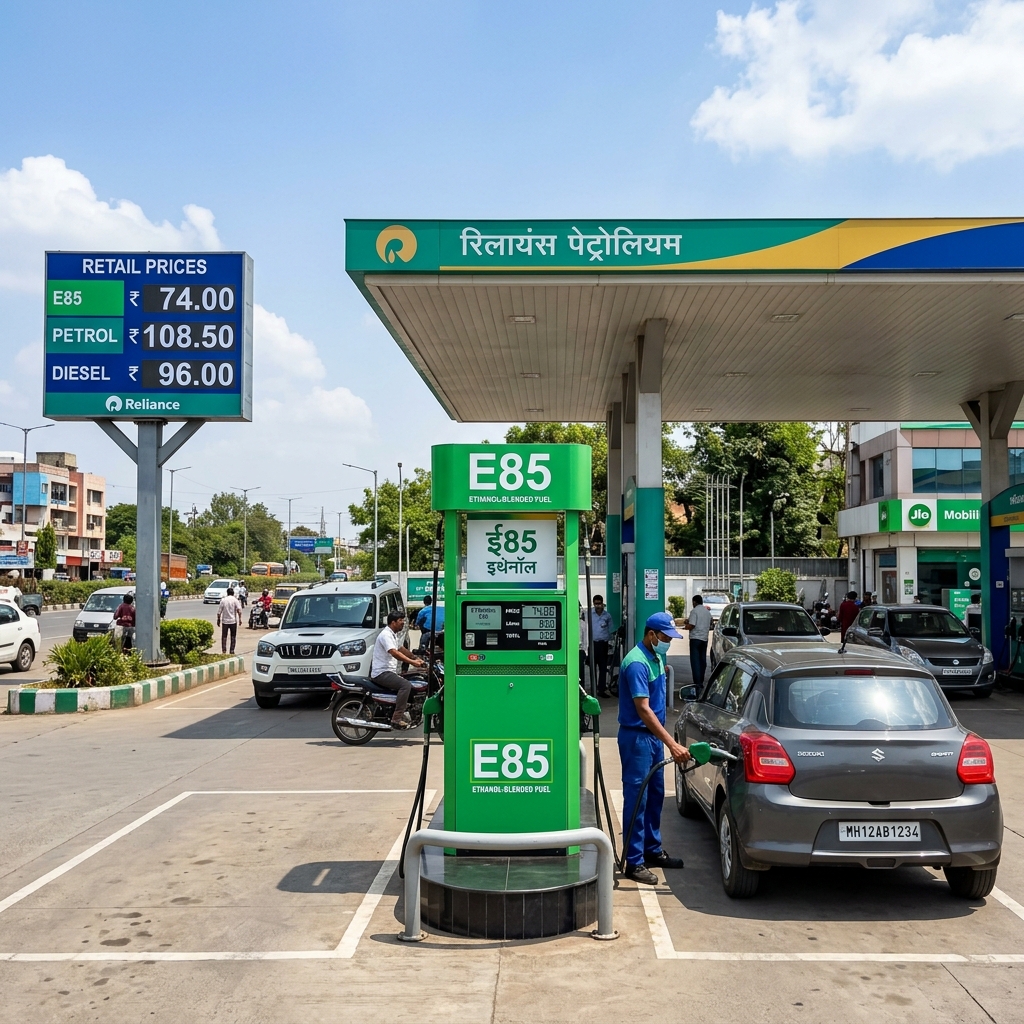
1. What Exactly is E85?
Before we can understand how E85 affects fuel lines, we must first understand what it is. E85 is a biofuel blend consisting of up to 85% ethanol and 15% gasoline (or other hydrocarbon distillates). The exact percentage of ethanol can vary depending on the season and geographic location, often ranging from 51% to 83% to ensure proper cold-start capabilities in winter months.
Ethanol is essentially grain alcohol, produced from renewable biological sources such as corn, sugarcane, or switchgrass. As a motor fuel, ethanol boasts exceptional properties. It has a high latent heat of vaporization, meaning it absorbs a massive amount of heat as it turns from a liquid into a gas. This drastically lowers intake air temperatures. Furthermore, ethanol has an extremely high effective octane rating (often over 105), which allows engine tuners to run significantly more ignition timing and higher boost pressures without encountering engine-destroying detonation (engine knock).
These incredible performance benefits are why E85 has been dubbed "cheap race gas" and is the fuel of choice for forced-induction setups. However, alcohol-based fuels behave very differently from traditional petroleum-based gasoline, particularly when they come into contact with the elastomers (rubbers) and metals used in older automotive fuel systems.
2. The Chemistry of Ethanol and Why It Attacks Rubber
To answer the question of whether E85 will "melt" your fuel lines, we need to look at the chemical interactions between ethanol and standard rubber compounds.
Gasoline is a non-polar hydrocarbon. Over a century of automotive engineering has gone into developing rubber compounds—such as Nitrile (Buna-N) and Neoprene—that resist degradation when exposed to non-polar hydrocarbons. When standard gasoline sits inside a traditional rubber fuel line, the rubber remains stable, flexible, and structurally sound for decades.
Ethanol, on the other hand, is a highly polar solvent. When a polar solvent like ethanol is introduced to a non-polar elastomer like older generation nitrile rubber, a chemical phenomenon occurs. The ethanol molecules penetrate the molecular structure of the rubber. This leads to two primary issues:
A. The "Washing" Effect and Dry Rot
Traditional rubber hoses contain plasticizers—chemical additives that keep the rubber flexible and pliable. Because ethanol is a potent solvent, it literally washes these plasticizers out of the rubber compound. As the plasticizers are leeched away, the rubber becomes hard, brittle, and prone to cracking. This is often referred to as dry rot. Once the hose becomes brittle, the vibrations and pressure changes within a running engine can cause the hose to split, leading to catastrophic fuel leaks.B. Swelling and Degradation (The "Melting" Myth)
While E85 doesn't instantly turn your fuel lines into a liquid puddle like acid in a Hollywood movie, it does cause specific types of older rubber to swell significantly. As the ethanol permeates the rubber, the material expands, loses its tensile strength, and begins to physically break down.Inside the hose, the inner liner begins to deteriorate. It sheds microscopic particles of black rubber sludge into the fuel stream. This black goo acts like a sticky paste, traveling through your fuel system and clogging fuel filters, ruining fuel pressure regulators, and seizing expensive high-flow fuel injectors. By the time you notice your engine running lean or failing to start due to clogged injectors, the damage is already done.
So, while E85 won't literally "melt" your fuel lines into a liquid in seconds, it will chemically attack, swell, and disintegrate older rubber lines from the inside out. In the automotive world, this is close enough to melting to justify the fear.
3. The Era of Your Vehicle Matters
It is important to note that not all rubber is created equal. The automotive industry recognized the changing landscape of fuels years ago, especially as standard pump gasoline began containing 10% ethanol (E10) across most of the world.
Pre-1990s Vehicles
If you are driving a classic car, a vintage muscle car, or any vehicle manufactured before the widespread introduction of E10, your original fuel lines are absolutely not E85 safe. These vehicles used older formulations of nitrile rubber and even bare steel hard lines that will rapidly succumb to the corrosive and solvent effects of high-concentration ethanol. Running E85 in these unmodified systems is a guaranteed recipe for failure.Modern Vehicles (2000s and Newer)
Automakers recognized the need to upgrade fuel system materials to withstand prolonged exposure to E10 and E15 fuels. As a result, modern OEM fuel lines are often made from advanced synthetic rubbers or layered plastics (such as nylon and fluoropolymers) that offer varying degrees of ethanol resistance. Many modern factory fuel lines can tolerate E85 for a significant period without immediate catastrophic failure.However, "tolerating" is not the same as being "optimized for." Even modern standard rubber lines can suffer from long-term permeation and degradation when subjected to the 85% ethanol concentrations found in E85, particularly under the high pressures and high flow rates demanded by aftermarket performance setups.
4. Traditional Rubber vs. Modern E85-Safe Rubber
When shopping for aftermarket fuel line hoses, you will encounter various SAE (Society of Automotive Engineers) ratings. Understanding these ratings is crucial if you intend to use rubber lines for ethanol.
SAE 30R9 (Standard Fuel Injection Hose)
For many years, SAE 30R9 was the standard for high-pressure fuel injection lines. It typically uses a Fluoroelastomer (FKM) inner liner to resist standard gasoline and E10. While 30R9 is vastly superior to older carbureted hoses, it is generally not recommended for continuous use with E85. Over time, prolonged exposure to high ethanol concentrations can still cause 30R9 hoses to degrade and release black particulates.SAE 30R14T2 (Low Permeation, Ethanol Compatible)
In response to modern fuel blends, the industry developed newer standards like SAE 30R14. This rating indicates a hose designed specifically for very low permeation (preventing fuel vapors from escaping through the hose walls) and high resistance to aggressive fuels, including E85. These modern synthetic rubber lines often utilize advanced internal barriers. If you absolutely must use a rubber-style hose for ease of installation, ensure it is rated for E85 and meets or exceeds these newer SAE specifications.Despite the existence of E85-compatible rubber hoses, they still have limitations in the high-performance aftermarket. They have a limited lifespan compared to our next topic, and they are still susceptible to "vapor weeping" over many years. This brings us to the ultimate solution for E85 fuel systems.
5. Enter PTFE: The Ultimate Fuel Line Solution
If you want a truly bulletproof fuel system that will outlast the life of your vehicle, regardless of what aggressive fuels you run through it, there is only one definitive answer: PTFE.
What is PTFE?
PTFE stands for Polytetrafluoroethylene. You might know it better by its famous brand name, Teflon, created by Chemours (a spin-off of DuPont). PTFE is a synthetic fluoropolymer of tetrafluoroethylene. It possesses some of the most remarkable physical and chemical properties of any known solid material.The Properties That Make PTFE Perfect for E85
1. Absolute Chemical Inertness: PTFE is famously non-reactive. It is practically impervious to virtually all industrial chemicals, solvents, and fuels. E85, pure E100, methanol, racing gas, nitromethane, brake fluid, and even harsh acids will not degrade PTFE. When you run E85 through a PTFE hose, there is zero chemical interaction. The hose will not swell, it will not harden, it will not shed black particulates, and it will not degrade. It is the definition of "future-proof."
2. Zero Permeation (No Fuel Smells!): One of the biggest complaints enthusiasts have when running large aftermarket braided rubber hoses (like traditional AN lines) is the fuel smell. Rubber is porous on a microscopic level. Even if the fuel isn't leaking out as a liquid, the fuel vapors slowly permeate through the walls of the rubber hose, leaving your garage smelling strongly of gasoline or ethanol. PTFE is completely non-porous and impermeable. It acts as an absolute vapor barrier. A vehicle plumbed entirely with PTFE lines will emit absolutely zero fuel odor from the lines themselves. If you park your car in an attached garage, PTFE is mandatory to keep fumes out of your home.
3. High Temperature and Pressure Resistance: PTFE has a remarkably high melting point (around 327°C or 620°F) and remains stable at extreme temperatures. When combined with a braided stainless steel outer sheath, a standard PTFE fuel hose can easily withstand operating pressures well in excess of 1,000 PSI—far beyond anything a standard automotive fuel system will ever generate.
The Structure of a PTFE Fuel Line
A high-performance PTFE fuel hose is typically constructed in three layers: - The Core: A smooth bore or convoluted tube made of pure or carbon-impregnated PTFE. The carbon impregnation (often referred to as a conductive core) prevents static electricity buildup caused by high-velocity fuel flow, which is critical for safety. - The Braid: A tightly woven layer of stainless steel wire mesh surrounding the core. This provides the structural integrity necessary for high pressures and protects the inner core from physical abrasion. - The Jacket (Optional): Many modern PTFE hoses feature an outer jacket made of PVC, Nylon, or woven aramid fibers (like Kevlar) over the stainless braid. This jacket prevents the abrasive stainless braid from cutting into other components under the hood and provides a stealthy, clean aesthetic (often in black).6. Rubber vs. PTFE: The Showdown
To summarize the battle between rubber and PTFE for E85 applications, let's break down the key categories:
Chemical Compatibility
Rubber: Standard rubber degrades, swells, and clogs injectors when exposed to E85. Modern E85-rated rubber survives but still has a finite lifespan. PTFE: Completely inert. Impervious to E85, methanol, and any other fuel you can imagine. Will never degrade chemically. Winner: PTFEVapor Permeation (The Smell Test)
Rubber: Traditional braided rubber lines leak fuel vapors. Your garage will smell like a gas station. PTFE: 100% vapor lock. No fuel smells, making it safe for enclosed garages. Winner: PTFEFlexibility and Installation
Rubber: Very flexible and easy to route. Fittings are relatively straightforward to assemble (standard AN push-lock or cutter style). PTFE: The inner core is stiff. PTFE hoses have a larger minimum bend radius, meaning you cannot bend them as sharply as rubber without kinking the inner core. Assembling PTFE AN fittings requires a specific technique using an "olive" or ferrule that crushes against the core to create the seal. It requires a bit more patience and skill to assemble correctly. Winner: Rubber (for ease of use)Longevity and Cost
Rubber: Cheaper upfront cost. However, because rubber degrades over time (even without E85, it succumbs to heat cycling and age), rubber fuel lines should theoretically be replaced every 5 to 7 years in a high-performance application. PTFE: More expensive initial purchase price for both the hose and the specialized PTFE fittings. However, a PTFE hose will effectively last forever. It is a one-and-done investment. Over the lifetime of the vehicle, PTFE is often the cheaper option because it never needs replacing. Winner: PTFE (for long-term value)7. Do I Have to Upgrade to PTFE?
The necessity of upgrading to PTFE depends entirely on your specific situation.
You MUST upgrade to PTFE if: - You are building a high-horsepower, high-flow fuel system from scratch. - You are replacing the entire length of fuel line from the tank to the engine bay. - You plan to run aggressive alcohol fuels (E85, Methanol) permanently. - Your car is parked in an attached garage where fuel vapors pose a health and safety risk. - You are noticing black sludge in your fuel filters or experiencing stuck injectors.
You might be able to delay upgrading if: - You have a relatively modern vehicle (2010+) and are simply running a basic flex-fuel tune on the stock factory hard lines and short rubber jumpers. The factory lines will likely hold up for quite a while, though you should monitor them. - You are using specially rated, high-quality modern synthetic rubber specifically guaranteed by the manufacturer for continuous E85 use (though PTFE remains vastly superior).
8. Beyond the Hoses: The Rest of the E85 Fuel System
It is critical to remember that your fuel lines are just one part of a larger ecosystem. Upgrading to PTFE hoses is pointless if the rest of your system is incompatible with E85. When converting to E85, you must also address:
The Fuel Pump
Standard fuel pumps have internal electrical components and rubber seals that will corrode and swell when submerged in E85. The armature can rust, and the pump will seize. You must upgrade to an E85-compatible fuel pump (such as those offered by Walbro/TI Automotive, AEM, or Aeromotive), which feature sealed electrical connections and stainless steel or composite internals.Fuel Injectors
Because E85 has a lower stoichiometric ratio than gasoline (around 9.7:1 for E85 vs. 14.7:1 for gasoline), you need to inject roughly 30% to 40% more fuel by volume to achieve the same power output. Your stock injectors will likely max out their duty cycle. You must upgrade to larger, E85-compatible injectors featuring stainless steel internals that will not corrode.Fuel Filters
E85 is highly effective at acting like an engine cleaner. When you first switch to E85, it will scour years of accumulated gasoline varnish, dirt, and grime from the walls of your fuel tank and existing lines. All of this debris will be pushed directly into your fuel filter. Furthermore, you must use an E85-compatible filter element. Traditional cellulose (paper) fuel filters will dissolve in E85. You must use a stainless steel mesh filter or a specialized micro-glass element. A 10-micron stainless filter is standard for protecting injectors, while a 100-micron filter is typically used as a pre-filter before the pump.O-Rings and Seals
Any remaining O-rings in your fuel system (such as injector O-rings or quick-disconnect fittings) must be made from Viton or PTFE. Standard Buna-N O-rings will swell and leak when exposed to E85.9. How to Upgrade Your Lines (A Brief Overview)
If you have decided to bite the bullet and plumb your vehicle with PTFE, here is a general outline of the process:
1. Measure Twice, Cut Once: Plan your routing carefully. Remember that PTFE cannot bend as sharply as rubber. Use a string to map out the route under your car and measure the required length. 2. Use the Right Tools: Cutting stainless braided PTFE requires a clean cut to prevent the braid from fraying. Wrapping the cut area tightly in masking tape and using a high-speed cutoff wheel, a specialized hose shear, or a fine-toothed hacksaw is recommended. Ensure you thoroughly clean out any metal dust from the hose after cutting! 3. Assemble the Fittings: PTFE AN fittings consist of a socket, an olive (ferrule), and a nipple. The socket slides over the outside, the braid is peeled back slightly, the olive is seated tightly over the PTFE core, and the nipple is pressed into the core. Tightening the socket crushes the olive against the core, creating a permanent, leak-proof mechanical seal. 4. Support the Lines: Use proper cushion clamps (Adel clamps) spaced every 12-18 inches along the chassis to secure the lines. High-pressure lines will pulse and move; securing them prevents abrasion and fatigue.
10. Frequently Asked Questions (FAQs)
Q: Will E85 clean my fuel tank? A: Yes. Ethanol is an excellent solvent. If you put E85 into a high-mileage gas tank, it will strip the built-up sludge and varnish. You should plan on changing your fuel filter after the first few tanks of E85 to catch all the dislodged debris.
Q: Can I mix E85 and regular gas? A: Yes, if your vehicle is equipped with a Flex Fuel sensor and a compatible engine management system. The sensor measures the exact ethanol content in real-time and adjusts the fueling and timing maps accordingly. Without a Flex Fuel system, mixing fuels will result in incorrect air/fuel ratios and potential engine damage.
Q: Are factory fuel lines on new cars E85 safe? A: Generally, yes. Most modern vehicles use nylon or hard plastic inner liners that resist E85. However, if you are increasing fuel pressure and volume significantly for aftermarket performance, the factory lines may become a restriction, necessitating an upgrade to larger PTFE lines.
Q: Does E85 attract water? A: Yes, ethanol is hydroscopic, meaning it absorbs moisture from the air. This is why E85 fuel systems should not sit completely dormant for extended periods (months at a time) in humid environments. The water can cause phase separation and internal corrosion on unprotected metal parts. If storing a car on E85, use an ethanol-specific fuel stabilizer or drain the system.
11. Conclusion
So, will E85 melt your fuel lines? If you are running old, traditional nitrile rubber hoses, the answer is a resounding yes—it will chemically break them down, swell them up, and destroy your fuel system from the inside out. The myth is based on very real chemical facts.
However, the solution is simple and absolute. By upgrading to PTFE (Teflon) fuel hoses, you completely eliminate the risks associated with corrosive fuels. PTFE offers total chemical immunity, zero vapor permeation, and a lifespan that will likely outlast the car itself.
While the initial cost and assembly process of PTFE lines might be slightly more demanding than standard rubber, the peace of mind they provide is invaluable. When you are pushing the limits of your engine on E85, the last thing you want to worry about is a failing fuel line. Do it once, do it right, and plumb your system with PTFE. Your injectors, your engine, and your sense of smell will thank you.