If you are a car enthusiast looking to maximize your engine's power output, you have likely considered making the switch to E85. Known for its high octane rating, incredible cooling properties, and ability to support massive horsepower, E85 is the fuel of choice for many modern builders and tuners. However, making the transition to "corn gas" is not as simple as just pumping it into your tank and hitting the road. One of the most common—and critical—questions that arises during this process is: Does E85 require bigger fuel injectors?
The short answer is yes, in the vast majority of performance applications, you will need larger fuel injectors to run E85 safely and effectively.
But why is this the case? How much bigger do your injectors need to be? What happens if you try to run E85 on stock injectors? In this comprehensive guide, we will dive deep into the chemistry of ethanol, the mechanics of fuel delivery, and provide you with a step-by-step sizing guide to ensure your engine gets the fuel it craves.
---
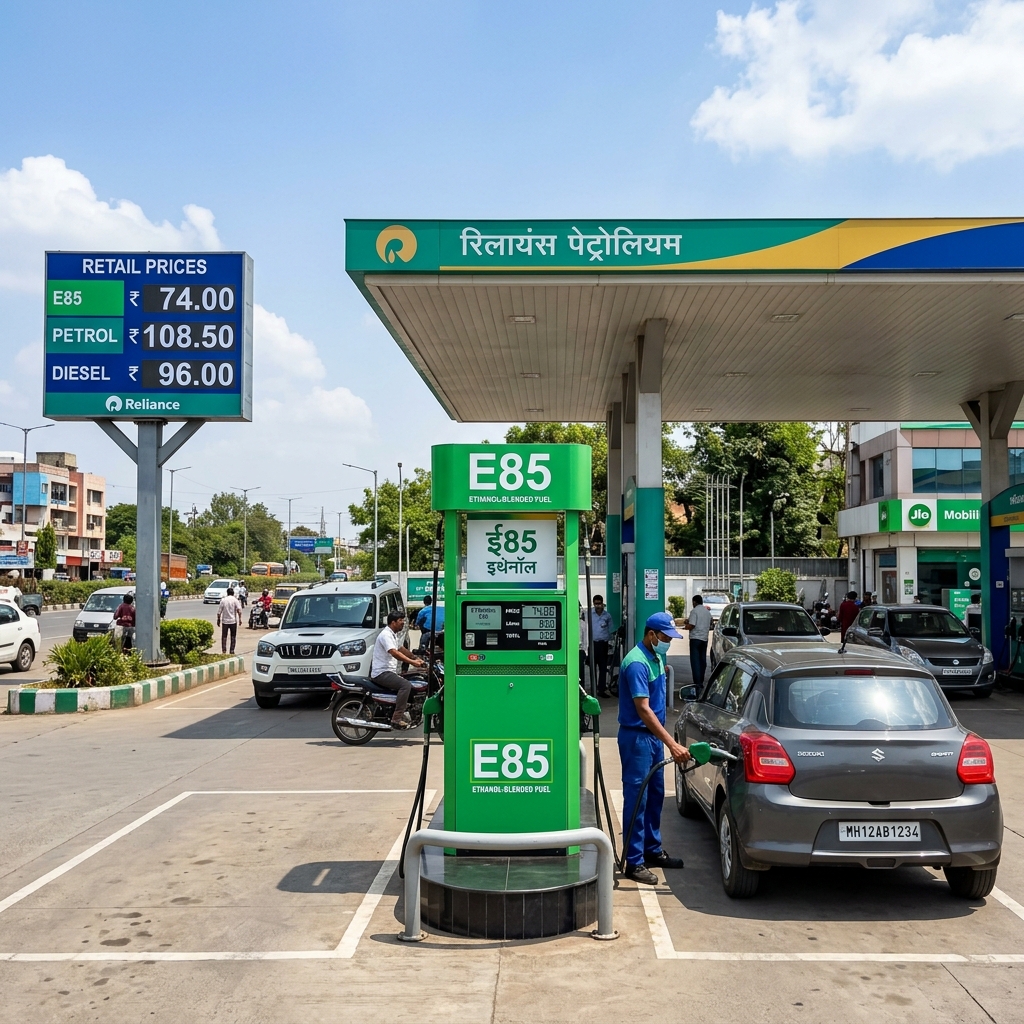
1. Why E85 Demands More Fuel
To understand why E85 requires larger injectors, we must first look at the fundamental differences between standard unleaded gasoline (E10) and E85 (a blend of 85% ethanol and 15% gasoline).
The Chemistry of Ethanol vs. Gasoline
Standard pump gasoline has a high energy density. This means that a specific volume of gasoline contains a large amount of potential energy. Ethanol, on the other hand, has a lower energy density. Specifically, ethanol contains roughly 30% less energy per gallon than gasoline.
Because ethanol contains less energy per unit of volume, your engine needs to burn more* of it to produce the same amount of power. If you want to make *more power than you were making on gasoline, you need an even greater volume of E85.
Stoichiometric Air-Fuel Ratio Explained
The stoichiometric air-fuel ratio (AFR) is the ideal ratio of air to fuel required for complete combustion. - The stoichiometric AFR for pure gasoline is roughly 14.7:1. This means it takes 14.7 parts of air to completely burn 1 part of gasoline. - The stoichiometric AFR for E85 is approximately 9.76:1.
As you can see, E85 requires significantly less air for every unit of fuel compared to gasoline. Conversely, for a given volume of air entering your engine, you must introduce a much larger volume of E85 to achieve a safe and powerful burn.
To achieve maximum power (often referred to as Maximum Best Torque or MBT), tuners will typically run an AFR richer than stoichiometric. For gasoline, this might be around 12.5:1 on a naturally aspirated engine. For E85, maximum power is often found around 7.0:1 to 8.5:1 AFR (on the gasoline scale, this is often read as ~11.5:1 on a standard wideband O2 sensor calibrated for gas).
The Bottom Line:* To maintain the correct air-fuel ratio, your fuel system must flow roughly *30% to 40% more fuel when running on E85 compared to standard gasoline.
---
2. Do You Absolutely Need Bigger Injectors for E85?
If you are only running a stock engine with absolutely no performance modifications, your factory injectors might have just enough overhead to support E85. However, this is exceptionally rare in the performance world. Automakers generally size fuel injectors to support the engine's factory power output with a small safety margin (usually maxing out around 80% duty cycle).
Stock Injector Duty Cycles
Injector Duty Cycle (IDC) is the percentage of time the fuel injector is open (spraying fuel) versus closed during a single engine cycle. - 0% IDC: The injector is completely closed. - 100% IDC: The injector is wide open, constantly spraying fuel. (Static)
A safe maximum duty cycle for continuous operation is generally considered to be 80% to 85%. This leaves a safety margin for unexpected variables like sudden drops in fuel pressure, extreme cold weather (where the air is denser), or minor tuning adjustments.
If your stock injectors are already running at 70% duty cycle on gasoline, switching to E85 will require 30% more fuel. This would push your stock injectors to roughly 91% duty cycle or higher. In many cases, it pushes them well past 100%, meaning the injectors go "static" (staying open continuously) and still cannot deliver enough fuel.
The Risks of Maxing Out Injectors
Attempting to run E85 on injectors that are too small is a recipe for catastrophic engine failure. Here is what happens when injectors are maxed out:
1. Lean Condition: Once an injector reaches 100% duty cycle, it physically cannot flow any more fuel. If engine RPM and airflow continue to increase, the air-fuel mixture becomes dangerously lean (too much air, not enough fuel). 2. Overheating and Pre-Ignition: A lean mixture burns much hotter. This extreme heat can melt pistons, burn valves, and destroy spark plugs. 3. Injector Failure: Forcing an injector to run at or near 100% duty cycle continuously generates excessive heat within the injector coil. This can cause the injector to physically fail, stick open, or stick closed. 4. Inconsistent Fueling: When injectors operate above 90% duty cycle, their spray patterns can become erratic, leading to uneven fuel distribution across cylinders.
If you are adding E85, it is almost certainly because you want to make more power (via forced induction, aggressive timing, or high compression). More power requires more air, which requires even more fuel. Therefore, upgrading your injectors is a mandatory step for a reliable E85 build.
---
3. How to Calculate Fuel Injector Size for E85
Guessing what size injector you need is a dangerous game. Fortunately, there is a straightforward mathematical formula used by engine builders and tuners to determine the exact injector size required for a specific horsepower goal.
The Formula for Injector Sizing
To calculate the required injector size, you need to know three things: 1. Target Crank Horsepower (HP): Your realistic horsepower goal at the engine (not the wheels). 2. Brake Specific Fuel Consumption (BSFC): A measure of fuel efficiency. It tells you how many pounds of fuel an engine needs to produce one horsepower for one hour. 3. Maximum Duty Cycle: The safe maximum operating percentage for your injectors (usually 0.80 or 80%). 4. Number of Cylinders: How many injectors your engine has (assuming one per cylinder).
The formula is:
Required Injector Size (lb/hr) = (Target HP × BSFC) / (Number of Cylinders × Max Duty Cycle)
(Note: To convert lb/hr to cc/min, multiply by 10.5)
Brake Specific Fuel Consumption (BSFC) for E85
BSFC varies wildly depending on the fuel type and whether the engine is Naturally Aspirated (NA), Supercharged, or Turbocharged. Because E85 has less energy density, its BSFC numbers are higher than gasoline.
Estimated BSFC Values for E85: - Naturally Aspirated: 0.55 to 0.65 - Nitrous Oxide: 0.65 to 0.75 - Turbocharged / Supercharged: 0.75 to 0.85
(For comparison, a turbocharged engine on gasoline might have a BSFC of 0.60 to 0.65).
Why is Forced Induction BSFC Higher? Turbochargers and superchargers create massive amounts of cylinder pressure and heat. To prevent detonation and keep cylinder temperatures manageable, tuners must inject extra fuel to act as an internal coolant. E85 is incredible at this, but it means you use significantly more fuel under boost.
---
4. A Step-by-Step E85 Injector Sizing Guide
Let's run through a few real-world examples to see how this formula plays out when planning an E85 build.
Example 1: Naturally Aspirated V8 on E85
Imagine you have an LS-based V8 engine. You are installing a cam, headers, and switching to E85. Your goal is 500 crank horsepower.
- Target HP: 500 - BSFC (NA on E85): Let's use 0.60 for a safe estimate. - Max Duty Cycle: 0.80 (80%) - Cylinders: 8
Calculation: 1. 500 HP × 0.60 BSFC = 300 lbs of fuel per hour total. 2. 8 cylinders × 0.80 Duty Cycle = 6.4 3. 300 / 6.4 = 46.875 lb/hr per injector
Conversion to cc/min: - 46.875 × 10.5 = ~492 cc/min
Conclusion for Example 1: To safely support 500hp on an NA V8 using E85, you need injectors that flow at least 500cc/min (or roughly 50 lb/hr).
Example 2: Turbocharged 4-Cylinder on E85
Now let's look at a heavily modified turbocharged 4-cylinder engine, like a Subaru WRX or Mitsubishi Evo. Your goal is 600 crank horsepower on high boost with E85.
- Target HP: 600 - BSFC (Turbo on E85): Let's use 0.80 due to high boost levels. - Max Duty Cycle: 0.80 (80%) - Cylinders: 4
Calculation: 1. 600 HP × 0.80 BSFC = 480 lbs of fuel per hour total. 2. 4 cylinders × 0.80 Duty Cycle = 3.2 3. 480 / 3.2 = 150 lb/hr per injector
Conversion to cc/min: - 150 × 10.5 = 1575 cc/min
Conclusion for Example 2: A 600hp turbocharged 4-cylinder requires a massive amount of E85. You will need injectors in the 1600cc/min to 1700cc/min range. This is why you commonly see 1700cc or even 2000cc injectors in high-power 4-cylinder builds.
---
5. Factors Beyond Just Injector Size
Upgrading your fuel injectors is only one piece of the E85 puzzle. Simply dropping 1700cc injectors into your engine will not work if the rest of your fuel system cannot support them. When transitioning to E85, you must consider the entire fuel delivery pathway.
Fuel Pump Capacity
Your fuel injectors can only spray the fuel that is delivered to them. If you upgrade to massive injectors but retain a stock fuel pump, the pump will quickly become the bottleneck.
When you go into high boost and your injectors open wide, a weak pump will not be able to maintain fuel pressure. As fuel pressure drops, the effective flow rate of your injectors also drops, leading to a dangerous lean condition.
For E85 setups, you need a high-flow, E85-compatible fuel pump (or multiple pumps run in parallel for very high horsepower applications). Pumps are rated in Liters Per Hour (LPH). Common E85 upgrades include pumps flowing 340 LPH, 450 LPH, or even 525 LPH.
Fuel Lines and Fuel Pressure Regulator (FPR)
The volume of fuel required for high-horsepower E85 applications often exceeds the physical diameter limits of factory fuel lines. Pushing massive amounts of fluid through a narrow pipe creates resistance and pressure drops. - For setups exceeding 600-700hp on E85, upgrading to larger AN-style fuel lines (e.g., -6 AN or -8 AN) is highly recommended. - You will also need an adjustable, rising-rate Fuel Pressure Regulator (FPR) to maintain consistent pressure across the injectors, especially in forced induction applications where manifold pressure fights against the fuel injector spray.
Ethanol Compatibility
Ethanol is a solvent. It can degrade certain types of rubber, plastics, and metals over time. When upgrading your injectors and fuel system for E85, you must ensure that all components are explicitly rated for ethanol use. - O-Rings: Ensure the O-rings on your new injectors are made from Viton or similar ethanol-resistant materials. - Filters: Use a micro-glass or stainless steel mesh fuel filter. E85 can break down standard paper filters, sending particulate matter directly into your expensive new injectors. - Lines: Use PTFE (Teflon) lined fuel hoses. Standard rubber fuel hoses will eventually harden, crack, and leak when exposed to high concentrations of ethanol.
---
6. High-Impedance vs. Low-Impedance Injectors
When shopping for massive E85 injectors, you will encounter the terms "High-Impedance" (Saturated) and "Low-Impedance" (Peak and Hold).
High-Impedance (Saturated)
Most modern OEM vehicle computers (ECUs) are designed to run high-impedance injectors (typically 12-16 ohms). Historically, it was difficult to manufacture very large high-impedance injectors that idled well. However, modern technology (like Bosch EV14 internals) has revolutionized the market. Today, you can buy 1500cc, 1700cc, and even 2200cc high-impedance injectors that offer incredibly precise control at low pulse widths, allowing a 1000hp car to idle like it just rolled off the showroom floor.Low-Impedance (Peak and Hold)
These injectors have a lower electrical resistance (usually 2-4 ohms). They use a high initial current to "peak" (snap the injector open very fast) and then drop to a lower current to "hold" it open. This allows for very large injectors to open quickly. However, running low-impedance injectors usually requires an aftermarket ECU or a resistor box spliced into the wiring harness, as most factory ECUs will fry their internal drivers trying to run them.Recommendation: For the vast majority of modern builds, stick to high-quality, high-impedance injectors based on Bosch EV14 architecture. They offer the best combination of massive flow and flawless idle/drivability.
---
7. Top Fuel Injector Brands for E85
Not all injectors are created equal. When your engine's life depends on precise fuel delivery, you should never cheap out on injectors. Beware of knock-off injectors found on cheap auction sites—they often have terrible spray patterns, inconsistent flow rates across the set, and fail quickly on E85.
When sizing and purchasing injectors for E85, look to reputable brands that provide flow-matching data with their injector sets:
1. Injector Dynamics (ID): Widely considered the gold standard in the aftermarket. They provide incredibly detailed characterization data (essential for precise tuning) and offer sizes ranging from 1050cc to 2600cc. 2. Fuel Injector Clinic (FIC): Another top-tier manufacturer offering precisely matched sets and comprehensive tuning data. Their Data Match Technology ensures all injectors in a set behave identically. 3. DeatschWerks (DW): Known for drop-in fitment solutions for many specific platforms. They offer a wide range of sizes and are fully E85 compatible. 4. Bosch (Genuine): Many of the top aftermarket brands utilize Bosch EV14 internals. Buying genuine Bosch motorsport injectors is a solid choice, provided you get them from a reputable dealer.
---
8. Common Symptoms of Undersized Injectors on E85
If you attempt to run E85 without properly sizing your injectors, your engine will quickly let you know. Watch out for these symptoms:
- Check Engine Light (CEL): The most common codes will be related to "System Too Lean" (e.g., P0171, P0174). - Loss of Power at High RPM: As the engine demands more fuel and the injectors max out, power will flatline or sharply drop off in the upper RPM range. - Sputtering or Hesitation Under Load: If the fuel mixture leans out under boost or heavy acceleration, the engine will misfire, sputter, and hesitate. - High Knock Retard (KR): A lean condition causes detonation (knock). Your ECU will attempt to pull ignition timing to save the engine, resulting in a massive loss of power. - Injector Duty Cycle Logs Reading 100%: If you are monitoring your ECU data, seeing IDC hit 95-100% is absolute proof that your injectors are too small for your current setup.
---
9. Tuning Considerations
Upgrading your injectors and switching to E85 is not a plug-and-play affair. You absolutely must tune the ECU to account for the new hardware and fuel type.
1. Injector Scaling: The ECU must be told the size of the new injectors. If you install 1000cc injectors but the ECU thinks you still have 500cc injectors, it will spray twice as much fuel as needed, flooding the engine. 2. Injector Latency (Dead Time): Larger injectors take a different amount of time to open and close compared to stock injectors. This latency changes based on battery voltage and fuel pressure. Reputable injector brands provide this exact data, which must be inputted into the tune. 3. Stoichiometric Ratio Update: The ECU must be recalibrated to target the correct stoichiometric ratio for E85 (approx 9.8:1) rather than gasoline (14.7:1). 4. Ignition Timing: Because E85 is highly resistant to detonation (acting like 105-110 octane race gas), tuners can significantly advance ignition timing to extract more power. 5. Flex Fuel Sensors: The most reliable way to run E85 is by installing a Flex Fuel sensor. This sensor reads the exact ethanol content in the fuel lines in real-time and sends a signal to the ECU. The tuner can then create a dynamic tune that automatically adjusts fueling, timing, and boost based on the exact ethanol content (whether you are running E10, E50, or full E85).
---
10. Conclusion
So, does E85 require bigger fuel injectors? In almost every performance scenario, the answer is a resounding yes.
Because ethanol contains less energy per volume than gasoline, your engine physically requires 30% to 40% more fuel to maintain safe operating conditions and make power. Attempting to push stock injectors beyond their limits is a gamble that almost always results in catastrophic engine damage.
By understanding your target horsepower, factoring in the higher Brake Specific Fuel Consumption of E85, and calculating for a safe 80% duty cycle limit, you can easily determine the exact injector size your build requires. Combine properly sized, high-quality injectors with an upgraded fuel pump, ethanol-compatible lines, and a professional tune, and you will be ready to safely unlock the massive power potential of E85.