If you are a flex-fuel vehicle owner, or someone considering making the switch to E85, the world of ethanol fuels can feel like a maze of technical jargon. From understanding octane ratings to grasping the complexities of fuel delivery systems, there is a lot to learn. But don't worry, we've got you covered.
This comprehensive E85 fuel glossary breaks down the essential terms every flex-fuel owner must know. Whether you are aiming to boost your vehicle's performance, save money at the pump, or simply understand what makes your engine tick, this guide will equip you with the knowledge you need. Let’s dive into the fascinating vocabulary of E85 and flex-fuel technology.
A
Air-Fuel Ratio (AFR)
The Air-Fuel Ratio (AFR) is the mass ratio of air to a solid, liquid, or gaseous fuel present in a combustion process. In the context of internal combustion engines, it is a crucial metric for ensuring efficient combustion and optimal engine performance. Different fuels have different ideal AFRs. For instance, the ideal (stoichiometric) AFR for pure gasoline is 14.7:1, meaning 14.7 parts of air to 1 part of fuel. For E85, the stoichiometric AFR is significantly lower, typically around 9.7:1 to 9.8:1. This is because ethanol contains oxygen within its molecular structure, requiring less atmospheric air for complete combustion. Monitoring AFR is vital for tuning, especially when switching between gasoline and E85.Aftermarket
The aftermarket refers to the secondary market of the automotive industry, encompassing all parts, equipment, chemicals, accessories, and services purchased for a vehicle after its original sale. For E85 enthusiasts, the aftermarket is essential. It provides performance parts like high-capacity fuel injectors, upgraded fuel pumps, flex-fuel sensors, and custom tuning software necessary to convert a standard gasoline vehicle into one capable of running safely and efficiently on high-ethanol blends.Advanced Ignition Timing
Ignition timing refers to the point in the combustion cycle when the spark plug fires to ignite the air-fuel mixture. Advanced ignition timing means firing the spark plug earlier in the cycle. E85 has a high octane rating, which makes it highly resistant to engine knock or detonation. This resistance allows engine tuners to advance the ignition timing significantly compared to gasoline. Advancing the timing enables the engine to extract more power from each combustion event, which is one of the primary reasons E85 is so popular in high-performance and racing applications.B
Bioethanol
Bioethanol is the specific type of ethanol used in fuels like E85. It is a renewable, plant-based alcohol produced primarily through the fermentation of sugars found in crops such as corn, sugarcane, and sorghum. Unlike petroleum-based fuels, which release carbon that has been trapped underground for millions of years, bioethanol is considered part of the current carbon cycle. The plants used to produce bioethanol absorb carbon dioxide during their growth phase, which offsets a significant portion of the greenhouse gases emitted when the fuel is burned.Blend Wall
The "blend wall" is a term used in the fuel industry to describe the maximum amount of ethanol that can be blended into the national fuel supply given current infrastructure, vehicle compatibility, and regulatory limits. Historically, this has been around 10% (E10), as older vehicles and small engines were not designed to handle higher concentrations of ethanol. However, the increasing availability of flex-fuel vehicles and infrastructure capable of handling E15 and E85 is slowly pushing the blend wall higher.British Thermal Unit (BTU)
A British Thermal Unit (BTU) is a traditional unit of heat. It is defined as the amount of heat required to raise the temperature of one pound of water by one degree Fahrenheit. In the context of fuels, BTU is used to measure energy density. Gasoline contains approximately 114,000 BTUs per gallon, whereas pure ethanol (E100) contains about 76,100 BTUs per gallon. Consequently, a gallon of E85 has fewer BTUs (less energy) than a gallon of gasoline. This difference in energy density is why vehicles running on E85 experience a reduction in fuel economy (miles per gallon) compared to running on standard gasoline.C
Cold Start
A cold start refers to starting a vehicle's engine when it has cooled down to the ambient air temperature, typically after sitting overnight or for an extended period. Cold starts can be challenging with high-ethanol blends like E85, especially in cold climates. Ethanol has a lower vapor pressure than gasoline, meaning it doesn't vaporize as easily at low temperatures. If the fuel doesn't vaporize properly, the spark plugs cannot ignite it. To combat this, fuel producers offer "winter blends" of E85 (often closer to E70), which contain more gasoline to aid in cold-weather vaporization and starting.Closed-Loop Operation
Closed-loop operation is a state in which an engine's Electronic Control Unit (ECU) uses feedback from the oxygen sensors (O2 sensors) in the exhaust system to continuously adjust the air-fuel ratio. The ECU monitors the oxygen content in the exhaust and fine-tunes the fuel injector pulse width to maintain the target air-fuel ratio, optimizing for fuel efficiency and minimal emissions. Flex-fuel vehicles heavily rely on closed-loop operation to seamlessly adapt to varying ethanol contents in the fuel tank during normal driving conditions.Compression Ratio
The compression ratio of an internal combustion engine is the ratio of the volume of the cylinder and the combustion chamber when the piston is at the bottom of its stroke to the volume when the piston is at the top of its stroke. Engines with high compression ratios squeeze the air-fuel mixture more tightly, resulting in greater thermal efficiency and power. However, high compression can lead to engine knock with low-octane fuels. Because E85 has a very high octane rating, it is incredibly well-suited for high-compression engines, allowing them to operate at peak efficiency without the risk of detonation.D
Denaturant
A denaturant is a substance added to ethanol to make it unfit for human consumption. Pure ethanol is essentially grain alcohol, the same substance found in alcoholic beverages. To exempt fuel ethanol from beverage alcohol taxes and regulations, a denaturant is added. In the United States, the most common denaturant used for fuel ethanol is standard unleaded gasoline. Therefore, even "pure" fuel ethanol (E100) typically contains 2-5% gasoline as a denaturant.Detonation (Engine Knock)
Detonation, commonly referred to as engine knock or pinging, is a harmful condition that occurs when the air-fuel mixture in a cylinder ignites spontaneously before the spark plug fires, or when a secondary flame front collides with the primary flame front. This creates a sudden, violent spike in cylinder pressure that can cause severe engine damage, including broken pistons, bent connecting rods, and blown head gaskets. High-octane fuels like E85 are highly resistant to detonation, providing a wider margin of safety, particularly in forced-induction (turbocharged or supercharged) and high-compression engines.Direct Injection (DI)
Direct Injection is a fuel delivery technology where fuel is injected directly into the combustion chamber, rather than into the intake manifold or port. DI systems operate at extremely high pressures. When used with E85, direct injection can be highly advantageous. The vaporization of ethanol within the cylinder absorbs a significant amount of heat (a high latent heat of vaporization), dramatically cooling the combustion chamber. This cooling effect further reduces the likelihood of detonation and allows for even more aggressive tuning and higher power output.E
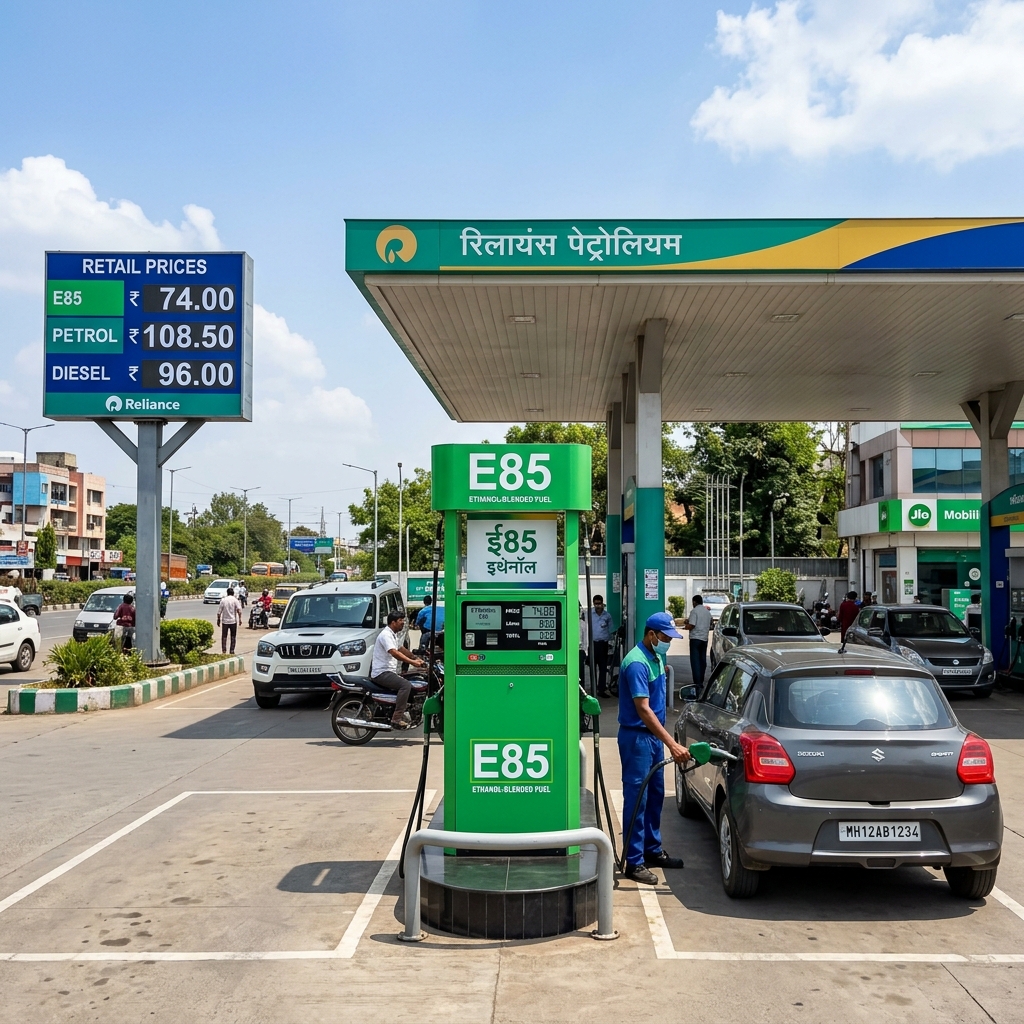
E85
E85 is an alternative fuel blend consisting of nominally 85% ethanol and 15% gasoline (or other hydrocarbon blendstocks). It is the most common high-level ethanol blend available to consumers. The high ethanol content gives E85 a very high octane rating (typically around 100-105 AKI), making it a favorite among automotive performance enthusiasts. It also burns cleaner than gasoline, reducing greenhouse gas emissions. It's important to note that the actual ethanol content in "E85" can vary between 51% and 83% depending on geographic location and the season, to ensure proper cold-weather starting.E10 and E15
These are lower-level ethanol blends. E10 contains 10% ethanol and 90% gasoline, and it is the standard fuel dispensed at almost all gas stations in the United States today. E15 contains 15% ethanol and 85% gasoline. The EPA has approved E15 for use in all light-duty vehicles model year 2001 and newer. These blends help reduce emissions and increase the overall fuel supply without requiring specialized flex-fuel vehicle technology.Electronic Control Unit (ECU)
The Electronic Control Unit (ECU), also known as the Engine Control Module (ECM), is the computerized "brain" of the vehicle. It manages and controls all engine functions, including fuel delivery, ignition timing, and idle speed, based on input from various sensors. In a flex-fuel vehicle, the ECU is specially programmed to interpret signals from the flex-fuel sensor and instantly adjust fuel flow and ignition timing to accommodate whatever blend of gasoline and ethanol happens to be in the tank.Ethanol
Ethanol, or ethyl alcohol, is a clear, colorless, highly flammable liquid. In the context of fuel, it is an oxygenated hydrocarbon that serves as a renewable energy source. It can be produced synthetically from petroleum, but for fuel purposes, it is almost exclusively produced via the fermentation of organic matter (biomass). Ethanol is prized as a fuel additive and primary fuel because of its high octane rating, its ability to reduce tailpipe emissions, and its domestic production, which enhances energy security.F
Flex Fuel Vehicle (FFV)
A Flex Fuel Vehicle (FFV) is an automobile designed to run on more than one type of fuel, usually standard gasoline and an ethanol-gasoline blend like E85. The engine and fuel system in an FFV are engineered to handle the corrosive properties of high-concentration ethanol. Additionally, the vehicle is equipped with a flex-fuel sensor and a sophisticated engine control unit that automatically detects the ethanol content of the fuel mixture and adjusts engine parameters accordingly, allowing the driver to seamlessly switch between fuels without any manual intervention.Flex Fuel Sensor (Ethanol Content Analyzer)
The flex-fuel sensor is a critical component of any true flex-fuel system. Installed in the fuel line, it continuously measures the percentage of ethanol in the fuel flowing to the engine. It typically does this by measuring the fuel's dielectric constant or electrical conductivity, which changes based on the ethanol concentration. The sensor sends a signal to the ECU, which uses this real-time data to adjust the air-fuel ratio and ignition timing instantly, ensuring optimal performance and safety regardless of whether the tank contains E10, E85, or any blend in between.Fuel Injector Duty Cycle (IDC)
Injector Duty Cycle refers to the percentage of time a fuel injector is open (spraying fuel) during a single engine cycle. Because E85 has a lower energy density than gasoline, an engine requires approximately 30-40% more volume of E85 to produce the same amount of power. Consequently, when running on E85, fuel injectors must remain open longer. If the injectors are too small, they may reach 100% duty cycle (static), meaning they are constantly open and unable to flow any more fuel. This leads to a lean condition and potential engine failure. Upgrading to higher-flowing injectors is a mandatory step when converting many vehicles to E85.Fuel Pump
The fuel pump is responsible for drawing fuel from the gas tank and pushing it through the fuel lines to the engine at a specific pressure. Similar to fuel injectors, the fuel pump must work harder to deliver the increased volume of fuel required when running E85. Furthermore, the internal components of a standard fuel pump may not be compatible with high concentrations of ethanol and can degrade over time. E85 conversions typically require an upgraded, ethanol-compatible, high-flow fuel pump.G
Greenhouse Gas (GHG) Emissions
Greenhouse gases, such as carbon dioxide (CO2), methane, and nitrous oxide, trap heat in the atmosphere and contribute to global climate change. One of the primary environmental benefits of using E85 and other bioethanol fuels is the reduction of lifecycle greenhouse gas emissions. Because the plants used to make ethanol absorb CO2 as they grow, burning bioethanol results in a lower net increase in atmospheric CO2 compared to burning fossil fuels.H
Hygroscopic
A substance is hygroscopic if it tends to absorb moisture from the air. Ethanol is highly hygroscopic. This characteristic is important for E85 users to understand because if E85 sits in a fuel tank or storage container for an extended period, particularly in a humid environment, it can absorb water. This can lead to phase separation (see below) and cause running issues or corrosion within the fuel system. It is generally recommended not to leave E85 sitting in a vehicle that will not be driven for long periods.I
Intercooler
In turbocharged and supercharged engines, an intercooler is a heat exchanger used to cool the compressed intake air before it enters the engine. Cooler air is denser, meaning it contains more oxygen molecules, which allows for more fuel to be burned and more power to be produced. Because E85 has an extreme cooling effect when it vaporizes in the cylinder (high latent heat of vaporization), it sometimes acts almost like a "chemical intercooler." While physical intercoolers are still essential, E85 significantly lowers combustion chamber temperatures, further mitigating the risk of detonation.K
Knock Sensor
A knock sensor is a vital engine component that acts somewhat like a microphone attached to the engine block. It "listens" for the specific frequencies associated with engine knock or detonation. If the sensor detects knock, it sends a signal to the ECU. In response, the ECU will typically retard (delay) the ignition timing to eliminate the knock and protect the engine from damage. Because E85 is so resistant to knock, the ECU often has to intervene much less frequently, allowing the engine to operate consistently at peak performance.L
Lambda
Lambda is a unitless value used to represent the stoichiometric air-fuel ratio. A Lambda value of 1.0 indicates a perfect stoichiometric mixture, regardless of the fuel type being used. A Lambda less than 1.0 indicates a rich mixture (more fuel, less air), and a Lambda greater than 1.0 indicates a lean mixture (less fuel, more air). Tuners and engine management systems often use Lambda because it simplifies tuning for different fuels; the target Lambda for optimal power or efficiency remains relatively constant whether the engine is running on gasoline or E85, even though the actual air-fuel ratio (AFR) changes drastically.Latent Heat of Vaporization
Latent heat of vaporization is the amount of energy (heat) required to transform a given quantity of a substance from a liquid into a gas. Ethanol has a significantly higher latent heat of vaporization than gasoline. This means that when E85 is injected into the hot intake manifold or combustion chamber, it absorbs a massive amount of heat as it evaporates. This rapid cooling of the incoming air charge increases air density and drastically reduces combustion chamber temperatures, which is a major factor in E85's ability to resist detonation and support immense power output in forced-induction engines.O
Octane Rating (AKI - Anti-Knock Index)
The octane rating of a fuel is a standard measure of its resistance to pre-ignition, detonation, or engine knock. In the US, this is typically displayed as the Anti-Knock Index (AKI), which is the average of the Research Octane Number (RON) and the Motor Octane Number (MON). Standard premium gasoline usually has an octane rating of 91 to 93 AKI. E85, by contrast, boasts an effective octane rating typically between 100 and 105 AKI. This extreme knock resistance is the defining characteristic that makes E85 so desirable for high-performance tuning.Open-Loop Operation
Open-loop operation is a state where the engine's ECU ignores feedback from the oxygen sensors and instead relies on pre-programmed, fixed fuel and ignition maps to determine the air-fuel ratio. This typically occurs during cold starts, rapid acceleration (wide-open throttle), or engine warm-up phases, where quick response or specific rich mixtures are required. When tuning a vehicle for E85, calibrating the open-loop fuel and timing maps is crucial to extract maximum performance safely.Oxygenated Fuel
An oxygenated fuel is a fuel that contains chemical compounds possessing oxygen as a part of their molecular structure. Ethanol is an oxygenate. The addition of oxygen to fuel helps it burn more completely, which significantly reduces harmful tailpipe emissions, particularly carbon monoxide (CO) and unburned hydrocarbons.P
Phase Separation
Phase separation is a phenomenon that occurs when an ethanol-blended fuel absorbs too much water. Ethanol is miscible (mixes easily) with water. However, if the water content exceeds a certain threshold, the water and ethanol mixture will separate from the gasoline and sink to the bottom of the fuel tank. This creates two distinct layers: a layer of low-octane gasoline on top and a highly corrosive layer of water and ethanol on the bottom. If the fuel pump picks up this water-ethanol mixture, the engine will likely stall and severe internal corrosion or damage can occur. Proper fuel storage and regular use mitigate this risk.R
Renewable Fuel Standard (RFS)
The Renewable Fuel Standard (RFS) is a United States federal program that requires transportation fuel sold in the US to contain a minimum volume of renewable fuels. Originating with the Energy Policy Act of 2005 and expanded in 2007, the RFS was created to reduce greenhouse gas emissions, decrease reliance on imported oil, and expand the nation’s renewable fuels sector. This policy has been a primary driver of the ethanol industry and the widespread availability of E10, E15, and E85.S
Stoichiometric Ratio
The stoichiometric ratio is the exact, ideal ratio of air to fuel that results in complete combustion, leaving no excess unburned fuel and no excess oxygen. It is the theoretical perfect burn. For pure gasoline, this ratio is 14.7:1. For pure ethanol (E100), it is 9.0:1. For E85, the stoichiometric ratio sits around 9.7:1 to 9.8:1. Understanding these differing ratios is fundamental to engine tuning and fuel system design when transitioning between conventional gasoline and high-ethanol blends.Summer Blend E85
During the warmer summer months, fuel producers alter the formulation of E85. Because higher ambient temperatures aid in fuel vaporization, summer blend E85 generally contains the highest actual concentration of ethanol, typically hitting the nominal 85% mark (or close to it). This formulation maximizes the octane rating and the cooling benefits of the fuel, making summer the ideal season for maximum automotive performance on E85.T
Timing Advance
Refer to Advanced Ignition Timing. This is the process of adjusting the ignition system so the spark plug fires earlier in the compression stroke, extracting more mechanical work from the combustion event, a process enabled safely by the high octane of E85.Tuning (ECU Tuning)
Tuning, or ECU tuning, involves modifying the software and parameters within the vehicle's engine control unit. When converting a non-flex-fuel vehicle to run on E85, custom tuning is an absolute necessity. A tuner must adjust fuel maps to deliver the 30-40% extra volume required, and they will typically modify ignition timing maps to take advantage of E85's high octane rating. Without proper tuning, running E85 in a standard vehicle will result in a severely lean condition, poor drivability, and likely catastrophic engine failure.V
Vapor Pressure
Reid Vapor Pressure (RVP) is a measure of a fuel's volatility—how readily it evaporates into a gas. Gasoline has a relatively high vapor pressure, making it easy to start an engine in cold weather. Ethanol has a lower vapor pressure, which is why cold starts can be difficult with high ethanol concentrations. Fuel refiners adjust the ratio of gasoline to ethanol in E85 based on the season (creating winter and summer blends) to ensure the fuel maintains adequate vapor pressure for reliable starting year-round.Volumetric Efficiency (VE)
Volumetric efficiency is a measure of an engine's effectiveness in moving the air-fuel mixture into and out of the cylinders. It is essentially the ratio of the mass of air actually drawn into a cylinder during the intake stroke to the theoretical mass of air that could fill the cylinder's volume at standard atmospheric pressure. Modifications that increase VE (like turbochargers, better intake manifolds, or ported cylinder heads) allow the engine to ingest more air. When combined with the high-octane and cooling properties of E85, high-VE engines can produce extraordinary amounts of power.W
Wideband Oxygen Sensor (Wideband O2)
A wideband oxygen sensor is an advanced exhaust sensor used to measure the air-fuel ratio over a broad spectrum. Unlike older narrowband sensors, which essentially only tell the ECU if the mixture is rich or lean relative to stoich, a wideband sensor provides an exact, real-time AFR or Lambda reading (e.g., exactly 11.5:1 AFR). Wideband sensors are indispensable tools for tuners calibrating engines for E85, as they allow for precise monitoring and adjustment of fuel delivery across all engine loads and RPM ranges.Winter Blend E85
In cold weather, high concentrations of ethanol struggle to vaporize, which can lead to severe starting issues. To combat this, fuel producers introduce "winter blend" E85 during the colder months. Winter blends reduce the actual ethanol content, sometimes dropping it as low as 51% (Class 3 E85), and increase the gasoline content. The increased gasoline raises the fuel's vapor pressure, ensuring the vehicle can start reliably in freezing temperatures. While the ethanol content is lower, winter blends still offer a significantly higher octane rating than premium gasoline.---
Understanding these terms is the first step toward mastering your flex-fuel vehicle or embarking on an E85 conversion project. By speaking the language of E85, you can make informed decisions about modifications, tuning, and maintenance, ensuring you get the most performance, reliability, and value out of every tank of fuel.