As the world increasingly shifts toward sustainable and environmentally friendly energy sources, the automotive and transportation sectors are undergoing significant transformations. While electric vehicles (EVs) and hydrogen fuel cells capture much of the media spotlight, biofuels—particularly ethanol blends—continue to play an essential, transitional, and long-term role in reducing global carbon emissions. Among the various ethanol blends available on the market today, E20 and E85 are two of the most widely discussed.
But what exactly do these terms mean? If you are a vehicle owner, an automotive enthusiast, or someone interested in green energy, understanding the nuances between E20 and E85 fuel is crucial. This comprehensive guide will delve deep into what E20 and E85 fuels are, how they are made, their key differences, their impact on vehicle performance and longevity, their environmental footprints, and how you can determine which fuel is suitable for your vehicle.
---
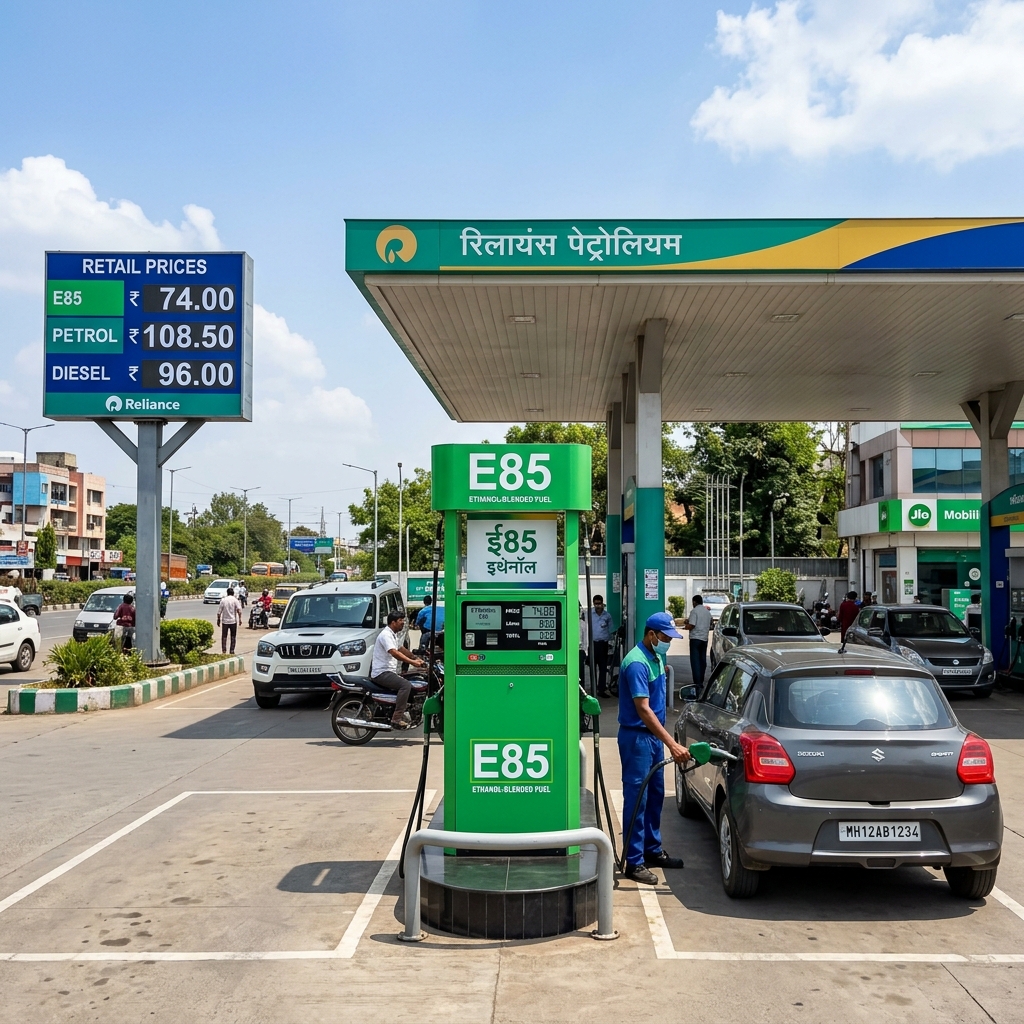
1. Introduction to Ethanol Blends
Before diving into the specifics of E20 and E85, it is vital to understand what ethanol fuel is. Ethanol is a renewable, plant-based biofuel typically made from biomass such as corn, sugarcane, barley, wheat, and sometimes even agricultural waste. Through a process of fermentation and distillation, the starches and sugars in these organic materials are converted into alcohol—specifically, ethyl alcohol (ethanol).
In the automotive world, pure ethanol is rarely used on its own. Instead, it is blended with traditional unleaded gasoline to create an oxygenated fuel mixture. These blends are denoted by the letter "E" followed by a number that represents the volumetric percentage of ethanol in the fuel. For instance, E10 contains 10% ethanol and 90% gasoline.
The primary goals of blending ethanol with gasoline are: 1. Reducing greenhouse gas emissions: Ethanol burns cleaner than pure gasoline. 2. Decreasing reliance on fossil fuels: By supplementing gasoline with renewable ethanol, nations can reduce their dependence on imported oil. 3. Boosting octane rating: Ethanol has a high octane rating, which helps prevent engine knocking and can improve engine performance in appropriately tuned vehicles.
With that foundational understanding, let us explore the specifics of E20 and E85.
---
2. What is E20 Fuel?
Definition and Composition
E20 fuel is a blend consisting of 20% ethanol and 80% gasoline. It represents a step up from the widely used E10 blend, offering a higher concentration of renewable biofuel without requiring massive overhauls to existing internal combustion engine (ICE) architectures.The Push for E20
Many countries are currently pushing for E20 adoption as a stepping stone toward greener transportation. For example, India has aggressively fast-tracked its ethanol blending program, aiming for a nationwide rollout of E20 fuel by 2025. This move is largely driven by a desire to cut down the national oil import bill, support the domestic agricultural sector (sugar and grain farmers), and lower vehicular pollution levels in congested urban centers.Vehicle Compatibility
One of the most critical aspects of E20 fuel is its compatibility. Because it only contains 20% ethanol, many modern vehicles (typically those manufactured after a certain year, varying by region and manufacturer) are capable of running on E20 without any modifications. The fuel delivery systems, seals, and hoses in newer cars are designed to withstand the slightly corrosive nature of ethanol. However, putting E20 in older, unapproved vehicles can lead to the degradation of rubber and plastic components over time.---
3. What is E85 Fuel?
Definition and Composition
E85, commonly referred to as "Flex Fuel," is a high-level ethanol blend containing anywhere from 51% to 85% ethanol, with the remainder being gasoline. The exact percentage often fluctuates depending on the season and geographical location. In colder climates and during winter months, the ethanol content is usually reduced to the lower end of that spectrum (closer to 51-70%) to ensure engines can start easily in freezing temperatures, as pure ethanol does not vaporize well when it is cold.The Purpose of E85
E85 is designed to maximize the use of renewable biofuels and minimize fossil fuel consumption. It is favored by environmentalists for its significant reduction in tailpipe emissions and by car enthusiasts for its incredibly high octane rating (often exceeding 100), which allows for aggressive engine tuning and high power outputs.Vehicle Compatibility
Unlike E20, E85 cannot be used in standard vehicles. It requires a Flex-Fuel Vehicle (FFV). FFVs are specifically engineered with upgraded fuel lines, specialized fuel pumps, corrosion-resistant seals, and advanced engine control modules (ECMs) equipped with sensors that detect the exact ethanol-to-gasoline ratio in the tank in real-time. The ECM then automatically adjusts the fuel injection and spark timing to ensure optimal combustion and performance.---
4. Key Differences Between E20 and E85
To fully grasp the "E20 vs E85" debate, we must break down their differences across several key categories.
A. Composition and Octane Rating
The most obvious difference lies in their chemical makeup. - E20 is mostly gasoline (80%) with a moderate dash of ethanol (20%). It typically features an octane rating similar to or slightly higher than standard premium gasoline (around 91 to 93 octane). - E85 is mostly ethanol (up to 85%). Because ethanol inherently possesses excellent anti-knock properties, E85 boasts an impressive octane rating, usually between 100 and 105. This makes E85 highly resistant to pre-ignition (engine knock), which is highly desirable in turbocharged, supercharged, or high-compression engines.B. Vehicle Compatibility and Hardware Requirements
- E20: Requires relatively minor "future-proofing" by automakers. Most modern cars (often those built post-2010 or 2015, depending on the market) have fuel systems constructed with materials that can handle up to 20% ethanol safely. - E85: Requires a dedicated Flex-Fuel Vehicle (FFV). An FFV has robust fuel lines, specialized injectors capable of flowing significantly more fuel, and a computer system programmed to adapt to varying ethanol percentages. Running E85 in a standard, non-FFV car will cause catastrophic engine failure, lean air-fuel mixtures, and severe degradation of fuel system components.C. Fuel Efficiency and Mileage (MPG/KMPL)
Ethanol contains approximately 30% less energy per unit of volume compared to pure gasoline. This chemical reality heavily impacts fuel economy. - E20: Because it contains only 20% ethanol, the drop in fuel efficiency compared to pure gasoline (E0) or E10 is relatively minor. Drivers might experience a 2% to 4% reduction in mileage, which is often imperceptible during daily driving. - E85: Due to its massive ethanol content, E85 significantly impacts fuel economy. Drivers of FFVs commonly report a 15% to 25% drop in miles per gallon (MPG) or kilometers per liter (KMPL) when running on E85 compared to standard gasoline. To travel the same distance, the engine must inject a larger volume of E85 into the cylinders.D. Performance and Power Output
- E20: Provides a slight bump in octane, which can help modern engines run more smoothly and efficiently, but the performance gains are negligible for the average driver. - E85: This is where E85 shines. In the automotive tuning and racing communities, E85 is often referred to as "cheap race gas." The high octane rating allows engine tuners to advance ignition timing and increase turbo boost pressure without the risk of engine knock. Furthermore, ethanol has a high latent heat of vaporization, meaning it acts as a chemical intercooler, drastically lowering combustion chamber temperatures. In a properly tuned vehicle, switching to E85 can yield a massive horsepower and torque increase.E. Environmental Impact and Emissions
Both fuels are greener than pure gasoline, but they scale differently. - E20: Offers a moderate reduction in carbon monoxide, particulate matter, and unburned hydrocarbons. It is an excellent macro-level solution for countries looking to lower their overall carbon footprint across millions of daily commuter vehicles. - E85: Offers substantial environmental benefits. Vehicles running on E85 emit drastically lower levels of greenhouse gases. Over its entire lifecycle (from growing the crops to burning the fuel), E85 can reduce greenhouse gas emissions by up to 40-50% compared to gasoline.F. Availability and Infrastructure
- E20: Is rapidly becoming a standard pump offering in various countries pushing aggressive ethanol mandates (like Brazil and India). Because it doesn't require massive changes to existing gas station storage tanks and pumps, it is easier to roll out on a national scale. - E85: Availability is highly regional. In the United States, E85 is plentiful in the Midwest (the "Corn Belt") but can be difficult to find in other regions. It requires specialized pumps and tanks at the fueling station, which creates a barrier to widespread adoption.G. Cost Comparison
At the pump, ethanol is generally cheaper to produce than refined gasoline. - E20: Typically priced similarly to or slightly cheaper than standard gasoline, though government subsidies and taxes heavily influence this. - E85: The price per gallon/liter of E85 is almost always lower than standard regular gasoline. However, because you get 15-25% worse fuel economy, the cost per mile might actually be the same or slightly higher, depending on the current price gap between the two fuels.---
5. The Pros and Cons of E20 Fuel
Pros of E20
1. Widespread Compatibility: Compatible with a vast majority of modern, standard internal combustion engine vehicles without the need for expensive FFV hardware. 2. Economic Benefits for Nations: Helps countries reduce their reliance on imported crude oil, saving billions in foreign exchange and boosting local agricultural economies. 3. Mild Efficiency Loss: The reduction in mileage is minimal and barely noticeable for everyday commuters. 4. Emissions Reduction: Provides a meaningful reduction in tailpipe emissions and urban air pollution compared to older E0 or E10 standards.Cons of E20
1. Risk to Older Vehicles: Cannot be used safely in older, vintage, or classic cars without upgrading fuel lines and seals. 2. Shelf Life: Ethanol attracts moisture from the air (it is hygroscopic). If a vehicle sits unused for long periods, phase separation can occur, leading to engine issues.---
6. The Pros and Cons of E85 Fuel
Pros of E85
1. High Performance: An incredible, low-cost alternative to race fuel, allowing for massive horsepower gains in tuned and forced-induction engines. 2. Superior Cooling: Excellent cooling properties within the engine cylinder, extending the life of engine internals under heavy load. 3. Maximum Eco-Friendliness: Offers the highest possible reduction in greenhouse gas emissions among liquid ICE fuels. 4. Cheaper at the Pump: The sticker price per gallon/liter is highly attractive.Cons of E85
1. Requires Special Vehicles: You absolutely must own a Flex-Fuel Vehicle (FFV) or have heavily modified your standard car (injectors, pumps, flex-fuel sensor, ECU tune) to run it. 2. Poor Fuel Economy: You will be visiting the gas station much more frequently due to the 15-25% drop in mileage. 3. Availability Issues: E85 pumps can be scarce outside of agricultural or specialized regions. 4. Cold Weather Starting: High ethanol content can make starting the engine difficult in freezing temperatures, necessitating winter blends that lower the ethanol content.---
7. Which Fuel is Right for You?
Choosing between E20 and E85 isn't really a matter of preference—it primarily comes down to what your vehicle is built to handle and what your goals are.
- You should use E20 if: You drive a modern, standard vehicle that explicitly lists E20 compatibility in the owner's manual. If you are an everyday commuter looking to get from point A to point B with minimal fuss, minimal mileage loss, and a slightly greener footprint, E20 is the ideal, hassle-free choice. - You should use E85 if: You own a factory Flex-Fuel Vehicle (FFV) or a modified performance car. If you prioritize maximum horsepower, love automotive tuning, or are deeply committed to reducing your carbon footprint to the absolute minimum, and you don't mind the drop in fuel economy, E85 is the fuel for you.
Disclaimer: Always consult your vehicle’s owner's manual before changing fuel types. Using fuel with a higher ethanol content than your manufacturer recommends can void your warranty and cause severe mechanical damage.
---
8. The Future of Ethanol Fuels (Global & India Perspective)
The global landscape for ethanol is incredibly dynamic. As governments worldwide grapple with the realities of climate change, interim solutions like E20 and E85 bridge the gap between pure fossil fuels and a fully electric future.
The Indian Context
India presents one of the most fascinating case studies for ethanol adoption. The Indian government has launched the Ethanol Blended Petrol (EBP) Programme with remarkable aggression. Initially targeting a 20% blend by 2030, the government brought the deadline forward to 2025. The push for E20 in India is monumental for several reasons: - Agrarian Economy: It supports millions of sugarcane and grain farmers by creating a massive, steady demand for their crops. - Energy Independence: India imports over 80% of its crude oil. A nationwide shift to E20 will save the country billions of dollars annually in import bills. - Pollution: Major Indian cities battle severe air quality issues. E20's cleaner combustion directly targets urban smog.Automakers in India (like Maruti Suzuki, Tata Motors, and Hyundai) have already begun rolling out E20-compliant engines across their fleets. Furthermore, India is testing the waters with E85 and pure ethanol (E100) vehicles, with manufacturers like Toyota introducing flex-fuel prototypes optimized for the Indian climate.
The Global Perspective
In nations like Brazil, ethanol is deeply ingrained in the culture, with most vehicles operating on high ethanol blends or pure ethanol. In the United States and Europe, the growth of E85 remains steady, particularly among performance enthusiasts and environmentally conscious fleet operators. While the long-term future may belong to EVs, ethanol fuels like E20 and E85 will remain vital for decades to keep the existing billions of combustion-engine cars running cleaner.---
9. Conclusion
The debate of E20 vs E85 is less about which fuel is "better" and more about understanding their distinct roles in the automotive ecosystem.
E20 is the accessible, mass-market solution. It strikes a pragmatic balance, allowing millions of standard vehicles to run cleaner and helping nations reduce their oil dependence without requiring massive technological shifts from consumers.
E85, on the other hand, is the specialized powerhouse. It pushes the boundaries of what biofuel can achieve, offering phenomenal environmental benefits and unmatched high-octane performance, albeit with the caveats of lower fuel economy and strict hardware requirements.
As we navigate the transition toward sustainable energy, both E20 and E85 prove that we do not have to wait for a fully electric future to start making a positive impact on our planet today. By understanding what you are putting in your tank, you become a more informed consumer, a better vehicle owner, and an active participant in the global green energy transition.
---
10. Frequently Asked Questions (FAQs)
Q1: Will E20 damage my car engine? A: If your car was manufactured recently and the owner's manual states it is E20 compatible, it will not damage your engine. However, using E20 in older, incompatible vehicles can degrade rubber seals, fuel lines, and plastics over time.
Q2: Can I put E85 in a regular car? A: No. Do not put E85 in a standard, non-Flex-Fuel vehicle. It will cause the engine to run excessively lean, trigger check engine lights, and potentially destroy your fuel pump, injectors, and internal engine components.
Q3: Why does E85 get worse gas mileage? A: Ethanol has a lower energy density than gasoline. It takes roughly 1.3 to 1.4 gallons of ethanol to equal the energy output of 1 gallon of gasoline. Therefore, your engine has to burn more E85 to achieve the same power and speed, resulting in lower MPG/KMPL.
Q4: Is E85 considered race gas? A: In the tuning community, yes! E85 has an octane rating of over 100 and incredible cooling properties. Many car enthusiasts tune their turbocharged sports cars to run on E85 to safely generate massive horsepower gains that would otherwise require expensive, specialized racing fuel.
Q5: Can you mix regular gas and E85? A: If you have a Flex-Fuel Vehicle (FFV), yes. The vehicle's sensors will detect the mixture (whether it's E30, E50, etc.) and adjust the engine parameters automatically. If you do not have an FFV, you should not mix them.
Q6: What happens if I leave E20 or E85 in a parked car for a long time? A: Ethanol is hygroscopic, meaning it absorbs moisture from the air. If left in a gas tank for months without use, the water and ethanol can separate from the gasoline (phase separation), settling at the bottom of the tank. This can rust the tank and prevent the engine from starting. If storing a car, use a fuel stabilizer or ethanol-free fuel if possible.