The global automotive landscape is undergoing a massive transformation, driven by an urgent need to transition towards cleaner and more sustainable energy sources. In India, a nation heavily reliant on imported crude oil and grappling with severe urban air pollution, the search for viable alternative fuels has never been more critical. While electric vehicles (EVs) often dominate the headlines, another promising contender is rapidly gaining traction: E100 fuel, or 100% pure ethanol.
India has already made significant strides in its ethanol blending program, moving from E10 (10% ethanol blend) towards the ambitious target of E20 nationwide. But the ultimate question that industry experts, policymakers, and consumers are now asking is: Can India make the leap to E100? Are we ready for 100% ethanol vehicles?
In this comprehensive guide, we will explore everything you need to know about E100 fuel, its potential impact on the Indian economy and environment, the infrastructural hurdles, and whether the nation is truly prepared for this green revolution.
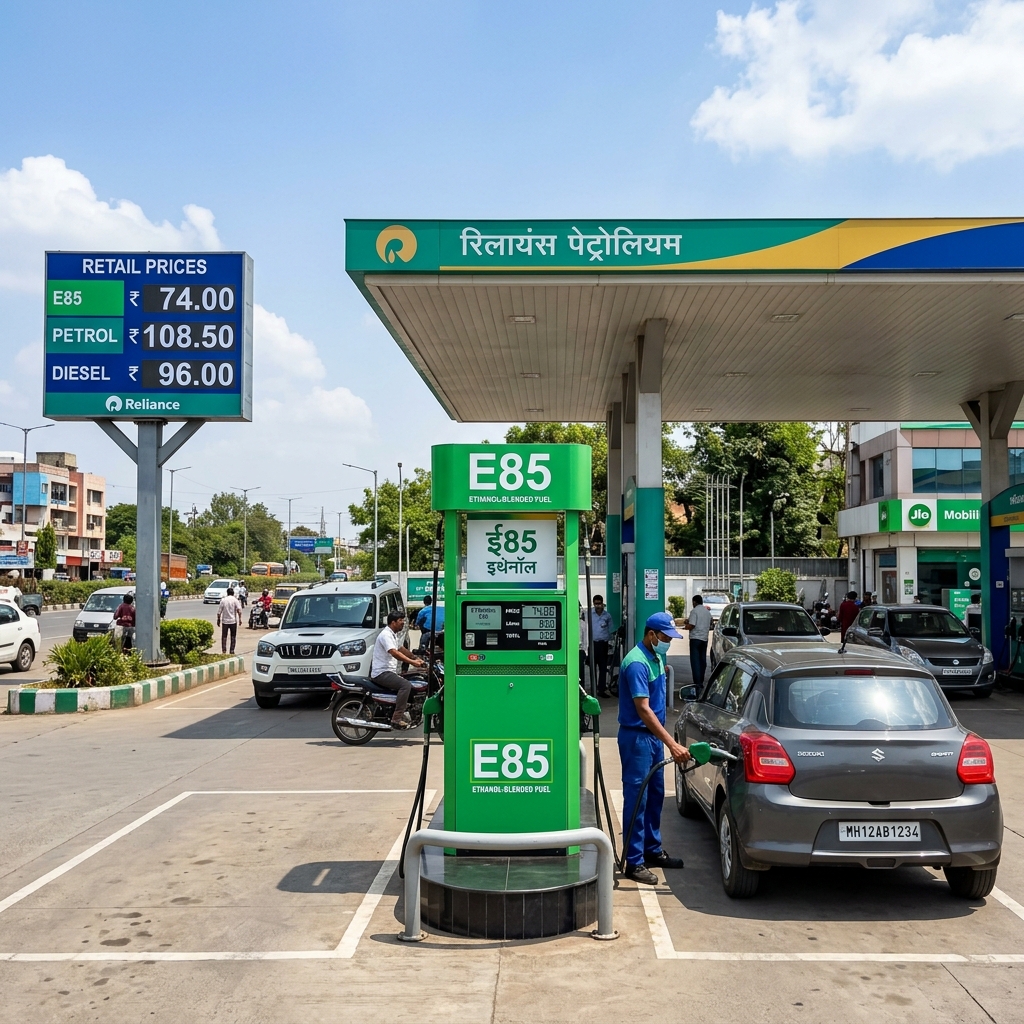
What is E100 Fuel?
E100 fuel refers to an automotive fuel that is composed of 100% ethanol. Ethanol, or ethyl alcohol, is a renewable biofuel primarily produced from the fermentation of sugars found in agricultural crops such as sugarcane, corn, broken rice, and other biomass. Unlike conventional fossil fuels, ethanol is a plant-based energy source.
When we talk about E10, E20, or E85, the number signifies the percentage of ethanol blended with standard gasoline (petrol). Therefore, E100 is pure ethanol with no gasoline mixed in, except perhaps for minimal denaturants required by law to prevent human consumption.
Burning E100 in an internal combustion engine (ICE) produces significantly fewer greenhouse gas emissions compared to traditional petrol or diesel. It boasts a higher octane rating, which can lead to improved engine performance and efficiency if the engine is specifically optimized for it. However, because ethanol has a lower energy density than gasoline, vehicles running on E100 typically experience slightly lower fuel economy (miles per gallon) than they would on pure petrol.
India's Ethanol Blending Journey
To understand the feasibility of E100, we must first look at India's journey with ethanol blending. The Indian government recognized the potential of ethanol early on, primarily as a tool to reduce the exorbitant crude oil import bill, which strains the national exchequer, and to provide a financial boost to the agricultural sector, particularly sugarcane farmers.
From E10 to E20
The Ethanol Blended Petrol (EBP) programme was launched with modest targets, but it has seen aggressive acceleration in recent years. India successfully achieved its target of blending 10% ethanol in petrol (E10) months ahead of the November 2022 deadline.Buoyed by this success, the government advanced its target for achieving 20% ethanol blending (E20) from 2030 to 2025-2026. The rollout of E20 fuel has already begun in select cities and is expanding rapidly across the nation. This aggressive push is supported by policies encouraging the expansion of distillery capacities and the diversification of feedstocks beyond just sugarcane molasses to include surplus food grains like maize and damaged rice.
The Leap Towards Flex-Fuel
The natural progression from E20 is the introduction of Flex-Fuel Vehicles (FFVs). These vehicles are designed to run on any blend of petrol and ethanol, right up to E85 or even E100. The Indian government, led by the Ministry of Road Transport and Highways, has been actively encouraging automakers to introduce FFVs in the Indian market. Several major manufacturers have already showcased prototypes of flex-fuel cars and motorcycles capable of running on E85 and higher blends.The transition to E100 is the final frontier of this journey, representing a complete decoupling from fossil-fuel-based petrol for ICE vehicles.
The Massive Benefits of E100 Fuel for India
If India can successfully transition to a widespread adoption of E100 fuel, the benefits across multiple sectors would be transformational.
1. Drastic Reduction in Oil Import Bills
India is the world's third-largest importer and consumer of oil, importing nearly 85% of its crude oil requirements. This heavy reliance leaves the economy vulnerable to global geopolitical tensions and fluctuating oil prices. By replacing petrol entirely with E100 for a significant segment of the vehicle fleet, India could save billions of dollars in foreign exchange annually. This economic independence is one of the primary drivers behind the government's intense focus on biofuels.2. Environmental Impact and Air Quality Improvement
Many of India's major cities consistently rank among the most polluted in the world, with vehicular emissions being a major contributor. E100 fuel burns much cleaner than petrol. It significantly reduces the emission of harmful pollutants such as carbon monoxide (CO), hydrocarbons (HC), and nitrogen oxides (NOx).Moreover, ethanol is considered carbon-neutral over its lifecycle. The carbon dioxide emitted when E100 is burned in a vehicle is roughly equivalent to the carbon dioxide absorbed by the crops (like sugarcane or corn) during their growth phase. Transitioning to E100 would be a massive leap forward in India's commitment to reducing its carbon footprint and meeting its international climate goals.
3. Empowering the Agrarian Economy
India is primarily an agrarian economy, and the widespread use of E100 would directly benefit millions of farmers. Currently, farmers often struggle with surplus crop production and unremunerative prices. By utilizing surplus sugarcane, damaged food grains, and agricultural waste to produce ethanol, the agricultural sector receives a massive economic stimulus. It creates a robust alternative market for agricultural produce, ensuring timely and better payments for farmers, thereby boosting rural incomes and the broader rural economy.The Daunting Challenges of E100 Adoption
While the benefits are highly attractive, the road to a 100% ethanol-fueled ecosystem in India is fraught with significant technical, infrastructural, and economic challenges. The transition from E20 to E100 is not merely a matter of scaling up; it requires a paradigm shift.
1. Infrastructure Readiness: The Distribution Bottleneck
One of the most immediate hurdles is the lack of a dedicated distribution infrastructure. Ethanol is highly corrosive and hygroscopic (it absorbs water). It cannot be transported through existing petroleum pipelines without causing severe corrosion and contamination issues.Currently, ethanol is transported via road in specialized tankers and blended with petrol at oil marketing company (OMC) depots before being sent to retail outlets. For E100, the country would need to develop an entirely separate, corrosion-resistant infrastructure, including dedicated storage tanks at refineries, specialized transport fleets, and separate dispensing units at thousands of fuel stations nationwide. Upgrading the nation's vast network of fuel pumps to handle E100 safely and efficiently is a multi-billion dollar undertaking that will require years to implement.
2. Vehicle Modifications and Flex-Fuel Engine Requirements
You cannot simply pour E100 into a standard petrol car. Because ethanol is corrosive, using high blends of it in standard engines will quickly degrade rubber seals, plastic components, and certain metals in the fuel system.To run on E100, vehicles require specific modifications. They need flex-fuel engines equipped with corrosion-resistant fuel lines, specialized fuel pumps, and advanced engine control units (ECUs) capable of dynamically adjusting the fuel injection and spark timing based on the exact ethanol blend detected in the tank.
While automakers are capable of manufacturing these vehicles (as they do for markets like Brazil), the challenge in India lies in scaling up production, keeping the costs competitive, and convincing consumers to adopt this new technology. Currently, the availability of flex-fuel vehicles in the Indian market is limited, and they often come at a premium compared to standard petrol models.
3. Supply Chain and Production Capacity
Meeting the demand for E20 already requires a massive scaling up of India's ethanol production capacity. Achieving E100 would exponentially increase this demand. While India is a major producer of sugarcane and other agricultural commodities, relying solely on these first-generation feedstocks raises concerns about the "food vs. fuel" debate.To ensure a sustainable and uninterrupted supply of ethanol for a potential E100 rollout, India must rapidly commercialize second-generation (2G) ethanol technologies. 2G ethanol is produced from non-edible agricultural waste, such as rice straw, wheat stubble, and bamboo. While several 2G ethanol plants are under construction in India, the technology is still maturing, and production costs remain higher than first-generation ethanol. Ensuring a robust, multi-feedstock supply chain is absolutely critical before any large-scale adoption of E100 can be considered.
4. Water Consumption and Agricultural Impact
Sugarcane, the primary feedstock for ethanol in India, is a highly water-intensive crop. Expanding sugarcane cultivation to meet the insatiable fuel demands of a nationwide E100 program could severely deplete groundwater resources in already water-stressed regions.This necessitates a delicate balancing act. Policymakers must incentivize the cultivation of less water-intensive feedstocks like maize and heavily promote 2G ethanol production from agricultural residues to mitigate the environmental impact on India's water table and ensure long-term agricultural sustainability.
Global Perspectives: Learning from Brazil
When discussing E100, one cannot ignore the success story of Brazil. Brazil is the undisputed global leader in the widespread adoption of ethanol as a primary automotive fuel. The country introduced the "Proálcool" program in the 1970s in response to the global oil crisis.
Today, almost all petrol sold in Brazil is blended with at least 27% ethanol (E27), and flex-fuel vehicles, which can run on E100, make up over 80% of the light vehicle fleet. At most Brazilian fuel stations, consumers have the choice of filling up with petrol (E27) or pure ethanol (E100), depending on which offers better value at that moment.
What can India learn from Brazil? 1. Long-Term Policy Stability: Brazil's success was built on decades of consistent, unwavering government support and clear, long-term policies that provided certainty to automakers, ethanol producers, and consumers. India needs a similarly robust and predictable policy framework. 2. Robust Infrastructure: Brazil invested heavily over decades in building the necessary infrastructure for ethanol storage, transport, and dispensing. 3. Automaker Collaboration: The Brazilian government worked closely with automakers to ensure the rapid development and affordability of flex-fuel technology. 4. Market-Driven Pricing: In Brazil, the choice between E100 and petrol is largely driven by market economics. Ethanol is priced competitively enough to make it an attractive alternative despite its lower energy density.
While India cannot simply replicate the Brazilian model due to different agricultural, economic, and demographic realities, the core principles of long-term planning, infrastructure investment, and stakeholder collaboration remain highly relevant.
Government Initiatives and Policy Framework
The Government of India is acutely aware of both the potential and the challenges of ethanol adoption. Several initiatives are paving the way for higher ethanol blends and potentially E100 in the future:
* National Policy on Biofuels (2018): This policy laid the groundwork by expanding the scope of raw materials allowed for ethanol production and setting clear blending targets. * Financial Incentives: The government has introduced interest subvention schemes to encourage the setting up of new distilleries and the expansion of existing ones to boost production capacity. * Push for Flex-Fuel Vehicles: The Ministry of Road Transport and Highways has strongly urged automakers to start manufacturing flex-fuel vehicles that can run on blends ranging from E20 to E85, acting as a crucial stepping stone towards E100 capability. * Tax Benefits: To make ethanol-blended fuels and flex-fuel vehicles more attractive, there are ongoing discussions about providing tax incentives, such as lower GST rates, to offset the higher initial costs of these vehicles.
However, a specific, targeted policy roadmap explicitly outlining the timeline and infrastructure development plan for E100 is still required to give the industry the confidence to make massive long-term investments.
The Road Ahead for Indian Consumers
For the everyday Indian consumer, the transition to higher ethanol blends is already a reality with the rollout of E20. But what does a potential future with E100 mean for the average car buyer?
1. New Vehicle Purchases: Consumers will increasingly be presented with flex-fuel vehicle options. When purchasing a new car in the coming years, opting for an FFV will be a crucial consideration to future-proof the investment and take advantage of potentially cheaper E100 fuel. 2. Fuel Economy Considerations: Consumers will need to adapt to the reality that E100 provides slightly lower mileage per liter compared to pure petrol. The economic viability of E100 for the consumer will depend heavily on the price differential between E100 and standard petrol. If E100 is priced significantly lower to offset the mileage drop, it becomes an attractive proposition. 3. Maintenance: Flex-fuel vehicles running on high ethanol blends may require slightly different maintenance schedules, though modern FFVs are designed to be highly reliable.
Conclusion: Is India Ready?
So, is India ready for 100% ethanol vehicles today? The realistic answer is no, not yet.
However, is India firmly on the path to being ready in the foreseeable future? Absolutely.
India is currently in a transitional phase. The immediate focus is successfully implementing E20 nationwide and establishing a robust market for flex-fuel vehicles capable of handling E85. The leap to E100 is a massive undertaking that requires overcoming significant hurdles in infrastructure, supply chain sustainability, and vehicle technology.
The transition to E100 is not a short sprint; it is a marathon. It requires sustained government commitment, massive investments from oil marketing companies in infrastructure, rapid innovation from automakers, and a conscious shift in consumer behavior.
If India can navigate the challenges of water consumption, scale up 2G ethanol production, and build the necessary distribution networks, E100 holds the key to a greener, more economically independent future. The foundation is being laid today with E20 and flex-fuel initiatives. With careful planning and execution, E100 could transition from a visionary concept to a reality on Indian roads within the next decade, running parallel to the EV revolution to offer a diverse and sustainable mobility ecosystem.
---
FAQs on E100 Fuel in India
1. Can I use E100 fuel in my current petrol car? No, you cannot. Standard petrol engines are not designed to handle high concentrations of ethanol. Using E100 in a regular car can severely damage the fuel lines, rubber seals, and engine components due to ethanol's corrosive nature. You need a specifically designed Flex-Fuel Vehicle (FFV) to run on E100.
2. Will E100 give me the same mileage as petrol? No. Ethanol has a lower energy density than gasoline (petrol). This means you need to burn more ethanol to generate the same amount of power. Typically, vehicles running on E100 experience a drop in fuel economy (mileage) compared to running on pure petrol.
3. Is E100 cheaper than petrol? The retail price of E100 in India will depend on government policies, taxation, and production costs. For E100 to be successful, it must be priced significantly lower than petrol to compensate consumers for the lower fuel economy.
4. Is E100 better for the environment than EVs? It's a complex comparison. EVs produce zero tailpipe emissions, making them excellent for local air quality. However, the environmental impact of an EV depends heavily on how the electricity used to charge it is generated (e.g., coal vs. solar). E100 vehicles still produce some tailpipe emissions, but they are significantly lower than standard petrol cars, and ethanol is largely carbon-neutral over its lifecycle. Both technologies are crucial components of a sustainable future.
5. When will E100 be widely available at petrol pumps in India? Widespread availability of E100 is still years away. The current government focus is on achieving E20 blending nationwide by 2025-2026. Following that, the focus will likely shift to E85 and flex-fuel vehicles. A dedicated E100 infrastructure rollout would likely happen in phases over the next decade.