The automotive landscape in India is undergoing a massive transformation. With a growing emphasis on reducing carbon emissions and cutting down on the import bill for crude oil, the Indian government has been heavily promoting alternative fuels. Ethanol blending, in particular, has become a central focus. You might have heard about E20 (20% ethanol blend), which is rapidly rolling out across the country. But what about E85?
E85, a flex-fuel consisting of up to 85% ethanol and 15% gasoline (petrol), is increasingly entering conversations as the next step in India's green mobility journey. However, a major concern for car owners and enthusiasts is the impact of this high-ethanol blend on their beloved vehicles, specifically regarding the manufacturer's warranty. The burning question is: Does E85 void your car warranty in India?
In this comprehensive, 2500-word guide, we will dive deep into everything you need to know about E85 fuel, how it affects your car's engine, the official stance of car manufacturers in India, the legal implications for your warranty, and what the future holds for flex-fuel vehicles (FFVs) in the Indian market.
---
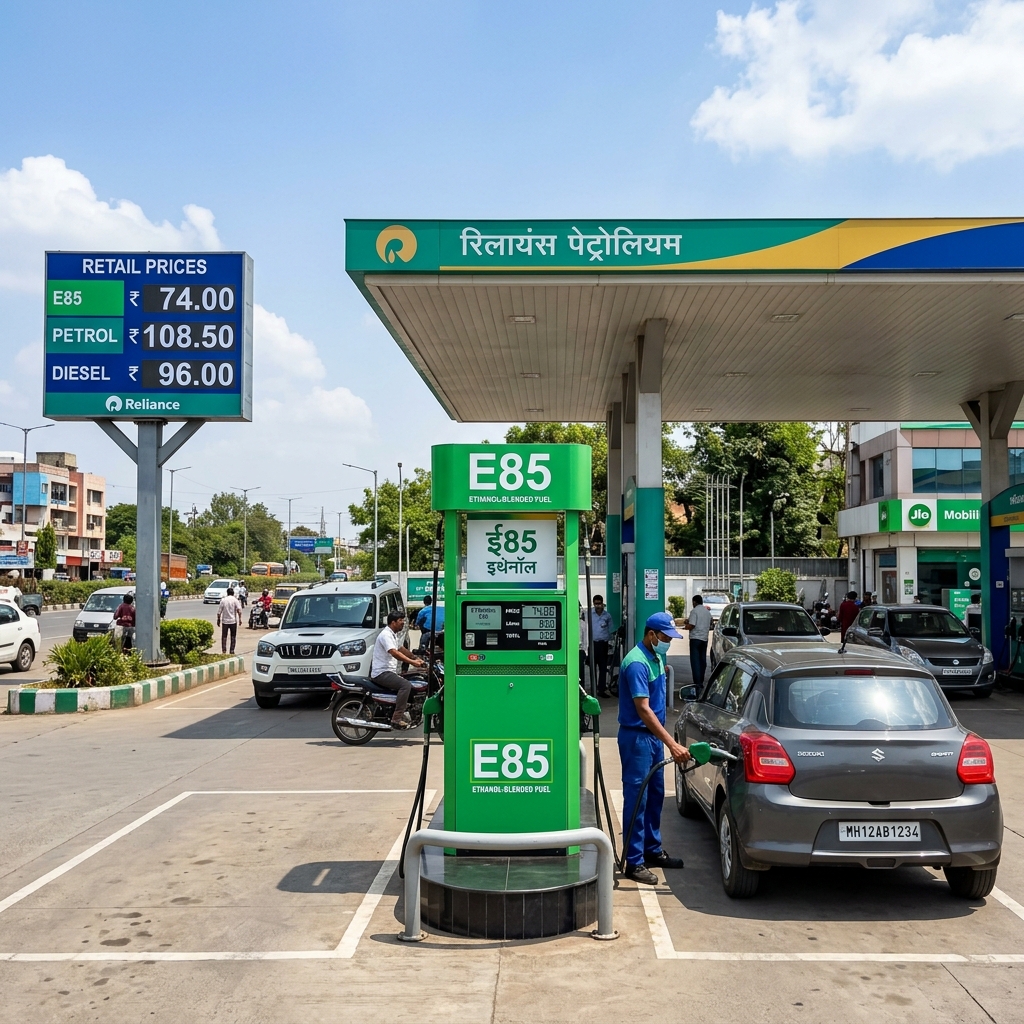
Table of Contents
1. Introduction to Ethanol Blending in India 2. What Exactly is E85 Fuel? 3. Understanding Car Warranties in India 4. Does Using E85 Void Your Car Warranty? The Short Answer 5. The Science: Why E85 Can Damage a Standard Engine 6. Manufacturer Policies in India (Maruti Suzuki, Hyundai, Tata, Mahindra, Toyota) 7. E20 vs. E85: Knowing the Difference 8. Flex Fuel Vehicles (FFVs): The Only Safe Way to Use E85 9. The Risks of Using E85 in Non-Compatible Cars 10. E85 Conversion Kits: Do They Void Warranties? 11. The Legal Landscape and Consumer Rights in India 12. How to Check If Your Car is E85 Compatible 13. The Future of E85 and Flex Fuel in India 14. Frequently Asked Questions (FAQs) 15. Conclusion---
1. Introduction to Ethanol Blending in India
India has aggressive targets for ethanol blending. The Ethanol Blended Petrol (EBP) program aims to mix ethanol, primarily derived from sugarcane and agricultural waste, with regular petrol. This initiative serves dual purposes: it supports the agricultural sector and reduces the nation's reliance on imported fossil fuels, thereby enhancing energy security.
The government successfully achieved its target of 10% ethanol blending (E10) ahead of schedule and is now fast-tracking the E20 (20% ethanol) rollout. Most new cars sold in India today are E20 compatible. However, to truly capitalize on the benefits of ethanol, higher blends like E85 are necessary. While E85 is popular in countries like Brazil and parts of the USA, its adoption in India is still in its nascent stages, mostly limited to prototype testing and specific government showcases.
---
2. What Exactly is E85 Fuel?
E85 is an abbreviation for a fuel blend containing 85% denatured ethanol and 15% gasoline (petrol). It is classified as an alternative fuel. The "E" stands for ethanol, and the number represents the maximum percentage of ethanol in the blend by volume.
Key Characteristics of E85: * Higher Octane Rating: E85 typically has an octane rating over 100, which can allow for higher engine compression ratios and better performance in engines designed for it. * Lower Energy Density: Ethanol contains less energy per unit of volume compared to pure petrol. This means you will generally experience lower fuel economy (fewer kilometers per liter) when running on E85 compared to standard petrol. * Corrosive Nature: Ethanol is hydroscopic (it absorbs water from the air) and can be highly corrosive to certain metals, rubbers, and plastics commonly found in the fuel systems of older or non-flex-fuel vehicles.
Because of its unique chemical properties, standard internal combustion engines cannot safely run on E85 without significant modifications to the fuel delivery system and engine mapping.
---
3. Understanding Car Warranties in India
When you purchase a new car in India, it comes with a manufacturer's warranty. This is a legally binding promise by the automaker to repair or replace specified parts of the vehicle that fail due to manufacturing defects within a certain time frame or mileage limit (e.g., 3 years or 100,000 km, whichever comes first).
Types of Warranties: * Standard/Basic Warranty: Covers most parts of the car against factory defects. * Powertrain Warranty: Specifically covers the engine, transmission, and drivetrain components. This is the part of the warranty most affected by fuel choices. * Extended Warranty: An optional, purchased extension of the basic warranty.
What Voids a Warranty? Warranties are contingent on the owner maintaining the vehicle according to the manufacturer's specifications. Common actions that can void a warranty include: * Missing scheduled services. * Using unauthorized aftermarket parts. * Using improper fluids or fuels. * Modifying the engine (tuning/remapping). * Racing or abusive driving.
The clause regarding "improper fluids or fuels" is the crucial element when discussing E85.
---
4. Does Using E85 Void Your Car Warranty? The Short Answer
Yes. If your car is not explicitly designed and certified by the manufacturer as a Flex-Fuel Vehicle (FFV) capable of running on E85, using E85 will almost certainly void your powertrain warranty in India.
Every car manufacturer explicitly states the required fuel type and acceptable ethanol blend limits in the owner's manual. As of the current market scenario, the vast majority of petrol cars in India are certified only up to E10 or E20.
If you put E85 in a standard E10 or E20-rated vehicle, and it causes damage to the fuel pump, fuel lines, injectors, or internal engine components, the manufacturer will deny your warranty claim. Dealership service centers can easily test fuel samples to determine the ethanol content if they suspect improper fueling caused a failure.
---
5. The Science: Why E85 Can Damage a Standard Engine
Why are manufacturers so strict about ethanol blends? It comes down to the chemistry of ethanol and the materials used in standard engines.
1. Corrosion of Fuel System Components: Ethanol is an alcohol, and high concentrations can be harsh on conventional fuel system materials. It can degrade rubber seals, plastic fuel lines, and even corrode certain metals like aluminum and zinc if they aren't specially coated. Over time, this leads to leaks and component failure.
2. Lean Running Conditions (Air/Fuel Mixture): Because E85 has less energy density than petrol, an engine requires a significantly larger volume of E85 (roughly 30% more) to achieve the correct air/fuel ratio. Standard fuel injectors and fuel pumps are not sized to deliver this increased volume. If you run E85 in a non-compatible car, the engine will run "lean" (too much air, not enough fuel). A lean mixture causes combustion temperatures to spike, which can lead to catastrophic engine damage, including melted pistons and burnt valves.
3. Water Absorption: Ethanol attracts moisture. In high blends like E85, if the fuel sits in the tank for long periods, it can absorb enough water to cause phase separation—where the water/ethanol mixture separates from the petrol and sinks to the bottom of the tank. If the fuel pump sucks up this mixture, the car will run poorly or not at all, and internal engine components can rust.
---
6. Manufacturer Policies in India
Let's examine how the major automakers in India currently approach ethanol blends and warranties.
Maruti Suzuki
Maruti Suzuki, India's largest carmaker, has transitioned its entire lineup to be E20 compliant. However, they do not currently sell any E85-compatible passenger cars in India. Their owner's manuals explicitly state that using fuel with ethanol content higher than 20% will void the warranty. While they have showcased an E85 capable WagonR prototype, it is not available for retail.Hyundai India
Hyundai also ensures its modern fleet is E20 ready. Similar to Maruti, Hyundai's warranty policy strictly limits ethanol usage to the specified E20 limit. Any damage traced back to the use of E85 or other high-ethanol blends will not be covered under their powertrain warranty.Tata Motors
Tata Motors has been a pioneer in electric vehicles (EVs) but also maintains an E20-compliant internal combustion engine portfolio. Tata's warranty documents clearly stipulate that fuel must conform to the standards mentioned in the manual. Using E85 in a standard Tiago, Nexon, or Harrier petrol will void engine and fuel system warranties.Mahindra & Mahindra
Mahindra's petrol engines (like the mStallion series) are engineered for E20. They are actively researching higher ethanol blends, but currently, using E85 in an XUV700 or Thar petrol is a direct violation of the warranty terms.Toyota Kirloskar Motor
Toyota has been the most vocal proponent of flex-fuel technology in India. They launched the pilot project for a Flex-Fuel Strong Hybrid Electric Vehicle (FFV-SHEV) using a modified Corolla Altis imported from Brazil, which can run on E85. However, this model is not sold to the public. For standard Toyota vehicles sold in India (Glanza, Hyryder, Innova Hycross), the limit is E20. Exceeding this voids the warranty.In summary, no mainstream manufacturer in India currently warrants their standard retail vehicles for E85 usage.
---
7. E20 vs. E85: Knowing the Difference
It is crucial not to confuse India's current push for E20 with E85 compatibility.
* E20 (20% Ethanol): This is the current standard being rolled out nationwide. Modifications required to make a car E20 compliant are relatively minor compared to E85. Manufacturers have upgraded hoses, seals, and engine mapping slightly to handle the 20% blend safely. Using E20 in an E20-rated car is perfectly safe and maintains your warranty. * E85 (85% Ethanol): This is a specialized Flex Fuel. It requires a completely overhauled fuel system. Vehicles need an ethanol sensor, significantly larger fuel injectors, a high-capacity fuel pump, and specialized engine control unit (ECU) programming to switch seamlessly between varying ethanol blends (from E0 to E85).
Just because your new car has an "E20 Compatible" sticker does not mean it can handle E85.
---
8. Flex Fuel Vehicles (FFVs): The Only Safe Way to Use E85
If you want to use E85 without voiding your warranty or destroying your engine, you must own a Flex-Fuel Vehicle (FFV).
An FFV is purpose-built by the manufacturer to run on any blend of petrol and ethanol, up to 85%.
How FFVs Differ from Standard Cars: 1. Ethanol Sensor: The core of an FFV is a sensor in the fuel line that constantly measures the exact percentage of ethanol in the fuel. 2. Adaptive ECU: The engine computer receives data from the ethanol sensor and instantly adjusts the fuel injection timing, volume, and spark timing to optimize combustion for the specific blend currently in the tank. 3. Upgraded Hardware: FFVs feature corrosion-resistant stainless steel fuel lines, specialized Teflon-lined hoses, robust fuel pumps, and larger injectors to handle the necessary volume.
As of 2026, retail availability of true FFVs in India remains practically non-existent for the general public, though prototype testing is heavily underway by companies like Toyota and Maruti Suzuki. When these eventually launch, they will carry full manufacturer warranties for E85 usage.
---
9. The Risks of Using E85 in Non-Compatible Cars
Beyond voiding your warranty, putting E85 in a standard Indian car is a massive financial and safety risk. The immediate and long-term consequences can be severe.
Immediate Symptoms: * Check Engine Light (CEL): This is usually the first sign. The car's oxygen sensors will detect a lean mixture, and the ECU will throw a code (often P0171 - System Too Lean). * Stalling and Rough Idling: The engine will struggle to run smoothly due to the incorrect air/fuel ratio. * Hard Starting: E85 does not vaporize as well as petrol in cold temperatures. Starting a non-compatible car with E85 on a cold morning can be very difficult. * Significant Loss of Power: Despite E85's high octane, a standard engine cannot deliver enough fuel to make power, resulting in sluggish acceleration.
Long-Term Damage (The Expensive Part): * Fuel Pump Failure: The lack of lubricity in ethanol can cause conventional fuel pumps to overheat and seize. * Injector Failure: Corrosion or clogging of fuel injectors. * Melted Engine Internals: As mentioned earlier, running excessively lean causes immense heat, potentially melting pistons or warping cylinder heads—requiring a complete engine rebuild or replacement. * Fuel Line Leaks: Corroded rubber lines can crack and leak, creating a severe fire hazard.
If a dealership determines these failures were caused by E85, the repair bill (which could easily exceed ₹1,00,000 to ₹3,00,000 for engine replacement) will be entirely out of your pocket.
---
10. E85 Conversion Kits: Do They Void Warranties?
In countries where E85 is common, the aftermarket offers "Flex Fuel Conversion Kits" for standard cars. These kits typically include an ethanol sensor, an interceptor module for the ECU (like a piggyback tune), and sometimes larger fuel injectors.
If these become available or are imported into India, a massive warning label should apply: Installing an aftermarket E85 conversion kit will absolutely, definitively void your manufacturer's powertrain warranty.
Automakers strictly prohibit any unauthorized modifications to the ECU or fuel delivery system. If you install a kit, you become entirely responsible for the engine. While a properly tuned E85 conversion can work, the risk shifts entirely from the manufacturer to the owner.
---
11. The Legal Landscape and Consumer Rights in India
In India, consumer rights regarding car warranties are governed by the Consumer Protection Act. If a manufacturer denies a warranty claim, they must prove that the consumer's action directly caused the failure.
However, in the case of misfueling (using E85 instead of petrol/E20), the burden of proof is heavily weighted in favor of the manufacturer.
How Dealerships Prove Misfueling: 1. Fuel Sampling: Dealership technicians will pull a sample of fuel from the tank and test its ethanol content. Simple chemical tests can instantly verify if the ethanol content exceeds the allowed 10% or 20%. 2. ECU Data Logging: Modern cars record "freeze frame" data when a Check Engine Light is triggered. If the car recorded extreme lean conditions indicative of E85 usage, this data will be used against the claim. 3. Physical Inspection: The specific type of corrosion or failure patterns (like melted pistons from lean running) are telltale signs of high-ethanol use in standard engines.
If the dealership presents this evidence, consumer courts in India will generally uphold the warranty denial, as the owner's manual instructions were clearly violated.
---
12. How to Check If Your Car is E85 Compatible
Never guess what fuel your car can handle. It is incredibly easy to verify:
1. Check the Fuel Filler Cap/Door: This is the most reliable place. Manufacturers place a sticker or imprint on the inside of the fuel door. It will clearly state the accepted fuels. It might say "Petrol Only," "E10," "E20," or, in the case of an FFV, "E85" or "Flex Fuel." 2. Read the Owner's Manual: Navigate to the "Fuel Requirements" or "Technical Specifications" section of your owner's manual. The manufacturer explicitly details the maximum permissible ethanol percentage. 3. Contact the Dealership: If you have lost your manual and there are no stickers, call your authorized dealership's service center and provide your Vehicle Identification Number (VIN). They can tell you exactly what fuel your car is rated for.
Rule of Thumb: If it doesn't explicitly say "E85" or "Flex Fuel," DO NOT put E85 in it.
---
13. The Future of E85 and Flex Fuel in India
While putting E85 in your current car is a bad idea, the fuel has a significant future in India.
The Indian government is pushing automakers to launch FFVs. The Society of Indian Automobile Manufacturers (SIAM) has been working with the government to establish clear timelines.
What to Expect: * Gradual Rollout: FFVs will likely debut in specific segments, perhaps starting with premium models or SUVs where the cost of the Flex Fuel technology can be absorbed more easily. * Infrastructure Challenges: Currently, E85 dispensing pumps are virtually non-existent for public use in India. For FFVs to succeed, Oil Marketing Companies (OMCs like Indian Oil, Bharat Petroleum) must build the infrastructure to store and dispense E85 nationwide. * Pricing Dynamics: For consumers to choose E85 over standard petrol, it must be priced attractively enough to offset the lower fuel economy. The government may need to implement tax incentives on E85 fuel to make it viable.
When these factory-built FFVs finally arrive in showrooms, they will carry full warranties covering E85 usage, marking a new era for Indian motoring.
---
14. Frequently Asked Questions (FAQs)
Q1: Can I mix a little bit of E85 with regular petrol in my standard car? A: It is highly unadvisable. While a very small amount might just dilute the overall ethanol content slightly, you risk exceeding the E20 limit (if your car is E20 rated). It's impossible to accurately gauge the blend at the pump by mixing manually. Stick to the fuel recommended by the manufacturer to protect your warranty.
Q2: Will E85 give my car more horsepower? A: In a purpose-built Flex Fuel Vehicle or a heavily modified and tuned race car, yes. E85's high octane allows for aggressive tuning. However, in a standard, untuned Indian car, E85 will actually result in a loss of power, rough running, and potential engine damage.
Q3: Are flex-fuel conversion kits legal in India? A: The legality of aftermarket ECU modifications is a gray area under the Motor Vehicles Act, which generally frowns upon altering factory specifications. More importantly, regardless of legality, these kits will absolutely void your manufacturer warranty.
Q4: I accidentally put a few liters of E85 in my car. What should I do? A: If it’s only a tiny amount (e.g., 2-3 liters in a 40-liter tank) and you immediately fill the rest with pure petrol, it will likely dilute enough to cause no immediate harm (it might just run slightly lean for one tank). However, if you filled a significant portion of the tank, DO NOT START THE ENGINE. Have the car towed to a dealership or mechanic to have the fuel tank completely drained and the fuel lines flushed.
Q5: When will true E85 Flex Fuel cars be available to buy in India? A: While prototypes have been shown (like the Toyota Corolla Altis FFV and Maruti WagonR FFV), mass-market retail availability is likely still a few years away, pending the rollout of the necessary E85 fuel dispensing infrastructure across the country.
---
15. Conclusion
To answer the core question definitively: Yes, using E85 fuel in a standard passenger car currently sold in India will void your powertrain warranty.
Automakers explicitly state the maximum ethanol blend limits in their owner's manuals—which currently top out at E20 for modern Indian vehicles. E85 is a specialized fuel that requires specialized hardware. Putting it in a standard engine will lead to lean running conditions, severe corrosion of the fuel system, and potentially catastrophic engine failure. When the dealership discovers E85 caused the damage, you will be left footing a massive repair bill.
While India is aggressively moving towards higher ethanol blends to support the agricultural economy and reduce emissions, the infrastructure and mass-market vehicle availability for E85 are not yet ready. Until you purchase a factory-certified Flex-Fuel Vehicle (FFV) designed specifically for E85, it is imperative to stick to standard petrol or E20, as recommended by your vehicle’s manufacturer, to ensure the longevity of your engine and the validity of your warranty.
Disclaimer: This article is for informational purposes only. Always consult your vehicle's official owner's manual and your authorized dealership regarding fuel requirements and warranty terms.