If you are an automotive enthusiast or a performance tuner, you are likely no stranger to the wonders of E85. Often dubbed "cheap race gas," E85 offers immense benefits, including a high octane rating (typically around 105), incredible cooling properties due to its latent heat of vaporization, and the ability to run more aggressive ignition timing and higher boost pressures without encountering detonation. These characteristics make it the fuel of choice for forced-induction setups and high-compression naturally aspirated engines.
However, alongside these tremendous performance benefits comes a widely recognized drawback: cold start issues. Anyone who has run E85 in an engine during the colder months of the year knows the frustration of turning the key (or pushing the start button) and experiencing endless cranking, sputtering, or immediate stalling. It can turn a crisp winter morning drive into an exercise in patience and battery draining.
But why does this happen? Is it an unavoidable quirk of using a renewable alcohol-based fuel, or can it be permanently fixed? The good news is that with the right tuning strategies, hardware optimizations, and an understanding of how ethanol behaves in cold temperatures, E85 cold start issues can be effectively resolved.
In this comprehensive guide, we will dive deep into the science behind E85 cold starts, explore the precise tuning parameters required to fix them, examine the mechanical and hardware upgrades that can help, and discuss the importance of winter fuel blends. Whether you are tuning a standalone Engine Control Unit (ECU) like a Haltech, Motec, or AEM, or flashing a factory ECU, this article will equip you with the knowledge to make your E85-powered vehicle start reliably in any weather.
---
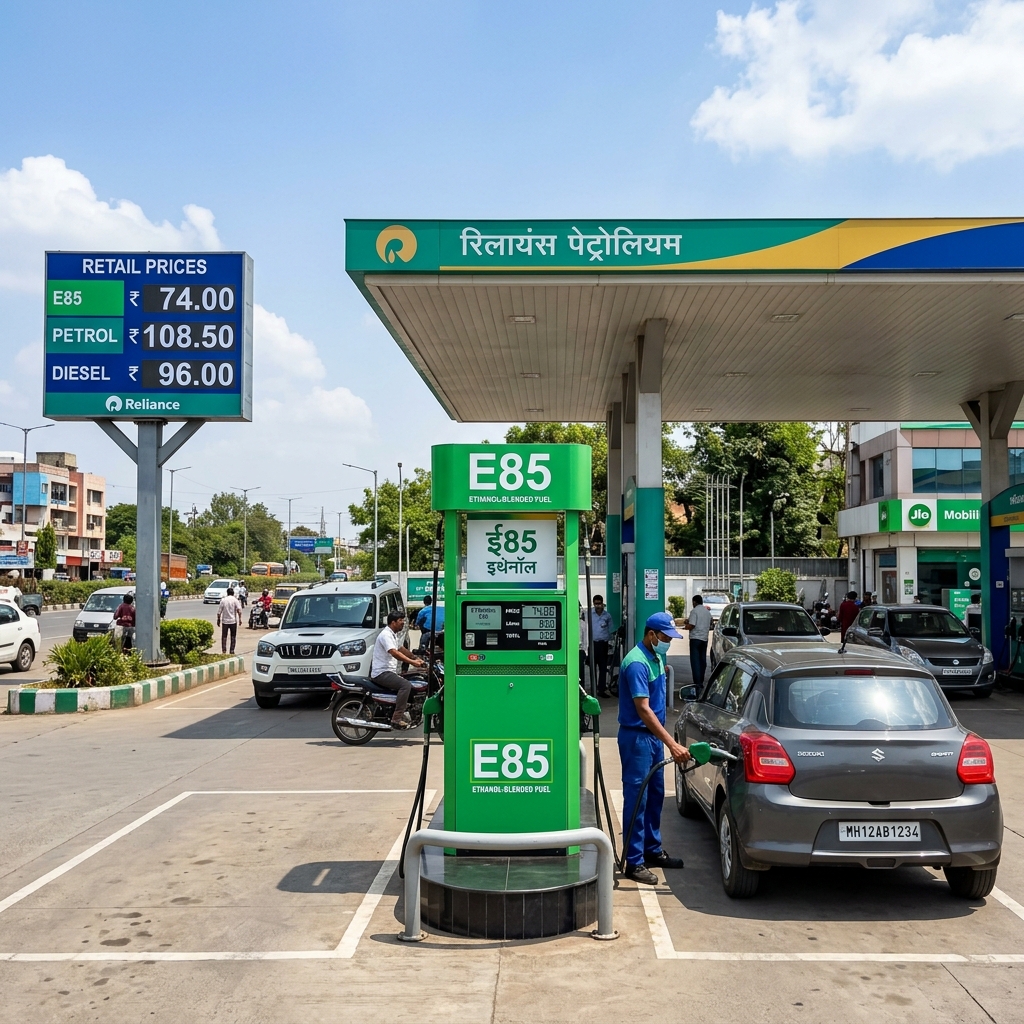
1. Understanding E85 Fuel and Its Properties
To fix cold start issues, we must first understand what E85 is and how it differs from standard unleaded gasoline.
What is E85?
E85 is a high-level ethanol blend consisting of anywhere from 51% to 85% ethanol, with the remainder being standard unleaded gasoline. The exact ratio depends on your geographical location and the time of year (which we will discuss later in the section on winter blends). Ethanol is an alcohol, and its chemical and physical properties are vastly different from those of the hydrocarbons found in gasoline.The Challenge of Vaporization
For an internal combustion engine to start and run, the fuel injected into the cylinders must mix with air and vaporize. Liquid fuel does not burn; only fuel vapor burns. This is a fundamental principle of engine operation.Standard gasoline is formulated with a mix of light, volatile hydrocarbons that vaporize very easily, even at extremely low temperatures. This low vaporization threshold means that when the fuel injectors spray gasoline into a freezing cold cylinder, a sufficient amount of the fuel instantly flashes into vapor, allowing the spark plug to ignite the air-fuel mixture easily.
Ethanol, on the other hand, has a much higher vaporization temperature and lower vapor pressure. Its latent heat of vaporization is roughly two and a half times that of gasoline. This means it takes significantly more thermal energy to convert liquid ethanol into a vapor. When the ambient temperature drops, the engine block, intake manifold, and cylinders are cold. When liquid E85 is sprayed into this cold environment, it stubbornly remains a liquid. It hits the cold cylinder walls, pools on the intake valves, and refuses to turn into the combustible vapor needed for ignition.
The Flash Point Factor
The flash point of a fuel is the lowest temperature at which it can vaporize to form an ignitable mixture in air. Standard gasoline has a flash point of around -45°F (-43°C). In contrast, pure ethanol has a flash point of roughly 55°F (13°C). While E85 is a blend and has a slightly lower flash point than pure ethanol due to the gasoline content, it is still drastically higher than that of regular pump gas.When you attempt to start an E85 engine on a 30°F (-1°C) morning, the ambient temperature is well below the fuel's flash point. The starter motor must crank the engine repeatedly, compressing the air in the cylinders over and over again to build up enough heat through mechanical compression to finally coax some of the ethanol into a vapor state. This is the root cause of the extended cranking times.
---
2. Common Symptoms of E85 Cold Start Issues
Before we dive into the fixes, let's identify the common symptoms. Diagnosing exactly how the car behaves during a cold start attempt will guide you in making the correct tuning or mechanical adjustments.
Extended Cranking Time
This is the most universal symptom. Instead of firing up in 1-2 seconds, the engine may crank for 5, 10, or even 20 seconds before finally catching. Prolonged cranking places massive stress on the starter motor and battery, potentially leaving you stranded.Sputtering and Stalling
The engine might catch and fire for a split second, only to immediately sputter and die. This often indicates that there was barely enough vapor to initiate combustion, but not enough continuous vapor to sustain the idle, or the post-start fueling is inadequate to overcome the rush of cold air into the intake manifold.Rough Idle and Misfires During Warm-Up
Once the engine finally stays running, it may run very roughly, sound like it has a massive camshaft, or actively misfire. This is because the engine is still too cold to efficiently burn the ethanol, resulting in poor combustion stability until the coolant and cylinder head temperatures rise sufficiently.The "Second Try" Success
Many E85 users notice that if they crank the engine for 5 seconds without it starting, stop, and then try again immediately, the engine fires right up. This happens because the first cranking attempt injected fuel that sat inside the cylinder and slowly absorbed heat from the compression strokes and surrounding metal, preparing it to vaporize perfectly for the second attempt. While it works, it is merely a band-aid and indicates that the primary cranking enrichment is incorrect.---
3. Tuning Solutions for E85 Cold Starts
The most effective way to cure E85 cold start issues is through proper Engine Control Unit (ECU) tuning. Standalone ECUs offer the most granular control, but many flash-tuning platforms for factory ECUs also provide access to these critical tables. Fixing an E85 cold start requires a multi-phased approach: adjusting Cranking Fuel, Post-Start Enrichment, and Warm-Up Enrichment.
Phase 1: Cranking Fuel / Cranking Enrichment
Cranking fuel is the amount of fuel injected while the starter motor is actively turning the engine over, before the engine reaches its idle RPM threshold. Because E85 struggles to vaporize when cold, you must inject significantly more fuel than you would with gasoline to ensure that a sufficient volume of vapor is created.If only 10% of the injected E85 vaporizes at 30°F, and you need a specific volume of vapor to achieve ignition, the mathematical solution is to spray a massive amount of liquid E85 into the cylinder so that the 10% that does vaporize is enough to start the car.
How to adjust: * Locate the "Cranking Fuel," "Base Cranking Injection Time," or "Cranking Enrichment" table in your tuning software. This table is typically referenced against Engine Coolant Temperature (ECT) and sometimes cranking RPM. * In the colder temperature columns (e.g., below 60°F / 15°C), you will need to substantially increase the fueling values compared to a gasoline baseline tune. * It is not uncommon for an E85 cranking table to require 200% to 350% more fuel at freezing temperatures compared to 93-octane pump gas. * A word of caution: Do not add too much fuel all at once. If you flood the engine (wet the spark plugs completely with liquid fuel), the spark will short to ground, and the car will absolutely not start until the plugs dry out. Increase the cranking fuel in 10-15% increments until the engine catches quickly. If it cranks longer and smells heavily of alcohol at the exhaust pipe, you may have added too much.
Phase 2: Post-Start Enrichment (PSE)
Getting the engine to fire is only the first hurdle. The moment the engine catches and engine speed exceeds the cranking RPM threshold (usually around 400-600 RPM depending on the engine), the ECU transitions from the Cranking Fuel table to the main fuel map, modified by the Post-Start Enrichment (PSE) table.PSE is a short-term, rapidly decaying fuel multiplier. Its job is to keep the engine alive immediately after it fires, combating the sudden rush of cold air past the throttle body and the fact that the intake manifold walls are still freezing cold and actively drawing fuel out of suspension (often called wall-wetting).
How to adjust: * If your E85 engine fires right up beautifully but immediately stalls within 1 to 3 seconds, your Post-Start Enrichment is likely too low. The initial burst of vapor was consumed, and the engine leaned out and died. * Increase the initial PSE amplitude (the starting percentage of enrichment) at cold temperatures. * You may also need to increase the decay time (how many engine cycles or seconds it takes for the enrichment to taper off to zero). E85 requires enrichment to hold on a bit longer than gasoline to stabilize the initial combustion events while the cylinder walls rapidly absorb heat.
Phase 3: Warm-Up Enrichment (WUE)
Once the Post-Start Enrichment decays, the engine relies on the main fuel map multiplied by the Warm-Up Enrichment (WUE) table. This table provides a steady, decaying amount of extra fuel based on Coolant Temperature until the engine reaches normal operating temperature (usually around 160°F - 180°F).Since a cold engine block does not vaporize ethanol efficiently, the engine will run lean and misfire if you do not command a richer air-fuel ratio during the entire warm-up phase.
How to adjust: * Monitor your wideband oxygen sensor (Lambda) as the engine idles and warms up in the driveway. * If the engine is misfiring, hesitating when you tap the throttle, or showing a lean condition (Lambda > 1.0) while cold, increase the WUE values at those specific coolant temperatures. * E85 often prefers to idle a bit richer than stoichiometry during the cold warm-up phase to maintain rotational stability. Aiming for a Lambda of 0.85 to 0.90 (approx 12.5:1 to 13.2:1 AFR on a gas scale) during cold idle can smooth things out considerably and eliminate stalling when dropping into gear on automatic vehicles.
Ignition Timing During Cranking
Fuel is not the only parameter you can manipulate. Ignition timing plays a massive, often overlooked role in cold starts.Standard gasoline engines often crank with ignition timing advanced to around 5 to 15 degrees Before Top Dead Center (BTDC). For E85, you actually want less ignition timing during cold cranking.
Retarding the ignition timing closer to Top Dead Center (0 degrees) or even slightly After Top Dead Center (ATDC) achieves two crucial things: 1. Reduces Starter Load: Firing the spark plug while the piston is still aggressively moving upward on the compression stroke creates opposing force. Retarding the timing reduces this load on the starter motor, allowing the engine to physically spin faster. Faster engine speed equals more compression heat. 2. Generates Exhaust Heat: Igniting the mixture later causes the combustion event to extend further into the exhaust stroke, pushing much more thermal energy directly into the exhaust manifold and cylinder walls. This rapid heat building aids immensely in vaporizing subsequent fuel charges on the following engine cycles.
Fuel Injector Phase / Injection Timing
Injection timing dictates exactly when the fuel injector opens in relation to the engine's 4-stroke cycle. For cold starts on E85, spraying the fuel onto a closed, relatively warm intake valve (if it has retained any heat from a previous run) can aid in vaporization. However, if the engine is dead cold after sitting overnight, adjusting the injection phase so that fuel is sprayed directly while the intake valve is open and air velocity is at its highest can help atomize the fuel mechanically through sheer air turbulence. Experimenting with injector phasing in the cranking tables (if your advanced standalone ECU supports it) can yield minor but helpful improvements in start times and idle stability.---
4. Mechanical and Hardware Considerations
While comprehensive tuning is the primary method for fixing E85 cold starts, your hardware foundation must be up to the task. A perfectly calibrated ECU cannot compensate for weak, failing, or improperly specified mechanical components.
The Battery and Starter Motor
As established, E85 requires more mechanical compression speed to generate the heat necessary for vaporization. This means your starter motor will be working overtime, and your battery will be subjected to heavier, longer amp draws. * Battery: Ensure you have a high-quality battery with a very high Cold Cranking Amps (CCA) rating. A weak or aging battery will cause cranking RPM to drop. Slower cranking means less compression heat, making E85 practically impossible to light off on a freezing morning. Upgrading to an AGM or Lithium-ion battery can provide incredible cranking voltage stability. * Starter: A tired or failing starter motor will spin the engine too slowly, even with a perfect battery. If your engine is cranking at 120 RPM instead of a healthy 250+ RPM, E85 will struggle to vaporize. Ensure your starter is in excellent condition and, crucially, verify that all engine and chassis ground wires are clean, thick, and tight to prevent voltage drop.Spark Plugs: Heat Range and Gap
Igniting a dense, extremely rich mixture of cold ethanol and freezing air requires an incredibly powerful, focused spark. * Gap: Because we are commanding significantly more fuel during an E85 cold start, the spark plug gap can easily be "blown out" or quenched by the physical liquid fuel. Tightening your spark plug gap slightly (e.g., from a standard 0.028" down to 0.022" or 0.024") can concentrate the electrical energy, making the spark hot enough and focused enough to blast through the heavy fuel mixture and successfully initiate the flame front. * Heat Range: High-horsepower, high-boost E85 cars typically run "colder" spark plugs (e.g., NGK step 8 or 9) to prevent dangerous pre-ignition at wide-open throttle. However, colder plugs shed heat quickly and foul easier during rich cold starts. You must find the delicate balance between a plug cold enough for full-throttle safety, but hot enough to keep itself clean during a rich, cold E85 idle.Fuel Injector Sizing and Spray Pattern
Large fuel injectors are an absolute necessity for E85 due to the roughly 30% higher volume requirement compared to gasoline. However, extremely large injectors (e.g., 2000cc or larger) can struggle at very low pulse widths. * If your injectors cannot accurately control tiny amounts of fuel at low milliseconds, your cranking and idle fueling will be erratic, making cold starts inconsistent. * Furthermore, modern injectors with multi-hole orifice plates provide much better atomization than older "fire hose" style single-pintle injectors. Better atomization equals smaller fuel droplets, which vaporize much easier in cold temperatures because of the increased surface area. Investing in high-quality, modern EV14-style injectors from reputable brands is highly recommended for E85 vehicles.Engine Block Heaters
If you live in an extremely cold climate (where winter temperatures consistently stay well below freezing), tuning and hardware can only do so much against the unyielding laws of thermodynamics. At a certain point, pure ethanol simply refuses to vaporize, period. In these extreme environments, installing an engine block heater is a highly practical and guaranteed solution. A block heater warms the engine coolant and oil via a standard wall outlet before you ever attempt to start the car. By raising the engine block temperature to 60°F-80°F before you even turn the key, you effectively bypass the cold start issue entirely, as the fuel will behave as if it's a warm spring day.---
5. The Role of Fuel Blends: Winter E85 vs. Summer E85
One of the most widely misunderstood aspects of E85 is that it is almost never exactly 85% ethanol year-round at the pump.
Fuel producers and distributors are fully aware of ethanol's poor cold-weather vaporization properties. To ensure that factory Flex-Fuel vehicles sold to the general public can actually start in the winter and meet emissions regulations, fuel stations switch to "Winter Blends" during the colder months.
Understanding the E-Content Drop
In the dead of summer, the E85 pump might dispense true E85, or sometimes even E90. However, as autumn and winter approach, refineries intentionally blend more standard gasoline into the mixture. Depending on your region's class rating, the fuel you pump from an "E85" nozzle in January might actually be E70, E60, or even E54 (54% ethanol).By increasing the gasoline content, the fuel regains the highly volatile light hydrocarbons needed to vaporize easily in cold weather, drastically improving cold start reliability without requiring user intervention.
The Absolute Necessity of a Flex Fuel Sensor
If you are running a static E85 tune (an ECU calibrated strictly and permanently for exactly 85% ethanol), filling up with a winter blend of E54 will cause massive issues. Your engine will run incredibly rich across the entire board, potentially causing bogging, poor fuel economy, loss of power, and worst of all, cylinder wall wash (where raw fuel strips the lubricating oil off the cylinder walls).This is why a True Flex Fuel system is absolutely vital for street cars. A Flex Fuel sensor, installed in the fuel feed or return line, measures the exact ethanol content of the fuel passing through it in real-time and sends a frequency signal to the ECU. The ECU then dynamically interpolates between a primary Gasoline map and a primary E85 map based on that exact sensor input.
With a properly calibrated Flex Fuel system, the ECU will automatically detect the lower ethanol content of the winter blend as soon as you fill up. It will dynamically scale back the massive fuel dumps required for summer E85, adjusting the Cranking Fuel, Post-Start Enrichment, and Warm-Up tables instantly. It ensures crisp, reliable cold starts on winter E70 just as it would on summer E85, while keeping your air-fuel ratios perfectly safe at wide-open throttle.
Manually Blending for Static Tunes
If your factory ECU does not support a Flex Fuel sensor and you are forced to run a static tune, you effectively have to become your own fuel blender during the winter. If you struggle to start the car in December, you can manually add two or three gallons of premium unleaded pump gas to a full tank of E85. This manually reduces the ethanol percentage and increases the gasoline vapor pressure, significantly aiding cold starts.WARNING:* However, you must be extremely cautious: doing this changes the octane rating and stoichiometric ratio of your fuel. You *must not perform high-load, high-boost, wide-open-throttle pulls if you manually blend gas into a static E85 tune. The engine will run dangerously lean and could suffer catastrophic, engine-destroying detonation. This manual blending trick is strictly a stop-gap measure for getting the car to start and safely commute around town during the winter.
---
6. Best Practices and Maintenance for E85 Users
Maintaining a vehicle that runs on high-concentration ethanol requires a bit more vigilance than one running on standard pump gas. Proper maintenance directly impacts engine health and cold start performance.
Keep the Fuel System Clean
Ethanol is highly hygroscopic, meaning it aggressively absorbs moisture from the ambient air. Over time, especially if the car sits outside or in a humid garage for extended periods, this moisture can cause severe corrosion in the fuel lines, fuel pumps, and delicate injector internals. Furthermore, ethanol can act as a powerful solvent, loosening old gunk, varnish, and deposits in the fuel tank and pushing them straight through the system. * Clogged or dirty injectors will have severely compromised spray patterns, ruining fuel atomization and making cold starts exponentially harder. * It is wise to use an E85-compatible fuel system cleaner or top-lube periodically to keep injector pintles lubricated. * If the car is going to sit for the winter (winter storage), do not leave it full of E85. Drain the tank, run standard 93-octane pump gas through the system to flush out the ethanol, and use a high-quality fuel stabilizer to protect the components.Frequent Oil Changes
Because cold E85 requires massive amounts of cranking fuel, some of that liquid ethanol inevitably washes past the piston rings and ends up in the engine oil crankcase (known as fuel dilution). Over time, this ethanol and moisture dilute the oil, rapidly breaking down its viscosity and lubricating properties. E85 users should adhere to much shorter oil change intervals (e.g., every 2,000 to 3,000 miles) to protect vital engine bearings and valvetrain components.Monitor Fuel Pressure Closely
Cold fuel is denser, and trying to push massive amounts of it through cold lines during startup can tax the fuel pump and regulator. Ensure you have an electronic fuel pressure sensor wired directly into your ECU. If fuel pressure drops during cranking because the pump is struggling, your injectors will not deliver the calculated volume of fuel, leading to a lean no-start condition that mimics a bad tune. Setting up ECU engine protection strategies based on fuel pressure is highly recommended for any E85 setup.---
7. Frequently Asked Questions (FAQ)
Q: Can I use starting fluid to help my E85 car start in the winter? A: While it will technically work because starting fluid (ether) is highly volatile, it is generally not recommended for modern fuel-injected engines. Ether is extremely harsh, can cause severe pre-ignition, and relying on it masks the underlying tuning or hardware issues that need to be addressed properly.
Q: Does E85 go bad in the cold? A: E85 doesn't necessarily "go bad" simply because it is cold. However, because it absorbs moisture, leaving it sitting in a tank during fluctuating winter temperatures can lead to phase separation, where the water/ethanol mixture drops out of the gasoline and settles at the bottom of the tank. This is highly detrimental and is why winterization with pump gas is recommended.
Q: Will upgrading my ignition coils help with E85 cold starts? A: Yes, absolutely. Upgrading to high-output ignition coils (like R35 GTR coils, IGN-1A smart coils, or high-performance aftermarket options) provides a significantly hotter and longer-duration spark. This extra spark energy is fantastic for blasting through dense, wet E85 mixtures during cold cranking.
Q: How cold is too cold for E85? A: Without an engine block heater, starting a car on pure summer E85 becomes exceptionally difficult below 40°F (4°C) and nearly impossible below 20°F (-6°C) for most setups. This is precisely why fuel stations switch to E70 or E54 winter blends, which can reliably start well below freezing.
---
8. Conclusion
Experiencing cold start issues with E85 is almost a rite of passage for performance enthusiasts, but it does not have to be a permanent annoyance that ruins the driving experience. It is entirely a matter of physics and chemistry: ethanol simply requires more heat and thermal energy to vaporize than traditional gasoline.
By taking a systematic, methodical approach, you can completely cure these starting woes. It begins with ensuring your mechanical foundation is rock solid—a high-CCA battery, a healthy starter motor, appropriately gapped spark plugs, high-output ignition coils, and modern, atomizing fuel injectors.
From there, it is all about mastering your ECU's environmental tuning tables. By aggressively increasing Cranking Enrichment, fine-tuning Post-Start and Warm-Up enrichments to stabilize the idle, and backing off cranking ignition timing to generate heat and engine speed, you can force the stubborn fuel to ignite even in freezing conditions.
Finally, embracing the reality of winter fuel blends and utilizing a proper, dynamic Flex Fuel sensor system is the ultimate, OEM-level solution. This allows your ECU to autonomously adapt to the changing chemistry of pump E85 throughout the changing seasons. With the right hardware, the precise tune, and a fundamental understanding of the fuel you are working with, you can enjoy the immense horsepower and safety benefits of E85 year-round, without ever dreading the winter morning cold start.