The world of motorcycle performance is constantly evolving, and one of the most significant shifts in recent years has been the growing popularity of E85 fuel. As riders seek more power, cooler engine temperatures, and a cleaner burn, ethanol blends have become the go-to choice for high-performance builds. However, converting a motorcycle to run on E85 introduces a critical debate: should you stick with a traditional carburetor, or is a modern electronic fuel injection (EFI) system the way to go?
This comprehensive guide will dive deep into the differences between carburetor and fuel injection systems on E85 bikes. We'll explore the pros and cons of each, the technical requirements for running ethanol, and ultimately help you decide which setup is best for your riding style, budget, and performance goals.
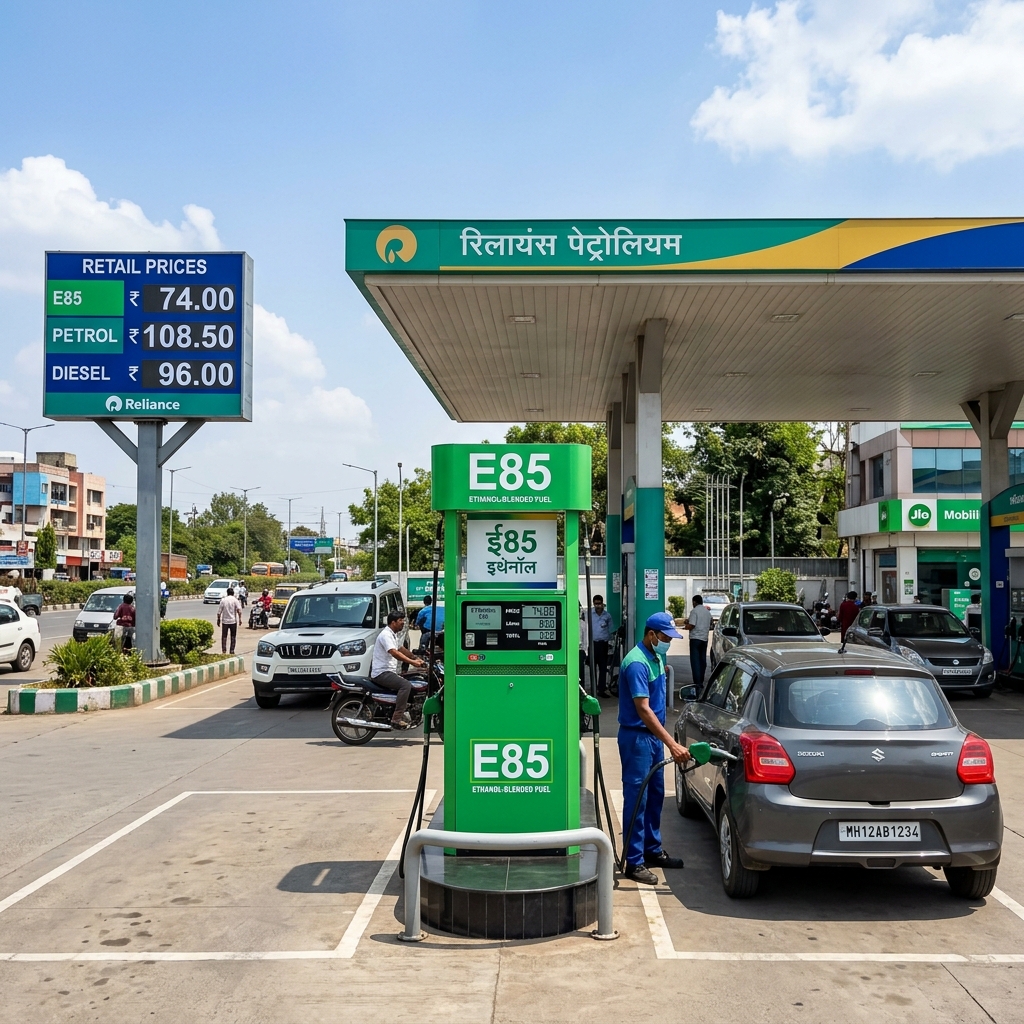
Understanding E85 Fuel and Its Impact on Motorcycles
Before we compare fuel delivery systems, it's essential to understand what E85 is and why it behaves differently than standard gasoline. E85 is a fuel blend containing up to 85% ethanol and 15% gasoline (though the exact ratio can vary by season and region).
The Benefits of E85 for Motorcycles
1. Higher Octane Rating: E85 typically has an octane rating around 105. This allows engine builders to run higher compression ratios or more ignition timing without the risk of detonation (engine knock). 2. Cooling Effect: Ethanol absorbs more heat as it vaporizes compared to gasoline. This latent heat of vaporization significantly lowers intake charge temperatures, which is incredibly beneficial for air-cooled motorcycle engines or high-stress racing applications. 3. Increased Power: Thanks to the higher octane and cooler intake charge, engines tuned for E85 can produce noticeably more horsepower and torque than those running on premium pump gas. 4. Cleaner Burning: Ethanol produces fewer carbon deposits, keeping combustion chambers, valves, and exhaust systems cleaner over time.
The Challenges of E85
While the performance benefits are undeniable, E85 also presents several challenges that your fuel delivery system must handle:
1. Stoichiometric Ratio: The ideal air-fuel ratio (AFR) for pure gasoline is 14.7:1. For E85, it's approximately 9.8:1. This means you need to flow roughly 30% to 40% more fuel to achieve the correct mixture. 2. Corrosivity: Ethanol is an alcohol, which can be corrosive to certain metals, plastics, and rubbers commonly found in older motorcycle fuel systems. 3. Hygroscopic Nature: E85 absorbs moisture from the air. If left sitting in a vented motorcycle tank for extended periods, it can cause corrosion and fuel degradation. 4. Cold Starting: Ethanol does not vaporize as easily as gasoline at low temperatures, making cold starts more difficult.
Now that we understand what E85 demands, let's examine how carburetors and fuel injection systems handle these requirements.
---
Carburetors on E85 Bikes: The Old-School Approach
For decades, carburetors were the standard for motorcycle fuel delivery. They are mechanical devices that rely on engine vacuum to pull fuel through various jets and circuits, mixing it with air before it enters the engine.
How Carburetors Work with E85
To run E85 through a carburetor, significant modifications are required. Because E85 requires 30-40% more fuel volume, standard gasoline jets will run the engine dangerously lean.
A typical E85 carburetor conversion involves: - Drilling or Replacing Jets: The pilot jet, main jet, and needle circuits must be enlarged to flow more fuel. - Upgrading Needle Valves: The float bowl needle valve must flow enough fuel to keep the bowl full under wide-open throttle. - Adjusting Accelerator Pumps: If equipped, the accelerator pump must provide a larger squirt of fuel when the throttle is cracked open. - Replacing Seals: Any rubber O-rings, gaskets, or diaphragms not compatible with ethanol must be replaced with materials like Viton or PTFE.
Pros of Carbureted E85 Bikes
1. Simplicity and Cost: Carburetors are entirely mechanical. There are no sensors, ECUs, or high-pressure fuel pumps required. If you have an older bike, modifying the existing carb is usually cheaper than converting to EFI. 2. Ease of Tuning (For Some): If you understand carburetor circuits, you can tune your bike with a set of screwdrivers and a handful of jets. No laptop is required. 3. Throttle Response: A well-tuned flat-slide carburetor can provide an incredibly crisp and immediate throttle response that some riders prefer over the slightly delayed feel of early EFI systems. 4. Nostalgia and Aesthetics: For custom builds, choppers, and vintage racers, a carburetor often fits the visual style of the bike better than a throttle body and wiring harness.
Cons of Carbureted E85 Bikes
1. Inflexibility: A carburetor is tuned for specific atmospheric conditions. If the altitude, temperature, or humidity changes significantly, your AFR will drift. Moreover, if the ethanol content of your fuel changes (e.g., you get a batch of E70 instead of E85), you cannot adjust the tune on the fly. 2. Cold Starting Issues: Carburetors rely on a choke (enrichment circuit) for cold starts. Because E85 resists vaporization when cold, carbureted E85 bikes can be notoriously stubborn to start on chilly mornings. 3. Fuel Economy: Because carburetors lack precise electronic control, they are generally less efficient than EFI, exacerbating the already poor fuel economy associated with E85. 4. Maintenance: The hygroscopic nature of ethanol means that if you leave E85 sitting in a carburetor float bowl, it will attract water and eventually corrode the brass jets and aluminum body. Carburetors on E85 bikes require frequent draining and cleaning if the bike isn't ridden regularly.
---
Electronic Fuel Injection (EFI) on E85 Bikes: The Modern Solution
Electronic Fuel Injection systems use an Engine Control Unit (ECU) to calculate exactly how much fuel the engine needs based on inputs from various sensors (throttle position, RPM, manifold pressure, engine temperature, air temperature, and exhaust oxygen levels). The ECU then pulses an electronic fuel injector to spray precise amounts of fuel into the intake tract.
How EFI Works with E85
Converting or tuning an EFI bike for E85 involves ensuring the fuel system components can handle the increased volume and adjusting the software to command more fuel.
A typical E85 EFI setup involves: - High-Flow Injectors: The stock injectors on a gasoline bike will usually max out (reach 100% duty cycle) before delivering enough E85. Larger injectors are almost always necessary. - Upgraded Fuel Pump: The fuel pump must be able to maintain pressure while flowing 30-40% more volume. The pump internals must also be E85 compatible. - Flex-Fuel Sensor (Optional but Highly Recommended): A flex-fuel sensor measures the exact ethanol content in the fuel lines and sends a signal to the ECU. The ECU can then automatically adjust the fueling and ignition timing based on whether you have E85, E10 pump gas, or anything in between. - ECU Tuning: The engine mapping must be adjusted to account for the new injector size, the different stoichiometric ratio of E85, and optimal ignition timing.
Pros of Fuel Injected E85 Bikes
1. Precision and Consistency: EFI systems calculate fueling milliseconds at a time. They automatically compensate for changes in altitude, air temperature, and engine temperature, ensuring the bike always runs at the optimal AFR. 2. Flex-Fuel Capability: This is perhaps the biggest advantage of EFI. With a flex-fuel sensor and a capable ECU, you can fill up with E85 at the track, and pump gas on the ride home, and the ECU will handle everything seamlessly. You are never stranded looking for an E85 pump. 3. Cold Starting: The ECU can command a massive burst of fuel during cranking and automatically taper it off as the engine warms up, making cold starts on E85 significantly easier and more reliable than with a carburetor. 4. Advanced Tuning Features: Modern EFI systems allow for individual cylinder tuning, boost control (for turbocharged bikes), launch control, traction control, and precise ignition timing maps that can extract every ounce of performance from E85 safely. 5. Better Fuel Economy: While E85 will always burn faster than gasoline, EFI manages the fuel delivery much more efficiently than a carburetor, resulting in better range per tank.
Cons of Fuel Injected E85 Bikes
1. Complexity and Cost: Converting a carbureted bike to EFI is a major undertaking involving fuel pumps, regulators, sensors, wiring harnesses, throttle bodies, and an aftermarket ECU (like Haltech, MoTeC, or a MegaSquirt derivative). This can easily cost thousands of dollars. 2. Tuning Curve: Tuning an EFI system requires a laptop, tuning software, a wideband oxygen sensor, and a solid understanding of volumetric efficiency and ignition timing. It often requires time on a chassis dyno with a professional tuner. 3. Packaging: Hiding a high-pressure fuel pump, wiring harness, and ECU can be challenging on a motorcycle, especially naked bikes or custom builds with minimal bodywork.
---
Head-to-Head Comparison: Carburetor vs EFI on E85
To help you make the best decision for your build, let's compare these two systems across several critical categories.
1. Maximum Power Output
Winner: Tie (with a slight edge to EFI for precision)
A carburetor flowing the correct amount of E85 can produce just as much peak horsepower as an EFI system. In fact, some drag racers prefer carburetors because the sheer volume of fuel moving through the venturi provides an exceptional cooling effect on the intake charge.
However, EFI takes the edge because it allows the tuner to optimize the air-fuel ratio and ignition timing at every specific RPM and throttle position. A carburetor is often a compromise; it might be slightly rich in the midrange to ensure it's safe at the top end. EFI provides a perfectly tailored power curve.
2. Drivability and Street Use
Winner: Fuel Injection
If you plan to ride your E85 bike on the street, EFI is vastly superior. A carbureted E85 bike will often struggle with cold starts, idle poorly until fully warmed up, and suffer from fueling inconsistencies as the weather changes.
EFI provides smooth idle control, perfect part-throttle cruising, and flawless transitions from off-throttle to wide-open. Furthermore, the ability to run a flex-fuel sensor on an EFI setup means you aren't restricted to routes that have E85 stations. You can run regular premium gas when E85 isn't available.
3. Cost of Conversion
Winner: Carburetor
If your bike already has a carburetor, converting it to run E85 is remarkably cheap. A set of larger jets, a drill bit set (if you are DIYing), some ethanol-safe fuel line, and perhaps a high-flow petcock are all you need. You can often complete the conversion for under $200.
An EFI conversion, even a budget-minded one, involves a high-pressure pump, regulator, injectors, throttle bodies, sensors, and an ECU. This will quickly exceed $1,000, and often push past $2,500 for a quality standalone system and dyno tuning.
4. Reliability and Maintenance
Winner: Fuel Injection
E85 is harsh on traditional fuel systems. If a carbureted bike sits for a few weeks, the ethanol will absorb moisture, turn to a jelly-like substance, and corrode the brass jets. You must meticulously drain the float bowls after every ride if the bike isn't a daily driver.
EFI systems are sealed under pressure. While ethanol-compatible components are still required, there are no vented float bowls for moisture to enter. An EFI bike can sit much longer on E85 without issues, though it is still recommended to store the bike with gasoline if it will be sitting for the winter.
5. Racing Applications
Winner: Depends on the Class
In bracket drag racing where consistency is key, EFI is dominant. The ECU can adjust for changing track temperatures and humidity, ensuring the bike runs the exact same ET pass after pass.
However, in vintage racing classes or specific modified classes, carburetors may be mandated by the rules. In these scenarios, a well-tuned Lectron or Keihin FCR carburetor modified for E85 is highly competitive.
---
Essential Components for E85 Conversion (Regardless of System)
Whether you choose a carburetor or fuel injection, certain components must be upgraded to handle E85 safely and effectively.
Fuel Lines
Standard rubber fuel lines will degrade rapidly when exposed to high concentrations of ethanol. They will dry out, crack, and potentially burst. All fuel lines must be replaced with PTFE (Teflon) lined hoses or specific ethanol-rated rubber hoses (like SAE 30R9).Fuel Filters
Because E85 is an excellent solvent, it will clean out years of varnish and dirt from an older fuel tank. This debris will quickly clog carb jets or fuel injectors. A high-capacity, stainless steel mesh fuel filter (usually around 10 to 40 microns) is essential. Paper element filters can disintegrate in E85.Fuel Tank Prep
If you have a steel fuel tank, the lack of gasoline's lubricating properties and the presence of moisture can cause the tank to rust internally. Many builders choose to seal the inside of the tank with an ethanol-resistant epoxy coating before making the switch.Spark Plugs
E85 burns cooler, which means you can often run a spark plug that is one step colder than what you would use with gasoline. This helps prevent pre-ignition in high-compression or boosted applications.---
Making the Decision: Which is Right for You?
Choosing between a carburetor and fuel injection for your E85 motorcycle build comes down to your budget, your mechanical expertise, and how you intend to use the bike.
Choose a Carburetor If:
- You are on a strict budget. - You are building a vintage bike, chopper, or a specific class-restricted race bike. - You enjoy tinkering and are comfortable swapping jets at the track. - The bike is a dedicated track vehicle that will be meticulously maintained and drained after every event. - You do not require the flexibility of running standard pump gas.Choose Fuel Injection If:
- You want the absolute best drivability, cold starting, and reliability. - You plan to ride the bike on the street and need the flexibility of a flex-fuel setup (switching between E85 and pump gas). - You are building a turbocharged or supercharged engine where precise fueling and timing control are critical to preventing engine failure. - You want advanced features like launch control, traction control, and data logging. - You have the budget to invest in a modern engine management system.The Future of E85 Motorcycles
As technology continues to advance, we are seeing aftermarket EFI kits becoming more affordable and easier to install. Companies are developing smaller, more integrated ECUs specifically designed to be hidden on motorcycles.
While the mechanical simplicity and raw appeal of a massive carburetor gulping E85 will always have a place in the hearts of hot-rodders and drag racers, the undeniable benefits of electronic fuel injection—specifically the ability to utilize flex-fuel sensors—make EFI the logical choice for the majority of modern high-performance motorcycle builds.
Converting a motorcycle to run on E85 is one of the most rewarding performance upgrades you can make. The smell of burning alcohol, the noticeable bump in torque, and the cooler running engine transform the riding experience. Whether you choose the analog charm of a carburetor or the digital precision of EFI, understanding the unique requirements of ethanol fuel will ensure your engine runs strong, safely, and powerfully for years to come.
--- Disclaimer: Modifying a motorcycle fuel system requires technical expertise. Working with highly flammable fuels like E85 should only be done in well-ventilated areas with appropriate safety equipment. Always consult a professional tuner if you are unsure about engine mapping or carburetor jetting, as an incorrect tune can lead to catastrophic engine failure.