If you've recently purchased a Flexible Fuel Vehicle (FFV) or are considering buying one, you likely have questions about what types of fuel you can safely use. The most common question among new flex fuel car owners is: "Can I use regular petrol in a flex fuel car?"
The short and definitive answer is yes. You can use regular petrol (unleaded gasoline) in a flex fuel vehicle without any issues.
In this comprehensive, 2500-word guide, we will dive deep into everything you need to know about flex fuel vehicles, how they operate with different types of fuel, the advantages and disadvantages of using regular petrol versus ethanol blends like E85, and how you can maximize the performance and longevity of your vehicle.
---
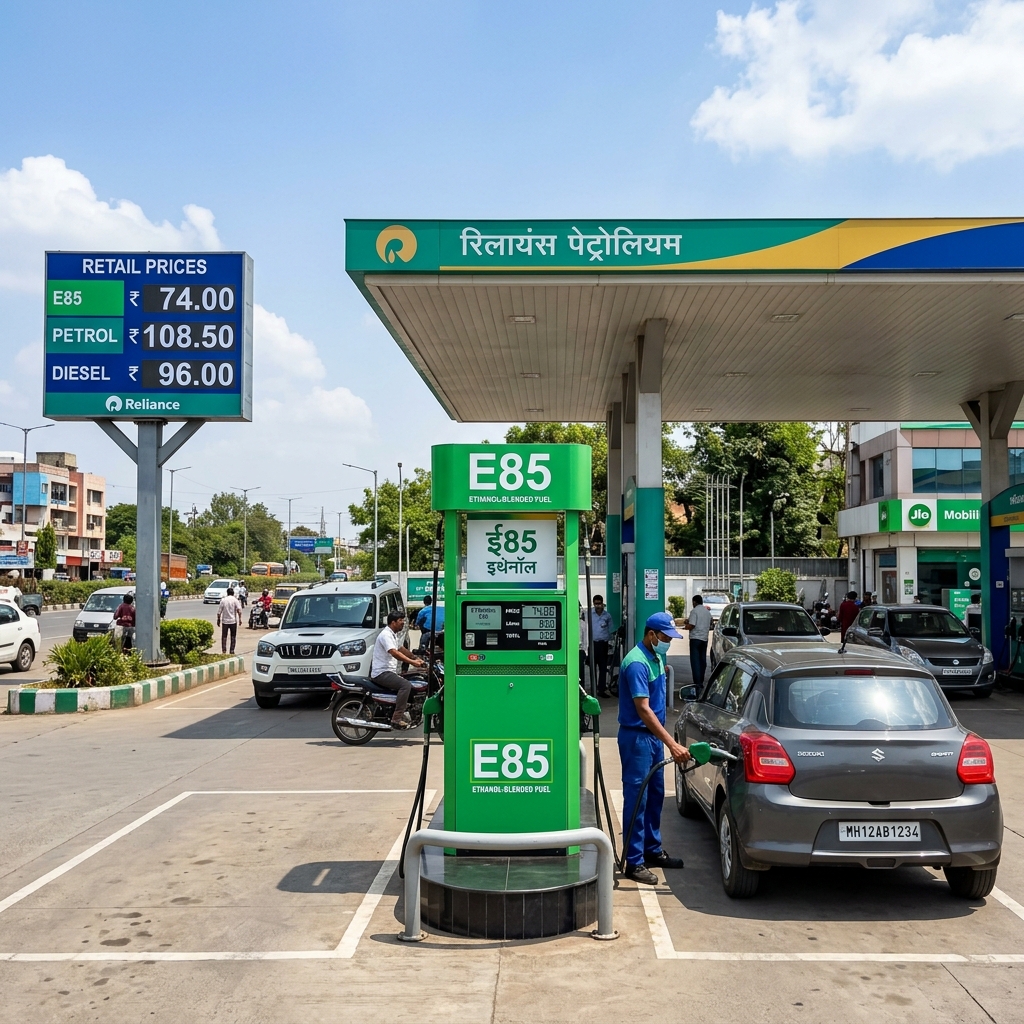
1. Understanding Flex Fuel Vehicles (FFVs)
To understand why you can use regular petrol in a flex fuel car, it is essential to first understand what makes a vehicle a "flex fuel" car.
A Flexible Fuel Vehicle (FFV) is an alternative fuel vehicle with an internal combustion engine designed to run on more than one fuel, usually gasoline blended with either ethanol or methanol fuel, and both fuels are stored in the same common tank.
How Flex Fuel Engines Work
The magic behind a flex fuel vehicle lies in its Engine Control Module (ECM) and specialized sensors.
1. The Fuel Sensor: Modern FFVs are equipped with a fuel composition sensor (often called an ethanol sensor) located in the fuel line. This sensor continuously monitors the blend of fuel flowing from the tank to the engine. It measures the exact percentage of ethanol versus gasoline. 2. The Engine Control Module (ECM): Once the sensor determines the ethanol content, it sends this data to the ECM. The ECM acts as the brain of the vehicle. 3. Dynamic Adjustments: Based on the sensor's readings, the ECM instantly adjusts the engine's timing and the fuel injectors. Because ethanol contains less energy per gallon than gasoline, the engine needs to inject more fuel when running on high-ethanol blends like E85 to achieve the same power output. Conversely, when running on regular petrol, the engine adjusts to inject less fuel and alters the spark timing appropriately.
This dynamic, real-time adjustment process is what makes the vehicle "flexible." It doesn't matter if you have 100% regular unleaded petrol, 85% ethanol (E85), or a 50/50 mix of the two in your tank; the car will automatically figure it out and adjust itself.
---
2. Using Regular Petrol in Your Flex Fuel Car
Now that we know how the car manages different fuels, let's explore what happens when you decide to fill up with standard regular petrol.
Is it Safe?
Absolutely. Regular petrol (typically E10, containing 10% ethanol) or pure unleaded gasoline is perfectly safe for a flex fuel vehicle. In fact, many flex fuel vehicles spend their entire lifespans running exclusively on regular petrol. The engine components, fuel lines, and exhaust systems of an FFV are built to handle gasoline just as well as, if not better than, standard vehicles.
Performance and Fuel Economy with Regular Petrol
When you run your flex fuel car on regular petrol, you will notice distinct differences in performance and fuel economy compared to running on E85.
#### Better Fuel Economy (MPG) The most significant advantage of using regular petrol in a flex fuel car is improved fuel economy. Gasoline has a higher energy density than ethanol. It contains roughly 27% to 30% more energy per gallon than E85.
Because of this higher energy content, your engine requires less gasoline to produce the same amount of power. Consequently, when you fill your FFV with regular petrol, you will almost always achieve higher miles per gallon (MPG) and a longer driving range per tank than you would on E85.
#### Power Output While regular petrol offers better fuel economy, it may result in slightly less horsepower and torque compared to E85 in some specific high-performance flex fuel vehicles. E85 has a higher octane rating (often over 100), which allows the engine to run more aggressive ignition timing, potentially producing more power. However, for the average daily driver, the difference in power output when using regular petrol is completely unnoticeable.
---
3. Mixing Fuels: Petrol and E85
Another frequent question is whether it is okay to mix regular petrol and E85 in the same tank.
The Seamless Transition
Yes, you can absolutely mix them. Because the fuel composition sensor is constantly monitoring the fuel line, it doesn't matter if you have a quarter tank of E85 and fill the rest with regular petrol. The sensor will read the new mixed percentage (for example, it might read E40) and instruct the engine to adjust accordingly.
When to Mix
There are practical reasons why you might end up mixing fuels: - Availability: E85 stations are not as ubiquitous as standard gas stations. If you are running low on E85 and the nearest station only offers regular petrol, you can simply fill up with regular. - Cost Balancing: Sometimes the price gap between E85 and regular petrol narrows. Drivers might choose to mix fuels to balance cost and fuel efficiency. - Winter Driving: In colder climates, starting a car on pure E85 can be difficult because ethanol doesn't vaporize as easily as gasoline at low temperatures. In winter, many "E85" pumps actually dispense a winter blend (like E70) that contains more gasoline. Drivers also manually add regular petrol to their tanks in the winter to improve cold starting.---
4. Pros and Cons: Regular Petrol vs. E85 in a Flex Fuel Vehicle
To help you make the best decision at the pump, it's helpful to weigh the pros and cons of both fuel types.
Regular Petrol (E10 or Unleaded)
Pros: * Higher Fuel Economy: You will get more miles per gallon and a longer range. * Availability: You can find regular petrol at literally every gas station. * Easier Cold Starts: Gasoline vaporizes easily in freezing temperatures, ensuring reliable engine starts in winter. * Less Frequent Fill-Ups: Due to the higher MPG, you will visit the gas station less often.
Cons: * Higher Emissions: Gasoline burns dirtier than ethanol, producing more greenhouse gases and carbon emissions. * Lower Octane: Regular petrol typically has an octane rating of 87, which may slightly reduce maximum horsepower in performance-oriented FFVs compared to E85. * Higher Cost Per Gallon: Generally, regular petrol costs more per gallon than E85.
E85 (85% Ethanol, 15% Gasoline)
Pros: * Lower Cost Per Gallon: E85 is often noticeably cheaper at the pump than regular petrol. * Eco-Friendly: Ethanol burns much cleaner, significantly reducing tailpipe emissions and greenhouse gases. It is also a renewable resource, usually derived from corn or sugarcane. * Higher Octane/Performance: With an octane rating over 100, E85 resists engine knocking and allows the engine to run optimally, often resulting in a slight horsepower and torque boost. * Cooler Engine Temperatures: Ethanol absorbs heat better than gasoline, helping the engine run cooler under heavy load.
Cons: * Lower Fuel Economy: Because of its lower energy density, your MPG will drop by roughly 15% to 25% when using E85. * Limited Availability: Depending on where you live, E85 pumps can be difficult to find. * Cold Weather Issues: E85 can cause hard starting in freezing temperatures.
---
5. Cost Analysis: Is E85 or Petrol Cheaper in the Long Run?
A major factor for many drivers is the economic impact of their fuel choice. Since E85 is cheaper per gallon but provides fewer miles per gallon, calculating which fuel is actually more cost-effective requires a bit of math.
The "Spread" Matters
To determine if you are saving money by using E85, you need to look at the price difference (the spread) between E85 and regular petrol.
As a general rule of thumb, because E85 reduces your fuel economy by about 20% to 25%, E85 needs to be priced at least 20% to 25% lower than regular petrol to break even on a cost-per-mile basis.
Example Calculation: * Let's say regular petrol is $4.00 per gallon and your car gets 25 MPG. Your cost per mile is $0.16. * If you use E85, your MPG drops by 20%, giving you 20 MPG. * For the cost per mile to remain $0.16, E85 must cost no more than $3.20 per gallon ($4.00 less 20%).
If E85 is $2.99 in this scenario, you are saving money. If E85 is $3.50, it is actually costing you more money per mile to drive on E85, despite the lower price at the pump.
Many drivers use smartphone apps to track local fuel prices and do this quick calculation before deciding which nozzle to pick up.
---
6. How to Identify if You Have a Flex Fuel Vehicle
If you bought a used car or just aren't sure if your vehicle is flex-fuel capable, there are several easy ways to check before you start experimenting with fuel types.
1. The Gas Cap: The most common identifier is a bright yellow gas cap. Alternatively, the gas cap may be black but have "E85 / Gasoline" printed on it. 2. Badging: Many manufacturers place a "Flex Fuel," "E85," or "FFV" badge on the rear trunk lid, tailgate, or fenders of the vehicle. 3. The Fuel Door: Open the small door that covers the gas cap. There is often a sticker on the inside of the door stating the vehicle's fuel requirements. 4. The Owner's Manual: When in doubt, always consult the owner's manual. The fuel and engine specifications section will explicitly state if the vehicle is capable of running on E85. 5. Vehicle Identification Number (VIN): You can use an online VIN decoder or contact a dealership with your VIN to confirm the engine specifications.
Warning: Never put E85 into a non-flex fuel vehicle. The high ethanol content can degrade rubber seals, fuel lines, and cause severe engine damage in vehicles not designed for it.
---
7. Maintenance Tips for Flex Fuel Vehicles
Owning an FFV is generally no different than owning a standard gasoline car, but there are a few maintenance best practices to keep in mind, especially if you frequently switch between fuel types.
Oil Changes
Regardless of whether you run E85 or regular petrol, adhere to the manufacturer's recommended oil change intervals. However, if you run E85 exclusively, some experts suggest checking your oil more frequently. Ethanol can dilute engine oil faster than gasoline, particularly in cold climates where the engine takes longer to warm up. Always use the grade of motor oil specified in your owner's manual.Fuel Filters
Because ethanol acts as a mild solvent, it can clean out old deposits in the fuel tank and lines. If you purchase an older FFV that has only ever run on regular petrol and you suddenly switch to E85, the ethanol might break loose years of accumulated dirt and gunk. This can prematurely clog the fuel filter. It is wise to have the fuel filter checked or replaced a few months after making a major switch to E85 in an older vehicle.Winter Storage
If you plan to store your flex fuel vehicle for the winter (for instance, a summer sports car), it is highly recommended to store it with a full tank of regular, ethanol-free gasoline if possible, along with a fuel stabilizer.Ethanol is hygroscopic, meaning it absorbs moisture from the air. Over a long period of storage, a tank full of E85 can absorb enough water to cause phase separation—where the water and ethanol separate from the gasoline and sink to the bottom of the tank. This can lead to severe corrosion and engine damage when you attempt to start the car in the spring. Regular petrol is much more stable for long-term storage.
---
8. Environmental Impact: Why Flex Fuel Exists
If regular petrol provides better fuel economy and is more readily available, you might wonder why flex fuel vehicles were created in the first place. The answer largely comes down to energy independence and environmental concerns.
Renewable Energy
Ethanol is a biofuel, typically produced from plant materials like corn, sugarcane, or grasses. Unlike petroleum, which takes millions of years to form and is finite, ethanol is a renewable resource that can be grown and produced annually.Reduced Greenhouse Gases
While a vehicle burning E85 gets fewer miles to the gallon, the actual combustion of ethanol produces significantly fewer greenhouse gas emissions (like carbon dioxide) compared to gasoline. Furthermore, the plants grown to produce the ethanol absorb CO2 from the atmosphere during their life cycle, offsetting some of the emissions produced when the fuel is burned.Decreased Reliance on Imported Oil
For many countries, promoting E85 and flex fuel vehicles is a strategic move to reduce dependence on foreign oil imports. By producing fuel domestically from agricultural products, countries can improve their energy security.---
9. Common Myths About Flex Fuel Vehicles
Let's dispel some common myths surrounding FFVs and fuel usage.
Myth 1: Switching fuels back and forth will confuse the engine. Fact: False. The fuel composition sensor monitors the blend continuously. You can switch from 100% regular petrol to 85% ethanol on your next fill-up without any hesitation from the engine.
Myth 2: Regular petrol will ruin a flex fuel engine. Fact: False. Flex fuel engines are fundamentally gasoline engines that have been upgraded (with special sensors, corrosion-resistant fuel lines, and high-flow injectors) to handle ethanol. They run perfectly on standard gasoline.
Myth 3: E85 makes your car slower. Fact: False. In many cases, E85 actually increases horsepower because of its high octane rating, allowing the engine to operate more aggressively. The tradeoff is lower MPG, not lower speed or power.
Myth 4: You have to run the tank completely dry before switching fuels. Fact: False. You can mix the fuels in any ratio at any time.
---
10. Conclusion: The Flexibility is Yours
So, can you use regular petrol in a flex fuel car? Yes, without a doubt.
The defining characteristic of a Flexible Fuel Vehicle is exactly that: flexibility. It empowers the driver with the choice of what fuel to use based on their current needs, budget, and geographical location.
If you are embarking on a long road trip where charging stations or E85 pumps are scarce, filling up with regular petrol ensures you have the maximum driving range and the convenience of refueling anywhere.
If you want to save money at the pump (provided the price spread is favorable), reduce your carbon footprint, and perhaps squeeze out a little extra horsepower for a spirited drive, you can fill up with E85.
Understanding how your vehicle works and doing a little bit of math at the gas pump will allow you to get the most out of your flex fuel vehicle, no matter which fuel nozzle you choose. The car's intelligent sensors and computer systems will handle the rest, ensuring a smooth, safe, and efficient ride every time.