As India continues its push towards greener energy solutions and reduced dependence on fossil fuels, ethanol-blended petrol has become a significant topic of discussion among car enthusiasts, environmentalists, and everyday commuters. Among these blends, E85 (a mixture of 85% ethanol and 15% gasoline) stands out as a high-ethanol alternative that promises lower emissions and potential performance benefits for flex-fuel vehicles. However, as winter approaches, particularly in the northern regions of the country—from the chilly plains of Punjab and Haryana to the freezing altitudes of Himachal Pradesh and Uttarakhand—a common question arises: Can E85 freeze in winter?
If you are a driver in North India contemplating the switch to E85 or already using it, understanding how this fuel behaves in cold temperatures is crucial. This comprehensive guide will delve into the science behind E85, its freezing points, how it performs in North Indian winters, and what you need to know to keep your vehicle running smoothly when the mercury drops.
---
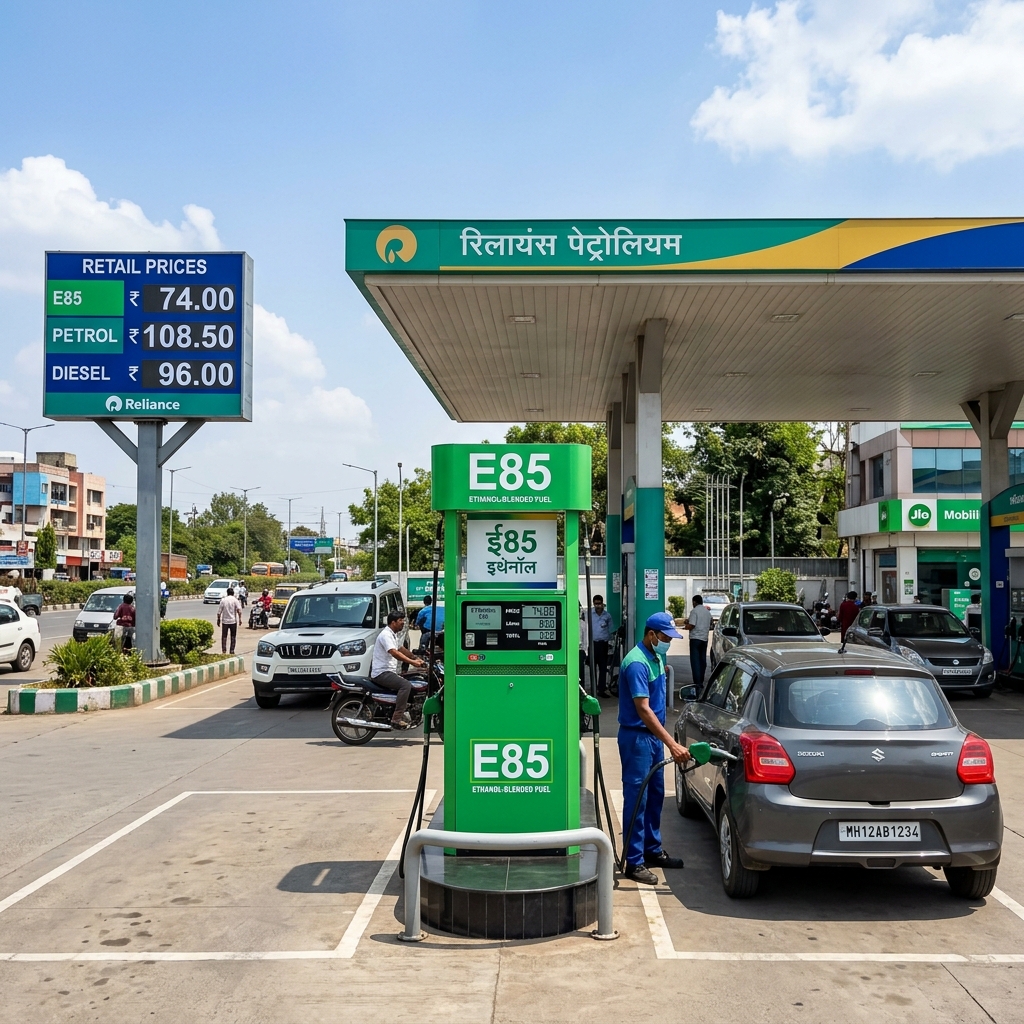
1. What Exactly is E85?
Before we address its freezing capabilities, let's establish a clear understanding of what E85 is. The "E" stands for ethanol, and the "85" represents the maximum percentage of ethanol in the fuel mixture by volume. The remaining 15% (or more, depending on the season and region) is unleaded gasoline (petrol).
The Composition
- Ethanol (Ethyl Alcohol): A renewable biofuel made from plant materials, primarily sugarcane and grains in the Indian context. It has a high octane rating but less energy density than pure gasoline. - Gasoline (Petrol): Traditional fossil fuel added to improve cold-starting capabilities, engine lubrication, and overall stability of the mixture.Vehicles designed to run on E85 are called Flexible Fuel Vehicles (FFVs). These vehicles have modified engine management systems, fuel lines, and components designed to handle the corrosive nature of ethanol and adjust the air-fuel mixture based on the ethanol content in the tank.
---
2. The Science of Freezing: Ethanol vs. Gasoline
To answer whether E85 can freeze, we must look at the freezing points of its two main components: ethanol and gasoline.
The Freezing Point of Pure Ethanol
Pure ethanol has an incredibly low freezing point. It freezes at approximately -114°C (-173°F). This extreme resistance to freezing is why alcohol is sometimes used in antifreeze solutions and scientific applications requiring ultra-low temperatures.The Freezing Point of Gasoline
Gasoline is not a single chemical compound but a complex mixture of hundreds of different hydrocarbons. Because of this, it doesn't have a single, precise freezing point like water. Instead, it has a "freezing range." Generally, gasoline will begin to freeze or turn into a waxy, gel-like substance at temperatures ranging from -40°C to -60°C (-40°F to -76°F), depending on its specific blend and winter additives.The Freezing Point of E85
When you mix 85% ethanol (freezing point -114°C) with 15% gasoline (freezing point around -50°C), the resulting mixture inherits an exceptionally low freezing point.Therefore, the freezing point of E85 is somewhere between -50°C and -100°C.
To put it simply: Under any naturally occurring weather conditions on Earth, your E85 fuel will not freeze solid in your gas tank.
---
3. The Reality of North Indian Winters
Now let's contextualize this with the climate of North India. The northern region experiences diverse winter climates:
- The Plains (Delhi, Punjab, Haryana, UP): Winter temperatures typically range from 4°C to 20°C. In extreme cold waves, temperatures might dip to 0°C or slightly below (e.g., -1°C to -2°C in certain rural pockets of Punjab or Haryana). - The Foothills and Lower Himalayas (Shimla, Manali, Nainital): Temperatures frequently drop below zero, often ranging from -5°C to 10°C during peak winter months (December and January). - The High Altitudes (Ladakh, Spiti Valley, Kargil): These regions experience extreme, harsh winters where temperatures can plummet to -20°C to -30°C.
Will E85 Freeze in These Conditions?
Looking at the freezing point of E85 (below -50°C) and the lowest temperatures recorded even in the harshest regions of North India (around -30°C in Ladakh), the answer is a resounding NO. E85 will not freeze in North India.Even if you leave your flex-fuel vehicle parked outside in Spiti Valley during a blizzard in January, the E85 fuel in the tank will remain in a liquid state.
---
4. If It Doesn't Freeze, What's the Problem? (The Cold Start Issue)
While you don't have to worry about E85 turning into an ice block, that doesn't mean cold weather has no effect on it. The primary issue with E85 in winter is not freezing; it's vaporization.
Internal combustion engines don't burn liquid fuel; they burn fuel vapor mixed with air. For an engine to start, the fuel injected into the cylinders must evaporate quickly so the spark plug can ignite it.
The Vapor Pressure Dilemma
Ethanol has a much lower vapor pressure than gasoline. This means it doesn't evaporate as easily, especially at lower temperatures.- At normal or warm temperatures (above 15°C), E85 vaporizes sufficiently for the engine to start immediately. - As temperatures drop toward 0°C and below—typical of North Indian winter mornings—the ethanol struggles to vaporize. The fuel injectors spray the E85 into the cold cylinders, but instead of turning into a combustible mist, it remains mostly as liquid droplets.
When the spark plug fires, there isn't enough vapor to ignite, resulting in what mechanics call a "cold start issue"* or *"hard starting."
Symptoms of E85 Cold Start Issues:
1. Extended Cranking: The engine turns over for several seconds before catching, unlike the instant start you expect. 2. Multiple Attempts Required: You may need to turn the key or push the start button two or three times before the engine finally starts. 3. Rough Idling: Once started, the engine might sputter, shake, or idle roughly for the first minute until the engine block warms up and aids in vaporizing the fuel. 4. Stalling: In extreme cases, the engine might start and immediately stall if it can't maintain combustion.This phenomenon is the real challenge North Indian drivers face when using high-ethanol blends during the winter months, particularly in cities like Delhi, Chandigarh, and certainly in the hill stations.
---
5. How the Fuel Industry Solves the Cold Start Problem: Winter Blends
Because cold starting is a well-known characteristic of ethanol, fuel retailers and refineries don't actually sell true "85% ethanol" year-round in climates that experience cold winters.
To ensure vehicles can start reliably in winter, the industry adjusts the blend. This is known as Seasonal Blending.
The Winter Blend Transition
As winter approaches, fuel suppliers increase the percentage of gasoline and decrease the percentage of ethanol in the "E85" pump. Gasoline vaporizes much more easily in cold weather, providing the necessary fumes to start a cold engine.- Summer E85: Might genuinely be 85% ethanol and 15% gasoline. - Winter "E85": Depending on the region's expected temperatures, what is labeled as E85 at the pump might actually be E70 (70% ethanol, 30% gasoline) or even E51 (51% ethanol, 49% gasoline) in extremely cold areas.
In North America and Europe, these seasonal adjustments are strictly regulated by standards (like ASTM D5798 in the US).
What About India?
India's ethanol blending program is evolving rapidly. While the current national mandate focuses heavily on E20 (20% ethanol), the infrastructure for E85 is still in its nascent stages, primarily catering to pilot projects, specific flex-fuel fleets, or localized areas.As E85 becomes more prevalent in North India, it is highly likely that oil marketing companies (OMCs like IndianOil, Bharat Petroleum, and Hindustan Petroleum) will implement similar seasonal blending strategies. If you are buying E85 in Delhi during December, the fuel you receive will likely have a higher gasoline content than the E85 you buy in May, specifically formulated to prevent cold start issues on chilly 5°C mornings.
---
6. Water Contamination: The Hidden Winter Threat
While E85 itself won't freeze, there is a secondary freezing risk associated with ethanol: Water contamination.
Ethanol is hygroscopic, meaning it loves water. It absorbs moisture directly from the air. This characteristic introduces unique challenges, especially in winter.
Phase Separation
In a fuel tank, E85 can safely absorb a small amount of water, and it will remain in suspension, eventually passing harmlessly through the engine. However, if the fuel absorbs too much water, a phenomenon called phase separation occurs.When the maximum water saturation point is reached, the water and ethanol bind together and separate from the gasoline. Because this water-ethanol mixture is heavier than gasoline, it sinks to the very bottom of the fuel tank.
Why is this dangerous in Winter?
1. The Fuel Pump Location: The fuel pump pickup is located at the bottom of the tank. If phase separation occurs, the engine will suck up a high-water, high-ethanol mixture instead of the proper fuel blend. This can cause the engine to run terribly, stall, or fail to start altogether. 2. The Freezing Risk:* While E85 won't freeze, *water will freeze at 0°C. If a significant layer of water-ethanol mixture settles at the bottom of the tank, the water component can freeze during a cold North Indian night. This ice can block the fuel pickup screen, freeze within the fuel lines, or damage the fuel pump.How Moisture Enters the Tank in Winter
In North India, winters are characterized by cold nights and relatively warmer days. This temperature fluctuation causes condensation inside the fuel tank. - During the day, the air inside the tank warms up and holds moisture. - At night, as temperatures drop near freezing, that moisture condenses on the cold metal or plastic walls of the tank and drips into the fuel. - The ethanol in the E85 eagerly absorbs this condensation.---
7. Practical Tips for North Indian Drivers Using E85 in Winter
If you are operating a flex-fuel vehicle on E85 in North India during the winter months, following a few best practices will ensure you avoid cold start issues and water contamination problems.
Tip 1: Keep Your Tank Full
This is the most effective way to combat condensation. A full tank leaves less "empty space" (air volume) inside the tank. Less air means less moisture available to condense when temperatures drop at night. Try to keep your tank at least half full, preferably topping it off regularly during peak winter months.Tip 2: Trust the Engine Management System (EMS)
Modern Flex-Fuel Vehicles (FFVs) are equipped with sophisticated sensors (often an inline fuel composition sensor) that detect the exact percentage of ethanol in the line. The engine control unit (ECU) automatically adjusts the ignition timing and fuel injector pulse width to compensate for cold weather and high ethanol content. - When starting on a cold morning, do not press the accelerator pedal. Let the car's computer manage the air-fuel ratio. - If it doesn't start on the first crank, turn the key off, wait a few seconds, and try again. The first crank often primes the cylinders, making the second attempt successful.Tip 3: Allow for Warm-Up Time
While modern cars generally don't need extensive warm-ups, an FFV running on E85 in cold weather benefits from a brief idling period. - Start the car and let it idle for 30 to 60 seconds before driving. This allows the engine block to generate a little heat, which helps vaporize the E85 more efficiently, ensuring smooth acceleration when you pull out of your driveway.Tip 4: Consider a Block Heater (For Extreme Climates)
If you live in the higher altitudes of Himachal Pradesh, Uttarakhand, or Ladakh, where temperatures routinely plunge well below freezing, consider installing an engine block heater. - A block heater warms the engine coolant and block overnight. - When you start the car in the morning, the engine is already warm, meaning the E85 vaporizes instantly, completely eliminating the cold start issue. - While rarely necessary in the plains of Delhi or Punjab, it is a game-changer for Himalayan drivers.Tip 5: Strategic Blending (If Necessary)
If you consistently experience hard starting on E85 during January in North India, and you suspect the local pumps haven't adjusted their winter blend adequately, you can manually lower the ethanol content. - Next time you fill up, add 10 to 15 liters of standard regular petrol (E10) to the tank, and fill the rest with E85. - This slightly lowers the overall ethanol percentage in your tank, increasing the vapor pressure and drastically improving cold starting performance. Your flex-fuel sensor will automatically adjust to this new mix.Tip 6: Buy Fuel from Reputable, High-Turnover Stations
To minimize the risk of water-contaminated E85, purchase your fuel from busy, well-maintained petrol pumps. High turnover means the fuel sitting in the underground tanks is fresh and hasn't had months to absorb groundwater or atmospheric moisture.---
8. The Future of E85 in India's Climate
The Indian government's ambitious Ethanol Blended Petrol (EBP) program is a cornerstone of its strategy to achieve energy security and reduce carbon emissions. As the infrastructure scales up from E20 towards higher blends like E85, adapting the fuel standards to regional climates will be paramount.
North India presents a unique climatic challenge compared to the tropical south. The massive temperature variations require rigorous implementation of seasonal blending standards. Regulatory bodies like the Bureau of Indian Standards (BIS) will play a crucial role in ensuring that "Winter E85" sold in Chandigarh has a different specification than the E85 sold in Chennai.
Automakers are also continuously refining FFV technology. Future iterations of flex-fuel engines may incorporate advanced pre-heating technologies for fuel injectors or intake manifolds, further mitigating the cold-start characteristics of ethanol.
---
9. Frequently Asked Questions (FAQs)
Q1: Will E85 freeze in my car in Delhi during December? A: Absolutely not. The freezing point of E85 is below -50°C. The coldest recorded temperatures in Delhi rarely drop below 1°C. Freezing is physically impossible in this climate.
Q2: Why does my car struggle to start on winter mornings with E85? A: This is due to ethanol's low vapor pressure, not freezing. In cold temperatures (around 5°C and below), ethanol doesn't evaporate easily into a combustible gas. The engine struggles to ignite liquid droplets, leading to extended cranking times.
Q3: Is it bad for my engine if it takes longer to start on cold E85 mornings? A: An occasional hard start is normal for high-ethanol blends in winter and will not damage a vehicle specifically designed for flex-fuel. However, prolonged, repeated grinding of the starter motor can wear it out prematurely.
Q4: Can I mix normal petrol with E85 in winter to help it start? A: Yes. If you drive a Flex-Fuel Vehicle (FFV), you can mix E85 and regular petrol in any ratio. Adding a few liters of regular petrol to an E85 tank during a cold snap will increase the gasoline concentration, improving vaporization and cold-starting performance.
Q5: What is "Phase Separation" and should I worry about it in North India? A: Phase separation occurs when E85 absorbs too much water, causing the water and ethanol to separate from the gasoline and sink to the bottom of the tank. The water can freeze in winter, causing fuel line blockages. You can prevent this by keeping your fuel tank relatively full during winter to minimize condensation inside the tank.
Q6: Are fuel pumps in India required to change the E85 blend for winter? A: As the E85 market matures in India, oil marketing companies will implement seasonal blending standards similar to international practices—reducing ethanol content slightly in winter to improve cold starting. However, as the rollout is still in early phases, standardization is continually evolving.
---
Conclusion
To answer the pressing question: No, E85 will absolutely not freeze during a North Indian winter. Whether you are navigating the foggy winter mornings of the NCR, the frost-covered plains of Punjab, or even driving up to the snowy peaks of Himachal, the physical liquid inside your fuel tank is safe from freezing solid.
However, the cold weather does interact uniquely with ethanol. The true winter challenge for E85 users is its low vapor pressure, which can lead to hesitant, hard engine starts on chilly mornings. By understanding this characteristic and employing simple strategies—such as trusting your vehicle's engine management system, keeping your fuel tank topped up to prevent water condensation, and allowing a brief warm-up—you can enjoy the environmental and economic benefits of E85 year-round.
As India's biofuel infrastructure matures, localized seasonal blending will likely render these cold-start nuances a thing of the past. Until then, North Indian drivers can confidently utilize E85, armed with the knowledge of how to handle it when the winter chill sets in.