The Indian automotive landscape has been undergoing a series of monumental transformations in recent years. Chief among these changes are the implementation of increasingly stringent emission standards and a nationwide push toward alternative fuels, specifically ethanol-blended petrol. If you have been following the automotive news or have recently visited a car showroom, you have likely encountered terms like "BS6 Phase 2," "RDE," "OBD2," "E20," and perhaps even "E85" or "Flex Fuel."
For the average consumer, these acronyms can be overwhelming. What exactly do they mean for the car you drive today or the one you plan to buy tomorrow? How do these changes affect engine performance, fuel efficiency, and long-term reliability? In this comprehensive, 2500-word guide, we will break down everything you need to know about BS6 Phase 2 norms and E20/E85 fuel compatibility.
---
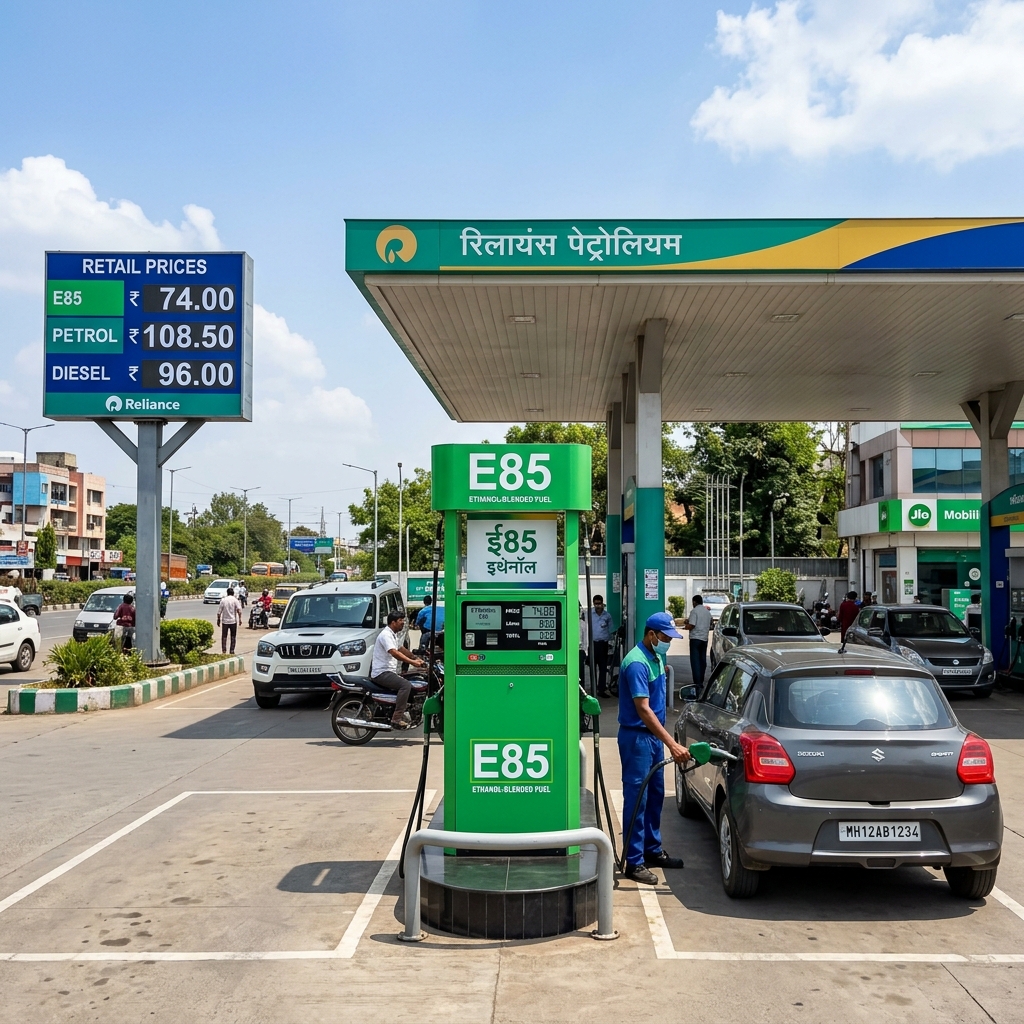
1. Introduction to the Changing Automotive Landscape
The push for cleaner air and a reduction in the import bill for crude oil has driven the Government of India to enforce dual strategies: tightening tailpipe emission norms and mandating the blending of ethanol with petrol.
The transition from Bharat Stage IV (BS4) directly to Bharat Stage VI (BS6) in April 2020 was a massive leap for the industry. However, the government did not stop there. To ensure that cars remain clean not just in laboratory conditions but also in the real world, BS6 Phase 2 was introduced in April 2023.
Simultaneously, India has accelerated its Ethanol Blended Petrol (EBP) program. While E10 (10% ethanol blend) was successfully achieved ahead of schedule, the target has now shifted to E20 (20% ethanol blend) by 2025-2026, with an eventual eye on E85 (85% ethanol blend) through Flex-Fuel Vehicles (FFVs).
Understanding the intersection of BS6 Phase 2 and ethanol compatibility is crucial for anyone navigating the current car market. Let's delve into the specifics of these regulations and technical requirements.
---
2. Understanding BS6 Phase 2 Norms
Bharat Stage Emission Standards are instituted by the Government of India to regulate the output of air pollutants from internal combustion engine (ICE) and spark-ignition engine equipment, including motor vehicles.
The Shift from Phase 1 to Phase 2
While BS6 Phase 1 focused on drastically reducing the permissible limits of Nitrogen Oxides (NOx), Particulate Matter (PM), and Hydrocarbons (HC) in laboratory testing, Phase 2 is all about real-world compliance. Vehicles could pass the highly controlled laboratory tests of Phase 1 but still emit higher levels of pollutants when driven on actual roads due to variations in driving style, traffic conditions, and temperatures.Real Driving Emissions (RDE)
The cornerstone of BS6 Phase 2 is the introduction of Real Driving Emissions (RDE) norms. Under RDE, vehicles are tested on public roads in real traffic conditions using Portable Emissions Measurement Systems (PEMS). This ensures that the emissions in the real world closely match the laboratory results.RDE testing accounts for: - Stop-and-go city traffic - Highway cruising speeds - Rapid acceleration and deceleration - Cold starts and varying ambient temperatures
If a vehicle's emissions exceed the permissible BS6 limits under these real-world conditions, it cannot be certified for sale. This has forced automakers to heavily upgrade their engine management systems and exhaust after-treatment technologies.
On-Board Diagnostics (OBD2)
Another critical component of BS6 Phase 2 is the mandatory inclusion of advanced On-Board Diagnostics (OBD2) systems. While basic OBD has been around for years, the Phase 2 mandate requires vehicles to have real-time emission monitoring.The OBD2 system constantly monitors catalytic converters, oxygen sensors, and engine misfires. If the system detects that the vehicle's emissions are exceeding the legal limit due to a malfunction or degradation of components, it will illuminate the Malfunction Indicator Lamp (MIL) or "Check Engine" light on the dashboard. In severe cases, the engine management system may induce a "limp mode," restricting performance until the issue is repaired, ensuring that highly polluting vehicles do not remain on the road unnoticed.
---
3. The Ethanol Blending Roadmap in India
While BS6 Phase 2 tackles tailpipe emissions through engine and exhaust technology, the Ethanol Blended Petrol (EBP) program tackles the fuel itself. Ethanol is a biofuel produced primarily from agricultural by-products like sugarcane juice, molasses, and surplus grains.
What is E20?
E20 fuel is a mixture consisting of 20% ethanol and 80% petrol. Ethanol burns cleaner than pure petrol, resulting in lower emissions of carbon monoxide (CO) and unburnt hydrocarbons. Moreover, because ethanol is produced domestically from renewable sources, increasing the blend ratio significantly reduces India's reliance on imported crude oil, saving billions of dollars in foreign exchange.What is E85 and Flex Fuel?
E85 refers to a blend of up to 85% ethanol and 15% petrol. Vehicles capable of running on E85 are known as Flex-Fuel Vehicles (FFVs). These vehicles feature specialized engines and fuel systems designed to automatically detect the ethanol concentration in the fuel tank (anywhere from 0% to 85%) and adjust engine parameters like spark timing and fuel injection accordingly.The Government's Timeline
- E10: Target achieved in 2022. All standard petrol sold in India today contains at least 10% ethanol. - E20: Phased rollout began in 2023. The target is to make E20 available nationwide by 2025-2026. Automakers have been mandated to ensure that all new vehicles manufactured from April 2023 are materially compliant with E20 fuel. - E85 (Flex Fuel): While there is no hard mandate for E85 across all vehicles, the government is strongly encouraging automakers to develop and launch Flex-Fuel variants, particularly in the two-wheeler and passenger vehicle segments, over the coming years.---
4. How BS6 Phase 2 Intersects with E20 Compatibility
The rollout of BS6 Phase 2 perfectly coincided with the government's mandate for E20 material compliance. However, it is vital to distinguish between two types of E20 compliance: Material Compliance* and *Engine Tuning (Optimization) Compliance.
Material Compliance
Ethanol is highly corrosive and hygroscopic (it absorbs water from the air). When used in high concentrations in engines not designed for it, ethanol can degrade rubber hoses, plastic fuel lines, gaskets, and certain metal components like aluminum and brass.To meet the government mandate, all vehicles sold under the BS6 Phase 2 era (from April 2023 onwards) must be materially compliant with E20 fuel. This means the automaker has upgraded the materials used in the fuel pump, fuel lines, injectors, and tank to resist the corrosive effects of a 20% ethanol blend. If you put E20 in these cars, the fuel lines will not melt, and the engine components will not suffer accelerated corrosion.
Engine Tuning and ECU Mapping (E20 Optimization)
However, material compliance does not necessarily mean the engine is fully optimized to run on E20. Ethanol has a lower energy density (calorific value) than pure petrol. This means you need to burn more ethanol to produce the same amount of energy. Furthermore, ethanol has a higher octane rating, which changes the combustion dynamics inside the cylinder.For a car to run efficiently on E20 without a drop in performance or a massive drop in fuel economy, the Engine Control Unit (ECU) must be specifically mapped to adjust the air-fuel mixture and ignition timing to account for the 20% ethanol content.
Some early BS6 Phase 2 cars are materially compliant but not fully tuned for E20, meaning they can run on E20 without breaking down, but might experience a slight dip in performance or mileage. The latest models hitting the market are now increasingly fully optimized for E20, featuring intelligent ECUs that adapt seamlessly to the blend.
---
5. E85 Compatibility: The Next Frontier (Flex Fuel)
While E20 requires minor material upgrades and ECU tweaks, jumping to E85 is a different ballgame entirely. An engine cannot simply be "tuned" to handle an 85% ethanol blend; it requires substantial mechanical and electronic re-engineering.
Technical Requirements for E85 Flex Fuel Engines
1. Ethanol Sensors: A Flex-Fuel vehicle must have an active ethanol content sensor in the fuel line. This sensor reads the exact percentage of ethanol in the fuel in real-time and sends this data to the ECU. 2. High-Flow Fuel Injectors: Because E85 has significantly less energy density than petrol, the engine needs to inject roughly 30-40% more fuel by volume into the cylinder to achieve the same power. This requires much larger, high-capacity fuel injectors and a more powerful fuel pump. 3. Advanced ECU Capabilities: The ECU must possess a wide range of adjustment parameters. It needs to instantly advance or retard ignition timing and alter injector pulse widths depending on whether the tank has pure E10, E20, or a full tank of E85. 4. Extreme Corrosion Resistance: While E20 requires upgraded hoses, E85 requires almost every component touching the fuel to be made of specialized stainless steel or high-grade synthetic elastomers. The valves and valve seats in the cylinder head also require hardening to withstand the different combustion temperatures and lack of lubrication that petrol normally provides. 5. Cold Start Systems: Ethanol does not vaporize as easily as petrol in cold temperatures. E85 engines often struggle with cold starts. Automakers must implement special cold-start fuel enrichment strategies or even secondary heating systems to ensure the car starts on a cold winter morning.Currently, India is in the nascent stages of E85 adoption. Automakers like Toyota have showcased Flex-Fuel prototypes (such as the Flex-Fuel Corolla Altis), and several two-wheeler manufacturers have launched flex-fuel variants. However, mainstream passenger car adoption of E85 is still a few years away, largely dependent on the widespread availability of E85 dispensing pumps.
---
6. Impact on Engine Performance and Fuel Efficiency
One of the most common concerns among car buyers is how the transition to E20 and eventually E85 will affect their driving experience and wallet.
The Mileage Drop Reality
It is an inescapable fact of physics: ethanol contains roughly 30% less energy per unit of volume than pure petrol. Therefore, blending ethanol into petrol inevitably lowers the overall energy density of the fuel.- With E20 Fuel: Consumers can expect a drop in fuel efficiency (mileage) of roughly 4% to 7% compared to running on pure E0 petrol, depending on whether the engine is fully optimized for E20. - With E85 Fuel: The drop in mileage is far more drastic, often ranging from 20% to 30%. While Flex-Fuel cars burn more fuel, the economic viability of E85 depends entirely on the government subsidizing or pricing E85 significantly lower than standard petrol to offset the loss in mileage.
Performance and Power Delivery
Interestingly, while ethanol reduces mileage, it is actually excellent for engine performance in terms of power output.Ethanol has a very high octane rating (over 100). Higher octane fuel is more resistant to "knocking" or pre-ignition under high pressure. This allows engines—especially modern turbocharged engines common in the BS6 Phase 2 era—to run more aggressive ignition timing and higher boost pressures without damaging the engine.
If a BS6 Phase 2 car is fully tuned to take advantage of E20, it might actually feel slightly more responsive or produce slightly more peak power, even if it is burning fuel at a slightly faster rate. For E85 Flex Fuel cars, the power gains can be substantial; many high-performance cars use E85 specifically for the massive horsepower gains it allows.
Long-Term Reliability
For cars manufactured in the BS6 Phase 2 era, long-term reliability with E20 should not be a major concern, provided the manufacturer has strictly adhered to the material compliance mandates. The upgraded elastomers and fuel lines are designed to last the lifetime of the vehicle.However, users must be diligent about fuel storage. Because ethanol is hygroscopic, leaving an E20 vehicle parked with a partially empty tank for several months in a humid environment can lead to "phase separation." This is where the ethanol absorbs water from the air and separates from the petrol, sinking to the bottom of the tank. Trying to start an engine on a water-ethanol mixture can cause severe engine damage.
---
7. Can Older Cars Run on E20 or E85?
This is perhaps the most critical question for the millions of Indians driving BS4 or BS6 Phase 1 vehicles.
The Risks of E20 in Older Cars
Cars manufactured before April 2023 (and particularly those before 2020) were largely designed with E5 or E10 in mind. Running E20 fuel in an older, non-compliant car is highly risky and generally advised against.1. Corrosion and Leaks: The rubber fuel lines, seals, and plastic components in older cars will degrade rapidly when exposed to a 20% ethanol blend. This can lead to dangerous fuel leaks, presenting a severe fire hazard. 2. Fuel Pump Failure: The electric fuel pump inside the gas tank relies on the fuel itself for lubrication and cooling. High ethanol blends strip away this lubrication, leading to premature pump failure. 3. Engine Running Lean: Older ECUs cannot compensate for the extra oxygen present in ethanol. Consequently, the engine will run "lean" (too much air, not enough fuel). A lean combustion runs incredibly hot, which can burn exhaust valves, damage spark plugs, and ultimately destroy the catalytic converter.
Is Retrofitting Possible?
Technically, yes, an older car can be retrofitted for E20 or E85, but it is rarely economically viable for standard passenger cars. It involves replacing the fuel tank, all fuel lines, the fuel pump, the injectors, and installing a standalone aftermarket ECU to handle the tuning. For a standard commuter car, the cost of these modifications far outweighs the benefits.As E20 becomes the standard fuel nationwide, owners of older vehicles will need to look for pumps that still supply E10 ("Protection Grade" fuel), which the government has promised to make available alongside E20 for a transitionary period.
---
8. Challenges in Implementing E20 and E85
While the environmental and economic benefits of ethanol blending are clear, the transition is not without significant hurdles.
Infrastructure and Supply Chain Modernization
Distributing E20 and E85 requires an overhaul of the fuel logistics network. Ethanol cannot be transported easily through existing petroleum pipelines due to its corrosive nature and tendency to absorb water. It must be transported via specialized tanker trucks and rail cars. Furthermore, petrol stations must upgrade their underground storage tanks and dispensing pumps to ensure they are E20/E85 compatible to prevent leaks into the groundwater.The Food vs. Fuel Debate
As ethanol production scales up to meet the E20 and future E85 demands, concerns have been raised regarding food security. If too much agricultural land or too much crop output (like sugarcane and rice) is diverted to produce ethanol, it could lead to shortages or price inflation in the food market. The government must maintain a delicate balance, encouraging "second-generation" (2G) ethanol production, which utilizes agricultural waste (stubble, stalks) rather than the food crops themselves.Consistency of Ethanol Quality
For sophisticated BS6 Phase 2 engines to run properly, the fuel quality must be highly consistent. Any contamination with water during the transport or storage of E20 fuel can severely damage modern, highly sensitive fuel injection systems. Oil Marketing Companies (OMCs) bear the heavy burden of ensuring quality control from the refinery to the fuel nozzle.---
9. Consumer Guide: Buying a Car in the BS6 Phase 2 Era
If you are in the market for a new car today, the transition to BS6 Phase 2 and E20 makes your purchasing decision slightly more complex. Here is a checklist of things to consider:
Check the E20 Sticker
By law, all vehicles compliant with E20 fuel must have a clearly visible sticker indicating their compatibility. This is usually located on the inside of the fuel filler cap or on the windshield. Do not take the salesperson's word for it; verify the sticker or check the official owner's manual.Clarify "Optimized" vs. "Material Compliant"
As discussed earlier, all new cars are material compliant, but ask the dealership if the engine ECU has been specifically tuned and optimized for E20 fuel. Cars that are fully optimized will suffer less of a mileage penalty when running on the new fuel blends.Consider Your Usage Pattern for RDE Norms
BS6 Phase 2 diesel vehicles feature complex Diesel Particulate Filters (DPF) and Selective Catalytic Reduction (SCR) systems to meet RDE norms. If your driving is primarily short trips in heavy city traffic, a modern BS6 Phase 2 diesel engine might suffer from frequent DPF clogging, as the exhaust doesn't get hot enough to burn off the soot. For strict city commuters, a BS6 Phase 2 E20-compliant petrol or a strong hybrid is often a much wiser, more reliable choice.Resale Value Implications
Cars that are BS6 Phase 2 and E20 compliant will hold significantly better resale value in the coming years. As E20 becomes the only fuel available at many pumps, older non-compliant vehicles will become harder to run and maintain, drastically reducing their demand in the used car market.---
10. Conclusion
The implementation of BS6 Phase 2 norms and the shift toward E20 and E85 ethanol blending represents the most significant technological leap the Indian automotive industry has ever undertaken.
BS6 Phase 2, with its Real Driving Emissions (RDE) and advanced OBD2 requirements, ensures that the cars we drive are cleaner than ever before, not just on paper, but on our congested city streets. Simultaneously, the aggressive move toward E20 fuel represents a crucial step in India's journey toward energy independence and agricultural empowerment.
For consumers, this era brings incredibly sophisticated, high-tech vehicles. While there are legitimate concerns regarding a slight drop in fuel efficiency and the compatibility issues for older vehicles, the long-term benefits—cleaner air, reduced oil imports, and the pavement of a roadmap toward Flex-Fuel and electrified futures—are undeniable.
When navigating this new landscape, knowledge is your best asset. Understanding the difference between material compliance and engine optimization, recognizing the physics of ethanol, and knowing the requirements of modern emission systems will ensure that you make an informed decision, securing a vehicle that is not only future-proof but also tailored to deliver reliable performance for years to come.