The Indian automotive landscape is undergoing a massive transformation. With the government's aggressive push towards reducing crude oil imports and curbing greenhouse gas emissions, alternative fuels have taken center stage. Among the most promising of these alternatives is Ethanol, specifically in the form of flex-fuel technology. Bajaj Auto, a pioneer in the Indian two-wheeler market, has been at the forefront of this green revolution. The unveiling of the Bajaj Pulsar NS160 Flex Fuel motorcycle marked a significant milestone, showcasing the brand's readiness to embrace ethanol-blended fuels up to E85 (85% ethanol and 15% petrol).
This comprehensive article delves deep into the Bajaj Pulsar NS160 Flex Fuel, focusing on its performance, engine dynamics, economic viability, and everyday usability when running specifically on E85 fuel.
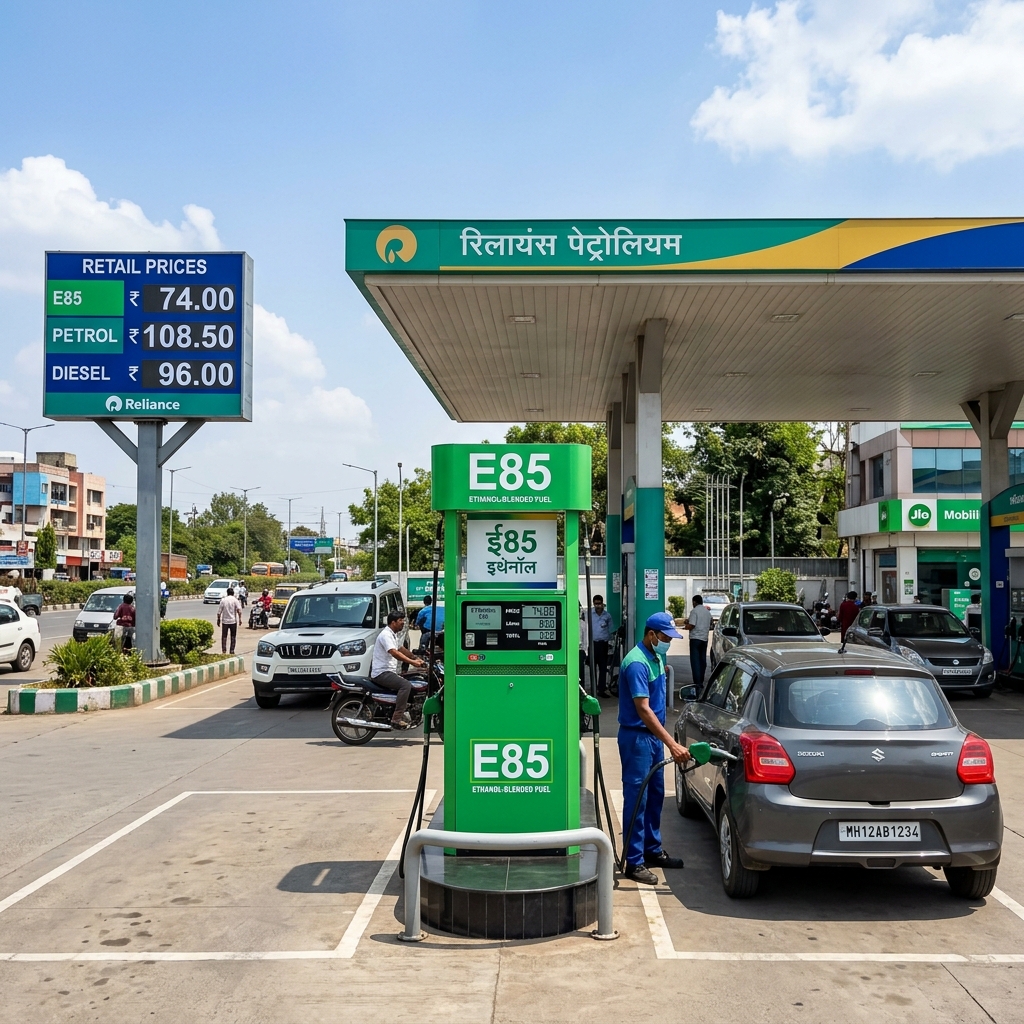
Understanding the Shift: The Ethanol Mandate in India
Before we dissect the Pulsar NS160, it's crucial to understand the context. India has successfully achieved its target of blending 10% ethanol with petrol (E10) ahead of schedule and has fast-tracked the E20 target to 2025. But flex-fuel vehicles (FFVs) take this a step further. Unlike standard E20-compliant engines, an FFV is designed to run on any blend of petrol and ethanol, typically ranging from 20% to 85% ethanol (E85).
Ethanol is a renewable biofuel produced primarily from sugarcane, corn, and agricultural waste. By increasing the ethanol blend, India not only supports its agrarian economy but also significantly cuts down on carbon emissions. For the consumer, ethanol is generally cheaper than pure petrol, presenting a potential reduction in running costs, albeit with some technical trade-offs that we will explore.
The Bajaj Pulsar NS160 Flex Fuel: A Technological Marvel
The Pulsar NS series has always been synonymous with raw, aggressive streetfighter styling and peppy performance. Adapting this platform to run on E85 is no small feat. Ethanol possesses distinct chemical properties compared to gasoline. It is more corrosive, has a lower energy density, and requires a different air-fuel ratio for optimal combustion.
To make the NS160 compatible with E85, Bajaj engineers had to overhaul several critical engine components:
1. Engine Control Unit (ECU) Calibration
The brain of the motorcycle, the ECU, has been completely recalibrated. When running on E85, the engine requires a richer fuel mixture because ethanol contains less energy per unit volume than petrol. The ECU utilizes flex-fuel sensors that detect the exact percentage of ethanol in the fuel tank in real-time, adjusting the ignition timing and fuel injection duration on the fly to ensure seamless combustion without knocking or stalling.2. Upgraded Fuel Injectors and Pump
Since E85 requires more fuel to be injected into the combustion chamber to produce the same power as petrol, the stock fuel injectors were replaced with high-flow injectors. Similarly, the fuel pump has been upgraded to handle the increased flow rate requirements and to withstand the corrosive nature of high-concentration ethanol.3. Corrosion-Resistant Fuel Lines and Tank
Ethanol is highly hygroscopic (it absorbs water) and can be highly corrosive to standard rubber hoses, plastic seals, and certain metals. The entire fuel delivery system in the NS160 Flex Fuel, from the tank's inner lining to the fuel lines and O-rings, is manufactured from specialized, ethanol-resistant materials to prevent degradation and leaks over time.4. Modified Engine Internals
To capitalize on ethanol's higher octane rating (which is around 100-105 for E85, compared to 91-95 for standard petrol), Bajaj might have tweaked the compression ratio. A higher compression ratio allows the engine to extract more power from the ethanol blend, compensating for its lower energy density. Hardened valve seats and modified spark plugs are also essential to withstand the different combustion temperatures and characteristics of E85.Performance on E85: Power, Torque, and Rideability
The most pressing question for any Pulsar enthusiast is: Does running on a green fuel compromise the signature "Pulsar thrill"? The short answer is no; in fact, it alters the dynamic in intriguing ways.
Power and Torque Output
The standard petrol-powered NS160 produces around 17.2 PS of power and 14.6 Nm of torque. When running on E85, these figures are generally maintained, and in some specific RPM bands, slightly improved. Thanks to the higher octane rating of E85, the engine can advance the ignition timing without the risk of engine knock (detonation). This allows the engine to run slightly more aggressively.Riders will notice that the mid-range punch—a hallmark of the NS series—remains robust. The engine feels remarkably smooth, as ethanol tends to burn cooler and cleaner than petrol, reducing engine vibrations at higher RPMs.
Throttle Response and Acceleration
Because the ECU is pumping more fuel to compensate for the lower energy density, the throttle response can feel incredibly crisp. The high-flow injectors ensure that the combustion chamber gets the precise amount of fuel instantly. During straight-line acceleration tests, the NS160 Flex Fuel on E85 holds its own against its petrol counterpart, clocking 0-60 km/h times that are practically identical, if not marginally sharper due to the cooler intake charge that ethanol provides.Top Speed
Top speed remains largely unaffected. The motorcycle easily reaches highway cruising speeds and can hit a top speed north of 115 km/h. However, sustaining top speeds on E85 will result in the fuel gauge dropping significantly faster, which brings us to the most crucial trade-off: Fuel Economy.The Mileage Conundrum: Fuel Efficiency on E85
While E85 might boost the octane rating and keep the engine running cool and smooth, it falls short in one critical area: energy density. A liter of E85 contains roughly 25% to 30% less energy than a liter of pure petrol. Consequently, to travel the same distance, the engine must burn up to 30% more E85 fuel.
Real-World Figures
If a standard Pulsar NS160 delivers around 45 km/l on pure petrol, running it on pure E85 will see that figure drop to approximately 30-33 km/l. This significant drop in mileage is the inherent physical limitation of ethanol.For the average Indian commuter, who is highly sensitive to the "Kitna deti hai?" (What's the mileage?) factor, this drop can seem alarming at first glance. However, mileage is only one side of the coin; the other side is the cost of the fuel itself.
Economics of Running on E85: Is It Cheaper?
To determine the true economic viability of the Pulsar NS160 Flex Fuel, one must calculate the running cost per kilometer, factoring in the lower price of E85 against its lower mileage.
Hypothetical Calculation: * Petrol Price: ₹100 per liter * Petrol Mileage: 45 km/l Running Cost on Petrol:** ₹100 / 45 = *₹2.22 per km
* E85 Price: ₹70 per liter (Assuming significant government subsidies and lower production costs) * E85 Mileage: 31 km/l Running Cost on E85:** ₹70 / 31 = *₹2.25 per km
In this hypothetical scenario, the running costs are nearly identical. For E85 to be a definitive financial win for the consumer, the price gap between petrol and E85 must be substantial enough to offset the 30% drop in fuel efficiency. The Indian government is actively working on pricing strategies for higher ethanol blends to ensure that consumers find economic merit in switching to flex-fuel vehicles.
However, even if the running costs break even, the peripheral benefits—such as reduced carbon footprint and supporting the domestic agricultural sector—add significant value to the proposition.
Environmental Impact: A Breath of Fresh Air
The primary driver behind the flex-fuel movement is environmental conservation. When the Pulsar NS160 runs on E85, the tailpipe emissions are drastically different from those of standard petrol.
1. Reduced Carbon Monoxide (CO): Ethanol contains oxygen in its chemical structure, leading to more complete combustion. This significantly reduces carbon monoxide emissions, a major urban pollutant. 2. Lower Particulate Matter: The cleaner burning nature of ethanol means virtually zero soot or particulate matter is emitted. 3. Greenhouse Gas Reduction: Because ethanol is derived from plants that absorbed CO2 during their growth cycle, the net carbon dioxide emission (the lifecycle carbon footprint) is substantially lower than that of fossil fuels.
For cities grappling with severe air quality issues, a mass adoption of flex-fuel motorcycles like the NS160 could lead to a measurable improvement in ambient air quality.
Real-World Usability and Challenges in India
While the technology is sound and the performance is commendable, living with a flex-fuel motorcycle in India comes with its unique set of challenges and considerations.
1. Fuel Availability and Infrastructure
The biggest hurdle currently is the availability of E85 dispensing pumps. While E10 is standard and E20 is rolling out rapidly, dedicated E85 pumps are still in the pilot phase. The beauty of the flex-fuel NS160, however, is that it doesn't leave the rider stranded. If E85 isn't available, the rider can fill up with standard petrol (E10 or E20), and the sensors will instantly adjust the engine mapping. It offers complete peace of mind.2. Cold Starting
Ethanol is notoriously difficult to vaporize at lower temperatures compared to petrol. In colder regions of India during winter mornings, an engine running on 85% ethanol might require a few extra cranks to fire up. Manufacturers combat this by ensuring the remaining 15% of the blend is high-volatility petrol, and by optimizing the cold-start fuel mapping in the ECU. In everyday Indian conditions, cold starting issues on E85 are generally minimal but still a factor to note compared to pure petrol.3. Long-Term Reliability
Bajaj's robust engineering has accounted for ethanol's corrosive nature. However, the long-term reliability of these components over 5-10 years of continuous use on high-concentration ethanol in the harsh Indian climate remains to be empirically proven on a mass scale. Regular maintenance and using high-quality engine oils specifically formulated for flex-fuel engines will be crucial.Riding Experience: The Verdict
Getting on the saddle of the Bajaj Pulsar NS160 Flex Fuel, the experience is overwhelmingly familiar. The perimeter frame, the sharp handling, the confident braking with ABS, and the aggressive riding posture are all intact.
When running on E85, the exhaust note sounds slightly crisper. The engine pulls cleanly through the rev range. There's a certain satisfaction in knowing that every twist of the throttle is resulting in cleaner combustion and reduced imported crude dependency. The drop in mileage is noticeable only when calculating tank range, but the performance delivery leaves no room for complaints.
The Road Ahead for Flex Fuel Two-Wheelers
The Bajaj Pulsar NS160 Flex Fuel is not just a prototype; it is a clear indicator of the direction the Indian two-wheeler industry is heading. With major players like TVS and Honda also investing heavily in flex-fuel technology, we are on the cusp of a major transition.
For the transition to be successful, a synchronized effort is required: * Government: Must ensure that E85 is priced attractively enough to offset the mileage drop, thereby incentivizing consumers. * Oil Marketing Companies (OMCs): Need to aggressively expand the dispensing infrastructure for higher ethanol blends. * Manufacturers: Must continue to refine the technology, keeping the initial acquisition cost of flex-fuel vehicles accessible to the masses.
Global Perspective: Following the Brazilian Model
India's foray into flex-fuel technology isn't an isolated experiment; it is a tried and tested model, predominantly championed by Brazil. For decades, Brazil has been the global leader in integrating ethanol into its fuel ecosystem. A vast majority of the vehicles sold in Brazil are flex-fuel compatible, running on everything from E27 (the standard petrol there) to pure E100.
By studying the Brazilian model, Indian manufacturers like Bajaj have been able to leapfrog several developmental hurdles. The engineering principles used in the Pulsar NS160 Flex Fuel draw heavy inspiration from the data gathered in South American markets. However, the Indian context presents unique challenges—such as vastly different climatic conditions ranging from the freezing Himalayas to the scorching Thar desert, and a uniquely demanding traffic pattern characterized by stop-and-go congestion. The NS160 has been specifically tuned not just to run on E85, but to endure the specific rigors of Indian riding conditions. This ensures that the motorcycle doesn't just survive on ethanol, but thrives on it, regardless of the geographic location within the subcontinent.
The Tuning Potential: E85 as a Performance Enhancer
While the primary goal of the NS160 Flex Fuel is environmental and economic sustainability, E85 holds a secret allure for tuning enthusiasts and track day riders. In the performance automotive world, E85 is often affectionately referred to as "cheap race gas." Because of its exceptionally high octane rating (typically 100-105) and its high latent heat of vaporization (which cools the intake charge significantly more than standard petrol), it allows engines to produce substantially more power if tuned correctly.
Although the factory ECU map on the NS160 is designed conservatively for a perfect balance of long-term reliability, strict BS6 phase 2 emissions compliance, and acceptable fuel efficiency, aftermarket tuners recognize the massive potential locked within. By advancing the ignition timing further and aggressively adjusting the fuel injection maps, an E85-powered NS160 could potentially be tuned to extract several more horsepower than its petrol-only counterpart. The cooler intake charge effectively acts as chemical intercooling, allowing the engine to breathe denser air. While modifying the ECU would likely void the manufacturer's warranty and further tank the already compromised fuel economy, it highlights the incredibly versatile nature of ethanol. It isn't just a green, eco-friendly fuel; it is a high-performance, race-ready fuel waiting to be unleashed by those who desire maximum output.
Flex Fuel vs. Electric Vehicles (EVs): A Necessary Bridge
As the world aggressively pivots towards Electric Vehicles (EVs), one might question the long-term relevance of flex-fuel technology. Is the Pulsar NS160 Flex Fuel merely a stopgap measure, destined to be overshadowed by battery tech?
The reality of the Indian market dictates a more nuanced approach. Full EV adoption faces significant logistical and infrastructural challenges. The public charging network is still in its absolute infancy, charging times remain lengthy compared to splash-and-dash refueling, and the initial acquisition cost of high-performance EVs remains prohibitive for the average mass-market consumer. Furthermore, the electricity used to charge EVs in India is still largely generated from burning coal, which somewhat offsets the green tailpipe benefits when evaluating the total well-to-wheel emissions.
Flex-fuel vehicles, conversely, utilize existing liquid fuel infrastructure. A traditional fuel station that dispenses petrol can be relatively easily and cheaply upgraded to dispense E85. The refueling time is identical to a conventional motorcycle, taking mere minutes to top up the tank. The Pulsar NS160 Flex Fuel serves as a crucial, practical bridge technology. It immediately and drastically reduces the carbon footprint and the national reliance on imported crude oil by utilizing a renewable resource that India produces abundantly (from sugarcane and agricultural biomass), without forcing consumers to change their ingrained refueling habits or endure range anxiety. In the broader transportation ecosystem of a vast and developing nation like India, EVs and FFVs will inevitably coexist for decades, each serving different consumer needs, economic brackets, and use cases.
Conclusion
The Bajaj Pulsar NS160 Flex Fuel operating on E85 is a triumph of adaptive engineering. It proves that transitioning to a greener, more sustainable fuel does not mean sacrificing the thrill of riding. The motorcycle retains its aggressive DNA, delivers smooth and robust performance, and slashes harmful emissions.
While the drop in volumetric fuel efficiency is an unavoidable reality of ethanol, the potential for lower fuel costs and the massive environmental benefits make it a highly compelling package. As the infrastructure catches up, the Pulsar NS160 Flex Fuel stands ready to lead the charge, offering Indian riders a chance to be eco-conscious without giving up the joy of motorcycling. It is a bold step towards a self-reliant and cleaner automotive future for India.