As the world pivots toward more sustainable and eco-friendly transportation solutions, flex-fuel vehicles (FFVs) have emerged as a highly practical bridge between traditional fossil fuels and a zero-emission future. Capable of running on a blend of gasoline and ethanol—most commonly E85, which is 85% ethanol and 15% gasoline—these vehicles offer reduced greenhouse gas emissions and support agricultural economies. However, whenever a new or alternative fuel is introduced to the mass market, consumer skepticism inevitably follows. One of the most common questions prospective buyers ask is: Are flex fuel cars safe?
When people hear about high concentrations of alcohol (ethanol) in their vehicle's fuel tank, concerns about fire risks, volatility, and crash safety naturally arise. In this comprehensive guide, we will dive deep into the engineering of flex-fuel vehicles, compare the physical properties of ethanol and gasoline, examine rigorous crash test protocols, and unpack real-world fire safety data to give you a definitive answer on the safety of flex-fuel cars.
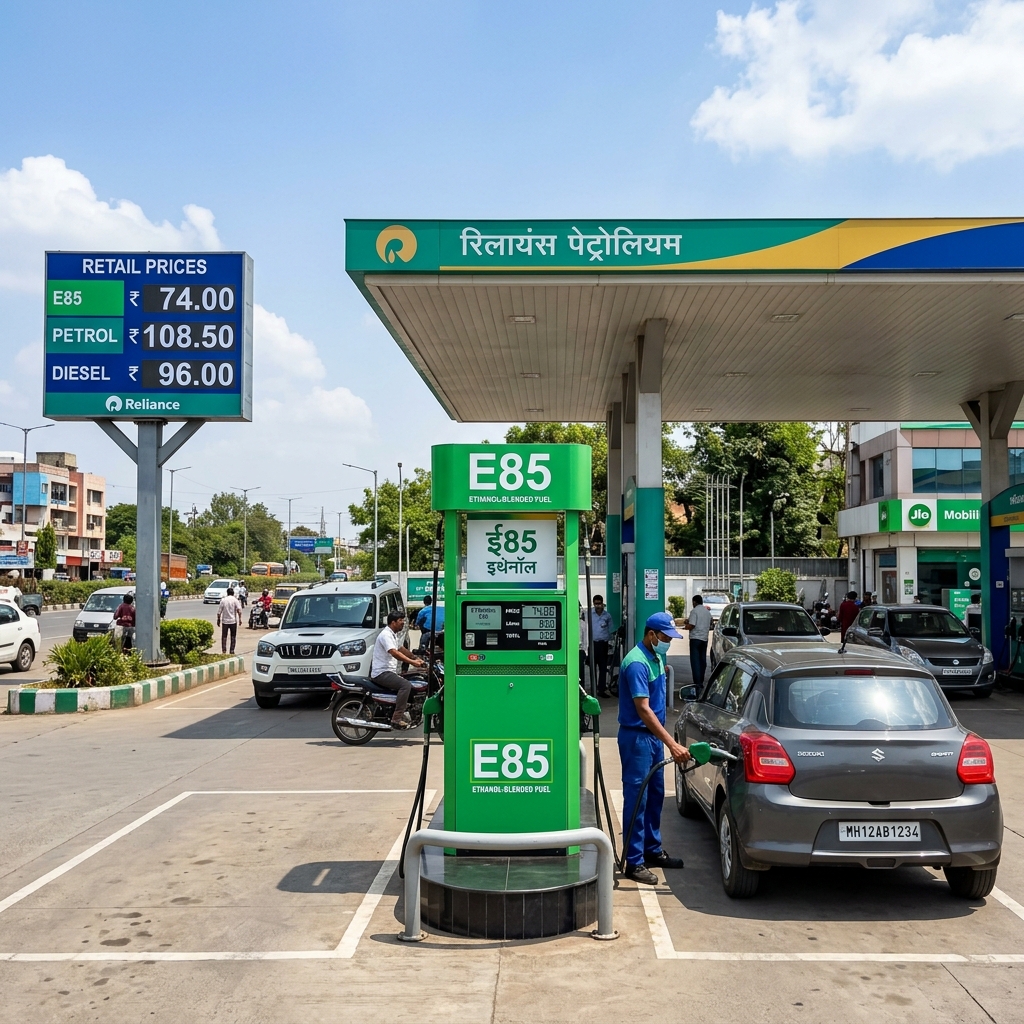
1. The Anatomy of a Flex Fuel Car: Safety Built-In
To understand the safety of flex-fuel cars, it is crucial to first understand how they differ from standard internal combustion engine (ICE) vehicles. From the outside, an FFV looks entirely identical to its gas-only counterpart. In fact, many drivers unknowingly purchase FFVs, only realizing it when they see a yellow fuel cap or a small "Flex Fuel" badge on the tailgate.
Under the hood, however, engineers have made several critical modifications to ensure the vehicle handles high-ethanol blends safely and efficiently.
Upgraded Fuel Lines and Components
Ethanol is a solvent and is hydroscopic, meaning it attracts and absorbs water from the atmosphere. Over time, high concentrations of ethanol can degrade certain types of rubber, plastic, and aluminum—materials traditionally used in older automotive fuel systems. To combat this, automakers build FFVs with upgraded, corrosion-resistant materials. The fuel lines are constructed from stainless steel or specialized fluoropolymers. Seals, gaskets, and O-rings are made from advanced elastomers designed specifically to withstand prolonged exposure to alcohol.The Fuel Sensor and Engine Control Unit (ECU)
The heart of an FFV is its fuel composition sensor. This sensor constantly analyzes the ethanol-to-gasoline ratio of the fuel flowing through the lines. It relays this data in real-time to the Engine Control Unit (ECU). The ECU then instantaneously adjusts the fuel injection timing and spark advance to optimize combustion. This system ensures that whether you are running on 100% gasoline (E0), E15, E85, or any mixture in between, the engine runs smoothly without misfiring, knocking, or creating unsafe combustion scenarios.Electrical System Protections
Because ethanol is slightly more electrically conductive than pure gasoline, the electrical components within the fuel system—such as the fuel pump—must be specially insulated. FFVs feature fully sealed, spark-proof electrical connectors within the fuel tank to eliminate any risk of accidental ignition, ensuring the system remains completely inert even under extreme conditions.2. E85 Ethanol vs. Gasoline: Understanding the Fuel
To assess the fire safety of a flex-fuel car, we must compare the physical and chemical properties of the fuel itself. Gasoline and ethanol behave differently under pressure and heat.
Flash Point and Volatility
The "flash point" of a liquid is the lowest temperature at which it produces enough vapor to ignite in the air when exposed to an ignition source. - The flash point of pure gasoline is approximately -45°F (-43°C). - The flash point of pure ethanol is much higher, around 55°F (13°C).This means that at normal winter temperatures, gasoline produces highly flammable vapors, whereas pure ethanol does not. However, E85 is not pure ethanol; it contains 15% gasoline specifically to lower the flash point and ensure the engine can start in cold weather. Even with this addition, E85 is generally less volatile than pure gasoline. It is less likely to accidentally ignite from a stray spark when spilled at ambient temperatures.
Auto-Ignition Temperature
The auto-ignition temperature is the temperature at which a substance will spontaneously ignite without a spark or flame—for instance, if fuel spills onto a hot exhaust manifold. - Gasoline's auto-ignition temperature is roughly 536°F (280°C). - Ethanol's auto-ignition temperature is significantly higher, at about 689°F (365°C).Because ethanol requires a much higher surface temperature to spontaneously ignite, an E85 spill in a hot engine bay is statistically less likely to cause an immediate engine fire compared to a pure gasoline spill.
Flammability Limits
Flammability limits define the concentration range of a vapor in the air that can catch fire. Gasoline has a very narrow flammability limit (approx. 1.4% to 7.6%), meaning a small amount of vapor can cause an explosion, but it becomes "too rich" to burn quickly. Ethanol has a wider range (approx. 3.3% to 19%), meaning it can burn at higher concentrations in the air. However, because its vapor pressure is lower than gasoline, it does not evaporate and form these dangerous clouds as rapidly as gasoline does.3. Fire Safety Protocols in Flex Fuel Cars
When discussing vehicle safety, fire prevention is paramount. The fuel system of an FFV is subjected to the same rigorous safety standards as any other modern vehicle, with some added redundancies.
Robust Fuel Tank Design
Modern flex-fuel vehicles utilize High-Density Polyethylene (HDPE) plastic fuel tanks or specially coated steel tanks. HDPE tanks are incredibly resilient; they can deform and stretch during a severe collision without rupturing. These tanks are heavily insulated and placed in the safest possible location within the vehicle's chassis—usually just ahead of the rear axle, keeping them far away from the primary impact zones of front or rear collisions.Rollover Valves and Anti-Siphon Devices
In the event of a rollover crash, one of the greatest dangers is fuel leaking from the tank filler neck or ventilation lines. FFVs are equipped with gravity-activated rollover valves. The moment the vehicle tilts past a certain angle, these mechanical valves snap shut, sealing the fuel tank and preventing E85 from spilling out. Additionally, anti-siphon check valves in the filler neck prevent fuel from flowing backward if the car is overturned.Fire Response and Extinguishing
One unique aspect of E85 safety involves emergency response. Because ethanol is an alcohol, it is water-soluble. If an E85 car catches fire, traditional firefighting foam (designed for petroleum fires) can be degraded by the alcohol. Fire departments are well-aware of this and use a special Alcohol-Resistant Aqueous Film-Forming Foam (AR-AFFF) to blanket and extinguish ethanol fires. While this is an important distinction for first responders managing bulk tanker spills, for the average consumer, a vehicle fire involving E85 is handled similarly to a gasoline fire—occupants must evacuate immediately and call emergency services.4. Crash Tests and Structural Integrity
Crash safety is determined not by the fuel in the tank, but by the structural integrity of the vehicle chassis. Since FFVs share their platforms with standard ICE vehicles, they benefit from the exact same billion-dollar safety research and development programs.
NHTSA and IIHS Ratings
Agencies like the National Highway Traffic Safety Administration (NHTSA) in the United States, the Insurance Institute for Highway Safety (IIHS), and the Global New Car Assessment Programme (Global NCAP) test vehicles ruthlessly.Popular flex-fuel vehicles, such as the Ford F-150, Chevrolet Silverado, and various Toyota models sold in flex-fuel configurations globally, consistently score 5-star ratings in crash tests. When these agencies conduct crash tests, the vehicles are filled with a specialized Stoddard solvent (a non-flammable liquid with a specific gravity similar to gasoline) to simulate the weight and fluid dynamics of a full fuel tank.
Frontal and Side Impacts
During frontal impacts, the engine is designed to be pushed downward, beneath the passenger cabin, rather than intruding into it. The fuel lines are routed along protected channels in the chassis. In side-impact crashes, ultra-high-strength steel pillars and side-impact door beams prevent intrusion into the cabin. The fuel tank, centrally located, remains largely isolated from the crushing forces of a T-bone collision.Rear-End Collisions and Fuel System Integrity
Rear-end collisions are the most critical test for fuel system integrity. Federal Motor Vehicle Safety Standard (FMVSS) 301 mandates strict limits on fuel leakage during and after an 80 km/h (50 mph) rear offset crash. Flex-fuel vehicles pass this test with flying colors. The crumple zones in the rear of the car are engineered to absorb the kinetic energy of the impact, stopping the deformation just inches before it reaches the HDPE fuel tank.5. Addressing Common Myths About Flex Fuel Safety
Misinformation can often overshadow engineering facts. Let’s debunk some of the most pervasive myths regarding the safety of E85 and flex-fuel cars.
Myth 1: Ethanol Explodes More Easily Than Gasoline
Fact: As discussed in the auto-ignition and flash point sections, ethanol is actually harder to ignite than gasoline. It requires a hotter spark and higher temperatures to combust spontaneously. While both fuels are highly flammable and must be treated with respect, E85 is not a "volatile bomb" waiting to go off. In many respects, its higher flash point makes it safer to handle at room temperature.Myth 2: High Ethanol Blends Corrode Your Car and Cause Leaks
Fact: This myth stems from the early 2000s when people attempted to run high-ethanol blends in older cars that were not designed for it. If you put E85 in a 1995 sedan, the alcohol will indeed degrade the rubber fuel lines, potentially causing dangerous fuel leaks. However, a factory-built Flex Fuel Vehicle is engineered specifically to prevent this. The stainless steel lines and specialized synthetic rubbers used in FFVs are completely immune to ethanol corrosion. A 10-year-old FFV is no more likely to leak fuel than a 10-year-old standard car.Myth 3: You Cannot Park an E85 Car in an Enclosed Garage
Fact: Some consumers believe that ethanol off-gases toxic or highly flammable fumes that will build up in a garage. Modern FFVs, like all modern cars, have sealed Evaporative Emission Control Systems (EVAP). The fuel tank is not vented directly to the atmosphere; instead, vapors are captured in a charcoal canister and later purged into the engine to be burned. There is zero risk of hazardous fume build-up in a garage from an intact flex-fuel vehicle.Myth 4: E85 Cars Stall More Often, Creating Traffic Hazards
Fact: Early generations of aftermarket flex-fuel conversion kits sometimes struggled with cold starts, leading to stalling. However, OEM (Original Equipment Manufacturer) flex-fuel vehicles have highly sophisticated cold-start programming. The ECU adjusts the fuel trim instantly. You are at no greater risk of stalling in an intersection in an FFV than you are in a standard gasoline vehicle.6. Maintenance for Optimal Safety
While flex-fuel vehicles are inherently safe, they do require standard maintenance to remain in top condition, just like any complex machine.
Regular Inspections
During routine servicing, mechanics should visually inspect the undercarriage to ensure fuel lines have not been damaged by road debris. While the lines are corrosion-resistant from the inside, a massive rock strike on the highway could dent or compromise the protective shielding.Using the Right Engine Oil
Ethanol combustion can produce slightly more water vapor and different byproducts than gasoline. It is crucial to use the engine oil recommended by the manufacturer (often designated to meet specific API standards for flex-fuel or direct-injection engines). Proper lubrication prevents premature engine wear, ensuring the vehicle operates safely and predictably.Do Not Ignore the Check Engine Light
If the fuel composition sensor fails, the ECU may struggle to determine the correct air-to-fuel ratio. This will trigger a check engine light. While the car will usually enter a "limp mode" or default to a safe gasoline map, driving with a faulty fuel sensor for extended periods can cause engine misfires or damage the catalytic converter. Always have warning lights diagnosed promptly.7. The Environmental and Macro-Safety Benefits
When discussing "safety," it is also worth zooming out to look at the broader picture. Flex-fuel vehicles offer safety benefits that extend beyond the driver's seat.
- Reduced Toxicity: Pure gasoline contains aromatics like benzene, toluene, and xylene, which are known human carcinogens. When spilled, gasoline poses a severe threat to groundwater. Ethanol, conversely, is biodegradable. While an E85 spill is still an environmental hazard due to the 15% gasoline content, it is significantly less toxic to soil and water systems than a 100% gasoline spill. - Improved Air Quality: E85 burns cleaner than standard gasoline. Vehicles running on high-ethanol blends produce less carbon monoxide and fewer particulate emissions. In densely populated urban areas, widespread adoption of FFVs can lead to better air quality, directly impacting public respiratory health.
8. Conclusion: Are Flex Fuel Cars Safe?
The definitive answer is yes. Flex-fuel vehicles are every bit as safe as traditional gasoline-powered cars.
Automakers do not cut corners when adapting a vehicle platform for flex-fuel capability. By upgrading the fuel system materials, sealing electrical components, and utilizing advanced computer management systems, engineers have entirely neutralized the corrosive and conductive properties of ethanol.
Furthermore, the physical properties of E85—specifically its higher auto-ignition temperature and higher flash point—actually provide marginal safety benefits in certain severe crash and spill scenarios compared to pure gasoline.
When you drive a modern flex-fuel vehicle, you are protected by the same 5-star crash structures, airbags, and active safety systems (like automatic emergency braking and lane-keeping assist) found in standard cars. Whether you are filling up with E10, E85, or premium gasoline, you can drive with absolute peace of mind knowing that your vehicle is engineered to the highest global safety standards.
Embracing flex-fuel technology is a step toward energy independence and environmental responsibility, and it is a step you can take without ever compromising on the safety of yourself or your family.